Silky garlic Parmesan sauce clings to every strand of pasta, and the sliced chicken on top keeps this from feeling like just another creamy noodle dinner. What makes it worth making again is the balance: enough garlic to taste, enough Parmesan to give the sauce body, and enough pasta water to keep everything loose and glossy instead of heavy.
The biggest difference between a good version and a dull one is how the sauce is handled. The garlic needs just a minute in butter so it softens without turning bitter, and the cream has to simmer long enough to thicken before the cheese goes in. If you rush that part, the sauce tastes flat or turns grainy instead of smooth and spoon-coating.
Below, I’ve included the exact point where the sauce comes together, plus a few useful swaps if you need to work with what’s in your kitchen. The method is straightforward, but a couple of small details make the finished pasta taste like you meant it.
The sauce turned out silky and coated the spaghetti perfectly, and the chicken stayed juicy even after slicing. I added a splash of pasta water at the end, and it made the whole dish come together instead of feeling too thick.
Save this Garlic Parmesan Chicken Pasta for the nights when you want a creamy, basil-finished dinner that still comes together fast.
The Sauce Breaks If You Rush the Cheese
Parmesan wants a gentle hand. If you dump it into a boiling cream sauce, the proteins tighten fast and the texture goes from smooth to sandy. That’s why the cream and broth get a short simmer first: they reduce slightly, the dairy warms evenly, and the sauce has enough body to accept the cheese instead of fighting it.
The other thing that matters here is the pasta water. It’s not just a backup liquid. The starch helps the sauce cling to the spaghetti and gives you a cleaner finish than adding more cream, which can turn the whole pan heavy. If the sauce looks tight before you toss in the pasta, loosen it with a splash at a time.
What the Key Ingredients Are Doing in the Pan
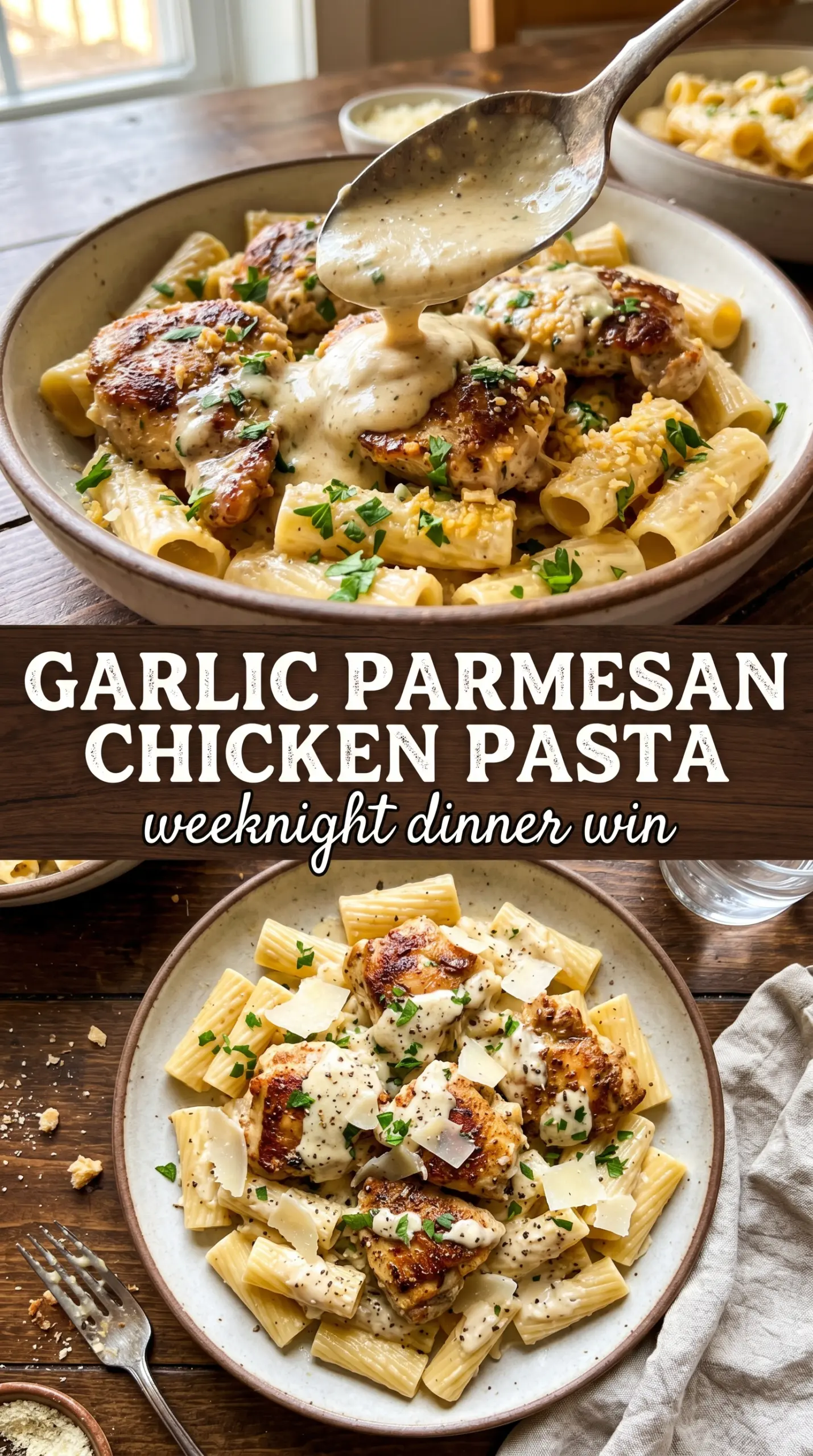
- Chicken breasts — Slicing them after cooking keeps the meat juicy and lets you fan it over the pasta instead of burying it in sauce. Breasts are lean, so don’t overcook them past 165°F or they’ll go dry once sliced.
- Heavy cream — This gives the sauce its body and a stable, silky finish. Half-and-half will work in a pinch, but the sauce will be thinner and may need more pasta water reduction to feel cohesive.
- Freshly grated Parmesan — This is one place where quality matters. Pre-shredded cheese often contains anti-caking agents that make the sauce grainy instead of smooth, so grate it yourself if you can.
- Garlic and butter — The butter carries the garlic flavor without browning it too fast. Minced garlic needs just a minute; once it turns deeply golden, the sauce starts tasting bitter.
- Pasta water — This is the ingredient that pulls the sauce together at the end. Save at least a cup before draining because a few spoonfuls can turn a thick, clunky sauce into one that coats the pasta cleanly.
Building the Chicken, Then Finishing the Pasta in the Same Skillet
Season and Sear the Chicken
Pat the chicken dry before seasoning it so it actually browns instead of steaming. Cook it in hot olive oil over medium-high heat until you get a deep golden crust on both sides and the center reaches 165°F. If the pan starts smoking hard or the seasoning darkens too fast, lower the heat a notch; burnt spices will carry through the whole dish.
Wake Up the Garlic in Butter
Use the same skillet and leave the browned bits in place. Those bits dissolve into the sauce and give it depth. Add the butter, then the garlic, and stir for about a minute until it smells sweet and fragrant. If the garlic starts to brown at the edges, move on immediately — it only takes a few seconds for it to turn sharp and bitter.
Simmer the Cream Until It Naps on the Spoon
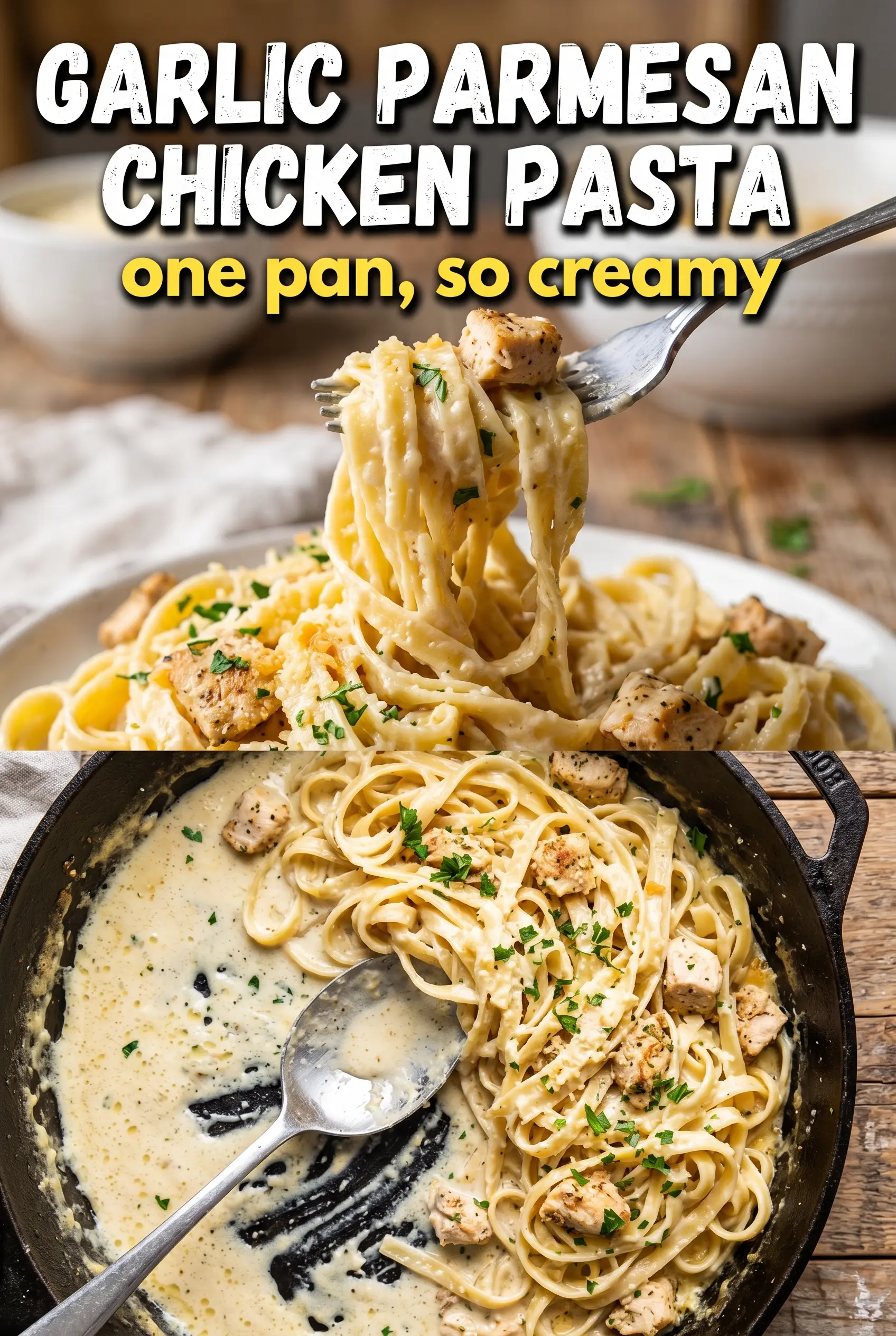
Pour in the cream and chicken broth and let them simmer, not boil, until the liquid thickens slightly and lightly coats the back of a spoon. This usually takes 4 to 5 minutes. High heat is the fastest way to split a cream sauce, so keep it at a gentle bubble and use the time to scrape up the bottom of the pan.
Finish With Cheese and Pasta Water
Take the pan off the heat before stirring in the Parmesan. That small pause keeps the sauce smooth instead of grainy. Add the cooked pasta, toss, then use splashes of pasta water until every strand looks glossy and coated rather than buried. Slice the chicken, pile it over the top, and finish with basil and extra Parmesan.
How to Adjust It Without Losing the Creamy Texture
Make it gluten-free with a sturdy pasta shape
Use your favorite gluten-free spaghetti or fettuccine and cook it just shy of done. Gluten-free pasta can go soft fast after it hits the sauce, so undercooking by a minute helps it hold its shape when you toss everything together.
Make it lighter with half-and-half
Half-and-half can stand in for the cream, but you’ll need a slightly longer simmer and a little more Parmesan to get the same coating power. The sauce will taste a touch lighter and less rich, which works if you want something less heavy but still creamy.
Use chicken thighs for a juicier result
Boneless thighs bring a little more richness and stay tender even if you’re distracted at the stove. They take a minute or two longer than breasts, but they’re more forgiving and work especially well if you like a heartier finish.
Add vegetables without watering out the sauce
Spinach, peas, or steamed broccoli fold in well near the end. Cook off any excess moisture before adding them, or they’ll thin the sauce and wash out the Parmesan flavor.
Storage and Reheating
- Refrigerator: Store leftovers in an airtight container for up to 3 days. The pasta will soak up some sauce as it sits.
- Freezer: I don’t recommend freezing this one. Cream sauces tend to separate after thawing, and the pasta gets mushy.
- Reheating: Warm it gently on the stovetop or in the microwave with a splash of broth, milk, or water. Reheat slowly, because high heat can make the sauce oily and push the chicken past tender.
Answers to the Questions Worth Asking
Garlic Parmesan Chicken Pasta
Ingredients
Equipment
Method
- Season the chicken breasts with salt, pepper, garlic powder, and Italian seasoning. Heat olive oil in a large skillet over medium-high heat and cook the chicken for 5–6 minutes per side until golden and cooked through to 165°F, then rest and slice thin.
- In the same skillet, melt the butter and cook the minced garlic over medium heat for 1 minute. Pour in the heavy cream and chicken broth and simmer for 4–5 minutes until slightly thickened.
- Stir in the Parmesan cheese, Italian seasoning, and red pepper flakes until smooth. Add reserved pasta water a splash at a time until the sauce coats the pasta well.
- Toss the cooked spaghetti or fettuccine in the garlic Parmesan sauce until glossy and evenly coated. Divide among plates, top with the sliced chicken, and garnish with fresh basil and extra Parmesan.