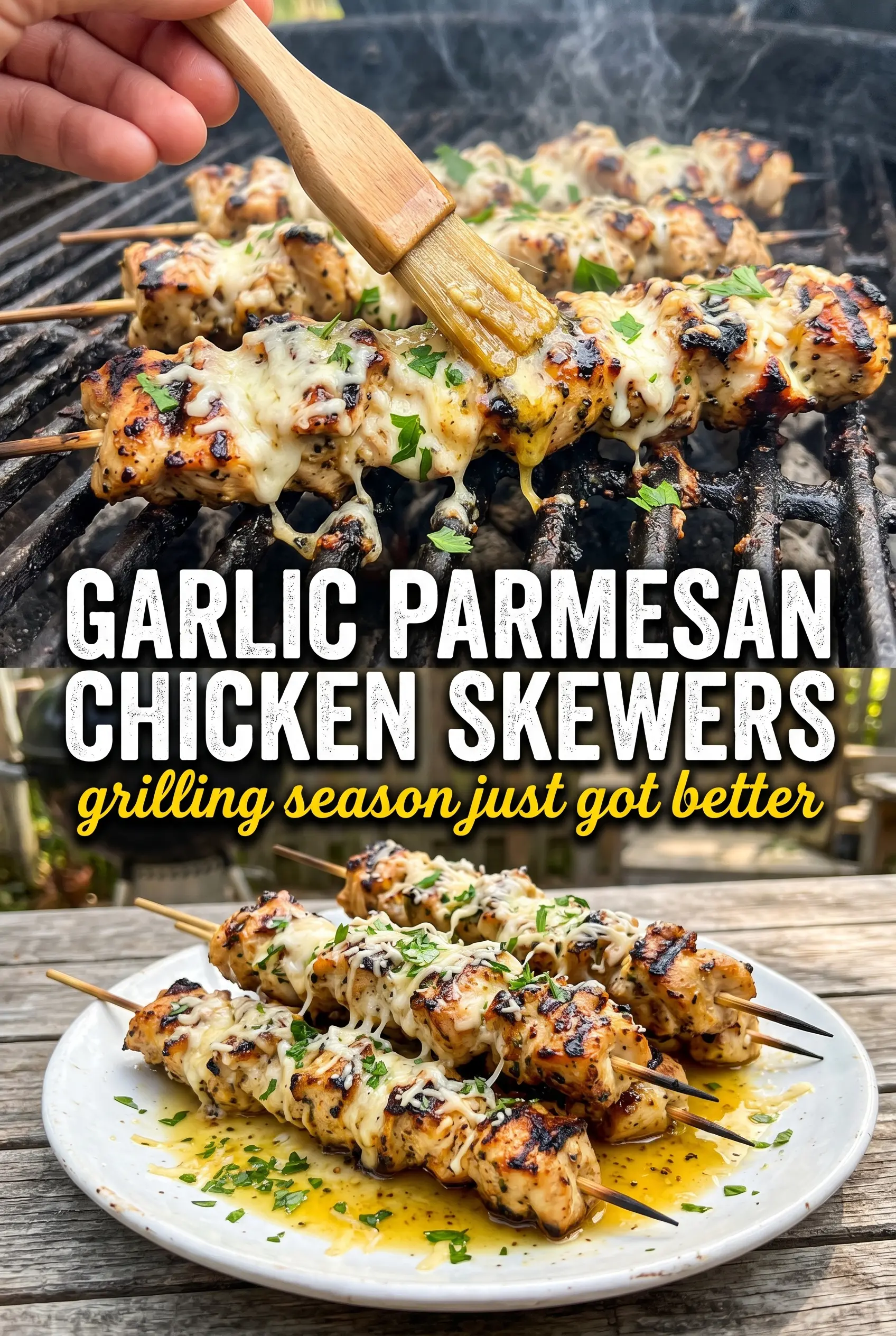
Golden grilled chicken skewers finish with a buttery garlic parmesan coating that clings to every edge and settles into the little charred ridges from the grill. The chicken stays juicy because the pieces are cut evenly and cooked hot and fast, and the final brush of parmesan butter gives each bite that salty, savory finish people keep reaching for.
What makes these work is the layering. The chicken gets a quick marinade with olive oil, garlic, Italian seasoning, and smoked paprika, which seasons the meat all the way through without burying it. Then the garlic parmesan butter goes on after grilling, not before, so the cheese stays sharp and savory instead of burning on the heat. That last step is what turns basic skewers into something you’ll want to serve with a pile of napkins.
Below you’ll find the exact grill timing, the reason the skewers need a little space between each piece, and a few useful swaps if you want to change up the protein or make this work on a grill pan.
The chicken stayed juicy and the garlic parmesan butter melted into every little charred edge. I used a grill pan and it still came out with that crisp, restaurant-style finish.
Save these garlic parmesan chicken skewers for the nights when you want juicy grilled chicken with a buttery, cheesy finish.
The Part That Keeps the Chicken Juicy Instead of Dry
Chicken breast goes dry fast when it’s cut unevenly or cooked past the point where the juices have nowhere left to go. These skewers avoid that by using 1.5-inch cubes, a short marinade, and high heat. The pieces are large enough to stay juicy, but small enough to pick up good browning before the center overcooks.
The other thing that matters here is spacing. If the chicken is packed tight on the skewer, the sides steam instead of sear. Leave a little gap between pieces so the grill can kiss more surface area, and pull them as soon as the centers are opaque and the edges have real char. That’s the difference between grilled chicken that tastes flat and grilled chicken that tastes like you meant it.
What Each Ingredient Is Doing in the Bowl

- Chicken breast — Lean chicken breast gives you a clean, meaty bite that works well with the garlic butter finish. Cut it into even cubes so every piece finishes at the same time. If you want a little more forgiveness on the grill, boneless chicken thighs also work and stay juicier, though they taste a little richer.
- Olive oil — This carries the seasonings and helps the chicken brown instead of sticking. You don’t need anything fancy here; a standard cooking olive oil is fine.
- Garlic — Fresh garlic does the heavy lifting in both the marinade and the butter. Mince it finely so it coats the chicken and melts into the finishing sauce instead of staying sharp and chunky.
- Parmesan — Freshly grated parmesan matters in the butter because it melts more smoothly and gives you a saltier, nuttier finish. Pre-grated cheese can work in a pinch, but it won’t disappear into the butter as cleanly.
- Butter — This is what makes the final coating cling to the chicken. Melt it just enough to mix, then brush it on while the skewers are still hot so it loosens and spreads across the surface.
- Smoked paprika and Italian seasoning — Paprika adds warmth and a touch of color, while Italian seasoning brings herb notes that keep the garlic from tasting one-note. They’re small additions, but they keep the dish from tasting like plain garlic chicken.
Getting the Grill Marks Before the Butter Goes On
Marinating the Chicken
Mix the olive oil, garlic, Italian seasoning, smoked paprika, salt, and pepper in a bowl, then toss the chicken until every piece is coated. Thirty minutes is enough to season the surface without turning the texture mushy. If you marinate much longer, especially with a lot of garlic sitting on the meat, the flavor can get aggressive instead of balanced.
Skewering for Even Cooking
Thread the chicken onto skewers with a small gap between each cube. That air space is not decorative; it helps the heat move around the meat and keeps the sides from steaming. If you pack the pieces together, the outside will brown before the center cooks through and you’ll end up chasing doneness with a dry bird.
Grilling Hot and Fast
Preheat the grill or grill pan to medium-high, then cook the skewers for about 5 to 6 minutes per side. You’re looking for browned edges, clear grill marks, and opaque centers with no pink at the thickest part. If the chicken is sticking, it’s usually because it needs another minute to release naturally; tugging too early tears the crust.
Brushing on the Garlic Parmesan Butter
Mix the melted butter with the minced garlic, parmesan, and parsley, then brush it over the hot skewers as soon as they come off the heat. The residual warmth softens the garlic just enough and helps the cheese melt into the surface instead of falling off. If you brush it on too early over direct heat, the parmesan can scorch and go grainy.
Use Chicken Thighs for a Richer Skewer
Swap the chicken breast for boneless chicken thighs if you want a juicier, slightly richer result. Thighs handle the grill a little better and are more forgiving if your heat runs hot. Cut them into even pieces and grill until the fat renders and the edges turn deeply browned.
Make It Dairy-Free Without Losing the Garlic Finish
Use a dairy-free butter substitute and skip the parmesan, then finish with extra parsley and a pinch of salt. You’ll lose the nutty cheese layer, but the garlic butter coating still gives the chicken a glossy finish and good flavor. A little nutritional yeast can add a faint savory note if you want more depth.
Oven or Grill Pan Version
A grill pan gives you the best indoor version because it still creates those browned edges and lets the butter cling nicely afterward. If you use the oven, broil the skewers near the end for color, but watch them closely since chicken breast can dry out fast under the broiler. The finishing butter stays the same either way.
Storage and Reheating
- Refrigerator: Store leftovers in an airtight container for up to 3 days. The parmesan butter will firm up in the fridge, but the chicken still reheats well.
- Freezer: These freeze fine if you skip the final fresh parsley until serving. Freeze the cooked skewers tightly wrapped or in a freezer bag for up to 2 months, then thaw in the fridge overnight.
- Reheating: Warm gently in a 300°F oven or in a covered skillet over low heat. High heat dries out the breast meat and can make the butter separate, so keep the reheating slow and steady.
Answers to the Questions Worth Asking
Garlic Parmesan Chicken Skewers
Ingredients
Equipment
Method
- Combine olive oil, minced garlic, Italian seasoning, smoked paprika, salt, and black pepper in a bowl, then add chicken cubes and toss until evenly coated. Cover and marinate for at least 30 minutes, until the chicken looks glossy with seasoning.
- Thread marinated chicken onto skewers, leaving a small gap between each piece for even cooking. Arrange skewers so they can lie in a single layer on the grill or grill pan.
- Preheat grill or grill pan to medium-high heat and place skewers on the grate. Cook for 5–6 minutes per side until cooked through and visibly charred at the edges.
- Mix melted butter with minced garlic, freshly grated parmesan, and chopped parsley to make the finishing sauce. Stir until the mixture looks thick and speckled with parmesan.
- Brush warm skewers generously with garlic parmesan butter immediately after removing them from the grill, letting it pool slightly on the meat. Serve with extra parmesan and fresh parsley on top.