Crispy on the edges, soft in the middle, and bright with lemon and oregano, Greek feta roast potatoes hit that sweet spot where a side dish starts stealing attention from the main plate. The potatoes roast in their own lemon-garlic bath until the liquid cooks down and the edges turn deep golden, then feta and fresh herbs go on at the end for salty, creamy contrast.
What makes this version work is the combination of broth and lemon juice in the pan. The broth keeps the potatoes from drying out before they’re tender, while the lemon cuts through the richness and helps the wedges pick up flavor all the way through. Yukon golds are the right choice here because they hold their shape but still turn creamy inside, and the wedges get enough flat surface area to brown properly.
Below, I’ve included the small details that matter most: how to keep the potatoes from steaming, when to flip them, and why the feta goes on after roasting instead of before. Those little choices are what turn a decent pan of potatoes into the kind people keep picking at before dinner even starts.
The potatoes came out crisp around the edges and soaked up the lemon and oregano all the way through. I added the feta at the end like you said, and it stayed creamy instead of melting into the pan.
Save these Greek feta roast potatoes for a crispy lemon-oregano side with golden edges and creamy feta on top.
The Trick to Crispy Potatoes in a Wet Pan
These potatoes start in a roasting pan with broth and lemon juice, which means they’re doing two jobs at once: seasoning from the inside and softening before the final browning. The mistake most people make is crowding the pan or leaving too much liquid around the potatoes at the end. If the wedges are stacked, they steam. If the pan is too shallow and the liquid evaporates too fast, the garlic and oregano can scorch before the potatoes are tender.
The fix is simple. Use a roasting pan with enough surface area for the wedges to sit in a mostly even layer, and flip them halfway so both cut sides get a chance to kiss the hot pan. By the end, the liquid should be gone or almost gone, and the bottoms should look lacquered and deeply golden instead of pale and wet.
What Each Ingredient Is Actually Doing in the Pan
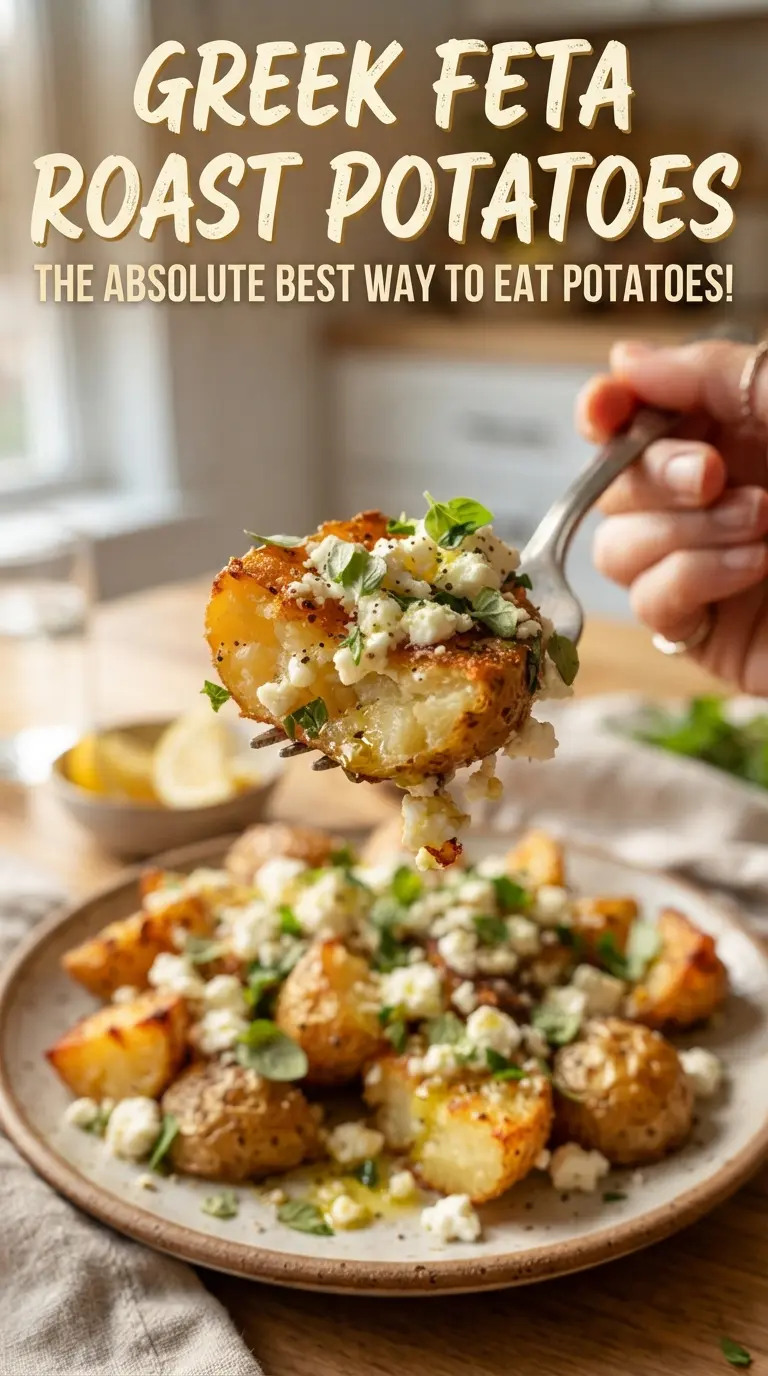
- Yukon gold potatoes — These hold their shape while turning creamy inside, which matters when the wedges roast in liquid. Russets can get fluffy and break down faster; red potatoes work too, but they stay a little firmer.
- Olive oil — This helps the cut edges brown and carries the oregano and garlic across the pan. A good extra-virgin oil adds more flavor, but you don’t need the most expensive bottle here.
- Fresh lemon juice — This is what makes the potatoes taste bright instead of flat. Bottled juice can work in a pinch, but fresh lemon gives the cleanest acidity and the best aroma.
- Chicken broth — The broth keeps the potatoes from drying out before the lemon has time to reduce. Vegetable broth works if that’s what you have, though the flavor will be slightly lighter.
- Feta — Use a block or a good crumbled feta that tastes tangy and salty. Add it after roasting so it stays creamy and distinct instead of disappearing into the pan.
- Dried oregano — Dried oregano blooms better here than fresh because it has time to infuse the hot liquid. Fresh oregano can be used at the end, but it won’t give the same backbone during roasting.
- Fresh dill or parsley — These finish the dish with freshness and color. Dill gives it a more classic Greek edge; parsley keeps it clean and bright if you want the herbs to stay understated.
How to Roast Them So the Bottoms Brown, Not Boil
Coating the Wedges Evenly
Toss the potatoes with the oil, lemon juice, broth, garlic, oregano, salt, and pepper right in the roasting pan so every wedge gets coated without losing the flavorful liquid. The goal is a glossy, lightly pooled mixture, not soup. If the pan looks dry before it goes in the oven, the potatoes will stick and the garlic may burn.
Roasting Into Tenderness
Slide the pan into a fully hot 425°F oven and leave it alone long enough for the liquid to start reducing. Around the halfway mark, flip the wedges with a spatula so the underside can brown. If the potatoes are soft but the pan still has a lot of liquid, give them a few extra minutes until that liquid has mostly cooked off and the edges look deeply golden.
Finishing With Feta and Herbs
Scatter the feta over the potatoes right after they come out of the oven. The residual heat softens it without turning it greasy. Add the dill or parsley last so the herbs stay fresh and vivid; if you toss them in too early, they wilt into the pan and lose the sharp finish that makes the dish pop.
How to Adapt These Greek Roast Potatoes for Your Table
Dairy-Free Version
Skip the feta and finish with extra herbs plus a drizzle of good olive oil. You’ll lose the salty creaminess, but the lemon, oregano, and browned potatoes still carry the dish. If you want a little more punch, add a few chopped olives at the end.
Vegetarian Swap
Use vegetable broth instead of chicken broth and the recipe stays just as balanced. Choose a broth with enough body to keep the potatoes savory; a thin, watery one can leave the pan tasting mostly of lemon.
Swap the Herbs Based on What You Have
Dill gives the most classic finish, but parsley is cleaner and more neutral. If you’re using dried herbs instead of fresh, add them during roasting, not at the end; dried herbs need heat and moisture to open up.
Storage and Reheating
- Refrigerator: Store leftovers in an airtight container for up to 4 days. The potatoes soften a little as they sit, but the flavor deepens.
- Freezer: They freeze, but the texture turns mealy after thawing, so I don’t recommend it for the best result.
- Reheating: Reheat on a sheet pan in a 400°F oven until hot and re-crisped at the edges. The biggest mistake is using the microwave, which makes the potatoes wet and collapses the browned sides.
Answers to the Questions Worth Asking
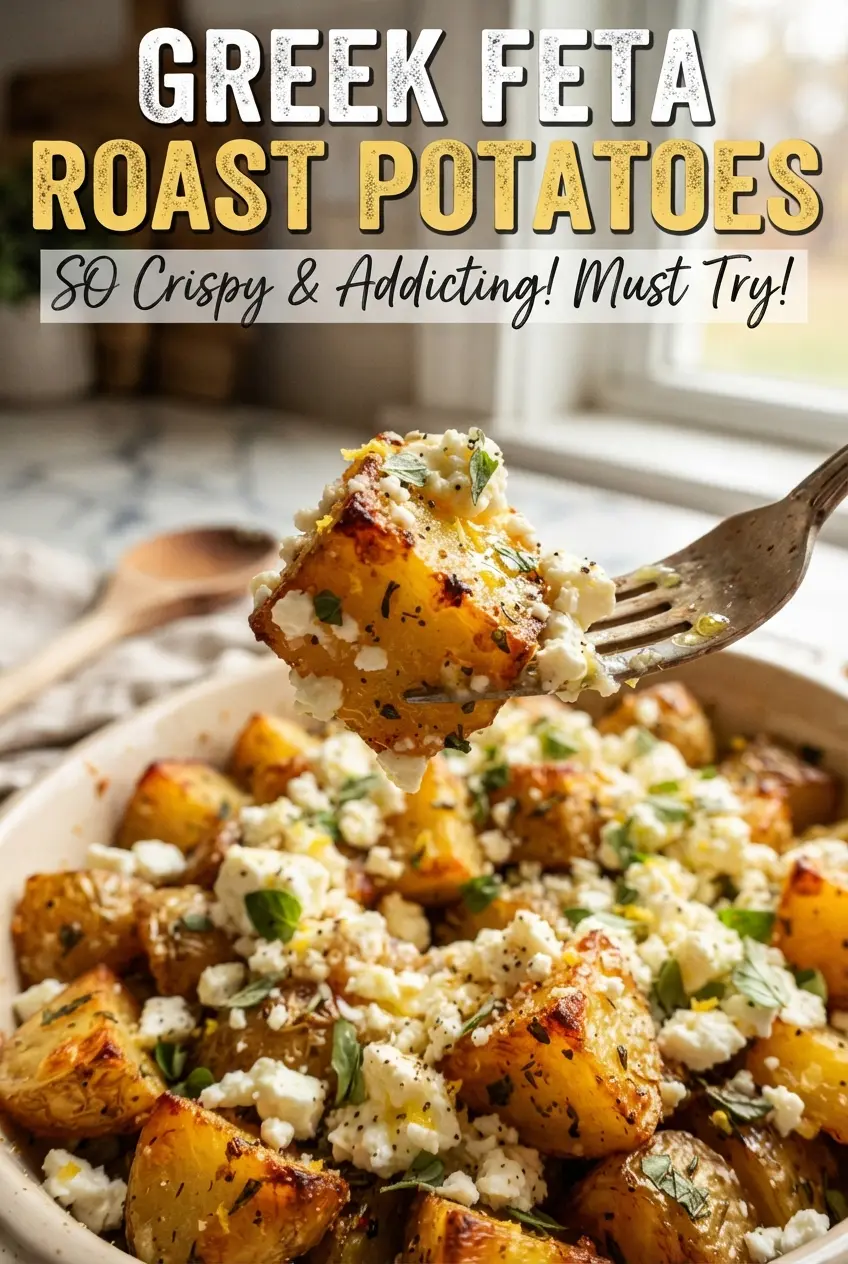
Greek Feta Roast Potatoes
Ingredients
Equipment
Method
- Preheat your oven to 425F and set a roasting pan inside to warm up for a minute if possible for quicker browning.
- Toss the potato wedges with olive oil, fresh lemon juice, chicken broth, minced garlic, dried oregano, salt, and black pepper in a roasting pan until evenly coated.
- Spread the potatoes in a single layer so they roast instead of steam, keeping cut sides spaced apart.
- Roast for 45-50 minutes, flipping halfway, until the liquid is absorbed and the edges are crispy and golden, with visible browning along the ridges.
- Top the hot potatoes with crumbled feta and fresh dill or parsley, letting the feta soften slightly from the heat.
- Serve hot with lemony, oregano-scented crispy edges as the visual cue: browned corners and melted crumbles.