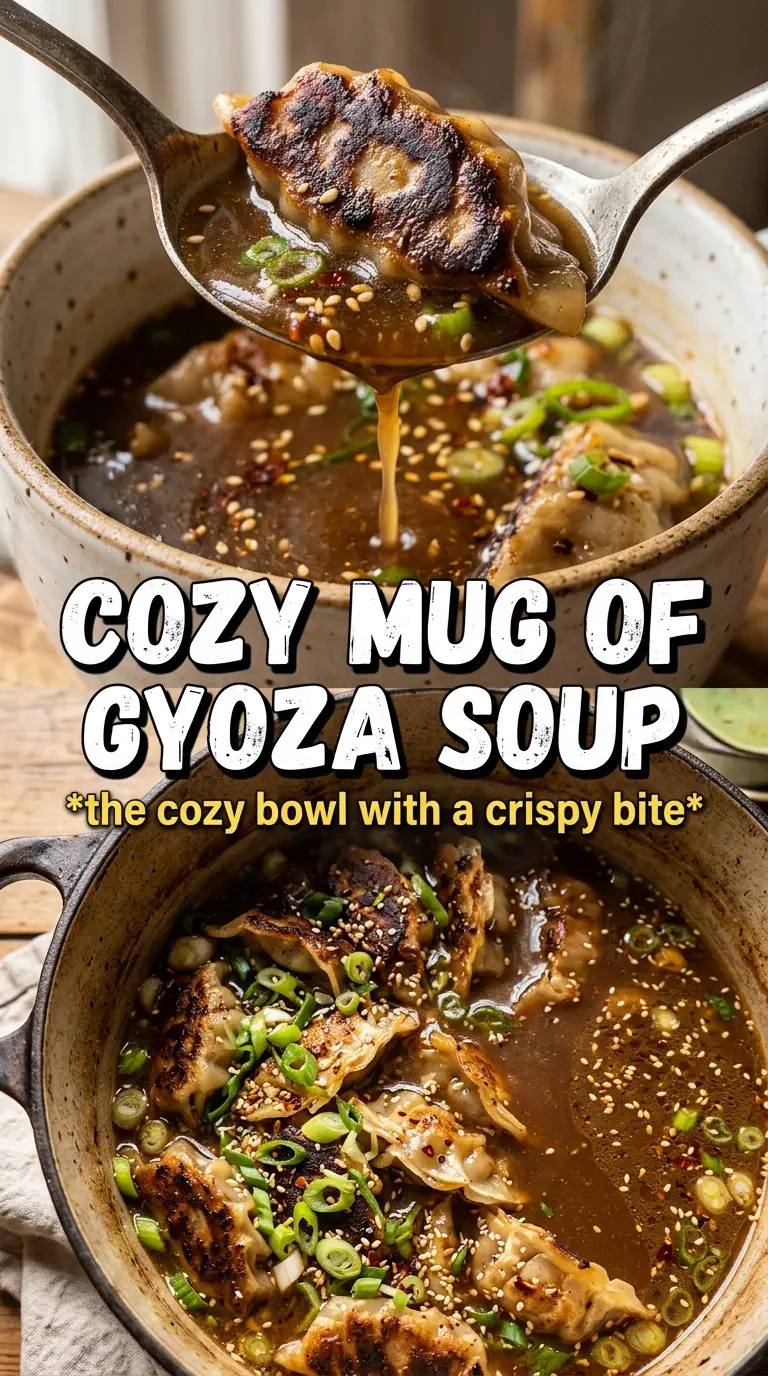
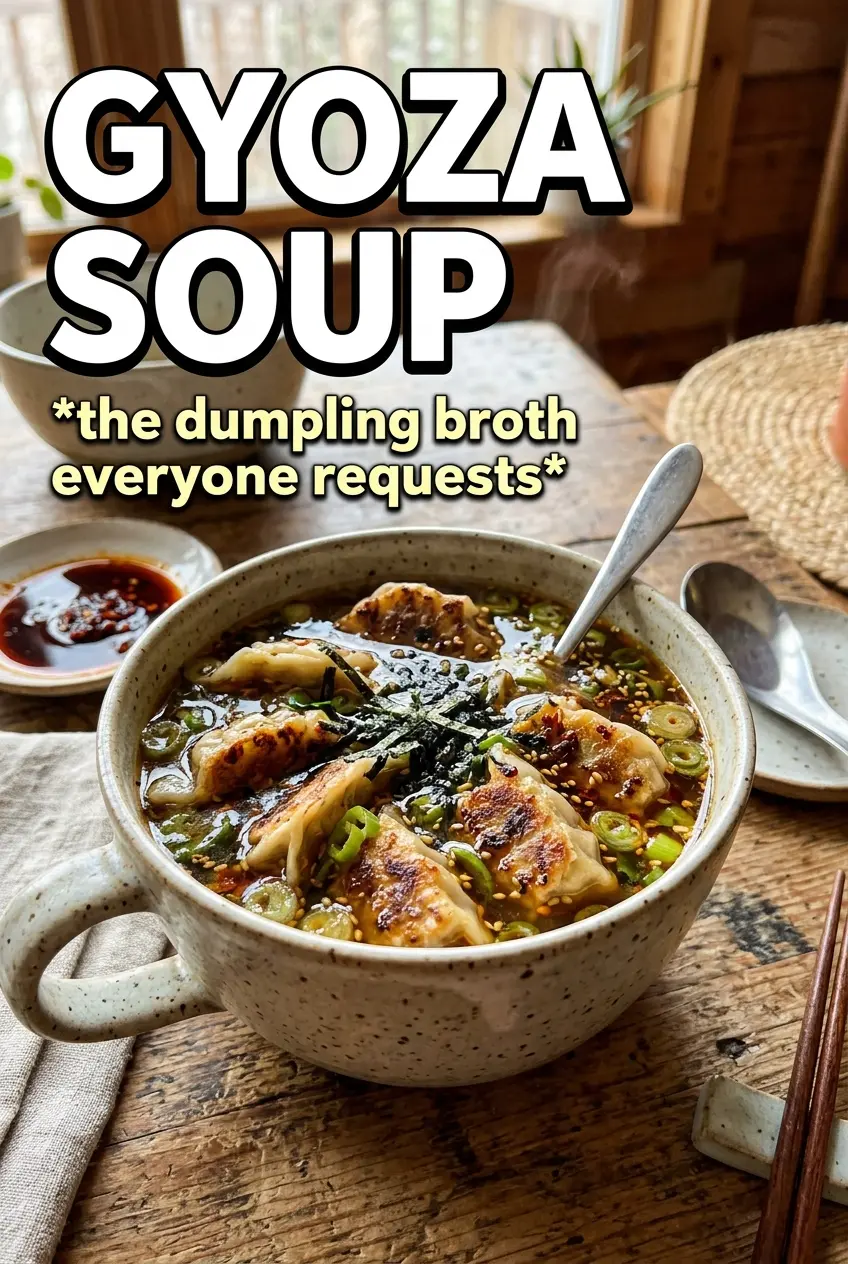
Gyoza soup lands in the bowl with the kind of balance that makes you stop after the first spoonful. The broth is savory and light, but still layered enough to feel like a meal, and the dumplings turn tender without going mushy if you add them at the right moment. Bok choy keeps some bite, shiitakes bring a deeper earthy note, and the finishing drizzle of sesame oil and chili oil gives the whole pot a clean, aromatic lift.
What makes this version work is the order. Garlic and ginger go into the broth first so they have time to soften and perfume everything, while mirin and rice vinegar keep the base from tasting flat. The gyoza cook directly in the broth, which saves dishes and gives the soup a little body from the dumpling wrappers. I’ve tested it both with frozen and fresh dumplings, and the timing stays forgiving as long as the broth stays at a gentle simmer, not a hard boil.
Below, I’ve included the detail that matters most for keeping the dumplings intact, plus a few swaps that make this soup work with what’s already in your fridge.
The dumplings stayed intact and the broth picked up so much flavor from the ginger and garlic. I added a little extra chili oil at the table and my husband went back for a second bowl immediately.
Save this gyoza soup for a fast, brothy dinner with tender dumplings, gingered dashi-style depth, and a bright sesame finish.
The Trick That Keeps the Gyoza from Going Wobbly
The biggest mistake with gyoza soup is treating the dumplings like pasta and boiling them hard. That rough heat works against you. It shakes the wrappers open, tears the edges, and turns the filling grainy before the broth has a chance to stay clear. A gentle simmer keeps the dumplings sealed and gives the soup a cleaner finish.
The other detail that matters is timing the greens last. Bok choy only needs a couple of minutes, just until the stems turn bright and the leaves slump. If it cooks too long, the broth loses its fresh edge and the greens get dull. This soup tastes best when each component still has a little definition.
- Gyoza — Frozen or fresh both work, but frozen dumplings need the full cooking time from the package. Drop them in while the broth is at a steady simmer, not a boil, so the wrappers stay intact.
- Bok choy — Chopped baby bok choy cooks fast and keeps a tender-crisp texture. If you use mature bok choy, separate the stems from the leaves and add the stems first.
- Shiitake mushrooms — Fresh shiitakes give the broth a deeper, savory backbone. Button mushrooms will work in a pinch, but they won’t add the same woodsy flavor.
- Mirin — This adds a soft sweetness that rounds out the soy sauce. If you don’t have it, use a small pinch of sugar with a splash more broth, but the finish will be flatter.
What Each Ingredient Is Actually Doing in This Recipe
- Primary ingredient (the star) — Quality matters most. Choose the best you can find.
- Cooking medium (oil, butter, or broth) — This carries flavors and prevents dryness.
- Seasonings (salt, pepper, spices, herbs) — Layer flavors so nothing overpowers. Build depth gradually.
- Aromatics (garlic, onion, herbs) — Cook with fat to bloom flavors. Become the foundation.
- Supporting ingredients — Complement the main ingredient without overpowering it.
- Sauce or liquid (if applicable) — Brings flavors together. Balance richness with acid.
- Acid (lemon, vinegar, wine, or other) — Brightens and prevents flat-tasting results.
- Final finish (garnish, glaze, or sauce) — Prevents one-dimensional taste and adds visual appeal.
Building the Broth Before the Dumplings Go In
Wake Up the Aromatics
Bring the broth to a simmer first, then add the garlic, ginger, soy sauce, mirin, and rice vinegar. You want the broth steaming and gently moving, not bubbling hard. That short simmer softens the sharp edges of the garlic and ginger and gives the liquid a rounder, more integrated taste. If the broth tastes too salty at this stage, don’t fix it yet; the dumplings and vegetables will mellow it as they cook.
Cook the Mushrooms Until the Broth Picks Them Up
Add the sliced shiitakes and let them cook for 3 to 4 minutes. They should turn tender and release some of their flavor into the broth, but they shouldn’t collapse into nothing. If your mushrooms are sliced too thick, they’ll stay chewy; if they’re paper thin, they disappear before the soup is done. Thin, even slices give you the best texture and the cleanest broth.
Poach the Gyoza Gently
Lower the dumplings into the simmering broth and keep the heat steady. They’re done when they float and the wrappers look slightly translucent around the edges, usually 5 to 7 minutes depending on the package and whether they started frozen. Don’t stir aggressively once they’re in the pot; a spoon scraping through the soup is the fastest way to tear them open. A gentle nudge is enough if they stick together.
Finish with Greens and Oil
Stir in the bok choy and cook just until wilted, then turn off the heat and add the sesame oil. That last step matters because sesame oil loses its fragrance when it sits over heat too long. Taste the broth now and add salt only if it still needs it. Finish with green onions, sesame seeds, and chili oil right before serving so the toppings stay bright and aromatic.
How to Adapt This Gyoza Soup Without Losing What Makes It Good
Make It Vegetarian
Use vegetable broth and vegetarian gyoza, then add a splash more soy sauce or a little white miso at the end if the broth tastes thin. You’ll lose some of the roundness that chicken broth gives, but mushrooms and ginger carry the savory side nicely.
Make It Gluten-Free
Use gluten-free dumplings and swap in tamari for the soy sauce. Check the rice vinegar and mirin labels too, since a few brands add gluten-containing ingredients. The flavor stays close, but the wrapper texture may be a little softer depending on the dumpling brand.
Turn It into a Heartier Bowl
Add thin sliced carrots, napa cabbage, or a handful of spinach near the end. The key is keeping the soup brothy, not overloading it until it starts to feel like a stir-fry in broth. Extra vegetables are great here, but add them in stages so they cook evenly.
Storage and Reheating
- Refrigerator: Up to 3 days, but the dumplings will soften as they sit in the broth.
- Freezer: I don’t recommend freezing the finished soup. The dumpling wrappers turn soft and the vegetables lose their texture.
- Reheating: Warm it gently on the stovetop over low heat until hot. If you boil it, the dumplings can split and the broth can turn cloudy.
Answers to the Questions Worth Asking
Gyoza Soup
Ingredients
Equipment
Method
- Bring chicken broth to a simmer in a large pot, then add garlic, ginger, soy sauce, mirin, and rice vinegar.
- Simmer for 5 minutes, then add shiitake mushrooms and cook for 3-4 minutes while the broth bubbles gently.
- Add gyoza/potsticker dumplings directly to the simmering broth and cook per package directions, usually 5-7 minutes until cooked through.
- Add bok choy and cook for 2-3 minutes until wilted, keeping the broth at a steady simmer.
- Stir in sesame oil, then taste the soup and season with salt.
- Serve topped with green onions, sesame seeds, and chili oil.