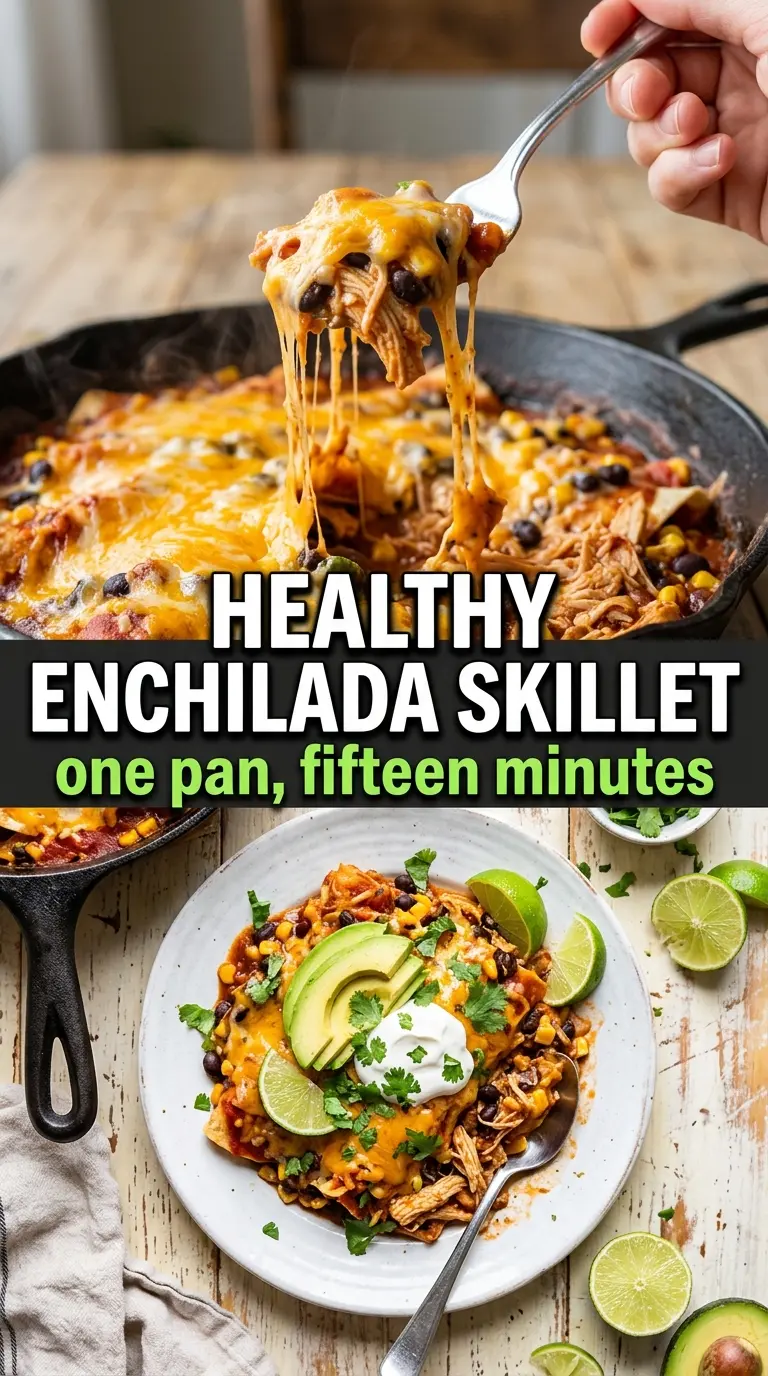
Colorful, saucy, and packed with lean turkey, black beans, corn, and just enough melted cheese to pull everything together, this healthy enchilada skillet earns its place in the weeknight rotation fast. It gives you all the comfort of enchiladas without the rolling, layering, or long oven time, and the payoff is a skillet full of bold Tex-Mex flavor that still feels light enough for an ordinary Tuesday.
What makes this version work is the order. The turkey browns first so it has some flavor before the sauce goes in, and the spices bloom in the fat for a minute so they don’t taste flat. Draining the tomatoes keeps the skillet from turning watery, which matters because you want a thick spoonable filling, not a soupy mess.
Below you’ll find the small details that keep the sauce from thinning out, plus a few easy swaps if you need to work with what’s already in the pantry. The whole dish comes together in one pan, and that makes it easy to serve with lime, avocado, and a handful of cilantro right at the table.
The sauce thickened up perfectly and the turkey stayed juicy. I added a little extra lime at the end and it tasted like something I’d order at a casual Tex-Mex place.
Save this healthy enchilada skillet for nights when you want one pan, fast cleanup, and a thick saucy filling with black beans and corn.
The Trick to Keeping This Skillet Thick, Not Watery
The biggest mistake in a dish like this is crowding too much moisture into the pan at once. Ground turkey releases liquid as it cooks, tomatoes bring more, and enchilada sauce already has enough body on its own. If you add everything before the turkey has a chance to brown, you end up steaming the mixture instead of building that savory base that makes the final skillet taste finished.
The other thing worth watching is the simmer. You want the sauce to reduce just enough that it clings to the beans and turkey, but not so long that the beans start to break apart and the corn turns dull. A gentle simmer with the lid off is the sweet spot here. That last little bit of reduction is what gives you a spoonable filling that stays put on the plate.
- Ground turkey — Use lean turkey for a lighter skillet, but don’t go so lean that it turns dry. If yours is extra lean, a teaspoon of oil in the pan helps the browning start faster.
- Enchilada sauce — This is the backbone of the dish, so use one you actually like the taste of. A red sauce with moderate heat works best because it carries the spices without overpowering the beans and corn.
- Diced tomatoes — Draining them is the difference between a thick skillet and a loose one. If you skip that step, simmer a few extra minutes until the excess liquid cooks off.
- Mexican cheese blend — The cheese goes on at the end, where it melts into the top instead of disappearing into the sauce. You can swap in Monterey Jack or cheddar, but the melt will be a little less stretchy with cheddar alone.
What Each Ingredient Is Actually Doing in This Recipe
- Primary ingredient (the star) — Quality matters most. Choose the best you can find.
- Cooking medium (oil, butter, or broth) — This carries flavors and prevents dryness.
- Seasonings (salt, pepper, spices, herbs) — Layer flavors so nothing overpowers. Build depth gradually.
- Aromatics (garlic, onion, herbs) — Cook with fat to bloom flavors. Become the foundation.
- Supporting ingredients — Complement the main ingredient without overpowering it.
- Sauce or liquid (if applicable) — Brings flavors together. Balance richness with acid.
- Acid (lemon, vinegar, wine, or other) — Brightens and prevents flat-tasting results.
- Final finish (garnish, glaze, or sauce) — Prevents one-dimensional taste and adds visual appeal.
Building the Enchilada Flavor in the Right Order
Browning the Turkey First
Cook the turkey over medium-high heat and break it up as it goes from pink to pale golden. If you dump the onion in too early, the moisture from the vegetables slows the browning and you lose the savory edge that makes the skillet taste deeper. Once the turkey is cooked through, drain off any obvious excess liquid so the sauce doesn’t thin out later.
Softening the Onion and Garlic
Add the onion next and cook it until it turns soft and translucent, about three minutes. Garlic only needs a minute, just long enough for the raw edge to fade; any longer and it can taste bitter. This is the point where the pan should smell like dinner, not just meat.
Letting the Spices Bloom
Stir the chili powder, cumin, and smoked paprika into the hot skillet before the liquids go in. The heat wakes up the spices and spreads their flavor through the fat already in the pan, which gives the whole dish a rounder taste. If the pan looks dry, that’s fine — the sauce will loosen everything in a second.
Simmering to the Right Consistency
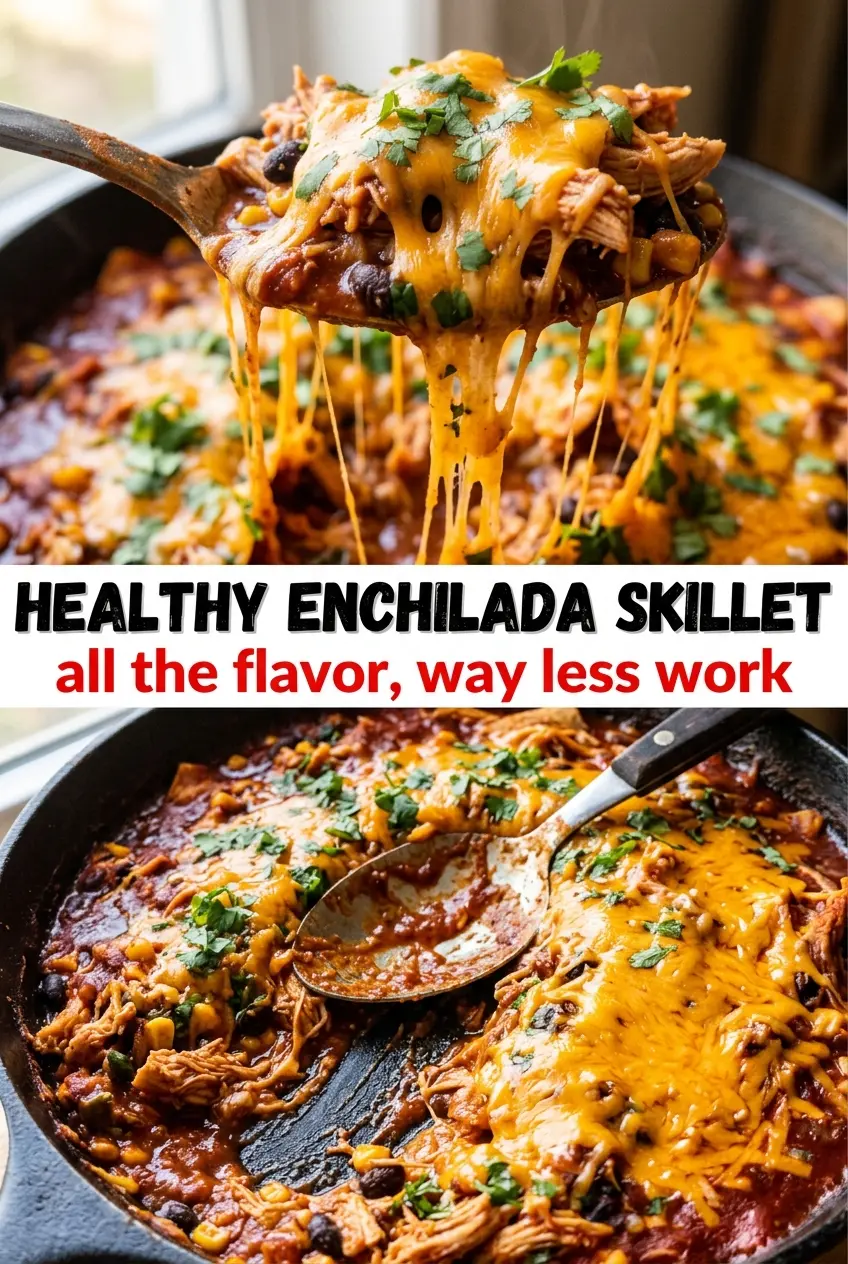
After you add the beans, corn, tomatoes, and enchilada sauce, let the mixture simmer uncovered until the sauce thickens slightly, usually 8 to 10 minutes. You want a glossy, spoonable texture with small bubbles around the edges, not a hard boil. If it still looks soupy, give it another couple of minutes before adding the cheese.
Melting the Cheese on Top
Sprinkle the cheese over the surface and cover the skillet just until it melts. The lid traps enough steam to soften the cheese without turning the whole dish watery. Serve it right away with cilantro, avocado, and lime, because that fresh finish is what keeps the skillet from feeling heavy.
How to Adapt This Skillet for Different Nights
Make It Dairy-Free
Skip the cheese and finish with avocado, cilantro, and extra lime. You lose the melty top layer, but the skillet stays bold and satisfying because the sauce and spices are already carrying the flavor.
Use Ground Chicken or Beef
Ground chicken works almost exactly the same way as turkey. If you use ground beef, drain the fat after browning so the sauce doesn’t get greasy, and expect a richer, heavier flavor.
Make It Vegetarian
Replace the turkey with an extra can of black beans or a mix of black beans and diced zucchini. The texture will be softer, so let the skillet simmer until the vegetables have a little bite and the sauce clings properly.
Stretch It for More Servings
Add another half can of beans or a little extra corn if you need to feed more people without making a second main dish. Just simmer an extra minute or two so the added ingredients absorb some of the sauce instead of watering it down.
Storage and Reheating
- Refrigerator: Store leftovers in an airtight container for up to 4 days. The sauce thickens as it sits, which actually helps the texture.
- Freezer: This freezes well for up to 2 months. Cool it completely first, then freeze in portions for the easiest reheating.
- Reheating: Warm it gently on the stove over low heat or in the microwave with a splash of water if needed. The common mistake is blasting it on high heat, which can dry out the turkey and make the sauce tighten up too much.
Answers to the Questions Worth Asking
Healthy Enchilada Skillet
Ingredients
Equipment
Method
- Cook the lean ground turkey in a large cast iron skillet over medium-high heat, breaking it apart, until no longer pink, then drain any excess liquid.
- Add the diced onion and cook for 3 minutes until soft, then add the minced garlic and cook 1 more minute.
- Stir in the chili powder, cumin, and smoked paprika, then add the black beans, corn, diced tomatoes, and red enchilada sauce.
- Stir everything together and simmer for 8–10 minutes, until the mixture is heated through and the sauce thickens slightly.
- Sprinkle the Mexican cheese blend over the top and cover for 2 minutes until melted.
- Serve with fresh cilantro, sliced avocado, and a squeeze of lime.