Hobo casserole earns its place because it gives you soft, tender potatoes, savory ground beef, and a creamy, cheesy sauce in one pan without turning soggy or bland. The potatoes hold their shape, the beef stays seasoned all the way through, and the cheddar on top bakes into that browned, bubbling lid everyone goes after first.
What makes this version work is the layering. Thin potato slices go in raw, but they’re tucked under a sealed foil cover long enough to steam and soften before the cheese goes on. The soup mixture is thinned just enough with broth and sour cream to move through the layers instead of sitting in clumps, which keeps every bite creamy instead of heavy.
Below, I’ve included the small details that matter most: how thin to slice the potatoes, why the foil matters, and what to change if you want to stretch the casserole a little further or make it fit what’s already in your kitchen.
The potatoes came out tender all the way through, and the sauce stayed creamy instead of separating. My husband went back for seconds and asked if I could put this on our regular rotation.
Love the creamy potato layers and melted cheddar on this hobo casserole? Save it to Pinterest for a comforting ground beef bake that turns out hearty and bubbly every time.
The Potatoes Need Time Under Cover, Not Just Heat
The biggest mistake with a layered potato casserole is rushing the bake uncovered and expecting raw slices to soften on schedule. They won’t. The foil traps steam around the potatoes and gives them the gentler heat they need before the cheese goes on, which is why the casserole turns out tender instead of half-crisp and half-mushy.
Thin slicing matters more than almost anything else here. Aim for slices that are about 1/8 inch thick and keep them as even as you can, because thick slices need a longer bake and uneven slices leave you with some bites that are done and others that still taste starchy. If you’ve got a mandoline, use it. If not, take your time with a sharp knife and keep the potatoes consistent.
What the Soup, Sour Cream, and Broth Are Doing Together
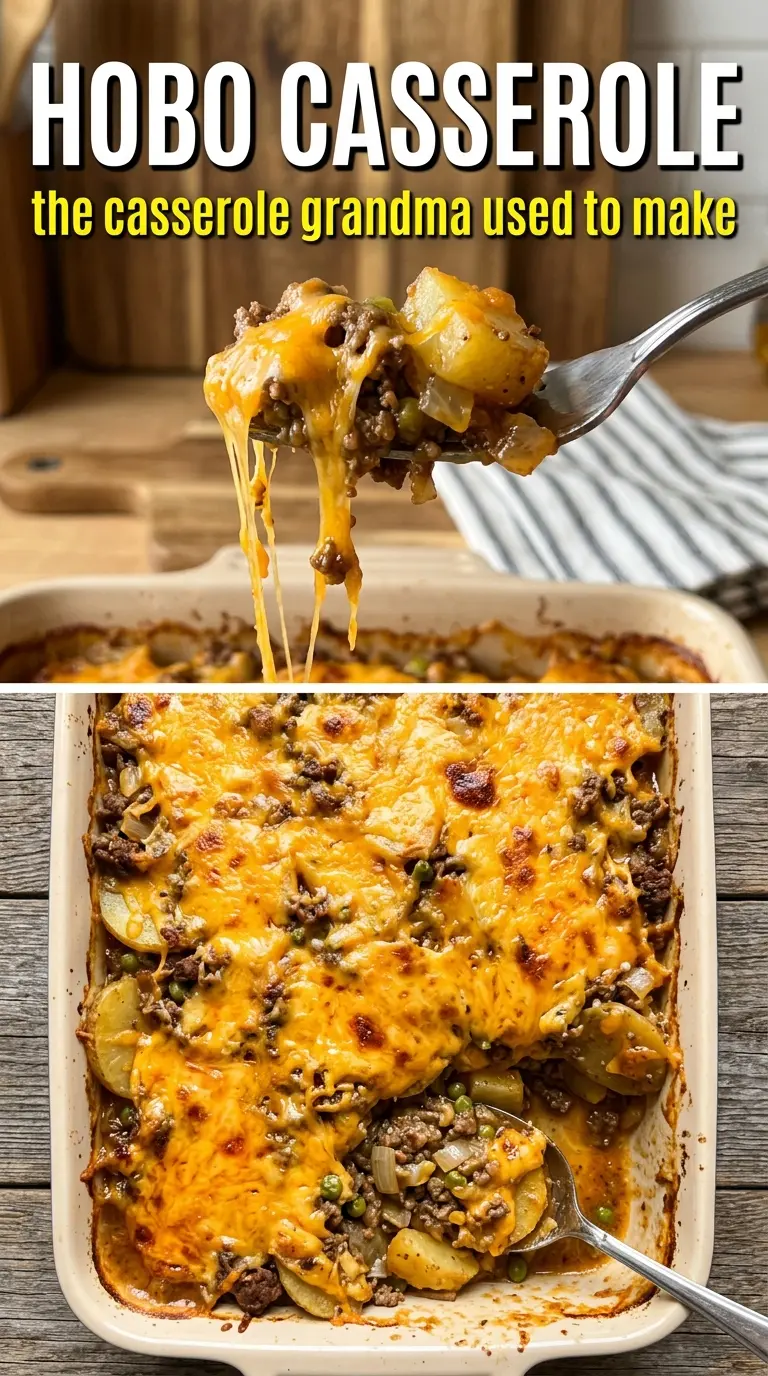
- Cream of mushroom soup — This gives the casserole its base body and a little savory depth. A homemade white sauce can work, but the canned soup is doing more than thickening; it brings that mushroomy, old-school casserole flavor that belongs here.
- Sour cream — This keeps the sauce from tasting flat and adds a slight tang that cuts through the richness of the beef and cheese. Plain Greek yogurt can stand in if that’s what you have, but it will taste a touch sharper.
- Beef broth — The broth loosens the sauce just enough to move between the layers and prevents a paste-like filling. Water will work in a pinch, but the casserole loses some of its savory backbone.
- Sharp cheddar — Sharp cheddar gives you enough flavor to stand up to the potatoes and beef. Mild cheddar melts fine, but it fades fast in a dish this hearty.
- Russet potatoes — Russets are the right choice because they soften beautifully and absorb the sauce without falling apart. Waxy potatoes stay too firm and can make the casserole feel dense.
Building the Layers So Every Bite Stays Creamy
Brown the Beef and Onion First
Cook the beef and onion together over medium heat until the meat loses its pink color and the onion turns soft and translucent. Drain off the excess fat after browning or the casserole can turn greasy in the bottom corners. Stir in the garlic at the end and cook it for just a minute so it loses the raw edge without scorching.
Mix the Sauce Until It Flows
Stir the soup, sour cream, broth, and seasonings together until the mixture is smooth and spoonable. If it looks too thick to spread, add a splash more broth; if it looks watery, it won’t coat the potatoes evenly and the casserole can separate as it bakes. The sauce should pour in ribbons, not sit in a lump.
Layer with Even Pressure
Start with half the potatoes, then half the beef, then half the sauce, and repeat. Don’t pack the potatoes down hard, but do press the layers just enough so the sauce settles through them instead of sitting only on top. Finish with foil that seals tightly around the dish; loose foil lets the top dry out before the potatoes finish cooking.
Finish with Cheese After the Potatoes Are Tender
Bake covered until a knife slips into the potatoes with little resistance, then pull the foil off and add the cheddar. The cheese should melt into a glossy top, then bubble and pick up a few browned spots around the edges. If you add it too early, it can overbrown before the center is done.
How to Adapt This Casserole When You Need a Different Version
Gluten-Free Without Losing the Creamy Texture
Use a gluten-free cream of mushroom soup and check that your broth is gluten-free. The texture stays the same because the sauce still has enough body to cling to the potatoes, and the dish keeps the same layered, baked feel.
Swap in Ground Turkey for a Lighter Bake
Ground turkey works well if you brown it with the onion and season it a little more aggressively. It tastes leaner than beef, so the smoked paprika and cheddar matter more here; they bring back the savory depth the turkey doesn’t naturally have.
Add Vegetables Without Making It Watery
Mushrooms, peas, or thin-sliced carrots can go in, but keep the additions modest so the casserole doesn’t turn loose. If you use mushrooms, cook them with the beef first to drive off their moisture; that step keeps the sauce creamy instead of diluted.
Make It Ahead for a Busy Night
Assemble the casserole up to a day ahead, cover it tightly, and refrigerate it unbaked. Let it sit on the counter while the oven preheats, then add 10 to 15 extra minutes under foil since it’s going in cold. The only thing that suffers a little is the potato texture at the edges, but the flavor holds up well.
Storage and Reheating
- Refrigerator: Store leftovers covered for up to 4 days. The potatoes will firm up a bit as they chill, but the casserole still reheats well.
- Freezer: It freezes, but the potatoes soften slightly after thawing. For the best texture, freeze in portions, wrap tightly, and thaw in the refrigerator before reheating.
- Reheating: Reheat covered in a 350°F oven until hot in the center, or microwave single servings with a splash of broth to keep the sauce from drying out. Don’t blast it uncovered or the cheese can turn rubbery before the middle warms through.
Answers to the Questions Worth Asking
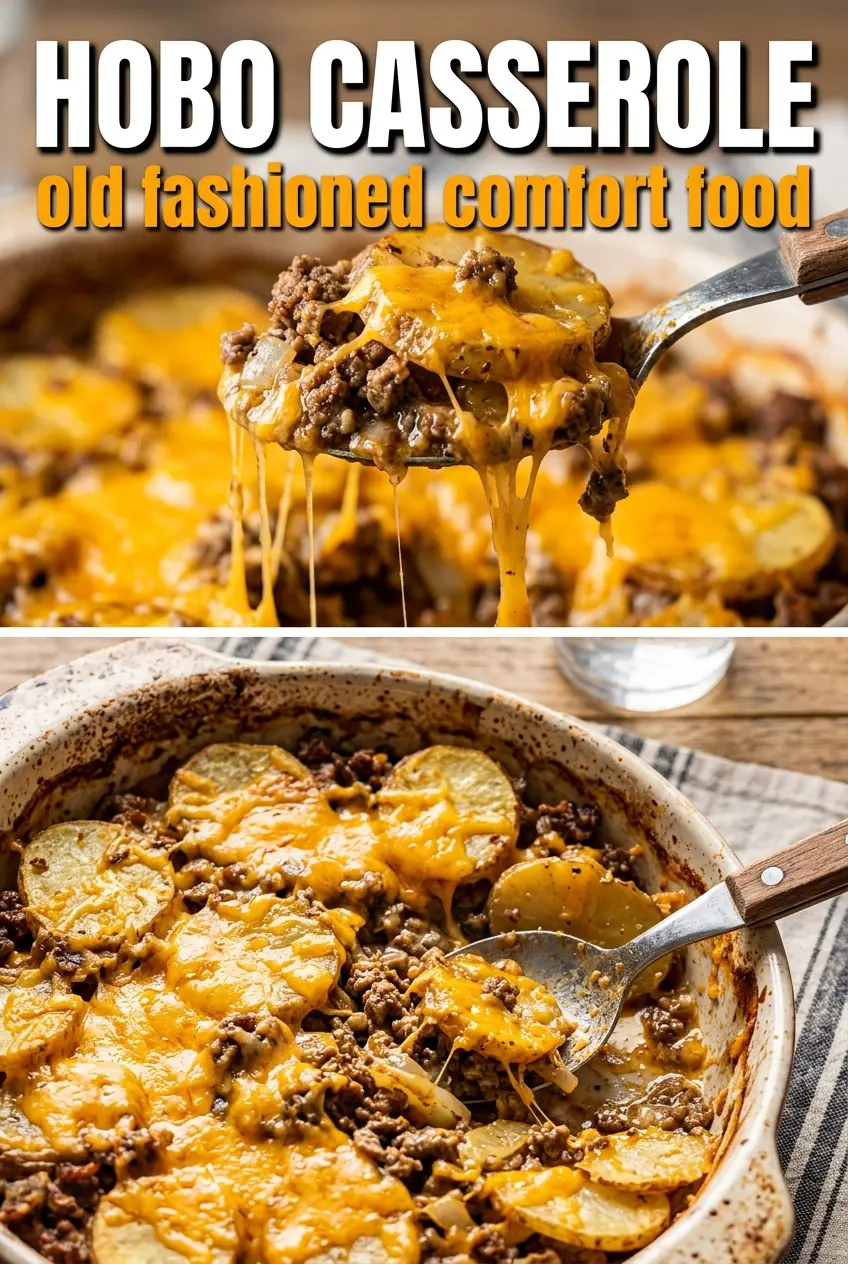
Hobo Casserole
Ingredients
Equipment
Method
- Preheat the oven to 375°F and grease a 9x13 baking dish so the layers bake evenly.
- Brown the ground beef with the diced onion in a skillet over medium heat, stirring until the beef is cooked through.
- Drain the fat, add the minced garlic, and cook for 1 more minute to mellow the garlic without browning it too much.
- In a bowl, mix the cream of mushroom soup, sour cream, and beef broth until smooth.
- Stir in garlic powder, onion powder, smoked paprika, salt, and black pepper until the seasoning is evenly distributed.
- Layer half the thinly sliced russet potatoes in the greased dish, spreading them in an even layer.
- Top with half the beef mixture, then spoon on half the soup mixture.
- Repeat the layers with the remaining potatoes, beef mixture, and soup mixture.
- Cover tightly with foil and bake at 375°F for 40 minutes, until the potatoes are tender and the filling is bubbling at the edges.
- Remove the foil and sprinkle shredded sharp cheddar cheese over the casserole.
- Bake uncovered for 15 more minutes at 375°F until the cheese is golden and bubbly.