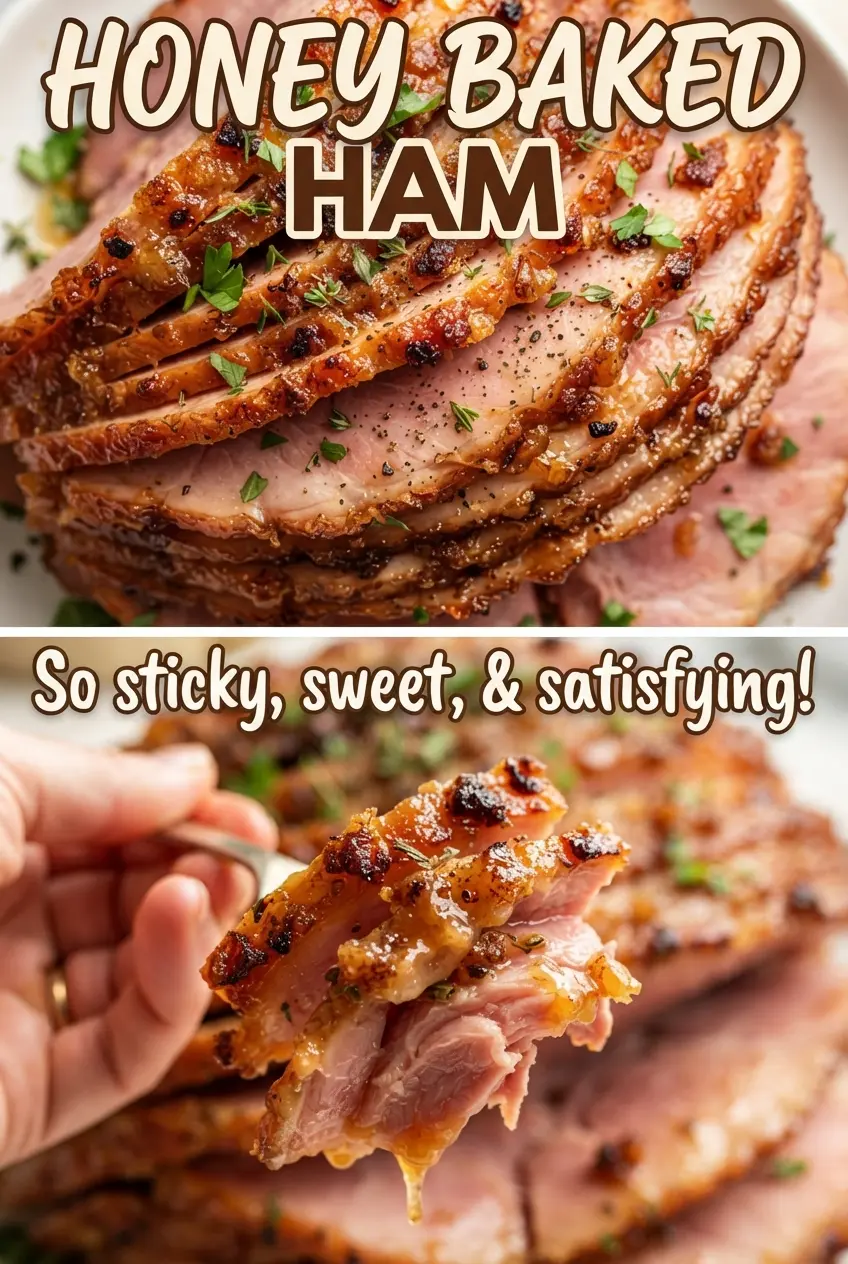
Honey baked ham comes out with that glossy, crackly crust everyone reaches for first, then slices underneath that stay juicy instead of dry. The sweet glaze clings to the spiral cuts, so every piece gets a little hit of honey, spice, and caramelized sugar without turning syrupy or sticky in the wrong way.
The trick is building flavor in layers. The ham starts covered so it warms through gently, then the honey butter helps the sugar stick, and the final blast of heat turns the coating into a thin, brittle shell. Using a fully cooked spiral-sliced ham matters here because it gives you those deep cuts that catch the glaze all the way through the roast.
Below, I’ll show you how to keep the crust from sliding off, what kind of ham works best, and how to get that deep golden finish without drying out the meat.
The glaze set up into a crackly crust, and the ham stayed juicy all the way to the center. I followed the timing exactly, and even the leftovers sliced cleanly the next day.
Love the crackly honey sugar crust on this spiral-sliced ham? Save it to Pinterest for your next holiday dinner or Sunday roast.
The Reason the Glaze Stays Crisp Instead of Turning Wet
The biggest mistake with glazed ham is rushing the sugar early and then holding it in a hot oven for too long. Sugar melts fast, and if it sits at high heat the whole time, it turns into a sticky varnish instead of a crisp crust. The foil-covered bake does the quiet work first: it warms the meat through without drying it out, which means the final glaze step only has to set and caramelize the outside.
The other detail that matters is the order. Honey and butter help the spiced sugar cling to the ham, but the sugar itself needs dry heat to crackle. That’s why the high-temperature finish is short and repeated in layers rather than one long blast.
- Spiral-sliced ham — The cuts let the glaze slip between the slices. A whole ham works, but you’ll lose that deep seasoning in the middle.
- Honey — Gives the glaze its shine and helps the crust bond to the meat. Maple syrup can stand in, but it tastes sharper and doesn’t set quite the same way.
- Butter — Helps the honey brush on evenly and keeps the surface from drying during the high-heat finish. Salted or unsalted both work here.
- Brown sugar plus granulated sugar — Brown sugar brings a little chew and molasses flavor; granulated sugar helps the crust dry into that brittle shell.
What Each Spice Is Actually Doing in the Glaze
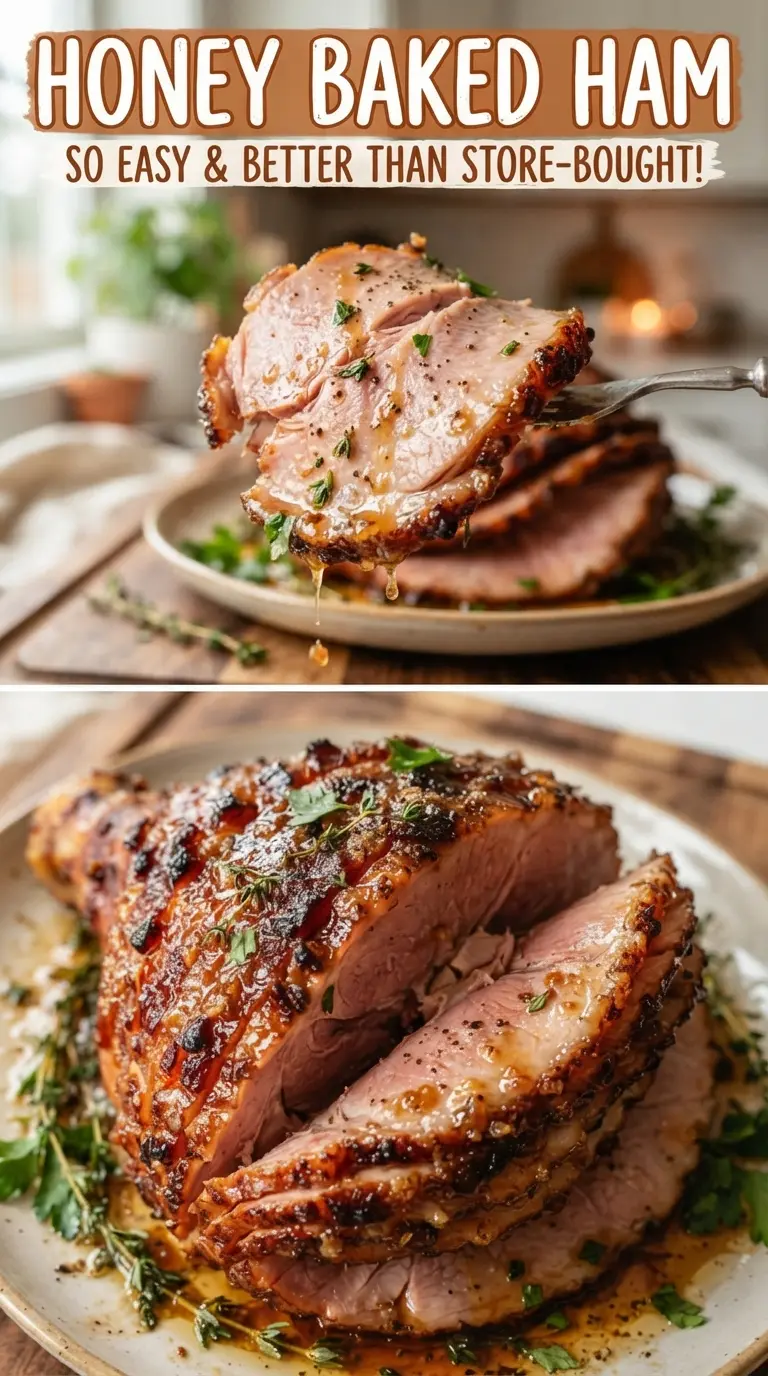
The spice blend is small, but it keeps the glaze from tasting flat. Cinnamon and cloves give the ham that familiar bakery-style warmth, while ginger and nutmeg round out the sweetness so the crust tastes deeper than plain caramelized sugar. Paprika doesn’t make it smoky here; it adds color and a quiet savory edge that helps the glaze look glossy instead of muddy.
If you only have one or two of the spices, the ham will still work. What matters most is keeping the balance between sweet and warm so the crust tastes layered, not candy-like. Freshly ground spices aren’t necessary, but stale cloves or ginger will show up fast because this glaze doesn’t have much else to hide behind.
- Ground cloves — Use the listed amount. Cloves can take over quickly, and too much makes the glaze taste harsh.
- Ground ginger — Sharpens the sweetness and keeps the glaze from tasting heavy. It’s the spice that makes the crust feel lighter on the palate.
- Paprika — Choose a plain sweet paprika. Smoked paprika changes the whole profile and can overpower the honey.
- Nutmeg and allspice — These are background spices. Don’t skip them if you want the glaze to taste rounded instead of one-note.
How to Build the Crust Without Drying Out the Ham
Warm the Ham Gently First
Put the ham cut-side down in the roasting pan and cover it tightly with foil. That first stage is about bringing the meat up to temperature slowly, not browning it. If the foil is loose, steam escapes and the edges dry out before the center is hot. Bake until the thickest part reads about 120F, which gives you room for the glaze finish without pushing the ham past juicy.
Brush, Sugar, and Repeat
Once the foil comes off, brush on the honey butter while the ham is still hot so it spreads into the slices. Then pat on the spiced sugar rather than dumping it, because a heavy layer falls off before it can set. Repeat the brushing and sugaring two more times during the high-heat bake. Thin layers build a better crust than one thick coat, and that final texture is what gives the ham its crackly finish.
Finish at High Heat, Then Rest
Raise the oven to 400F and watch for the glaze to darken at the edges and look dry on top. You want deep golden, not burnt, because the crust will harden as it cools. Pull the ham when it reaches 140F and rest it for 15 minutes before slicing. If you cut too early, the juices run onto the board and the slices won’t hold together as cleanly.
How to Adapt This for Different Tables and Diet Needs
Dairy-Free Version
Use a plant-based butter with a neutral flavor and the same amount of honey. The glaze will still set, but it may brown a little faster, so keep an eye on the oven during the final high-heat bursts.
Less Sweet, More Savory
Cut the granulated sugar back by 1/4 cup and keep the brown sugar as written. You’ll still get a crisp glaze, but the flavor leans more toward warm spice and ham rather than straight caramel.
Using a Smaller Ham
For a ham closer to 5 or 6 pounds, keep the glaze amounts the same if you want a thick crust, but start checking for doneness earlier. The oven temperature and glazing method stay the same; only the timing changes.
Storage and Reheating
- Refrigerator: Store leftovers tightly wrapped or sealed for up to 4 days. The crust softens a little, but the ham stays sliceable and good for sandwiches or breakfast.
- Freezer: Freezes well. Slice first, wrap portions well, and freeze for up to 2 months so you can thaw only what you need.
- Reheating: Warm slices covered in a low oven with a splash of pan juices or water. High heat dries spiral ham out fast, so gentle heat is the difference between juicy leftovers and tough ones.
Answers to the Questions Worth Asking
Honey Baked Ham
Ingredients
Equipment
Method
- Preheat the oven to 325F, then place the ham cut-side down in a roasting pan and cover tightly with foil.
- Bake 12-14 minutes per pound, until the ham reaches 120F inside.
- Melt the honey and butter together, then mix the granulated sugar and brown sugar with the cinnamon, cloves, ginger, nutmeg, allspice, and paprika in a separate bowl.
- Remove the foil, brush the ham generously with honey butter, and pat on a layer of the spiced sugar.
- Raise the oven to 400F and bake 5 minutes, until the crust begins to set.
- Remove the ham, brush with more honey butter, and pat on another layer of spiced sugar.
- Bake 5 minutes at 400F to build the crust, then repeat brushing with honey butter and sugaring a final time.
- Bake until the crust is deep golden and crackly, and the ham reaches 140F.
- Rest the ham for 15 minutes before serving, letting the glaze thicken and the juices redistribute.