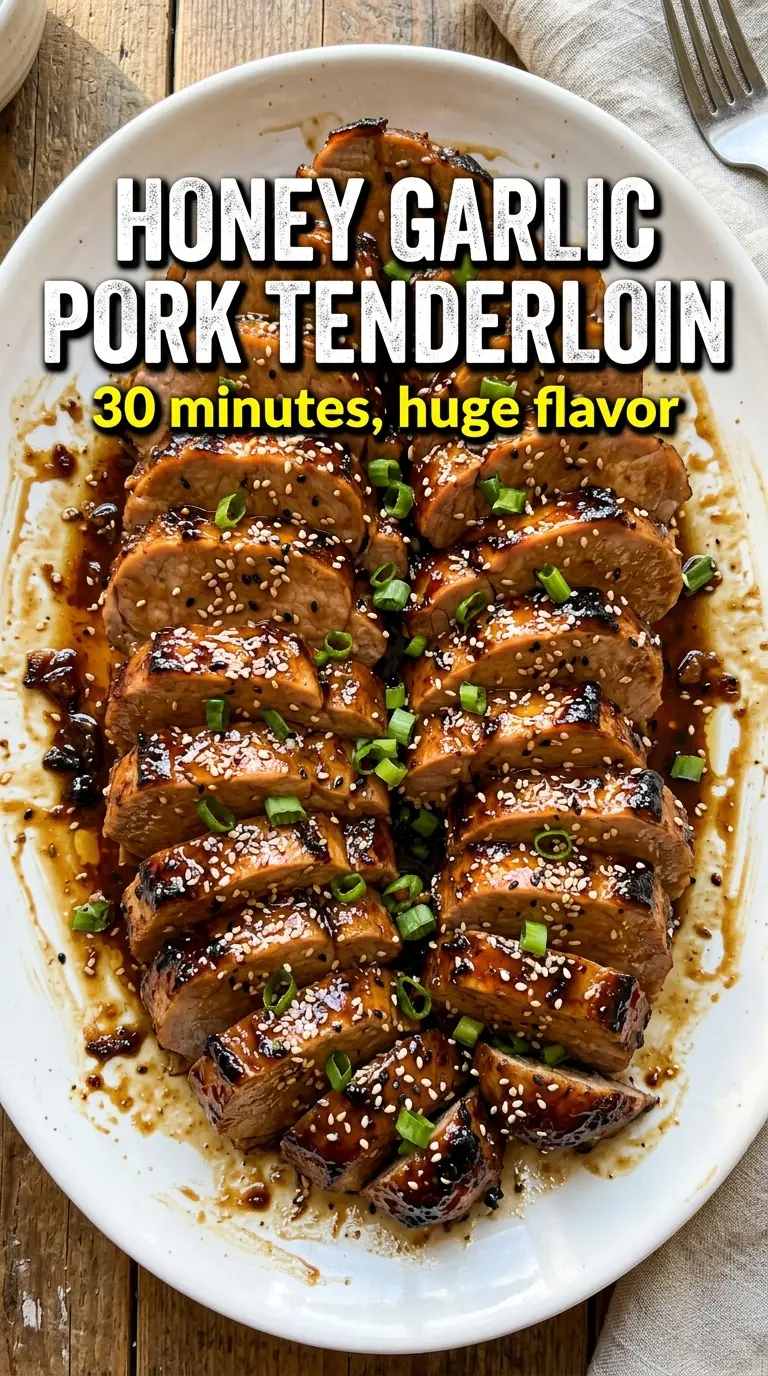
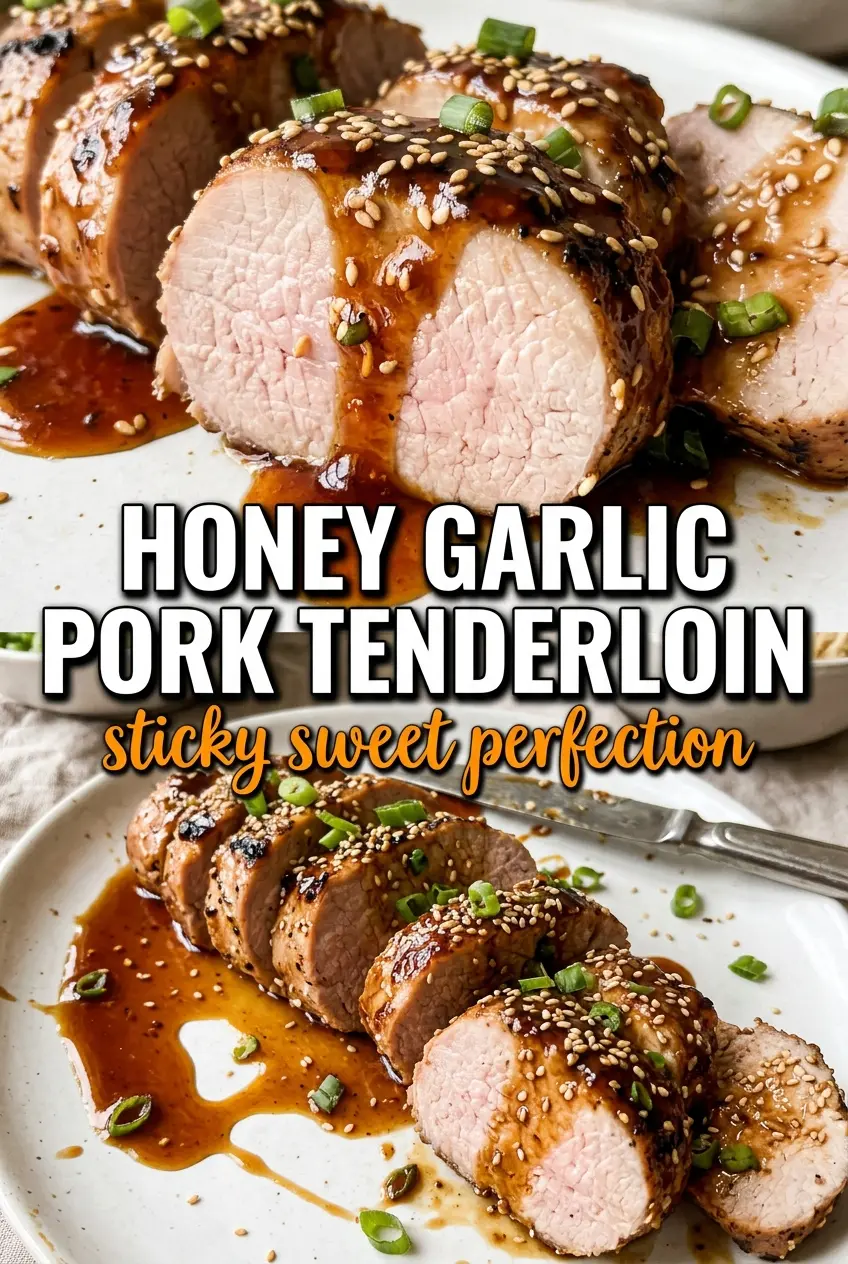
Sticky honey garlic pork tenderloin hits the table with caramelized edges, a glossy amber glaze, and the kind of juicy center that slices cleanly instead of squeezing out onto the cutting board. The sweet-savory coating clings to the meat instead of sliding off, which is exactly what you want from a pork tenderloin dinner that looks polished without asking much from you.
The trick is in the order: sear first for color, then brush on the glaze before the pork goes into the oven. That gives the honey time to thicken and caramelize instead of burning in the skillet, while the Dijon and vinegar keep the glaze from tasting flat or one-note. Pork tenderloin is lean, so a quick roast to 145°F and a short rest matter more here than almost anywhere else.
Below, I’ll show you how to keep the glaze glossy instead of gritty, which ingredient you can swap if you’re out of Dijon, and the small timing detail that keeps the pork juicy from end to end.
The glaze thickened up beautifully in the oven and the pork stayed juicy after resting. My husband kept picking at the slices before dinner even hit the table.
Like this sticky honey garlic pork tenderloin? Save it to Pinterest for an easy glazed dinner that slices juicy every time.
The Reason Pork Tenderloin Stays Juicy Here Instead of Drying Out
Pork tenderloin goes from perfect to dry fast, and the mistake usually happens before the oven even gets a chance to help. A hard sear builds the color you want, but the real safeguard is the short roast and the rest at the end. Pulling it at 145°F keeps the center blush-pink and tender; slicing sooner sends the juices straight onto the board.
The glaze matters too. Honey alone can scorch, but when it’s paired with soy sauce, Dijon, and vinegar, it stays balanced and finishes glossy instead of sticky in a cloying way. Brushing half on before roasting gives the pork a head start, then the second coat halfway through builds that lacquered finish without turning bitter.
What Each Ingredient Is Actually Doing in the Glaze
- Pork tenderloins — These are lean, fine-grained, and cook quickly, which makes them ideal for a fast glaze-and-roast dinner. Don’t swap in pork loin without adjusting the cook time; loin is thicker and takes longer.
- Honey — This is what gives the glaze its shine and that caramelized edge. There isn’t a true substitute for the way honey browns, but maple syrup works in a pinch; the glaze will be a little less sticky and a little darker in flavor.
- Soy sauce — It brings salt and depth, and it keeps the glaze from reading like plain sweet syrup. Low-sodium soy sauce works well if you want more control over seasoning.
- Dijon mustard — Dijon helps the glaze emulsify and gives it a sharp note that cuts through the sweetness. Yellow mustard won’t taste the same, but it will still give the glaze some tang if that’s what you have.
- Apple cider vinegar — This keeps the glaze bright and prevents it from tasting heavy. If you need to swap it, rice vinegar is the closest match.
- Garlic — Fresh minced garlic gives the glaze the bold finish that makes this dish taste homemade. Jarred garlic works, but the flavor is softer and can be a little muted after roasting.
- Red pepper flakes — They don’t make the pork spicy; they just keep the glaze from tasting flat. Leave them out if you want a mild version, or increase them a pinch if you like more heat.
Getting the Sear, Glaze, and Roast in the Right Order
Building the First Layer of Color
Pat the pork tenderloins dry, season them well with salt and pepper, and sear them in hot olive oil until they’re golden on all sides. You’re not cooking them through here; you’re building flavor and giving the glaze something to cling to. If the pan isn’t hot enough, the pork will pale and steam instead of browning, and you’ll lose the deep roasted taste that makes this dish work.
Mixing a Glaze That Stays Glossy
Stir the honey, garlic, soy sauce, Dijon, vinegar, and red pepper flakes together until the mixture looks smooth and loose. If the honey seems stubborn, warm it for a few seconds so it loosens up. The glaze should brush on easily; if it’s too thick before it even hits the pork, it will darken too fast in the oven.
Roasting to the Right Temperature
Brush on half the glaze, move the skillet into the oven, and roast until the tenderloin is just about done, brushing with the remaining glaze halfway through. Start checking early if your tenderloins are on the smaller side, because pork tenderloin can cross from juicy to dry in a matter of minutes. The target is 145°F in the thickest part, and the center should still look moist when you slice in after the rest.
The Rest That Keeps the Juices In
Let the pork sit for 5 minutes before slicing. That pause keeps the juices inside the meat instead of flooding the cutting board. Slice against the grain and finish with sesame seeds and green onions for a little crunch and freshness that lightens the sticky glaze.
Three Ways to Work This Glazed Pork Into Your Week
Dairy-Free, Naturally
This recipe already skips dairy, so you don’t need to change a thing for a dairy-free dinner. The glaze still gets its body from honey and Dijon, and the pork stays tender because the moisture comes from the meat itself, not cream or butter.
Gluten-Free With One Swap
Use tamari or a certified gluten-free soy sauce in place of standard soy sauce. The flavor stays close, but the glaze will still taste balanced and savory, which matters because soy sauce is doing more here than just salting the pork.
When You Want More Heat
Double the red pepper flakes or add a small spoonful of chili garlic sauce to the glaze. That shifts the finish from sweet-savory to sweet-heat, but keep the amount modest or the garlic can overpower the honey once it roasts.
Making It for a Crowd
You can scale the glaze up easily and roast both tenderloins in a larger skillet or a baking dish after searing. Don’t crowd them too tightly; the glaze needs a little space around the meat so it caramelizes instead of thinning into the bottom of the pan.
Storage and Reheating
- Refrigerator: Store sliced pork in an airtight container for up to 4 days. The glaze will firm up a bit in the fridge, but the flavor holds well.
- Freezer: It freezes well for up to 2 months. Wrap the slices tightly or freeze them with a little extra glaze so they don’t dry out after thawing.
- Reheating: Reheat gently in a covered skillet over low heat with a splash of water or extra glaze. High heat will tighten the meat and make the glaze burn before the center warms through.
Answers to the Questions Worth Asking
Honey Garlic Pork Tenderloin
Ingredients
Equipment
Method
- Preheat the oven to 400°F. Pat the pork tenderloins dry and set aside so the seasoning sticks.
- Season tenderloins with salt and pepper. Make sure the surface looks evenly speckled.
- Heat olive oil in an oven-safe skillet over medium-high heat and sear tenderloins 2 minutes per side until golden all over. You should see deep browning around the edges.
- Mix honey, minced garlic, soy sauce, Dijon mustard, apple cider vinegar, and red pepper flakes until smooth. It should look glossy and pourable.
- Brush half of the glaze over the seared pork. The glaze will cling immediately and start turning tacky.
- Transfer the skillet to the oven and roast 18–22 minutes at 400°F, brushing with remaining glaze halfway through. Roast until the internal temperature reaches 145°F and the glaze is shiny amber.
- Rest the pork 5 minutes before slicing. Juices should settle and the exterior glaze should look set and glossy.
- Slice and garnish with sesame seeds and green onions. Finish with a fresh pop of green and lightly nutty specks on top.