Honey glazed apple and sweet potato casserole lands on the table with that rare mix of tender, caramelized, and just a little glossy. The sweet potatoes soften into the honey-butter glaze while the apples keep enough shape to give each bite a bright, tart edge. It eats like a side dish that knows how to steal a little attention from the main course.
The trick is layering the fruit and sweet potatoes in overlapping rows so the glaze can slide between the slices instead of pooling at the bottom. Covering the dish for the first part of baking lets the sweet potatoes turn tender without scorching the honey, then the final uncovered bake is where the edges caramelize and the pecans toast. That last bit matters. It turns a soft casserole into something with texture and contrast.
Below, I’ve added the small details that make this work reliably, including the best apple choice, what to do if your slices are thick, and a few easy variations if you want to adjust the sweetness or make it fit a different menu.
The glaze soaked into the sweet potatoes without turning the apples mushy, and the pecans stayed crisp on top. I baked it for Thanksgiving and the dish came back empty.
Save this honey glazed apple and sweet potato casserole for the side dish that bakes up caramelized, tender, and finished with toasted pecans.
The Part That Keeps the Apples From Turning to Jam
Apple and sweet potato casseroles can go wrong in one of two ways: the sweet potatoes stay firm while the apples collapse, or everything turns soft before the top has a chance to brown. The fix is to slice both evenly and layer them loosely enough for heat to move through the dish. Overlapping rows look pretty, but they also help the glaze coat each piece instead of acting like soup at the bottom of the pan.
The covered bake is doing the heavy lifting here. Foil traps steam and lets the sweet potatoes soften at the same rate the apples cook down, so you get tenderness without overcooking the top. Once the foil comes off, the sugars concentrate and the pecans toast in the final blast of heat. If you skip that uncovered finish, the casserole tastes flat and soft instead of glazed.
- The sweet potatoes need to be sliced about 1/4 inch thick. Thicker slices stay hard in the center; thinner ones can turn stringy and fall apart.
- The apples should be firm enough to hold their shape. Honeycrisp, Fuji, or Gala work well because they soften without disappearing.
- The glaze belongs on top of the layered slices, not mixed into the dish. That keeps the flavor concentrated and helps the edges caramelize.
- Foil should be tight. Loose foil lets the steam escape, and the dish loses the gentle braise that makes the texture work.
What Each Ingredient Is Actually Doing in This Dish
- Sweet potatoes — These bring the creamy, earthy base. Choose firm potatoes with smooth skin, and slice them evenly so they finish at the same time as the apples.
- Apples — They add brightness and a little structure. Tart-sweet apples keep the casserole from tasting one-note, and a firm variety matters more here than an overly sweet one.
- Honey — This is the glaze’s backbone. Maple syrup can work in a pinch, but the flavor will be deeper and less floral, and the finish won’t have quite the same shine.
- Butter — Melted butter carries the spices and helps the glaze coat every slice. Salted butter is fine if that’s what you have; just hold back a pinch of the added salt.
- Brown sugar — It deepens the caramel note and helps the top brown. The casserole will still work without it, but the glaze will taste thinner and less rounded.
- Cinnamon, nutmeg, and ginger — These warm the dish without turning it into dessert. Freshly grated nutmeg is worth using if you have it, but the jarred version still does the job.
- Pecans — They bring the crunch that keeps the casserole from eating soft all the way through. Add them after the covered bake so they toast instead of burning.
Getting the Glaze and Layering Right
Building the Rows
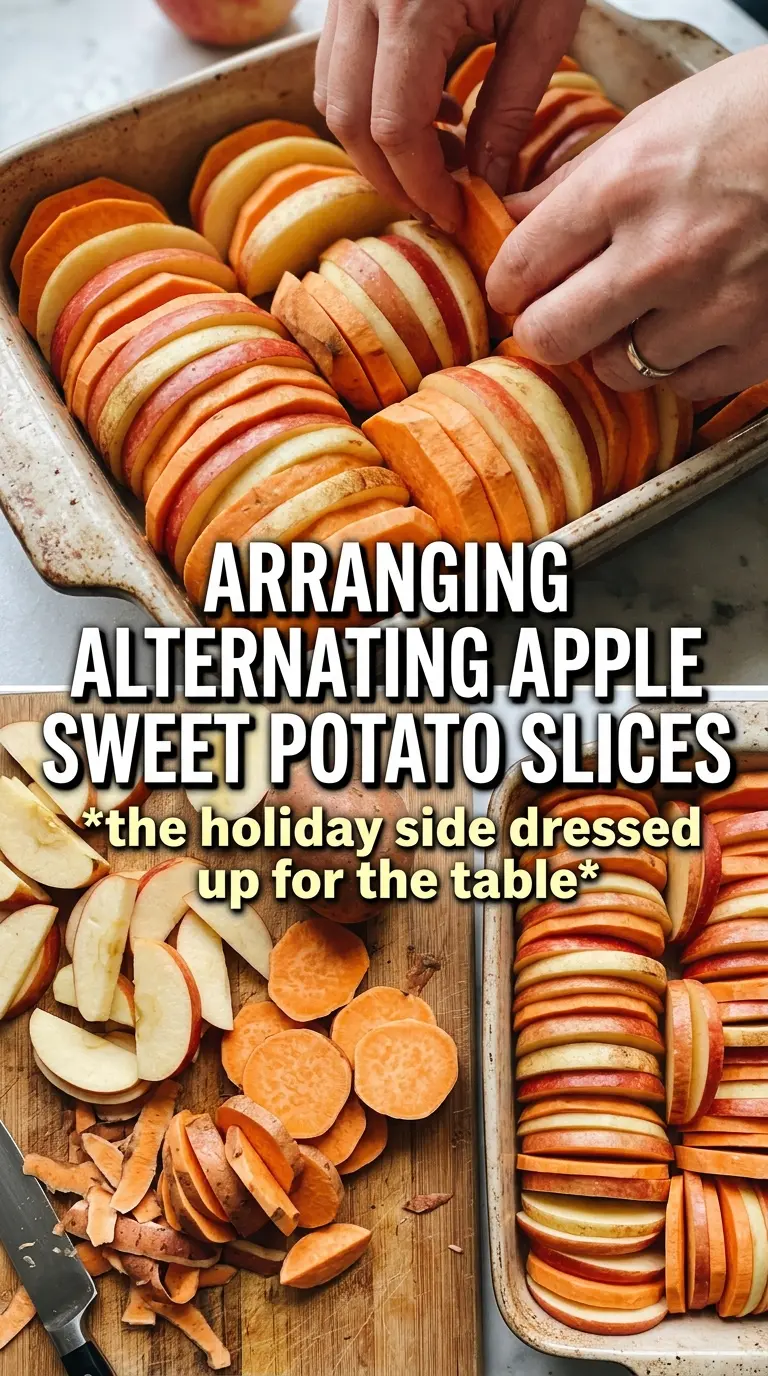
Grease the baking dish first, then alternate sweet potato and apple slices in overlapping rows so the pieces sit snug but not packed tight. If the slices are jammed together, the glaze can’t get into the gaps and the middle stays under-seasoned. Think of it as arranging shingles, not stacking coins. The goal is surface area and even heat, not height.
Whisking the Glaze
Stir the honey, melted butter, brown sugar, and spices until the mixture looks smooth and glossy. If the butter is still hot enough to separate the mixture, let it cool for a minute before whisking again. The glaze doesn’t need to be cooked first. It just needs to be evenly mixed so the spices don’t clump in one corner of the pan.
Covering, Then Finishing Hot
Bake covered for 30 minutes, then uncover and scatter the pecans over the top for the last 15 minutes. That first covered stretch softens the vegetables and fruit without drying the dish out, while the final uncovered bake gives you caramelized edges. If the top starts browning too fast, tent the dish loosely with foil again for the last few minutes. The casserole is done when a knife slides through the sweet potatoes with little resistance and the glaze looks thick around the edges.
How to Adapt This for Different Tables
Make It Dairy-Free
Swap the butter for melted coconut oil or a plant-based butter. Coconut oil adds a faint coconut note, while plant-based butter keeps the flavor closest to the original. Either way, the glaze still coats the fruit and potatoes properly as long as the fat is melted and fully whisked in.
Lean Less Sweet
Cut the brown sugar down by half if you want a more savory side dish. The casserole will still caramelize from the honey and the natural sugars in the apples and sweet potatoes, but the finish will be less sticky and more balanced.
Nut-Free Version
Skip the pecans and finish with a few extra minutes uncovered so the top gets some color on its own. You lose the crunchy contrast, but the casserole still holds together and the glaze still gives you that caramelized edge.
Storage and Reheating
- Refrigerator: Store covered for up to 4 days. The apples soften a bit more as it sits, but the flavor stays good.
- Freezer: It freezes, but the apples will be softer after thawing. Freeze in a tightly sealed container for up to 2 months if you don’t mind a more tender texture.
- Reheating: Warm covered in a 325F oven until heated through. The biggest mistake is blasting it at high heat, which dries out the edges before the center is hot.
Questions I Get Asked About This Recipe
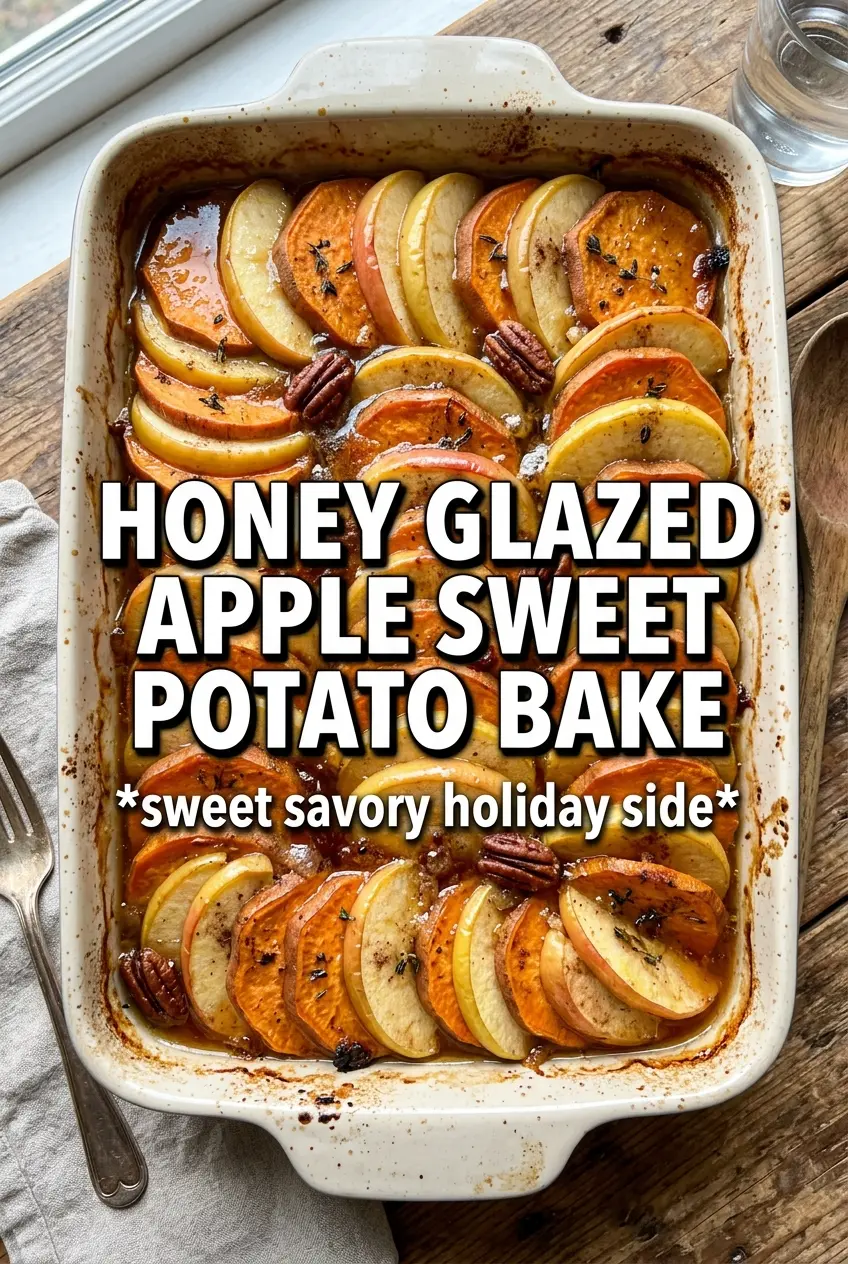
Honey Glazed Apple and Sweet Potato Casserole
Ingredients
Equipment
Method
- Preheat oven to 375F and grease a 9x13 baking dish. Keep the oven fully preheated so the casserole starts baking immediately for even caramelization.
- Layer sweet potato slices and apple slices in alternating overlapping rows in the dish. Aim for even coverage so every bite gets both flavors and the honey glaze can soak in.
- Whisk honey, melted butter, brown sugar, cinnamon, nutmeg, ginger, and salt together until smooth. The glaze should look glossy and evenly colored from the spices.
- Pour the glaze evenly over the layered sweet potatoes and apples. Make sure most slices are touched by glaze, especially around the edges.
- Cover tightly with foil and bake at 375F for 30 minutes. You want the slices to turn tender while the glaze steams and softens.
- Uncover, scatter pecans over the top, and bake at 375F for 15 more minutes. Bake until the pecans are toasted and the top looks caramelized and glistening.
- Garnish with fresh thyme if desired. Serve warm so the glaze stays syrupy.