Sweet Honeycrisp apples, salty feta, tart pomegranate, and candied walnuts hit every note this salad needs. It eats crisp and fresh, but the mix of textures makes it feel finished, not like a bowl of greens waiting for something better to happen.
The key is keeping the apples thin and the dressing light. Honeycrisp apples hold their snap better than most varieties, which matters here because a mealy apple turns the whole salad soft fast. The cider vinaigrette leans on Dijon to keep the honey and vinegar from separating, so you get a glossy dressing that clings to the greens instead of puddling at the bottom.
Below, I’ve added the small details that make this salad worth repeating: how to keep the apples bright, when to toss, and what to swap if you want to work with what’s already in the kitchen.
The apples stayed crisp, the feta balanced the sweetness, and the dressing coated everything without making the greens soggy. I served it with roast chicken and it disappeared first.
Save this Honeycrisp Apple and Feta Salad for the days when you want crisp apples, salty feta, and a cider vinaigrette that tastes bright instead of heavy.
The Trick to Keeping the Apples Crisp Instead of Watery
The most common failure in an apple salad is cutting the fruit too early and letting it sit around while you assemble everything else. Apples start to oxidize and soften as soon as they’re exposed, and once the dressing hits, they lose that sharp snap that makes this salad worth serving. Slice the apples last, and toss them with the vinaigrette at the table instead of in the bowl if you want the best texture.
Honeycrisp apples matter here because they stay firm and juicy without turning mealy. If you use a softer apple, the salad still tastes good, but the slices bend instead of crunch. Thin slices are the sweet spot: thick enough to hold up, thin enough to mingle with the greens and feta on the fork.
What Each Ingredient Is Actually Doing in This Salad
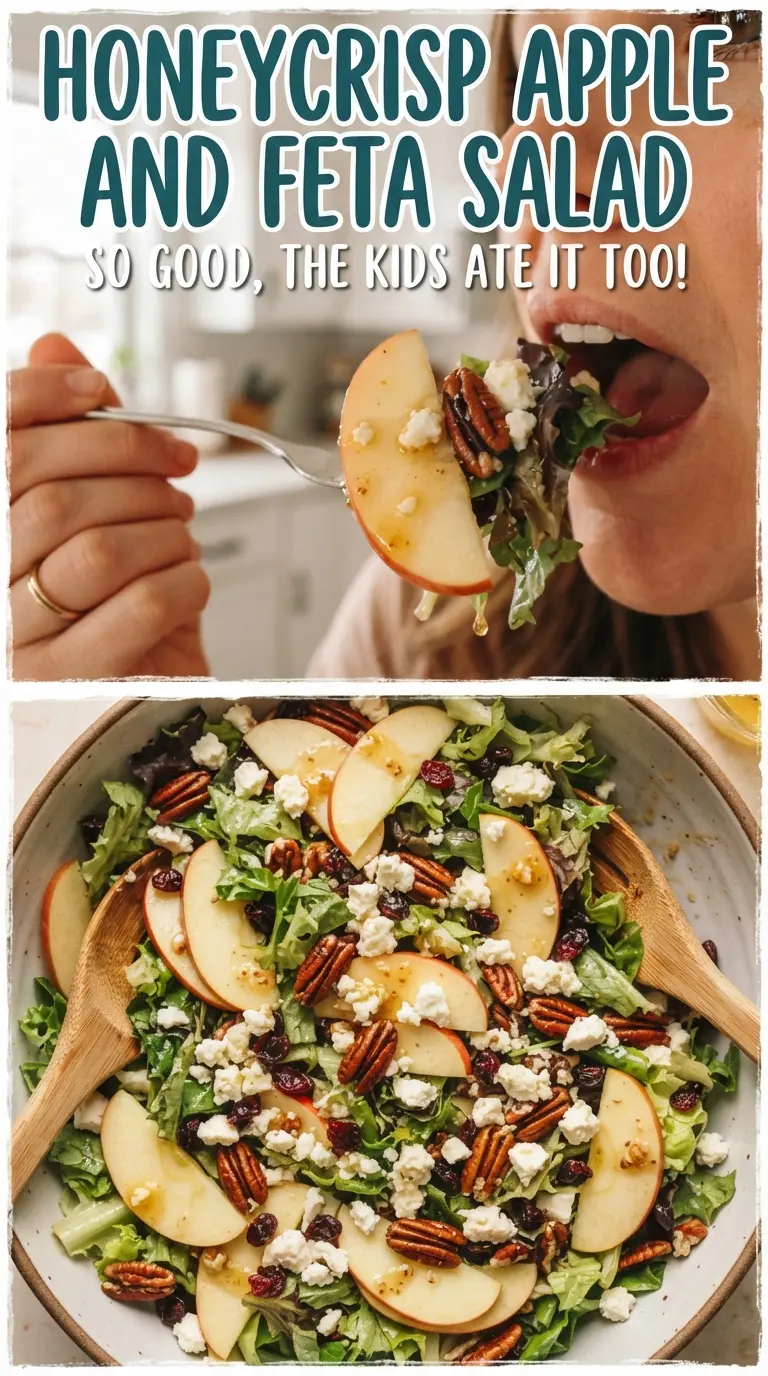
- Honeycrisp apples — These bring the clean crunch and natural sweetness. If you need a substitute, use Pink Lady or Fuji for similar firmness; avoid apples that brown quickly and go soft in a bowl.
- Feta — The salty tang keeps the salad from reading as fruit-heavy. Block feta crumbled by hand tastes creamier and less dusty than pre-crumbled, but either works.
- Candied walnuts — They add the sweet crunch that makes each bite feel complete. Toasted plain walnuts work in a pinch, but you’ll lose some of that caramel note that plays off the apples.
- Pomegranate arils — These add bright tart bursts and a little color. They’re not just garnish; they keep the salad lively between bites of creamy cheese and dressing.
- Apple cider vinegar and Dijon — This is what keeps the vinaigrette sharp and emulsified. Without the mustard, the dressing separates faster and won’t coat the greens as evenly.
Building the Salad So It Stays Fresh at the Table
Whisk the Dressing Until It Turns Glossy
Start with the vinegar, honey, Dijon, salt, and pepper, then stream in the olive oil while whisking. The dressing should look slightly thickened and glossy, not broken or greasy. If it looks separated, keep whisking for another few seconds; Dijon helps the mixture hold together long enough to coat the salad without weighing it down.
Layer the Bowl for Contrast
Put the greens in first, then scatter the apples, feta, walnuts, pomegranate, and red onion over the top. This keeps the toppings visible and prevents the heavier ingredients from sinking straight to the bottom. If the onion tastes too sharp, soak the slices in cold water for 5 minutes, then drain well; that takes off the harsh bite without dulling the salad.
Toss at the Last Possible Moment
Drizzle on just enough vinaigrette to lightly coat everything, then toss gently right before serving. The greens should look glossy, not wet, and the apple slices should still hold their shape. If you dress the salad too early, the salt pulls moisture from the apples and greens, and the whole bowl softens faster than it should.
Three Smart Ways to Adapt This Salad
Make it dairy-free
Skip the feta and add sliced avocado or extra walnuts for richness. You’ll lose the salty tang, so finish the salad with a little more salt and a few extra drops of vinegar to keep the balance in place.
Swap in pears for a softer, sweeter salad
Firm pears work well if you want a gentler sweetness. Use ones that still feel slightly firm at the stem, or they’ll turn mushy once tossed with the dressing.
Turn it into a fuller main-dish salad
Add sliced grilled chicken or roasted chickpeas. The fruit-and-feta base gives you enough brightness that the extra protein doesn’t taste heavy, which makes this an easy lunch or light dinner.
Storage and Reheating
- Refrigerator: Store the components separately for up to 2 days. Once dressed, the greens soften fast and the apples lose their best crunch.
- Freezer: Don’t freeze this salad. The greens, apples, and feta all break down and turn watery after thawing.
- Reheating: Not needed. If you’ve chilled the dressing, let it sit at room temperature for a few minutes and shake or whisk again before using so it loosens and emulsifies properly.
Questions I Get Asked About This Salad
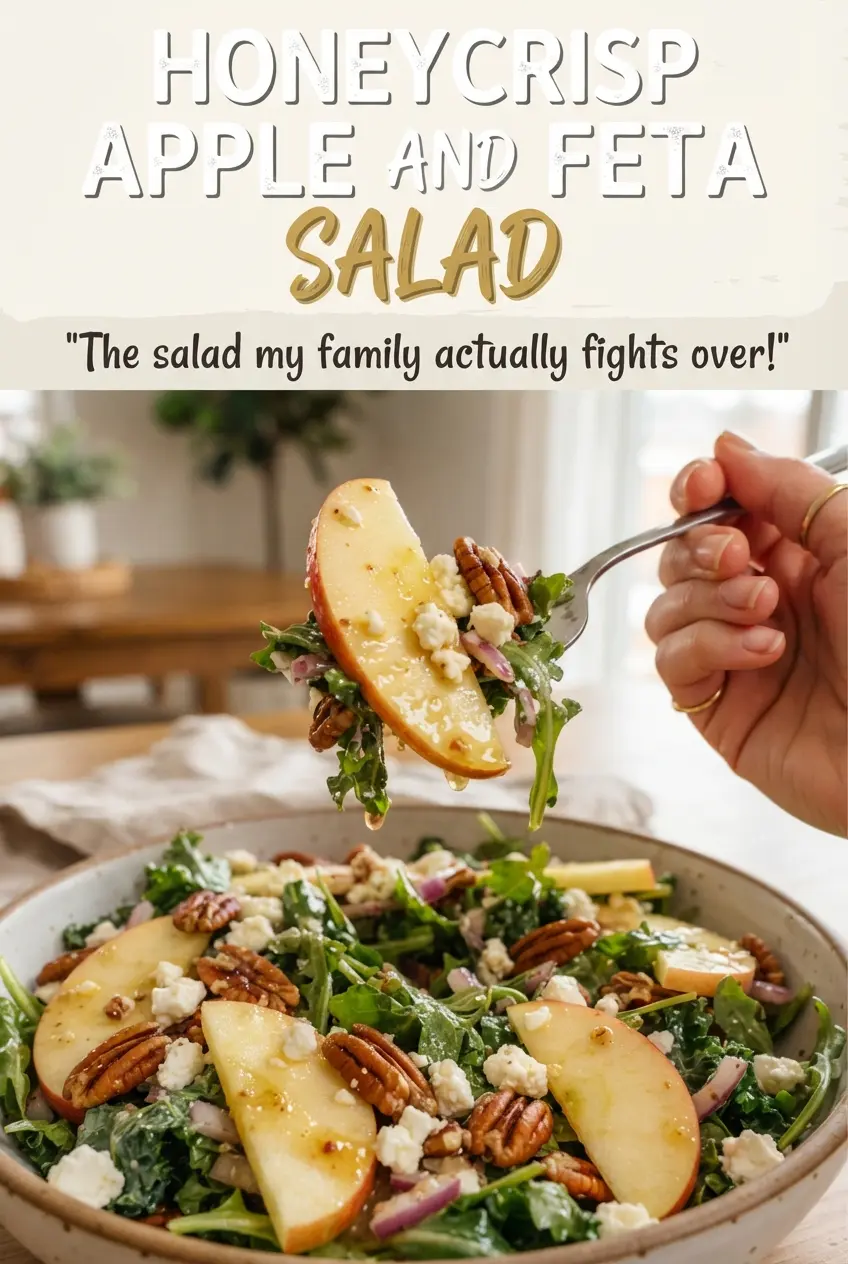
Honeycrisp Apple and Feta Salad
Ingredients
Method
- Whisk olive oil, apple cider vinegar, honey, Dijon mustard, salt, and pepper until the dressing looks evenly combined, about 30 seconds.
- Arrange mixed greens in a large bowl or platter as the base so the toppings stay visible.
- Top with thinly sliced Honeycrisp apples for crisp texture and bright color.
- Sprinkle crumbled feta evenly over the greens so each bite gets a bit of tangy cheese.
- Scatter candied walnuts across the top to add crunch and a caramel-like sweetness.
- Add pomegranate arils and thinly sliced red onion over the salad for ruby pops and mild bite.
- Drizzle the vinaigrette over the salad just before serving so the greens stay crisp.
- Toss gently at the table, using a light hand so apples and pomegranate stay intact.