Jalapeño peach chicken lands in that sweet spot where the chicken stays juicy, the glaze clings to the meat, and every bite gives you a little heat after the fruit hits first. The sauce turns glossy in the pan instead of watery on the plate, which is what makes this version worth keeping around. It looks like a special-occasion dinner, but it cooks fast enough for a normal weeknight.
The key is building the glaze in the same skillet you used for the chicken. Those browned bits dissolve into the peaches, honey, soy sauce, and vinegar, giving you a deeper sauce than you’d get from starting clean. Fresh peaches bring the best texture, but frozen works too as long as you let the sauce simmer long enough for the extra moisture to cook off.
Below, I’ve included the timing cues that keep the chicken from overcooking, plus a few smart swaps if peaches aren’t at their peak. The sauce is forgiving once you know what it should look and smell like, and that’s the part that makes this recipe repeatable.
The glaze thickened up beautifully and coated the chicken instead of pooling in the skillet. I used the jalapeño seeds and the sweet heat was perfect with the peaches.
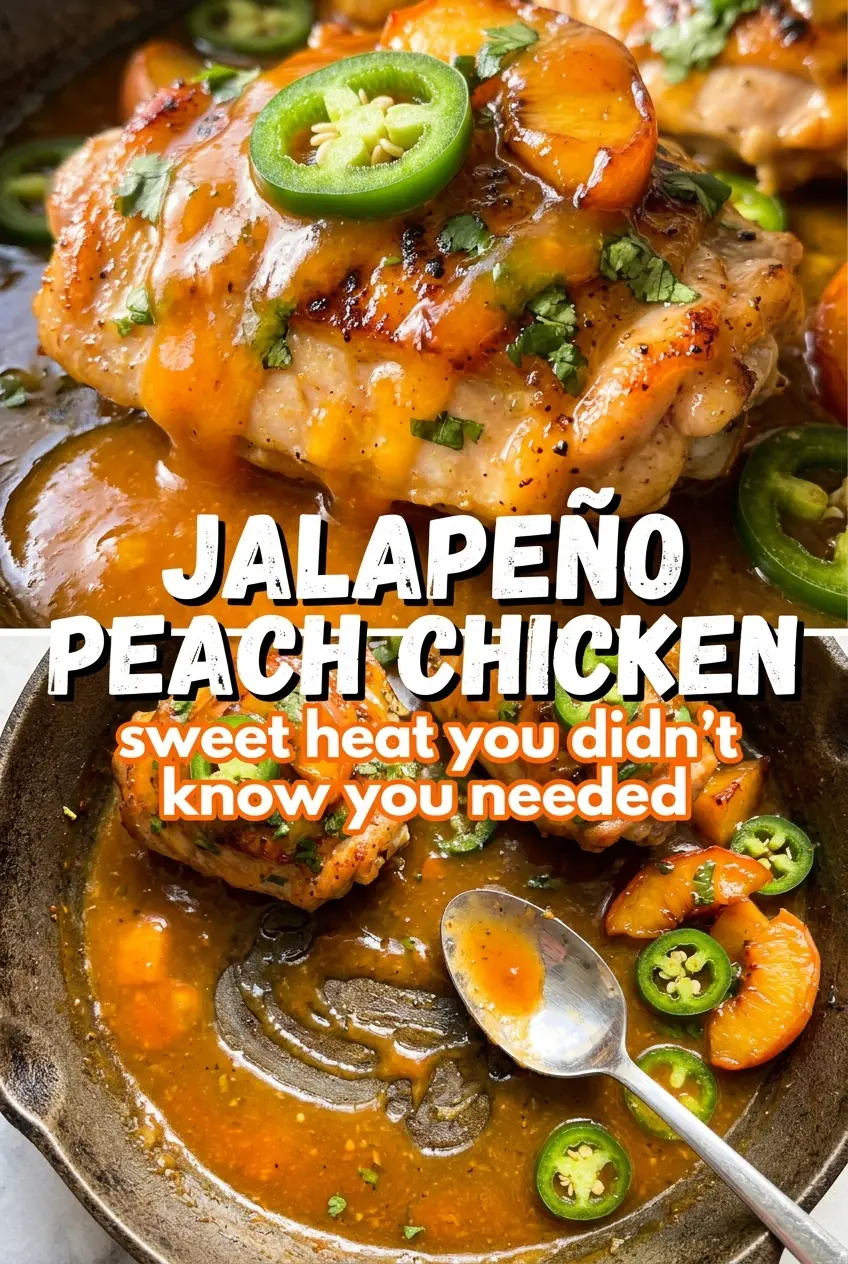
Sweet heat, glossy sauce, and golden jalapeño peach chicken that’s made for spooning over rice or mashed potatoes.
The Trick to Keeping the Peach Glaze Glossy, Not Watery
The glaze only works if the fruit softens enough to melt into the sauce without turning to puree. Peaches release a lot of juice as they cook, and that extra liquid is the main reason a skillet sauce can stay thin. Letting the mixture simmer until the sauce lightly coats a spoon gives you that sticky, lacquered finish instead of a soupy pan sauce.
Using the same skillet matters here. The browned fond from the chicken adds body and depth, and scraping it loose with the broth keeps the flavor grounded instead of sweet in a one-note way. If your peaches are very ripe, reduce the honey slightly; if they’re firm or out of season, the full amount helps round out the glaze.
What Each Ingredient Is Doing in This Skillet
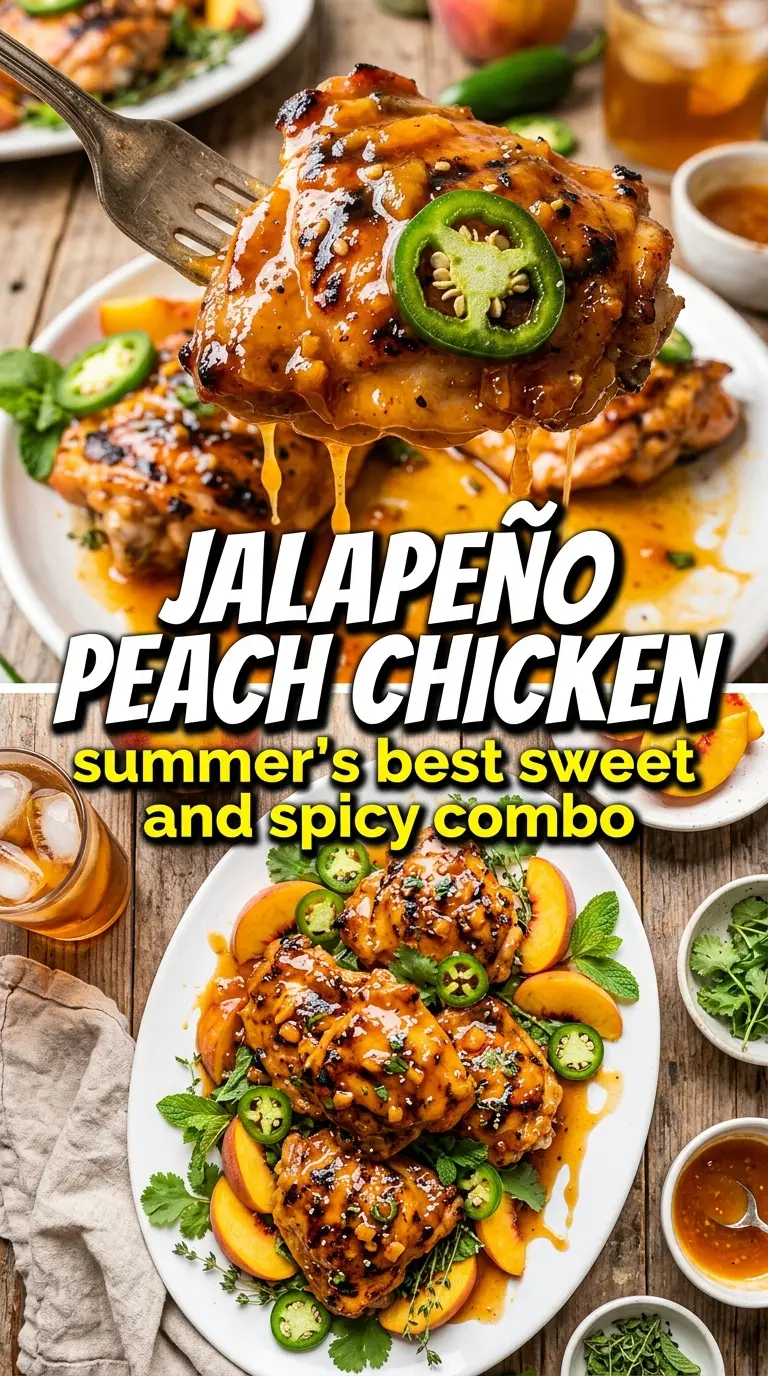
- Chicken breasts — Boneless, skinless breasts cook fast and give the glaze a wide surface to cling to. If yours are thick on one end, pound them lightly so they cook at the same pace and stay juicy.
- Peaches — Fresh peaches give the best texture, but frozen slices work when they’re out of season. If you use frozen, don’t thaw them first; add them straight to the skillet so the sauce doesn’t get diluted before it has a chance to reduce.
- Jalapeños — Seeds in bring the heat, but the real value is their green, fresh bite against the sweet fruit. If you want a gentler dish, remove the seeds and white ribs; if you want more kick, use both jalapeños and keep the seeds.
- Honey — This is what gives the glaze its shine and helps it cling to the chicken. Maple syrup can work in a pinch, but it reads darker and less floral than honey.
- Soy sauce — A small amount sharpens the sweetness and gives the sauce a deeper color. Use low-sodium if that’s what you keep on hand; the glaze reduces enough that regular soy can taste a little salty at the end.
- Apple cider vinegar — This keeps the glaze from tasting flat. That little bit of acid matters because peaches and honey can go heavy fast without it.
- Chicken broth — Broth loosens the glaze just enough to simmer without scorching. Water will work in an emergency, but the sauce will taste thinner and less savory.
- Fresh thyme — Thyme pulls the whole skillet toward savory and keeps the fruit from taking over. Add it at the end so it stays fragrant instead of disappearing into the sauce.
How to Keep the Chicken Juicy While the Sauce Reduces
Searing the Chicken First
Season the chicken with salt and pepper, then lay it into the hot oil without crowding the pan. You’re looking for a deep golden crust and clean release from the skillet; if it sticks, it needs another minute. Cook the first side long enough to build color, then turn it once and finish the second side. Pull the chicken out when it’s nearly done, because it will finish in the glaze and stay more tender that way.
Building the Jalapeño Peach Glaze
Add the garlic and jalapeños to the same pan and stir just until fragrant. One minute is enough; any longer and the garlic can turn bitter before the peaches even go in. Once the peaches, honey, soy sauce, vinegar, and broth hit the skillet, scrape the bottom well and let the mixture simmer with small active bubbles. The sauce should slowly thicken and look glossy, not boil hard and splatter up the sides.
Finishing in the Pan Sauce
Return the chicken to the skillet and spoon the glaze over the top so every piece gets coated. Two minutes is usually enough to warm the chicken through and let the sauce cling, not reduce past the point where it turns sticky in the wrong way. Finish with thyme right before serving so the herbs smell bright when the plate hits the table.
How to Adapt This for Different Tastes and Pantry Gaps
Make it spicier without changing the sauce
Keep the jalapeño seeds in and add a third pepper if you want more heat. The fruit and honey can handle it, but the sauce will taste sharper and less sweet, so don’t add extra vinegar unless you want that edge.
Use peaches from the freezer
Frozen peaches are a smart backup and they soften quickly in the skillet. Add them straight from frozen so the sauce can reduce around the extra moisture instead of starting out watered down.
Make it gluten-free
Use a certified gluten-free soy sauce or tamari. The sauce reduction works the same way, but tamari usually tastes a touch rounder and less sharp.
Swap the chicken breasts for thighs
Boneless thighs give you a richer, slightly more forgiving result and won’t dry out as fast. They need a few extra minutes in the skillet, so cook to doneness before you return them to the glaze.
Storage and Reheating
- Refrigerator: Store leftovers in an airtight container for up to 3 days. The glaze will thicken as it chills, which is normal.
- Freezer: It freezes well for up to 2 months, though the peaches will soften more after thawing. Freeze in portions with plenty of sauce so the chicken doesn’t dry out.
- Reheating: Reheat gently in a skillet over low heat with a splash of broth or water. High heat can tighten the chicken and make the glaze seize up before it warms through.
Answers to the Questions Worth Asking
Jalapeño Peach Chicken
Ingredients
Equipment
Method
- Season the chicken breasts on both sides with salt and black pepper. Heat the olive oil in a cast iron skillet over medium-high heat and sear until golden, 5–6 minutes per side, then set the chicken aside.
- In the same skillet, add the minced garlic and thinly sliced jalapeños and cook for 1 minute. Add the peach slices, honey, soy sauce, apple cider vinegar, and chicken broth, then bring to a simmer.
- Simmer the glaze for 5–6 minutes, stirring occasionally, until the peaches soften and the sauce thickens. Return the chicken breasts to the skillet and spoon the glaze over the top, cooking for 2 more minutes to coat.
- Sprinkle fresh thyme over the chicken and serve with the pan sauce spooned over the top. The glaze should look glossy and cling lightly to the chicken.