Juicy oven baked pork chops hit the plate with a seasoned crust on the outside and a tender, blush-pink center that stays moist after a short rest. The oven does the work here, but the real win is in the prep: dry chops, a thin coat of oil, and a hot enough oven to set the surface before the meat has a chance to overcook. That combination gives you pork chops that taste like you paid attention, even on a weeknight.
The biggest mistake with baked pork chops is treating them like a long, slow braise. Thin chops dry out fast, and even thick chops can turn chalky if they go in wet or get cooked past 145°F. This version leans on a quick, savory spice blend and a reliable temperature target, which means you get flavor on the outside and juiciness where it counts.
Below, I’m walking through the small details that matter most: how dry the chops need to be, why the rest time is non-negotiable, and what to change if your chops are thinner, thicker, or boneless.
I followed the temperature exactly and finally got pork chops that stayed juicy instead of drying out. The spice crust was perfect, and the five-minute rest made a huge difference.
Juicy Oven Baked Pork Chops are easiest to remember when you need a fast dinner with a golden spice crust and a tender center.
The Dry Surface That Gives You a Real Crust
Most baked pork chops go wrong before they even hit the oven. If the surface is damp, the seasoning slides around and the meat steams instead of browning. Patting the chops completely dry gives the oil and spices something to cling to, and that thin seasoned layer is what turns into the savory top crust you want.
The other part that matters is thickness. One-inch bone-in chops hold up well in a hot oven, which gives you enough time to build color without pushing the center past juicy. Thin chops can still work, but they need less time and a sharper eye, or they’ll overshoot fast.
What the Seasoning Is Doing Beyond Salt
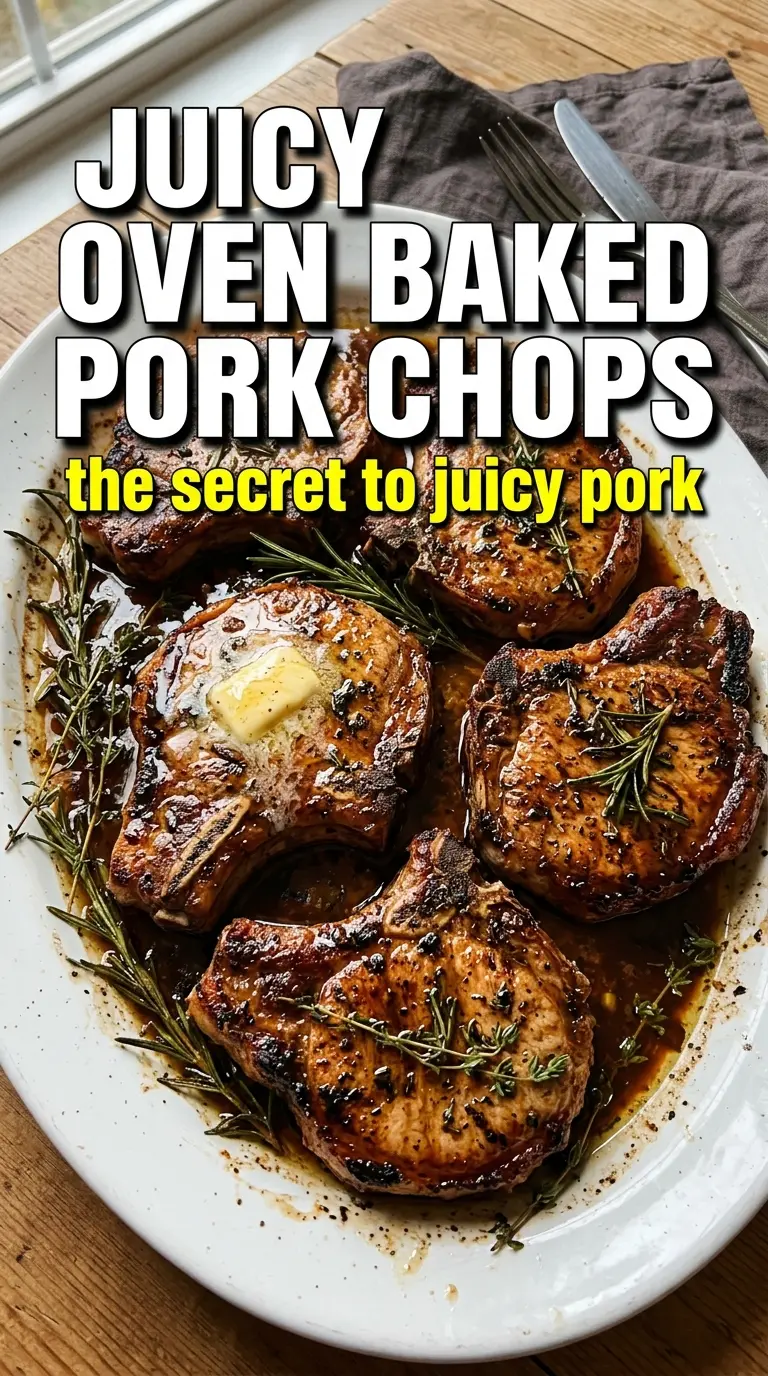
- Bone-in pork chops — The bone helps the chop cook a little more evenly and gives you a sturdier cut that’s less likely to dry out. Boneless chops work too, but they cook faster, so start checking them early.
- Olive oil — You only need enough to coat the meat lightly. It helps the spice mix stick and encourages browning, but too much oil softens the crust.
- Garlic powder, smoked paprika, onion powder, and thyme — This blend gives you savory depth without a wet marinade. Smoked paprika adds color and a gentle smokiness; regular paprika won’t give quite the same result, but it will still work.
- Lemon wedges and parsley — These finish the dish with brightness. They’re not decoration; a squeeze of lemon wakes up the pork and cuts through the richness.
Getting the Timing Right So the Pork Stays Juicy
Preheating the Oven and Setting Up the Pan
Heat the oven fully to 400°F before the pork goes in. A hot oven helps the outside set quickly, which gives you that seasoned crust before the center has time to dry out. Line the baking sheet with foil for easier cleanup, then lay the chops out with a little space around each one so they roast instead of steam.
Seasoning With Enough Pressure to Stick
Brush the chops with oil, then season them generously on both sides. You want an even coating, not piles of spice, and the oil should make the surface look lightly glossy, not slick. If the seasoning looks patchy, the chops were still too wet, and that’s the point where the crust starts slipping during baking.
Checking the Temperature Before You Overcook Them
Bake for 15 to 20 minutes, but let temperature guide you, not the clock. Pull the chops when the thickest part reaches 145°F, then let them rest for 5 minutes. If you keep cooking until they look firm all the way through, they’ll usually end up dry by the time they hit the plate.
The Rest That Keeps the Juices Inside
Set the pork aside and leave it alone for the full rest. During that time, the juices settle back through the meat instead of running out onto the cutting board. If you slice too soon, you’ll see the difference immediately: the chop still tastes fine, but the plate will be carrying the moisture you wanted in the meat.
Make It With Boneless Pork Chops
Boneless chops work if that’s what you have, but they cook faster and dry out sooner. Start checking them around the 12-minute mark, and pull them as soon as they hit 145°F. You’ll lose a little of the forgiving texture that bone-in chops give you, but the same seasoning and rest still work.
Make It Dairy-Free and Gluten-Free Without Changing the Dish
This recipe already fits both dairy-free and gluten-free cooking as written. The only thing to watch is your spice labels if you’re sensitive to cross-contamination, since some blends and paprika can be processed in shared facilities. The method stays exactly the same.
Add a Pan Sauce If You Want More on the Plate
After the chops come off, spoon the pan drippings into a skillet with a splash of broth or water and scrape up the browned bits. That gives you a quick, savory sauce with no extra seasoning work. Keep it thin and spoonable so it complements the pork instead of covering up the crust.
Use a Different Herb When You Don’t Have Thyme
Dried rosemary or oregano both work, but each one pushes the flavor in a different direction. Rosemary tastes woodier and more pronounced, while oregano reads a little brighter and more Mediterranean. Use a little less than the thyme amount if the herb you’re substituting is stronger.
Storage and Reheating
- Refrigerator: Store leftovers in an airtight container for up to 4 days. The crust softens a bit, but the pork stays tender if it was cooked to temperature and rested properly.
- Freezer: Freeze cooked chops for up to 2 months. Wrap them tightly so freezer air doesn’t dry out the edges, and thaw in the refrigerator before reheating.
- Reheating: Warm gently in a 300°F oven, covered loosely with foil, until just heated through. High heat is the fastest way to turn already-cooked pork chops dry, so keep the reheating slow and pull them as soon as they’re warm in the center.
Answers to the Questions Worth Asking

Juicy Oven Baked Pork Chops
Ingredients
Equipment
Method
- Preheat oven to 400°F and line a baking sheet with foil for easier cleanup.
- Pat pork chops completely dry with paper towels—this is critical for a good crust.
- Brush both sides with olive oil, then season generously with garlic powder, smoked paprika, onion powder, dried thyme, salt, and black pepper.
- Place pork chops on the baking sheet and bake for 15–20 minutes depending on thickness, until the internal temperature reaches 145°F.
- Rest the pork chops for 5 minutes before serving—do not skip the rest or juices will run out.
- Garnish with fresh parsley and serve with lemon wedges.