Roasted butternut squash and Brussels sprouts turn into the kind of side dish people hover around before the main course even hits the table. The squash gets soft and caramelized at the edges, the sprouts go crisp on the cut sides, and the cranberries and pecans bring just enough sweetness and crunch to keep every bite moving.
The trick here is space and heat. A crowded pan traps steam, and steamed vegetables go soft instead of bronzed, so this recipe keeps everything on one large sheet pan with enough room for real browning. The maple balsamic gets tossed in at the end, which keeps the vegetables from scorching in the oven and gives the whole dish a glossy finish instead of a sticky glaze.
Below, I’ve included the small details that matter most: how to cut the squash so it roasts at the same pace as the Brussels sprouts, why toasted pecans make the texture work, and what to do if you want to make it ahead for a holiday table or an easy weeknight dinner.
The squash caramelized beautifully and the Brussels sprouts stayed crisp on the edges. The maple balsamic brought everything together without making it soggy, and the pecans were the best part.
Like these roasted butternut squash and Brussels sprouts? Save them for the side dish that brings caramelized edges, toasted pecans, and maple balsamic together in one pan.
The Trick to Getting Both Vegetables Done at the Same Time
The main risk in a pan of mixed roasted vegetables is ending up with squash that’s soft before the Brussels sprouts have had time to brown. Cutting the squash into even cubes and halving the sprouts gives you two vegetables that roast at a similar pace, but the pan still needs breathing room. If the pieces are piled on top of each other, they steam; if they’re spread out, they caramelize and pick up those dark, sweet edges that make the dish worth serving.
- Butternut squash — Fresh squash roasts with a sweeter, denser bite than frozen cubes, which often release too much moisture. Cut it into roughly 3/4-inch pieces so it softens in the same window as the Brussels sprouts.
- Brussels sprouts — Trim the ends and cut them straight in half from top to stem. The flat side is what hits the pan and browns.
- Olive oil — This coats the vegetables so the surfaces conduct heat instead of drying out. A regular bottle is fine here.
- Maple syrup and balsamic vinegar — This is the final balance point. The maple brings round sweetness, while balsamic keeps it from tasting flat. Whisk them together after roasting; if they go in too early, they can darken and turn sharp in the oven.
- Pecans — Toasted pecans add the last bit of crunch and a buttery note that raw nuts can’t match. If yours aren’t already toasted, spread them on a dry pan for a few minutes until they smell nutty.
What Each Ingredient Is Doing in This Pan
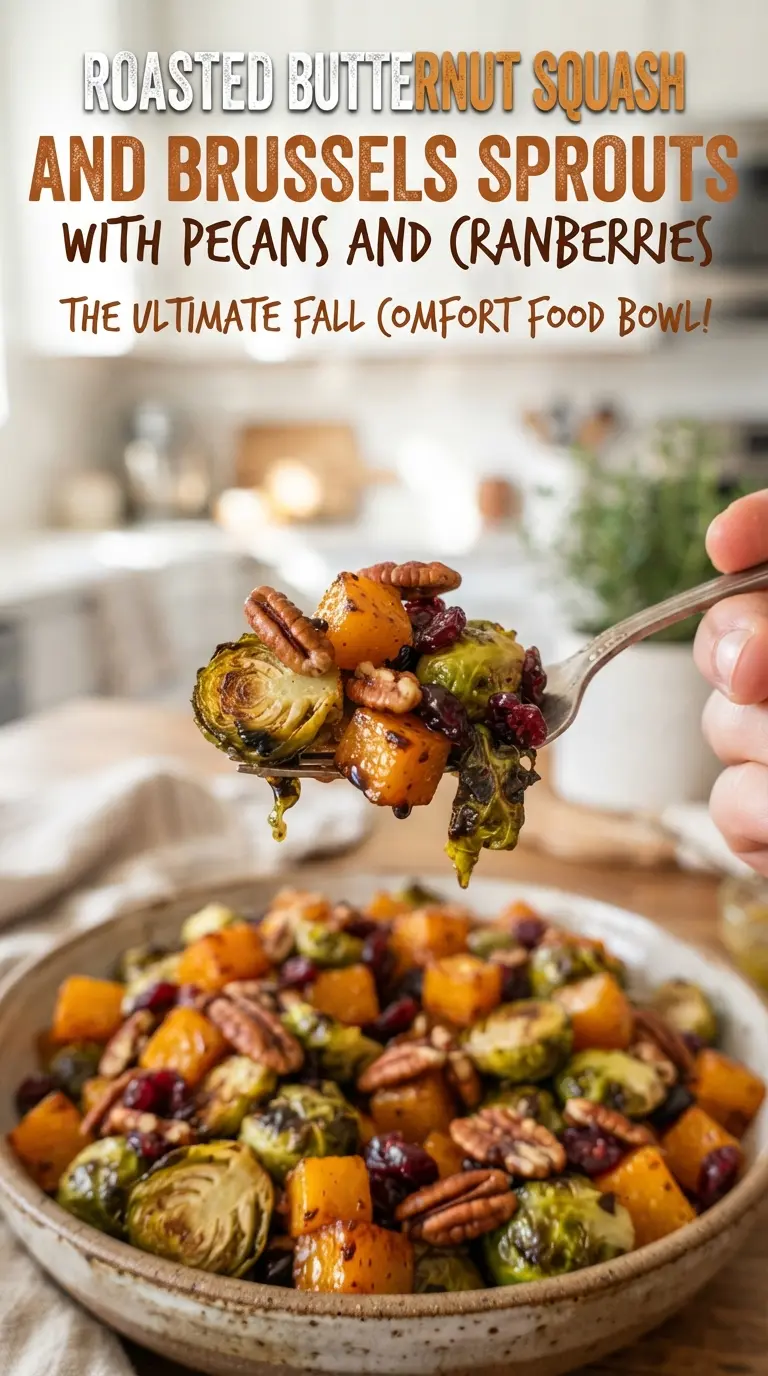
The cranberries do more than add color. They cut through the roasted richness and give the dish little bursts of tart chewiness that keep it from eating like a plain vegetable side. Add them after roasting so they stay plump instead of drying out in the oven.
The salt and pepper matter more than they look like they should. Salt pulls the sweetness forward in the squash, and pepper keeps the final dish from leaning too far into candy-sweet territory. The balance is what makes this work on a dinner plate instead of tasting like a holiday-only side.
Roasting for Browning, Not Steaming
Getting the Pan Hot Enough
Set the oven to 425F and give it time to fully heat before the vegetables go in. High heat is what creates those browned edges, especially on the Brussels sprouts. If the oven is still climbing when the pan goes in, the vegetables start releasing moisture before they can sear, and you lose the texture that makes this dish special.
Turning the Vegetables Once
Toss the squash and sprouts with the oil, salt, and pepper on the sheet pan itself or in a bowl, then roast until the bottoms are taking on color. Give everything one good toss halfway through so new surfaces can meet the pan. If you stir too often, the vegetables never get a chance to sit and brown. You want a mix of tender centers and crisp, caramelized edges.
Finishing After the Oven
Whisk the maple syrup and balsamic vinegar together while the vegetables roast, then add it once they’re done. Tossing it in at the end coats everything without softening the crust you just built. Stir in the cranberries and pecans last so the nuts stay crunchy and the fruit keeps its chewy bite.
How to Adapt This for a Different Table
Make It Vegan and Naturally Gluten-Free
This recipe already lands naturally in both of those lanes as written. Just check that your balsamic vinegar and dried cranberries don’t include any odd add-ins, which is uncommon but worth a glance. The texture and flavor stay exactly the same.
Swap the Pecans for Walnuts or Pepitas
Walnuts bring a slightly earthier taste, while pepitas keep the crunch but make the dish feel a little lighter and more savory. Toast either one before adding it so you still get that nutty finish. Raw nuts taste flat here.
Use Sweet Potatoes Instead of Butternut Squash
Sweet potatoes work well if that’s what you have, but they’ll roast a little faster and soften sooner than squash. Cut them into similar-sized cubes and start checking a few minutes early so they don’t collapse before the sprouts are done. The result is a little starchier and less silky, but still excellent.
Storage and Reheating
- Refrigerator: Store leftovers in an airtight container for up to 4 days. The pecans soften a bit, but the flavor holds up well.
- Freezer: You can freeze it, but the Brussels sprouts and squash lose some texture once thawed. If you need to freeze ahead, skip the pecans and cranberries, then add them fresh after reheating.
- Reheating: Warm it on a sheet pan in a 375F oven until heated through. The oven brings back more texture than the microwave, which tends to make the vegetables soggy and the nuts limp.
Answers to the Questions Worth Asking
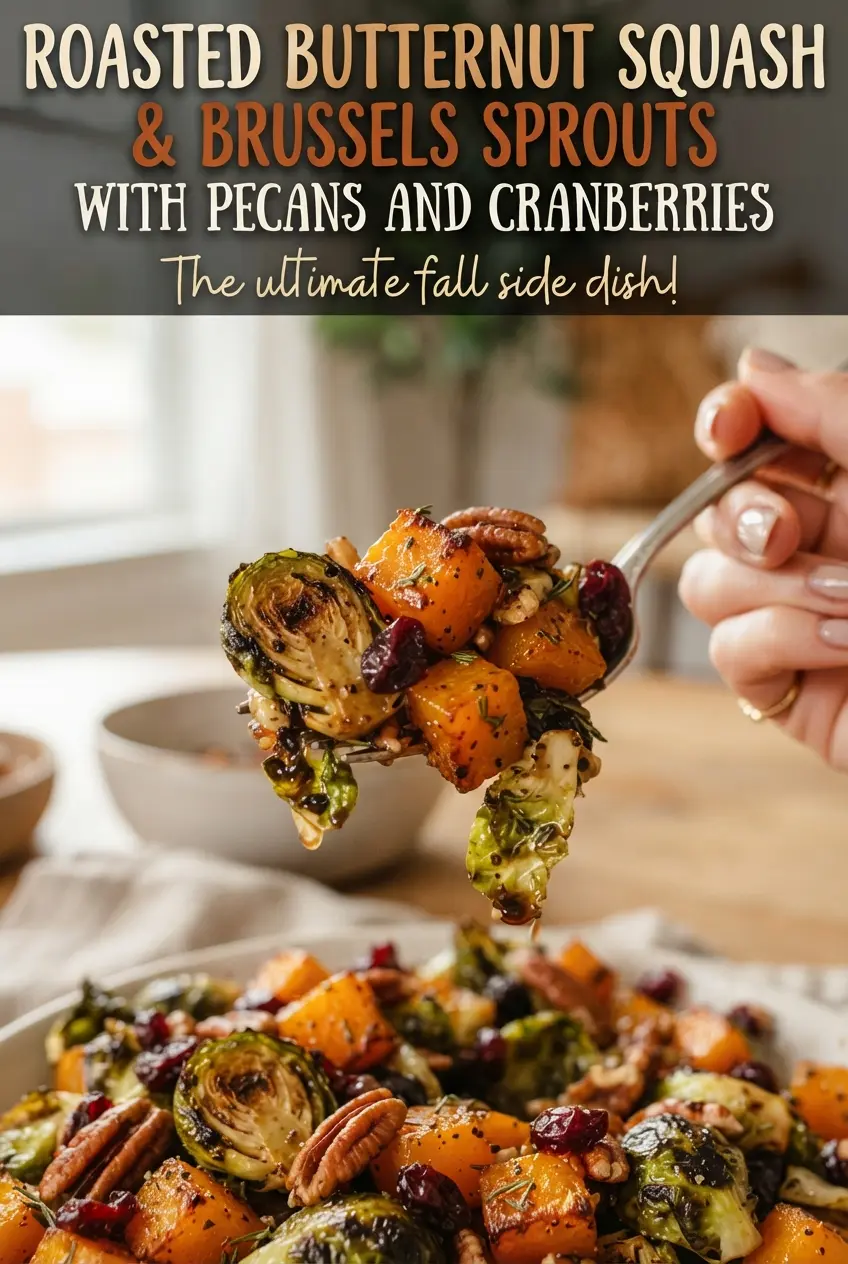
Roasted Butternut Squash and Brussels Sprouts with Pecans and Cranberries
Ingredients
Equipment
Method
- Preheat oven to 425F, ensuring it reaches temperature before roasting for better caramelization.
- Toss butternut squash and Brussels sprouts with olive oil, salt, and black pepper on a large sheet pan so the vegetables are evenly coated.
- Roast for 25-30 minutes, tossing halfway, until the squash is tender and the Brussels sprouts are caramelized at the edges, with visible browning on the sheet pan.
- Whisk maple syrup and balsamic vinegar until smooth and glossy.
- Toss the roasted vegetables with the maple balsamic, dried cranberries, and toasted pecans, then serve warm with the cranberries slightly rehydrated and the pecans dry-crisp on top.