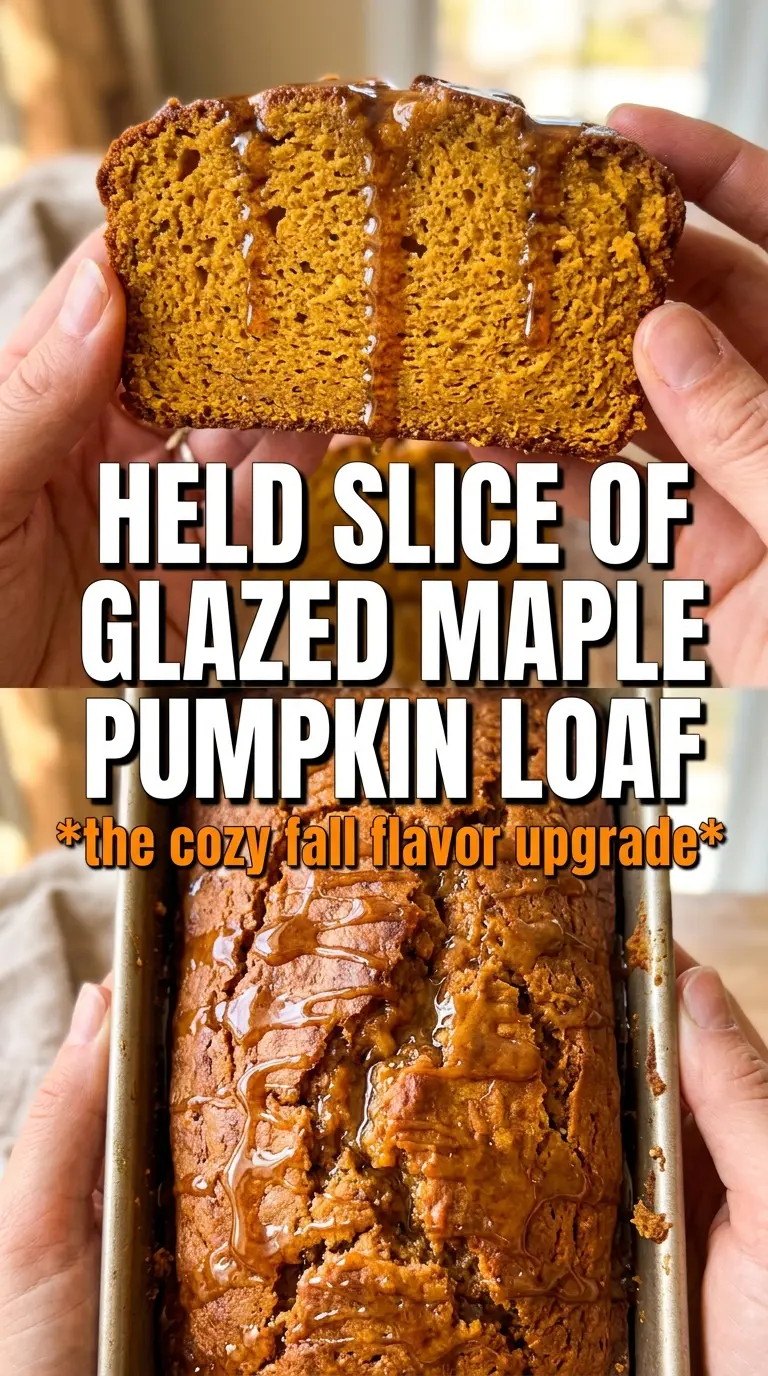
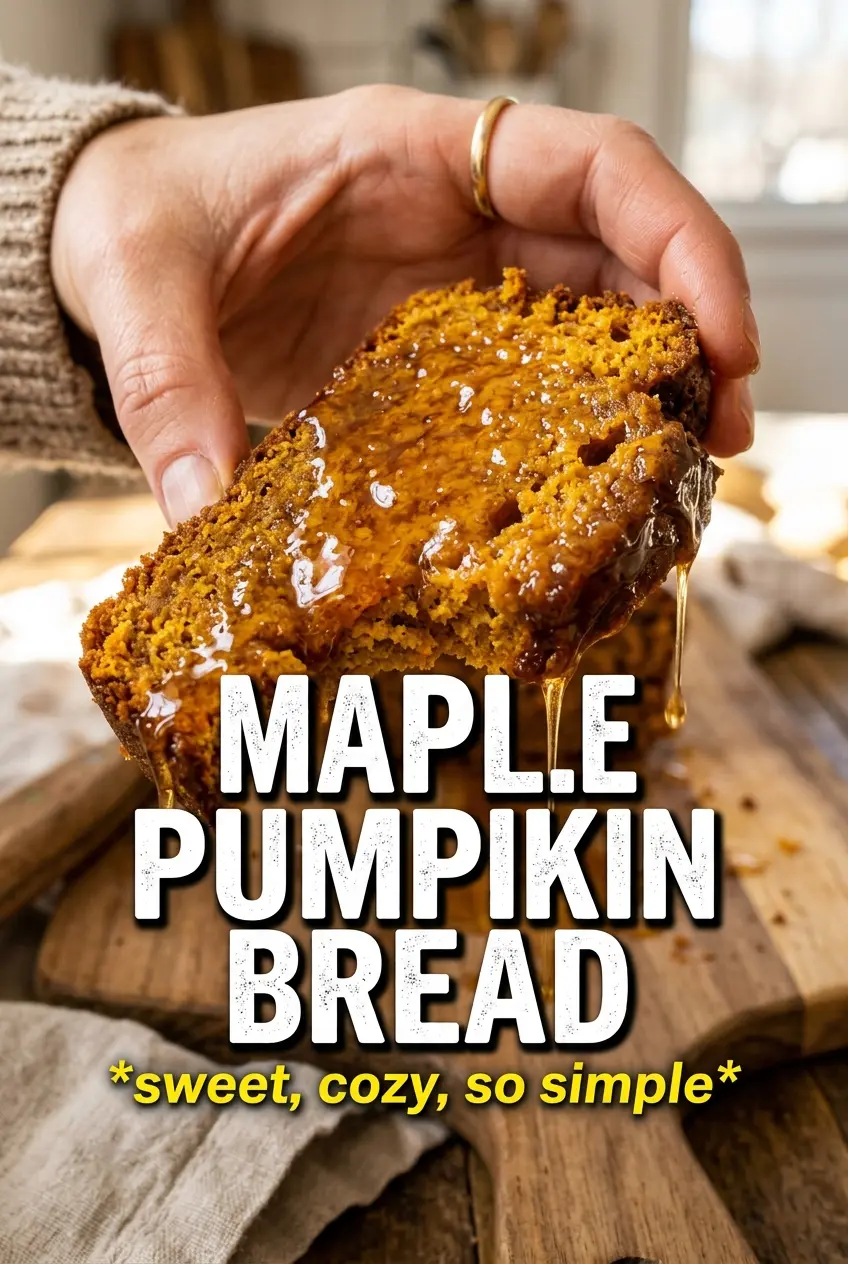
Maple pumpkin bread bakes up with a tender, moist crumb and a deep amber color that tells you exactly what kind of loaf this is before you even slice it. The pumpkin keeps it plush, the maple syrup brings a round sweetness that feels warmer than plain sugar, and the glaze on top gives each slice a glossy finish that tastes just as good as it looks.
This version works because it leans on a few small details that matter. Sour cream keeps the crumb soft without making it heavy, while maple extract pushes the maple flavor past “barely there” and into something you can actually taste after baking. The pepitas on top add a little crunch so the loaf doesn’t eat like dessert cake from top to bottom.
Below, I’ve included the one place people usually go wrong with pumpkin bread, plus a few swaps and storage notes that make this loaf easier to bake on a busy morning or serve later in the week.
The loaf stayed moist for days and the maple glaze set up just enough that it didn’t run off the sides. I loved the little crunch from the pepitas, and the maple flavor came through without tasting overly sweet.
Like the sound of that maple glaze and tender pumpkin crumb? Save this loaf for the next time you want a breakfast bread that slices cleanly and tastes even better the next day.
The Reason Most Pumpkin Breads Turn Dense Instead of Tender
Pumpkin bread usually gets heavy when the batter is overmixed or the flour gets packed in too tightly. Once the dry ingredients hit the wet, you want to stop as soon as the streaks disappear. A few small lumps are fine. They bake out, but extra mixing builds gluten and gives you a tight, bready loaf instead of that soft, sliceable crumb people want from a quick bread.
The other place this loaf earns its keep is in the balance of fat and moisture. Pumpkin puree adds body, but it doesn’t give the same tenderness that oil does, so the oil keeps the loaf plush while the sour cream adds a little richness and keeps the crumb from drying out in the center. That combination matters more than most spice blends do.
What Each Ingredient Is Actually Doing in This Loaf
- Pumpkin puree — This is the backbone of the loaf. Use plain pumpkin puree, not pumpkin pie filling, or the sugar and spices will throw the batter off and the texture can bake up gummy.
- Pure maple syrup — This brings the real maple flavor and helps the bread stay moist. Pancake syrup won’t behave the same way and will taste flatter, so use the real stuff here.
- Brown sugar — This deepens the sweetness and adds a little molasses note that works with the maple. Packed brown sugar also helps the crumb stay soft for days.
- Vegetable oil — Oil keeps quick bread tender in a way butter doesn’t quite match here. Since this loaf is meant to be soft and moist, oil gives you a better result than creamed butter.
- Sour cream — This adds richness and a subtle tang that keeps the flavor from tasting one-note. If you’re out, plain full-fat Greek yogurt is the closest swap, though the loaf may be slightly less rich.
- Maple extract — This is what makes the maple flavor show up after baking instead of fading into the background. If you skip it, the bread still works, but the maple note will be softer and less distinct.
- Pepitas — They add a clean, nutty crunch on top and keep the loaf from looking flat once glazed. Toasted pepitas work too, but raw ones are perfectly fine because they’ll crisp slightly as the bread bakes.
How to Keep the Center Moist Without Ending Up Underbaked
Building the Batter in Two Parts
Whisk the dry ingredients together first so the baking soda and spices are distributed evenly. In the wet bowl, whisk until the pumpkin, maple, oil, eggs, and sour cream look smooth and unified, with no streaks of egg white left behind. That smooth base matters because pumpkin batter is thick, and if the wet mixture is uneven, it takes more folding than it should. Overmixing at that point is what makes the loaf tough.
Stopping at Just Combined
When the flour goes in, fold gently and stop as soon as you no longer see dry pockets. Don’t chase a perfectly silky batter. This is a quick bread, not cake batter, and the less you work it, the lighter the crumb will be. If the batter feels thick, that’s normal; pumpkin bread should mound a little in the pan instead of pouring like pancake batter.
Baking Until the Top Springs Back
Use the toothpick test as a backup, not your only clue. The loaf is done when the top is set, the center no longer looks shiny and wet, and a tester comes out with a few moist crumbs instead of raw batter. If the top is browning too quickly before the center is cooked, tent it loosely with foil for the last 15 minutes. That keeps the crust from darkening before the middle catches up.
Cooling Before the Glaze Goes On
Let the loaf cool all the way before adding the maple glaze. If you drizzle it over warm bread, it melts into the crust instead of sitting on top and giving you that clean, glossy finish. A fully cooled loaf slices better too, which matters if you want neat bakery-style pieces instead of crumbly wedges.
Three Ways to Adjust the Loaf Without Losing the Good Part
Dairy-Free Version
Swap the sour cream for an equal amount of plain dairy-free yogurt or unsweetened coconut yogurt. The loaf will still stay moist, but the crumb may be a touch lighter and the flavor a little less rich. Use a glaze made with plant milk if you still want the finish on top.
Gluten-Free Adjustment
A good 1:1 gluten-free baking flour can work here, but the loaf may need a few extra minutes in the oven and should cool fully before slicing. Gluten-free quick breads can seem soft in the center while warm, so don’t cut early or you’ll think it’s underbaked when it just needs time to set.
Less Sweet, More Breakfast-Style
Skip the glaze and reduce the brown sugar slightly if you want a loaf that leans more toward breakfast bread than dessert. The maple syrup still gives enough sweetness to keep the flavor rounded, and the pepitas become more noticeable without the extra drizzle.
Make It Ahead
Bake the loaf a day in advance and glaze it once it’s fully cool. The flavor settles overnight, and the slices hold together better the next day. If you need it for serving, this is one of those breads that tastes even more balanced after sitting a while.
Storage and Reheating
- Refrigerator: Store covered for up to 5 days. The loaf stays moist, though the glaze will soften a bit after day one.
- Freezer: Freeze the unglazed loaf for up to 2 months. Wrap it tightly in plastic and foil, then thaw at room temperature before glazing.
- Reheating: Warm slices briefly in the microwave or toaster oven. If the bread is already glazed, use low heat so the topping doesn’t melt off and the crumb doesn’t dry out.
Questions I Get Asked About This Recipe
Maple Pumpkin Bread
Ingredients
Equipment
Method
- Preheat oven to 350F and grease a 9x5 loaf pan so the loaf releases cleanly.
- Whisk all-purpose flour, baking soda, pumpkin pie spice, cinnamon, and salt until evenly combined.
- Whisk pumpkin puree, pure maple syrup, brown sugar, vegetable oil, eggs, vanilla extract, maple extract, and sour cream until smooth and glossy.
- Fold dry ingredients into wet ingredients until just combined, then pour the thick batter into the greased pan.
- Scatter raw pepitas over the top, then bake 60-65 minutes at 350F until a toothpick in the center comes out clean.
- Cool completely so the glaze sets without melting.
- Whisk powdered sugar, pure maple syrup, milk, and cinnamon to make the maple glaze, then drizzle over the cooled loaf.