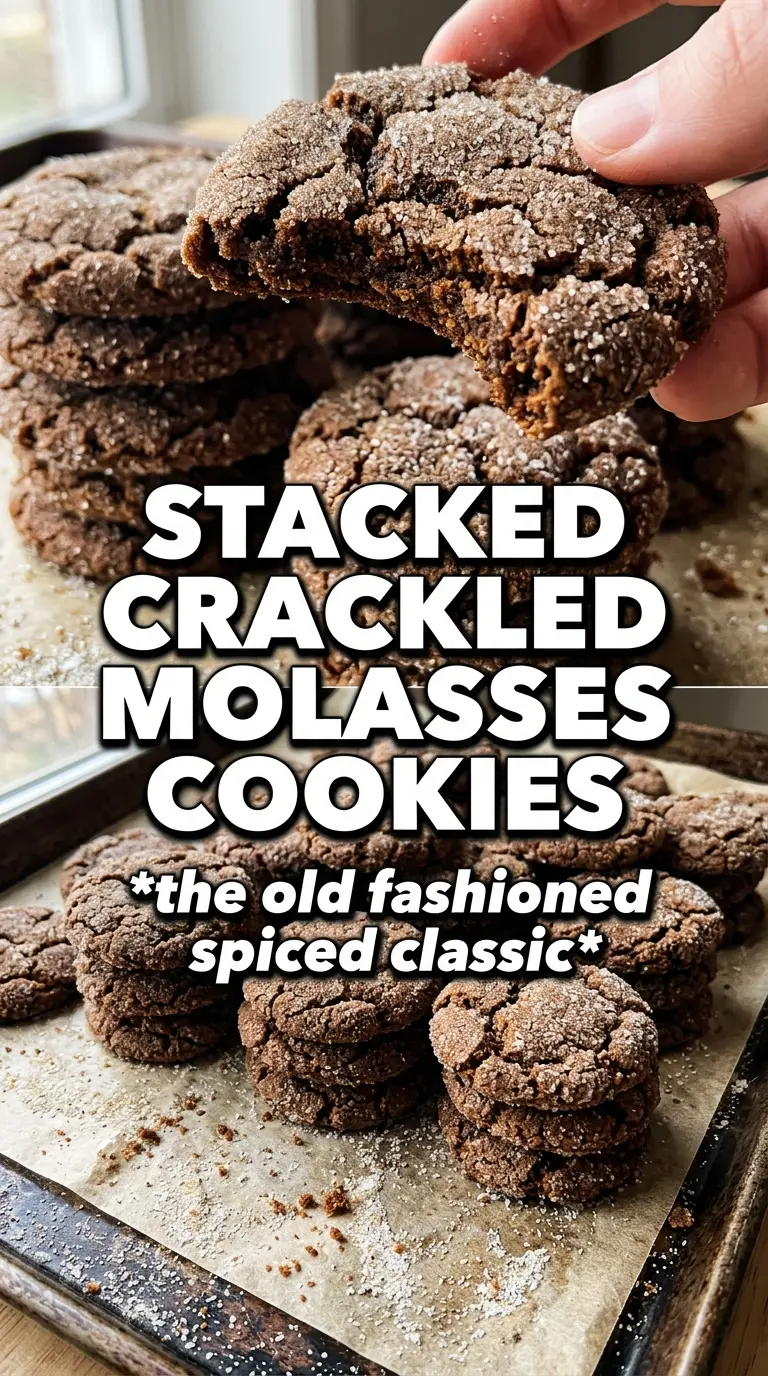
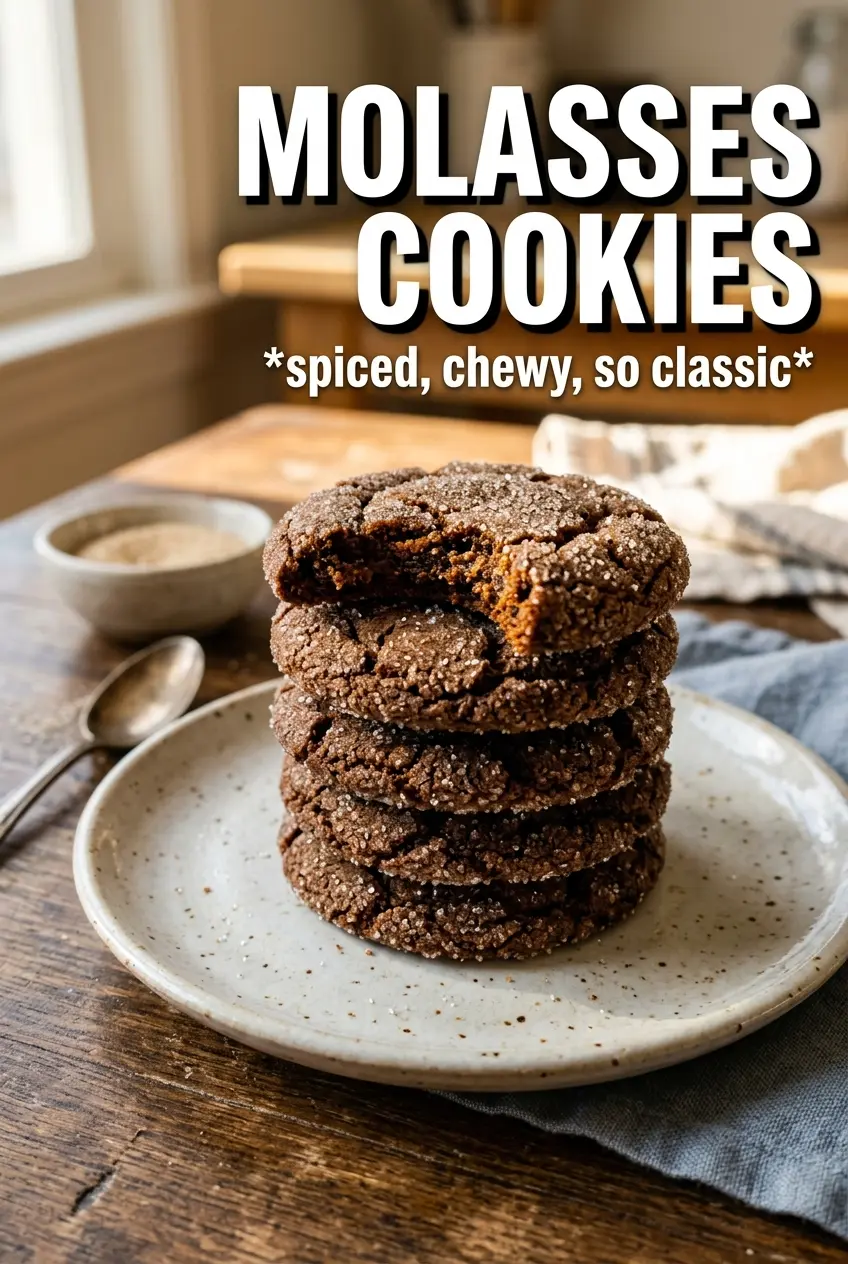
Molasses cookies should come out with crackled tops, crisp edges, and centers that stay soft and chewy long after they leave the oven. The best ones smell warm and deep-spiced before you even bite in, then give you that old-fashioned molasses flavor without tasting heavy or sticky. This version hits that balance by keeping the dough soft enough to spread into those classic crinkles, while the sugar coating gives each cookie a delicate sparkly crust.
The trick is in the spice blend and the bake time. Black pepper sounds unusual, but it sharpens the warm spices and makes the molasses taste fuller instead of one-note. Chilling the dough just long enough helps the cookies hold their shape, and pulling them when the centers still look slightly underdone keeps them chewy instead of dry.
Below, I’ll walk you through the one step that matters most for that crackled top, plus a few swaps and storage tips that help these cookies stay good for days.
The dough chilled just long enough to roll easily, and the cookies came out with those classic cracked tops and soft centers. The sugar coating gave them the best little crunch.
Love the crackled tops and soft middles? Save these sugar-dusted molasses cookies for the next time you want deep spice and a chewy bite.
The Reason These Cookies Crack Instead of Spreading Flat
The crackled top comes from a dough that’s sturdy enough to hold shape, but still soft enough to expand in the oven before the crust sets. If the butter and sugar aren’t beaten until light and fluffy, the cookies bake up denser and lose that pretty split top. And if the dough goes into the oven too warm, the cookies spread before the outside has a chance to set, which is how you end up with thin, smooth cookies instead of thick, craggy ones.
Chilling matters here, even though it’s only a short rest. It firms up the butter just enough to slow the spread, but it also gives the flour time to hydrate, which improves the texture in the center. The result is a cookie that looks rustic in the best way: wrinkled surface, crisp edges, soft middle.
What Each Ingredient Is Doing in These Molasses Cookies
- Molasses — Use regular molasses, not blackstrap. Blackstrap is too bitter and intense for this cookie, while regular molasses gives you that deep caramel note and the right amount of moisture.
- Brown sugar — This does more than sweeten. It brings chew and a soft, almost fudgy center that granulated sugar alone can’t give you.
- Butter — Softened butter creams properly with the sugars and helps build the cookie’s structure. If it’s too warm, the dough turns loose and the cookies spread too much.
- Black pepper — It doesn’t make the cookies taste peppery. It wakes up the cinnamon, ginger, cloves, and allspice so the spice flavor tastes deeper and cleaner.
- Baking soda — This is what helps the cookies puff, crack, and brown. Don’t swap in baking powder here; it changes the texture and the tops won’t split the same way.
- Granulated sugar for rolling — That coating gives the finished cookies their sparkle and a thin crisp shell that contrasts with the soft middle.
How to Build the Dough So the Cookies Stay Chewy
Blending the Dry Spices Evenly
Whisk the flour, baking soda, and spices together until everything looks fully blended, with no streaks of cinnamon or clumps of baking soda. This keeps one bite from tasting flat and the next from tasting overspiced. If the spices aren’t mixed well now, you’ll never fix that later in the dough.
Creaming for Lift and Tenderness
Beat the butter with the brown sugar and granulated sugar until it looks lighter and slightly fluffy, not greasy or dense. That step traps air, which helps the cookies rise and crack instead of baking up compact. Once the molasses, egg, and vanilla go in, stop beating as soon as they’re combined so the dough stays tender.
Chilling Just Enough
Fold in the flour mixture only until no dry streaks remain, then chill the dough for the full 30 minutes. The dough should feel firm enough to scoop without sticking to everything, but not hard. If you chill it too long, let it sit at room temperature just until scoopable again; rock-hard dough won’t roll evenly in sugar.
Baking Until the Centers Look Underbaked
Scoop generous 1 1/2 tablespoon portions, roll them in sugar, and bake until the tops are crinkled and the centers still look soft. That underdone center is the whole point. Pull them too late and they dry out fast, but pull them too early and they won’t set enough to hold that chewy middle once they cool.
Orange-Spice Molasses Cookies
Add 1 teaspoon finely grated orange zest to the dough with the vanilla. The orange lifts the warm spices and makes the molasses taste brighter without changing the cookie’s chewy texture.
Gluten-Free Version
Swap in a cup-for-cup gluten-free flour blend that includes xanthan gum. The cookies will still spread and crinkle, but they may be a touch more delicate when warm, so let them cool fully on the pan.
Extra-Spicy Ginger Molasses Cookies
Increase the ginger by 1/2 teaspoon and add a pinch more black pepper. The cookies stay balanced, but the spice note lands sharper and more pronounced.
Storage and Reheating
- Refrigerator: Store in an airtight container for up to 5 days. The cookies stay chewy, though the sugar coating softens a little after the first day.
- Freezer: These freeze well. Freeze baked cookies in a single layer, then move them to a freezer bag for up to 3 months, or freeze scooped dough balls and roll in sugar right before baking.
- Reheating: Warm cookies in a 300F oven for 3 to 4 minutes just until the edges loosen. The biggest mistake is microwaving them too long, which turns the centers gummy and dulls the sugar crust.
Questions I Get Asked About This Recipe
Molasses Cookies
Ingredients
Equipment
Method
- Whisk all-purpose flour, baking soda, cinnamon, ginger, cloves, allspice, black pepper, and salt until evenly combined and no spice streaks remain.
- Beat unsalted butter, brown sugar, and granulated sugar until fluffy, then mix in molasses, egg, and vanilla extract just until smooth and glossy.
- Fold the flour mixture into the molasses mixture until just combined, stopping as soon as no dry flour is visible.
- Refrigerate the dough for 30 minutes to firm it up and help the cookies hold shape.
- Preheat the oven to 375°F and line sheet pans with parchment paper.
- Scoop dough into 1-1/2 tablespoon balls, then roll generously in granulated sugar so the tops sparkle.
- Bake for 9-11 minutes at 375°F until the tops are crinkled and the centers look underdone.
- Cool on the pan for 5 minutes so the cookies finish setting into chewy centers with crisp edges.