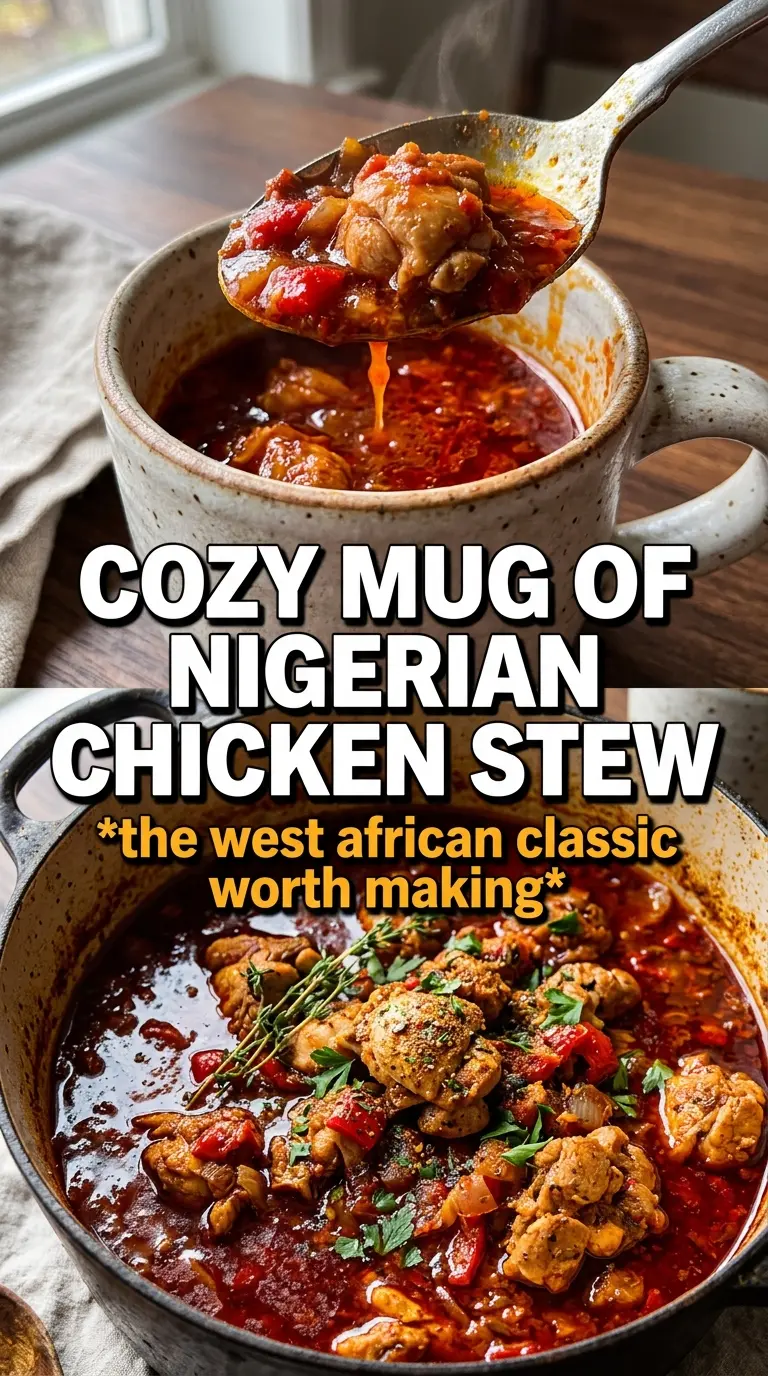
Deep orange-red Nigerian chicken stew earns its place on the table because the sauce cooks down until it tastes rounded, not sharp, and the chicken settles into it with enough backbone to stand up to rice. The best versions are glossy and bold, with oil floating at the top of the finished stew and chicken that still has texture instead of falling apart into the pot.
What makes this method work is patience at the stove. The blended tomato-pepper base has to fry long enough to lose that raw edge, and that means stirring often while the sauce darkens and the oil starts to separate. If you rush that part, the stew tastes thin and bright instead of deep and savory. Browning the chicken first also matters because it gives you a better finish in the sauce and keeps the meat from turning soft before the stew is ready.
Below, I’ll walk through the part that trips most people up, plus the small ingredient choices that make the stew taste like it had time to breathe.
The sauce cooked down beautifully and finally had that rich red-orange color I’ve been trying to get for years. Frying the blended pepper mix until the oil came up made all the difference, and the chicken held up perfectly over rice.
Save this Nigerian chicken stew for the night you want a deep, peppery sauce that clings to rice and gets better after a long simmer.
The Part Most Stews Get Wrong: Cooking the Pepper Base Until It Turns Dark and Glossy
The stew starts tasting like itself only after the blended tomato-pepper mixture has been cooked long enough to lose its raw, almost metallic edge. That means medium-high heat, frequent stirring, and enough time for the sauce to darken and the oil to rise to the surface in little pools. If you stop early, the finished stew tastes bright and thin, no matter how well you seasoned the chicken.
The other mistake is crowding the pot with too little oil or too much liquid from the blender. The sauce needs to fry, not steam. If it sputters constantly and never thickens, keep cooking and keep stirring until the bubbling gets heavier and the color shifts from fresh red to a deeper brick orange.
What Each Ingredient Is Actually Doing in This Stew
- Plum tomatoes — These give the stew body without as much water as salad tomatoes. Canned plum tomatoes are a smart choice here because they’re consistent and easy to blend smooth. If you use fresh tomatoes, cook them longer and expect a looser sauce.
- Red bell peppers — They bring sweetness, color, and volume. Don’t swap these for green peppers unless you want a sharper, less rounded stew. Roasted red peppers can work in a pinch, but the finished flavor will be softer and less traditional.
- Scotch bonnet or habanero — This is where the heat lives. Use one pepper if you want the stew warm rather than fiery, or keep both if you want the finish to hit harder. Seed removal lowers the heat, but it also tones down the pepper’s fragrance, so adjust with that in mind.
- Chicken pieces with bone — Bone-in chicken stays juicier and gives the stew more flavor while it simmers. Thighs and drumsticks work especially well because they handle the long cook without drying out. If you use boneless chicken, shorten the simmer so it doesn’t go stringy.
- Vegetable oil — This isn’t just for cooking; it helps fry the pepper base until the sauce darkens and separates properly. The oil floating on top at the end is part of the texture and the look of the dish. Don’t cut it too far or the sauce won’t develop the same richness.
- Bouillon and curry powder — These round out the savory base and give the chicken its seasoning before it ever hits the pot. The curry powder should support the stew, not dominate it, so keep it measured. If you use stock powder instead of bouillon cubes, dissolve it well into the chicken seasoning so it distributes evenly.
Building the Stew So the Chicken Stays Juicy
Seasoning and Marinating the Chicken
Rub the grated onion, thyme, curry powder, bouillon, salt, and pepper all over the chicken and let it sit for at least 30 minutes. The onion does more than add flavor; it softens the chicken’s edge and helps the seasoning cling. If you skip the marinating time, the meat still works, but the flavor stays on the surface instead of settling in.
Frying the Chicken First
Fry or oven-bake the chicken until it’s golden and mostly cooked through. You’re looking for color, not full tenderness yet, because the final simmer finishes the job. If the chicken goes into the stew raw, it releases too much liquid and dulls the sauce.
Cooking Down the Pepper Sauce
Blend the tomatoes, bell peppers, scotch bonnet, and the rest of the onion until smooth, then fry that puree in hot oil for 30 to 40 minutes. Stir often, scraping the bottom so the sauce doesn’t catch and scorch. The signal that it’s ready is a deeper color, thicker texture, and visible oil pooling around the edges and on top.
Finishing the Stew
Add the chicken to the cooked sauce and simmer until the meat is fully tender and coated. This last stage is about bringing everything together, not boiling hard. Keep the heat steady and moderate; aggressive boiling can break the sauce back down and make the oil separate too much.
How to Adjust the Heat, Richness, and Cook Time Without Losing the Character of the Dish
Milder Heat for a Wider Table
Use one scotch bonnet or habanero instead of two, and remove the seeds if you want the heat to sit farther in the background. You’ll still get the pepper aroma and the stew’s signature bite, just without the sharp burn that lingers. The color stays the same.
Oven-Baked Chicken for Less Oil
Bake the seasoned chicken until browned if you don’t want to fry it. You’ll save oil, but you’ll lose a little of the fried edge that helps the chicken stand up to the stew. The sauce still carries the dish, so this is a solid lighter option.
Gluten-Free and Naturally Dairy-Free
This recipe already works for both diets as written, as long as your bouillon or stock powder is gluten-free. That makes it an easy main dish to serve with steamed rice without changing the flavor or the texture of the stew. Check the seasoning cubes once and you’re set.
Using Boneless Chicken
Boneless thighs cook faster and stay more forgiving than breast meat. Add them toward the end of the sauce simmer so they don’t overcook while the stew thickens. Breast meat works, but it needs even less time and can dry out if you treat it like bone-in pieces.
Storage and Reheating
- Refrigerator: Store in an airtight container for up to 4 days. The flavor deepens overnight, and the sauce thickens as it chills.
- Freezer: It freezes well for up to 3 months. Cool it completely first, then freeze in portions so the chicken and sauce reheat evenly.
- Reheating: Warm it gently on the stove over low to medium heat with a splash of water if needed. Don’t blast it in the microwave on high for too long or the chicken can tighten up and the sauce can spit.
Answers to the Questions Worth Asking
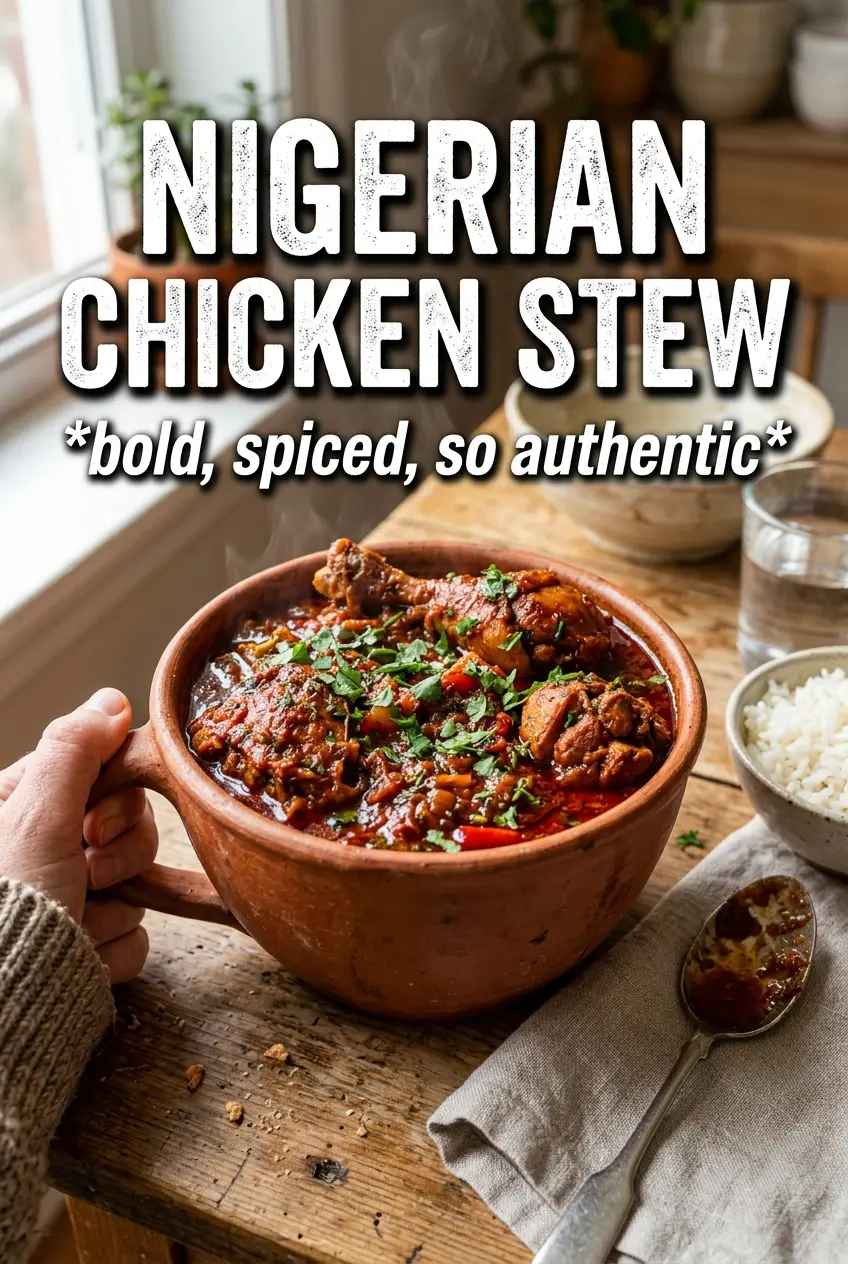
Nigerian Chicken Stew
Ingredients
Equipment
Method
- Season the chicken with half the onion (grated), thyme, curry powder, bouillon, salt, and pepper, then toss to coat evenly. Marinate for 30 minutes so the spices cling to the chicken.
- Fry or oven-bake the chicken until golden and mostly cooked through, then set aside. Keep it golden since it will finish cooking in the stew.
- Blend plum tomatoes, red bell peppers, scotch bonnet, and the remaining onion until smooth. Aim for a pourable, uniform sauce with no large pepper pieces.
- Heat 1/2 cup of the vegetable oil in a large pot over medium-high heat. Stir the blended pepper sauce in and cook for 30-40 minutes, stirring frequently, until oil floats on top and the sauce looks darker and deeply cooked.
- Add the fried chicken to the pot and coat it in the sauce. Simmer for 15-20 minutes until the chicken is tender and well coated.
- Taste the stew and adjust salt and pepper as needed, then serve over steamed rice with fresh parsley. Keep the stew hot so the sauce stays glossy over the rice.