Golden, sticky balsamic chicken thighs are the kind of skillet dinner that looks like you spent far longer on it than you did. The skin turns crisp in the pan, the tomatoes collapse into little sweet-tart bursts, and the sauce cooks down into a glossy glaze that clings to every bite instead of pooling at the bottom of the skillet.
What makes this version work is the order. The chicken gets a proper sear first, so the skin has a chance to crisp before any liquid goes in. Then the balsamic, honey, and broth reduce together with the browned bits from the pan, which gives the sauce depth instead of that sharp vinegar bite you get when it’s rushed. A little butter at the end smooths everything out and gives the glaze that restaurant-style sheen.
Below you’ll find the small details that matter here: how to keep the skin crisp, what to watch for as the sauce thickens, and the easiest swaps if you need to adjust for what’s in your kitchen.
The chicken skin stayed crisp even after the sauce went in, and the balsamic glaze thickened up exactly like you said. My husband kept spooning the tomatoes over his rice.
Keep this one pan balsamic chicken handy for nights when you want a glossy skillet dinner with crisp skin and a tangy balsamic glaze.
The Part That Keeps the Skin Crisp Instead of Soggy
The biggest mistake with balsamic chicken is adding the liquid too early. If the chicken hasn’t had time to brown properly, the skin softens before it ever has a chance to crisp, and the whole dish ends up tasting boiled instead of seared. A hard sear on the skin side first gives you the texture you want and leaves those browned bits in the pan for the sauce.
Keeping the chicken skin-side up once the sauce goes in matters just as much. The glaze reduces around the chicken instead of drowning it, and the skin stays exposed to the heat and steam in a way that keeps it from turning rubbery. If your sauce looks thin at the end, it usually just needs another minute or two with the heat on; balsamic reduces quickly once the water cooks off.
What the Chicken, Balsamic, and Butter Are Each Doing Here
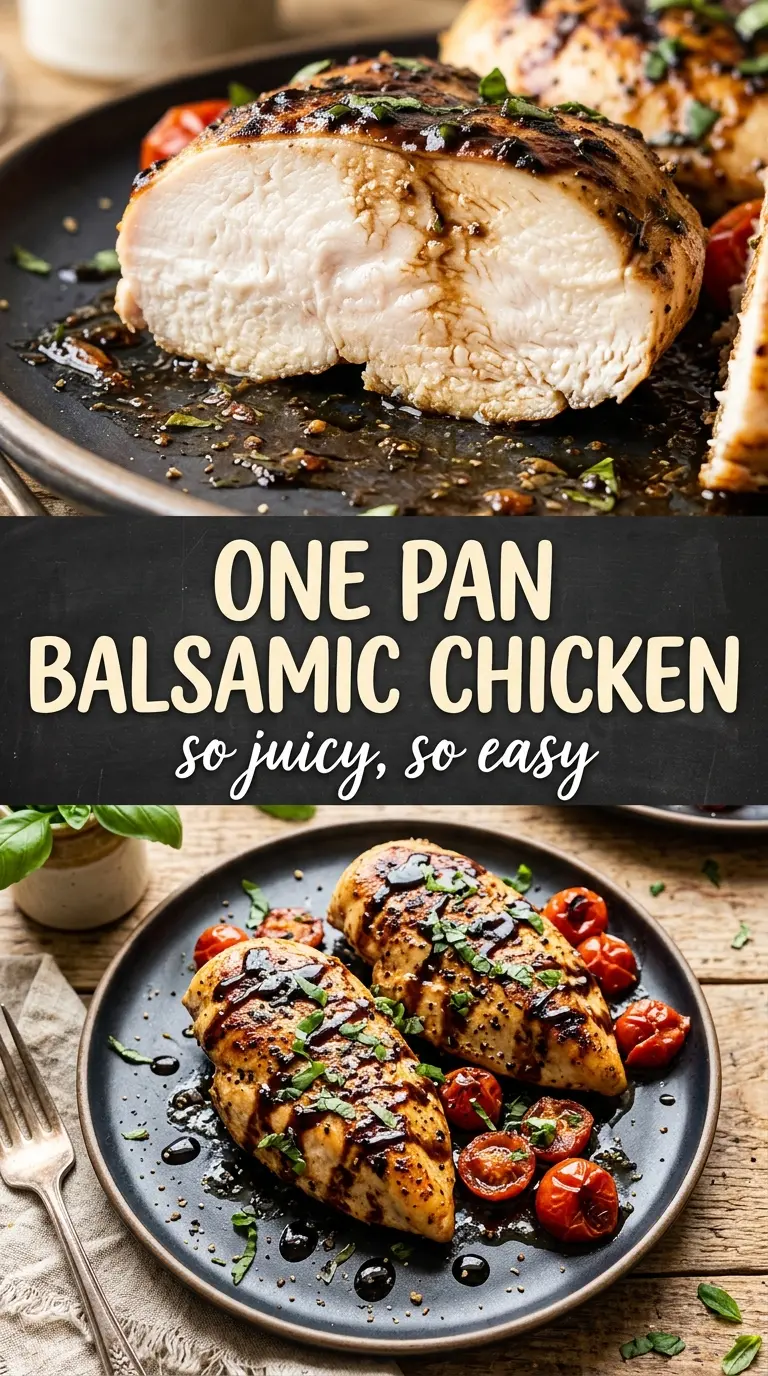
- Bone-in, skin-on chicken thighs — These hold up best to searing and simmering. Boneless thighs work in a pinch, but they cook faster and won’t give you the same crisp skin or rich skillet drippings.
- Balsamic vinegar — This is the backbone of the sauce, so use one you actually like the taste of. A cheap, harsh vinegar can still work once it’s reduced with honey and broth, but if your balsamic is thin and aggressively sharp, the glaze will taste flat.
- Honey — It softens the acidity and helps the sauce turn glossy. Maple syrup can stand in, but the flavor will lean a little deeper and less bright.
- Chicken broth — This keeps the glaze from becoming sticky-sweet and gives the sauce enough volume to reduce properly. Water works in an emergency, but the sauce won’t have the same savory backbone.
- Butter — Stirred in at the end, it rounds out the sharp edges and gives the glaze a smooth finish. Add it off the heat or over very low heat so it melts into the sauce instead of separating.
- Cherry tomatoes and garlic — The tomatoes burst and release juices that loosen the sauce slightly while adding sweetness, and the whole garlic cloves turn mellow and jammy instead of bitter.
Building the Glaze Without Breaking It
Seasoning and Searing the Chicken
Season the thighs generously on both sides, then lay them skin-side down in hot olive oil and leave them alone. The skin needs contact with the pan to render and brown; if you move the chicken too soon, it sticks and tears. After 7 to 8 minutes, the skin should be deeply golden and crisp enough to release without a fight. Flip it, give the second side a shorter sear, then pull it out while you build the sauce.
Softening the Garlic and Tomatoes
Whole garlic cloves and cherry tomatoes go into the skillet next. The tomatoes should blister and start to split, not fully collapse at this stage, because that quick heat wakes up their sweetness before the sauce goes in. If the garlic starts browning fast, lower the heat a touch; burnt garlic turns the whole dish bitter, and there’s no fixing that once it happens.
Reducing the Balsamic Sauce
Pour in the balsamic vinegar, honey, and broth, then scrape the pan well so every browned bit dissolves into the liquid. Bring it to a boil briefly, then settle into a steady medium heat once the chicken goes back in. You’re looking for a sauce that thickens enough to coat the back of a spoon and leaves a glossy trail across the pan, not a syrup so tight it turns leathery.
Finishing With Butter and Basil
Once the chicken hits 165°F and the sauce has turned syrupy, stir in the butter until it disappears into the glaze. The sauce should look darker, smoother, and a little richer right away. Finish with basil at the very end so it stays bright; if you cook it too long, it loses that fresh lift and the dish tastes heavier than it should.
Ways to Bend This Skillet Dinner to Your Kitchen
Use Boneless Thighs for a Faster Weeknight Version
Boneless thighs cook faster and are easier to eat, but they won’t give you quite the same crispy skin or deep pan drippings. Cut the sear time down and start checking for doneness a few minutes early so they stay juicy.
Make It Dairy-Free
This recipe is almost there already. Just skip the butter at the end or replace it with a small spoonful of olive oil for shine; the glaze won’t be as velvety, but the flavor will still land cleanly.
Swap the Tomatoes for Mushrooms or Shallots
If tomatoes aren’t on hand, sliced mushrooms or halved shallots can step in and still give the pan something sweet and savory to work with. Mushrooms deepen the sauce, while shallots add a softer onion-like sweetness.
Storage and Reheating
- Refrigerator: Store leftovers for up to 4 days. The skin will soften, but the sauce holds up well.
- Freezer: Freeze the chicken and sauce for up to 2 months, but expect the tomatoes to lose their shape. Thaw in the fridge overnight before reheating.
- Reheating: Warm gently in a covered skillet over low heat with a splash of broth or water. High heat dries out the chicken and can make the glaze seize up.
Answers to the Questions Worth Asking
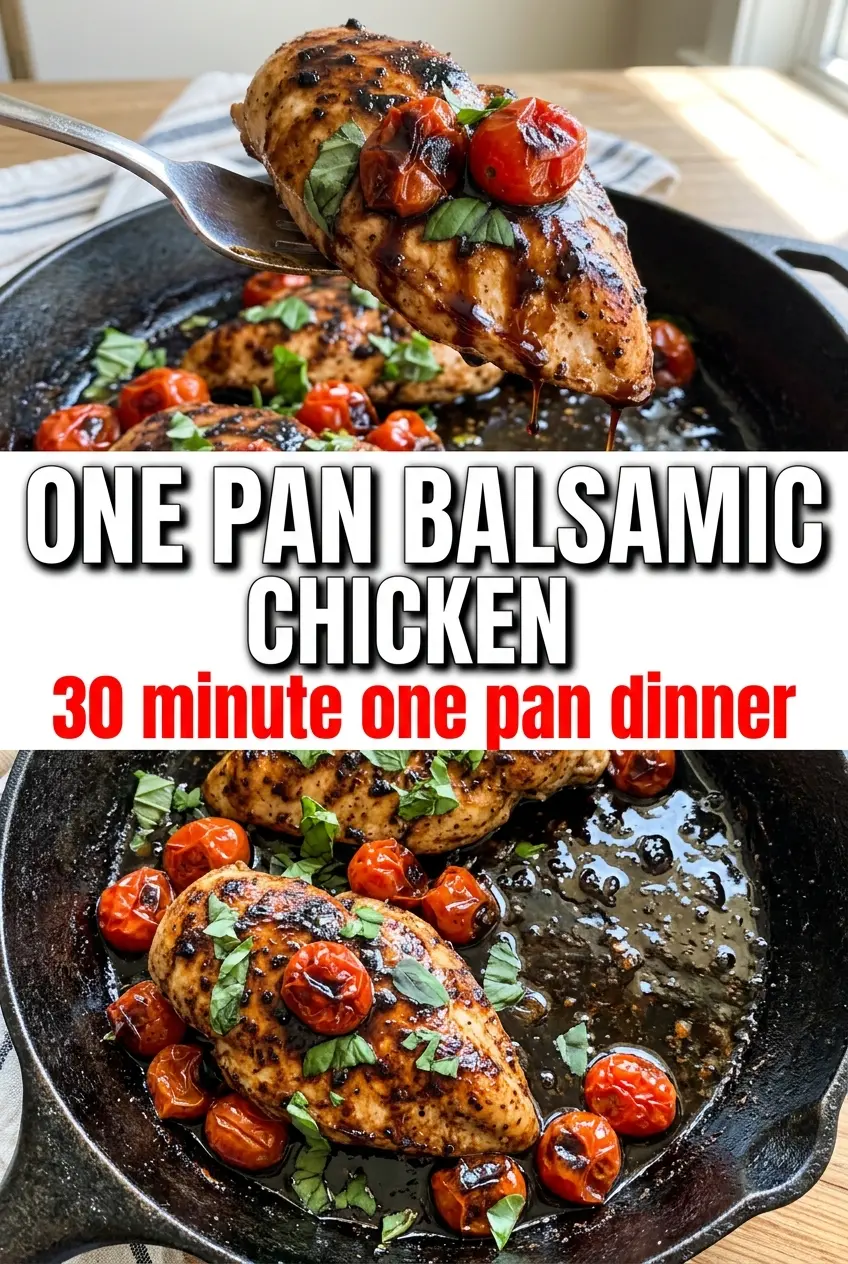
One Pan Balsamic Chicken
Ingredients
Equipment
Method
- Season chicken thighs generously on both sides with salt, pepper, garlic powder, and Italian seasoning.
- Heat olive oil in a large cast iron skillet over medium-high heat and sear chicken skin-side down for 7-8 minutes until skin is deeply golden and crispy.
- Flip and sear chicken for 3 more minutes, then remove from the skillet.
- Add whole garlic cloves and cherry tomatoes to the skillet and cook for 2 minutes until the tomatoes begin to blister.
- Pour in balsamic vinegar, honey, and chicken broth, stir, and bring to a boil, scraping up any browned bits.
- Return chicken skin-side up to the skillet and cook over medium heat for 12-15 minutes until chicken reaches 165°F and the balsamic sauce reduces to a thick glaze.
- Stir in butter until melted, scatter fresh basil over the top, and serve straight from the skillet.