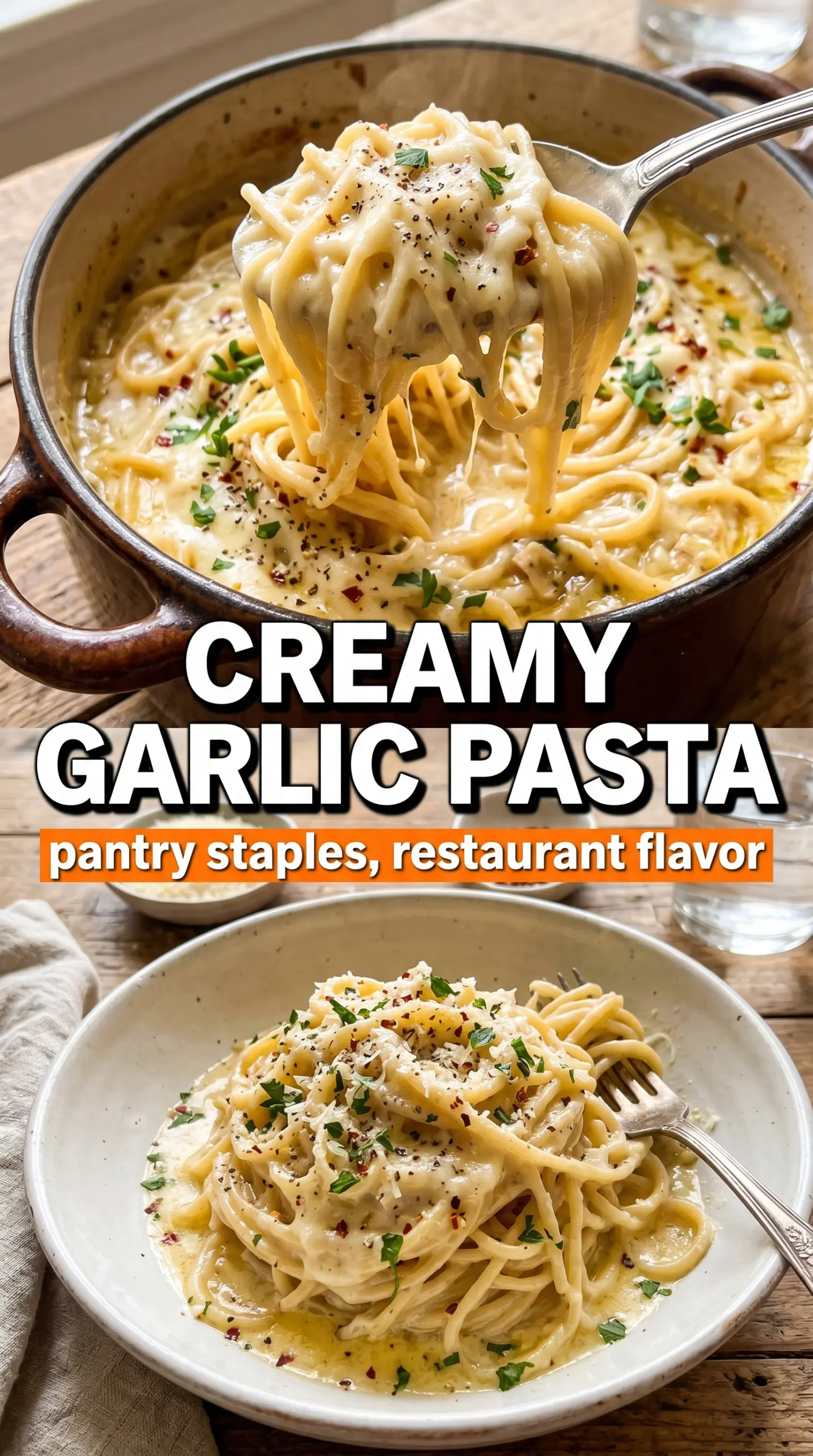
Silky noodles coated in a glossy garlic cream sauce are the kind of dinner that disappears fast, and this one-pot version earns its spot because the pasta cooks right in the sauce instead of getting drained and tossed at the end. That means the starch from the noodles helps thicken everything naturally, while the garlic and parmesan melt into a sauce that clings instead of sliding off the bowl.
The trick is keeping the heat gentle once the cream and broth go in. A hard boil can reduce the liquid too quickly on the outside while leaving the pasta underdone in the center, and it can also make the dairy separate before the parmesan has a chance to emulsify. Stirring often matters here, not as busywork but because the noodles need movement to cook evenly and release enough starch for that glossy finish.
Below you’ll find the exact point where the sauce turns creamy, plus a few swaps that still keep the texture on track if you need to adjust the recipe.
The sauce thickened up exactly when the pasta was al dente, and the garlic stayed mellow instead of bitter. I’ve made a lot of one-pot pastas, and this was the first one that came out glossy instead of watery.
Save this creamy garlic pasta for the nights when you want a one-pot dinner with a glossy parmesan sauce and almost no cleanup.
The Starch Happens in the Pan, Not After It
The biggest mistake with one-pot pasta is treating it like boiled pasta with sauce added later. That leaves you with a thin cream base and noodles that never quite help bind it. Here, the pasta goes straight into the broth and cream so the starch released during cooking becomes part of the sauce, which is what gives it that coated, clingy texture.
There’s also a timing point people miss: the sauce will look loose right before the pasta is done. That’s normal. Once the pan comes off the heat and the parmesan melts in, the liquid tightens into a glossy sauce within a minute or two. If it looks thick too early, the heat is too high and the pasta will finish before the sauce has a chance to come together.
What the Garlic, Cream, and Parmesan Each Need to Do
- Garlic — It needs just enough time in the butter to smell sweet and fragrant, not browned. If it goes deep golden, it turns bitter fast, and that bitterness carries through the whole sauce.
- Heavy cream — This is what gives the sauce its body and keeps it from tasting thin. Half-and-half can work in a pinch, but it won’t reduce as richly, so the final sauce will be lighter and a little less velvety.
- Parmesan — Use finely grated parmesan, not big shreds. The finer texture melts more cleanly into the sauce and helps it stay smooth instead of turning stringy or grainy.
- Broth — Chicken broth gives the sauce a deeper, rounder base, while vegetable broth keeps it meatless without changing the method. Either way, use a broth you’d actually drink, because the liquid reduces and concentrates as the pasta cooks.
Building the Sauce Without Breaking It
Waking Up the Garlic
Melt the butter over medium heat, then add the minced garlic and stir constantly for 1 to 2 minutes. You want the garlic fragrant and just barely turning golden at the edges, not brown. Once it browns, the flavor shifts from sweet to sharp, and there’s no way to pull that bitterness back out. Keep the heat moderate so the butter doesn’t scorch before the garlic softens.
Cooking the Pasta in the Cream Base
Pour in the broth and heavy cream and bring the pot to a gentle boil, then add the uncooked pasta. Stir often so the strands don’t clump and stick to the bottom, especially during the first few minutes when they’re stiff. The sauce will look thin at first, but as the pasta softens it releases starch and the liquid begins to turn silky. If it starts boiling hard, lower the heat right away; aggressive heat can cause the dairy to separate before the noodles finish cooking.
Finishing With Parmesan
When the pasta is al dente and most of the liquid has reduced, pull the pot off the heat before stirring in the parmesan and Italian seasoning. That off-heat finish keeps the cheese from clumping or turning grainy. Stir until the sauce looks smooth and glossy, then season with salt and cracked black pepper. The sauce should coat the pasta in a visible sheen, not pool like soup.
Lighter Cream Sauce
Swap half-and-half for the heavy cream if you want a lighter pasta, but expect a thinner sauce and a little less gloss. Let it reduce an extra minute before adding the cheese so it still coats the noodles instead of slipping off.
Vegetarian Version
Use vegetable broth instead of chicken broth and keep the rest the same. The sauce stays rich because the cream and parmesan carry most of the body, but the broth swap keeps the savory base without changing the texture.
Gluten-Free Pasta
Use a sturdy gluten-free spaghetti or linguine and check it a minute or two early, since gluten-free pasta can go from firm to soft fast. Stir more often than you would with wheat pasta because it’s more likely to break apart while the sauce thickens.
Storage and Reheating
- Refrigerator: Store leftovers in an airtight container for up to 3 days. The sauce thickens as it chills, so expect a much denser texture the next day.
- Freezer: I don’t recommend freezing this pasta. Cream sauces often separate after thawing, and the noodles turn soft and a little grainy.
- Reheating: Warm it slowly on the stovetop over low heat with a splash of broth, cream, or even water to loosen the sauce. High heat is the mistake here, because it tightens the cheese and can split the dairy before the pasta heats through.
Answers to the Questions Worth Asking
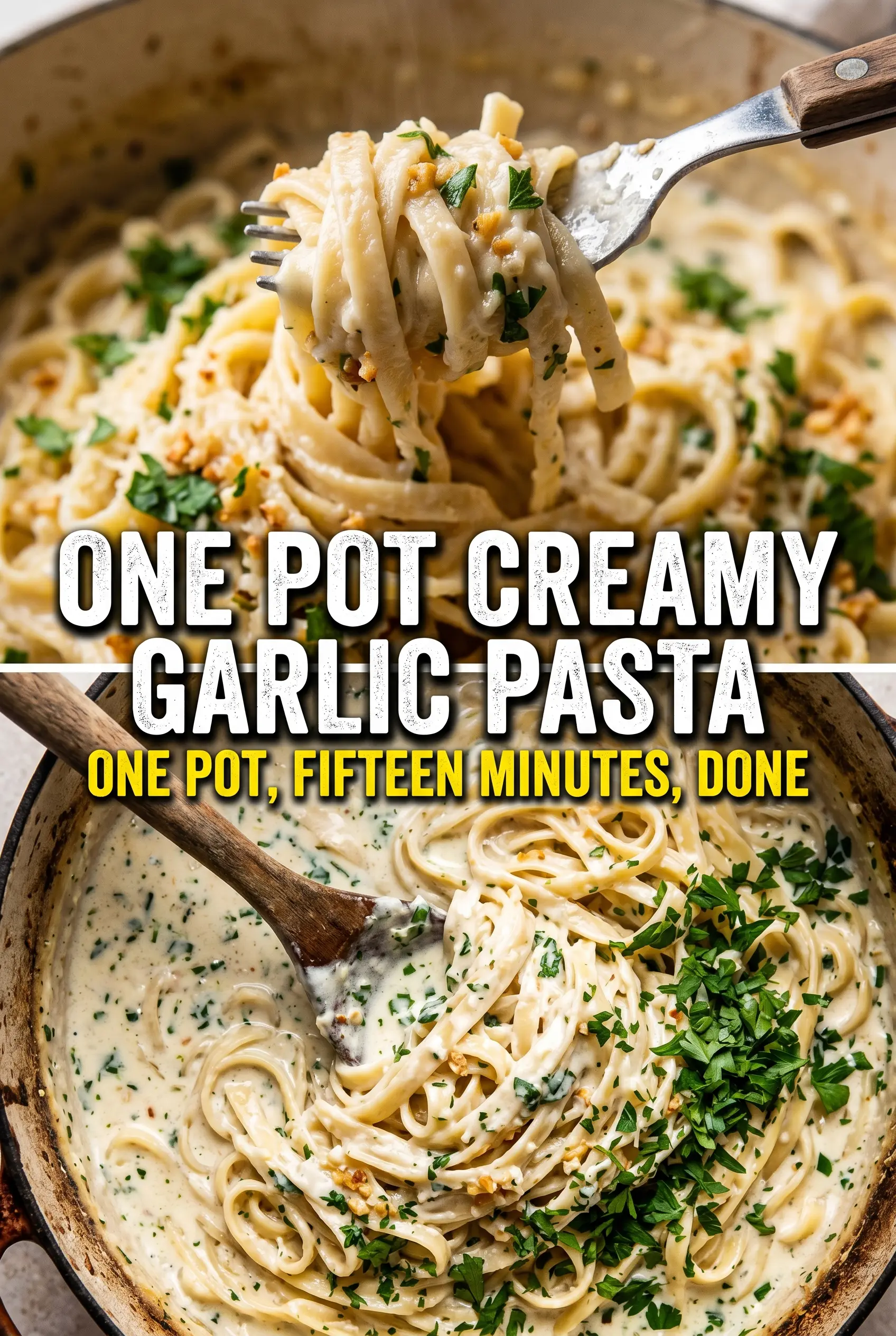
One Pot Creamy Garlic Pasta
Ingredients
Equipment
Method
- Melt the butter in a large pot over medium heat, then add the minced garlic and sauté for 1–2 minutes until fragrant and just golden, stirring to prevent browning.
- Add the broth and heavy cream and bring to a gentle boil, then keep it at a steady simmer so it reduces as the pasta cooks.
- Add the uncooked pasta and cook for 10–12 minutes, stirring frequently, until the pasta is al dente and the liquid has reduced into a creamy sauce.
- Stir in the grated parmesan and Italian seasoning until the cheese is fully melted and the sauce turns silky and glossy.
- Season generously with salt and cracked black pepper, then serve immediately topped with fresh basil and extra parmesan.