Oven roasted country style ribs turn out best when the meat has time to soften before the sauce goes on. You get that deep, porky tenderness that pulls apart with a fork, plus a sticky BBQ glaze that clings to every edge. The dry rub builds the crust first, then the uncovered finish tightens everything up into that caramelized layer people always go after first.
This method works because the ribs start low and slow, covered tightly so the meat can steam and braise in its own juices. That long, gentle heat breaks down the connective tissue without drying out the surface. Then the higher-temperature finish does the opposite job: it reduces the sauce, darkens the edges, and gives you the kind of sticky glaze that looks cooked before it tastes burnt.
Below, I’ll walk through the small details that matter here, especially how to tell when the ribs are tender enough to uncover and why the sauce goes on only at the end. A few simple timing cues make all the difference with this cut.
The ribs were fall-apart tender after the covered bake, and the BBQ glaze got sticky and caramelized without burning. I used boneless ones and the dry rub made them taste like they cooked all day.
Tender oven roasted country style ribs with a sticky BBQ glaze are perfect for Sunday supper or an easy make-ahead main.
Save these sticky BBQ country style ribs for a low-effort dinner with a caramelized crust
The Part Most Rib Recipes Rush: Tenderizing Before Browning
Country style ribs need time more than they need fuss. The covered bake does the heavy lifting here, and that’s why the ribs turn out tender instead of chewy. If you uncover them too early, the surface dries before the inside has relaxed, and the sauce can’t hide that. Keep the foil tight and let the oven do the slow work first.
- Low heat matters. At 300°F, the pork softens without squeezing out all its juices at once.
- Tight foil is not optional. It traps moisture and helps the ribs braise instead of roast dry.
- Wait for fork-tender, not just hot. The meat should start pulling apart easily at the thickest part before you add sauce.
What Each Ingredient Is Actually Doing Here
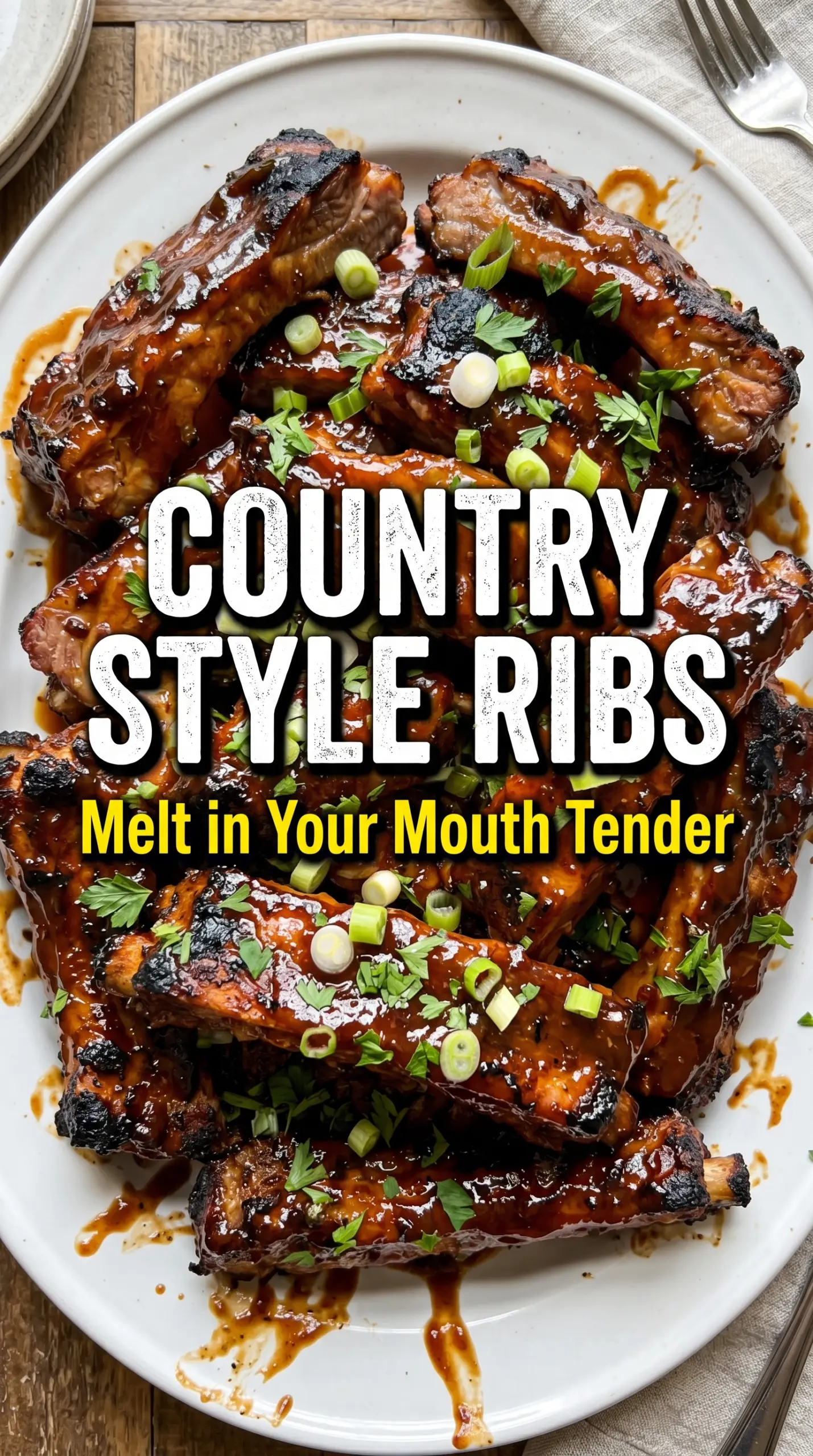
- Country style pork ribs — These are meaty and forgiving, which is why they work so well in the oven. Bone-in versions add a little extra flavor, but boneless ribs cook beautifully too. Just keep the pieces in a single layer so they soften at the same rate.
- Brown sugar — This helps the rub darken and gives the final glaze a little extra stickiness. You can use light or dark brown sugar; dark will taste a little deeper.
- Smoked paprika, cumin, garlic powder, and onion powder — This is the backbone of the dry rub. Smoked paprika gives the ribs that barbecue pit flavor without needing a smoker, and cumin adds warmth that keeps the seasoning from tasting flat.
- Cayenne — The heat stays in the background here. Use the full amount for a little kick, or cut it back if you want the sauce to stay sweet and smoky.
- BBQ sauce — This does the finishing work, not the cooking. A thicker sauce caramelizes best, while a thin, sugary sauce can scorch before it turns sticky. If yours is thin, brush on a modest layer first, then add a second coat near the end.
How to Get a Sticky Glaze Without Drying Out the Pork
Seasoning the Ribs Generously
Mix the dry rub until the sugar and spices look evenly blended, then coat every side of the ribs. Press the seasoning onto the meat instead of just scattering it over the top; that helps it stay put during the covered bake. If the rub seems to disappear after a few minutes, that’s normal as the sugar starts drawing out moisture. What matters is an even layer before the pan goes into the oven.
The Covered Bake
Set the ribs in a single layer and cover the dish tightly with foil. The foil needs to seal well, because escaping steam is what leads to dry edges and tough spots. After about 2 hours, the meat should be tender enough that a fork slips in with little resistance. If the ribs still feel tight, give them another 15 to 20 minutes before moving on.
The Sauced Finish
Uncover the ribs only once they’re tender through the center, then brush on a generous layer of BBQ sauce. Raise the oven to 400°F so the sauce can bubble and darken instead of just soaking in. Watch the edges closely during this stage; the goal is sticky and caramelized, not blackened. One coat gives you a light glaze, while a second brush-on near the end gives you that thicker, lacquered finish.
Use boneless ribs for cleaner serving
Boneless country style ribs cook a little more evenly and slice into neater portions. They still need the same covered bake, but they’re easier to plate if you’re serving a crowd. The texture stays just as tender when you keep the pan tightly covered.
Make it gluten-free
Use a gluten-free BBQ sauce and check the spice labels if you’re sensitive to cross-contamination. The cooking method stays exactly the same, and the ribs still get that sticky finish without any flour-based thickener.
Turn the heat down for a sweeter finish
Skip most of the cayenne and use a sweeter BBQ sauce if you want a milder, kid-friendly version. You’ll lose a little edge, but the ribs will still caramelize beautifully in the final bake.
Add smoke without a smoker
A smoky BBQ sauce or a little extra smoked paprika gives you deeper barbecue flavor. That swap is worth it if you want the ribs to taste like they spent time over coals, even though they stayed in the oven.
Storage and Reheating
- Refrigerator: Store leftovers in an airtight container for up to 4 days. The sauce will thicken as it chills, and the ribs will slice or shred even more easily the next day.
- Freezer: These freeze well. Wrap portions tightly with some sauce and freeze for up to 2 months, then thaw in the refrigerator before reheating.
- Reheating: Reheat covered in a 300°F oven with a spoonful of extra BBQ sauce or a splash of water so the meat stays moist. The common mistake is blasting them at high heat, which dries out the edges before the center warms through.
Answers to the Questions Worth Asking
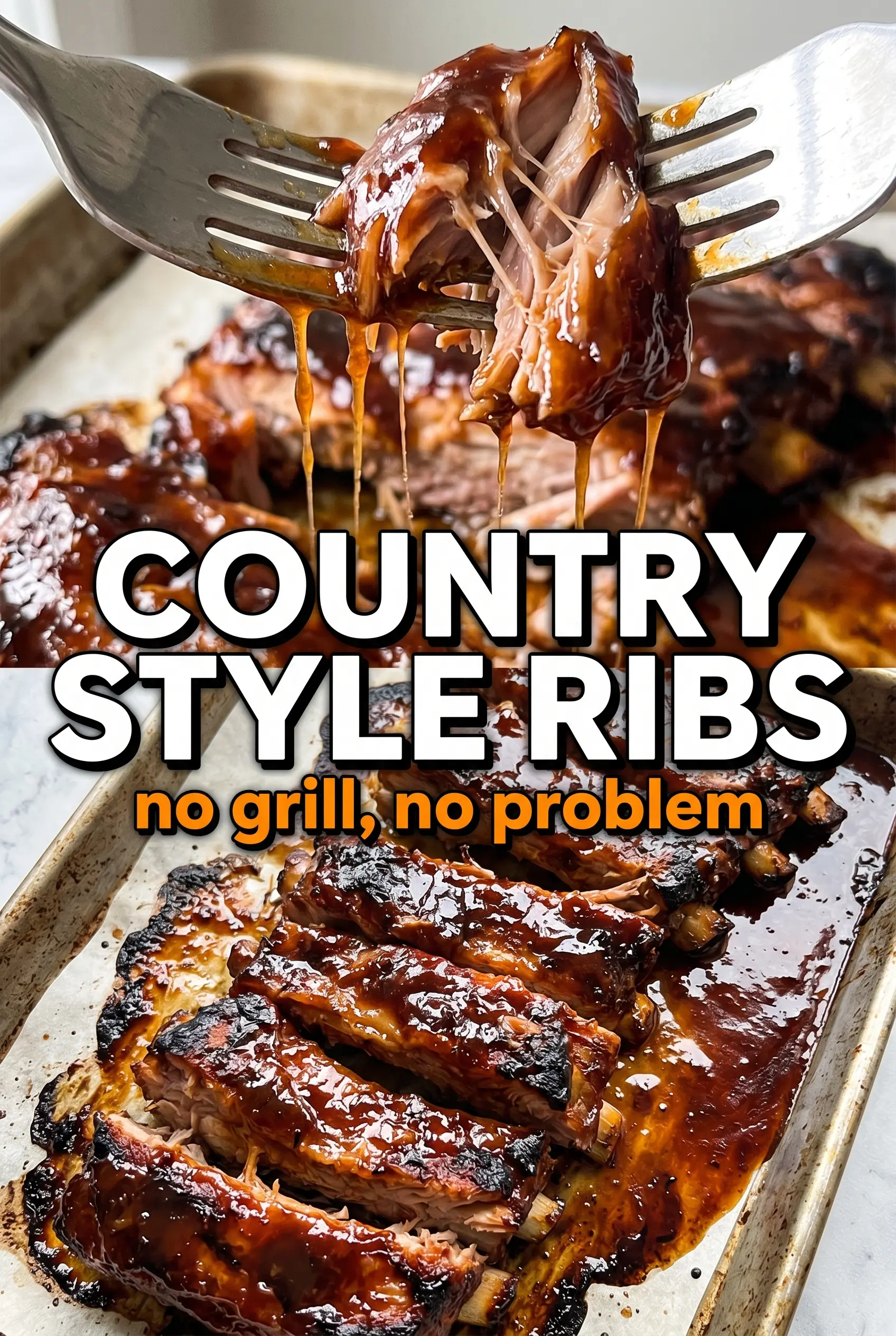
Oven Roasted Country Style Ribs
Ingredients
Equipment
Method
- Preheat oven to 300°F so it’s ready for slow roasting.
- Mix the dry rub ingredients, then coat the ribs generously on all sides.
- Place ribs in a single layer in a baking dish, cover tightly with foil, and bake for 2 hours until very tender.
- Uncover the ribs, brush generously with BBQ sauce, and increase oven to 400°F.
- Bake uncovered for 20–25 minutes until the sauce is caramelized and sticky.
- Serve with extra BBQ sauce so every bite stays glossy.