Parmesan crusted chicken earns its place in the weeknight rotation when you want a crisp, golden crust that actually stays attached to the chicken. The coating bakes up shatteringly crunchy instead of turning soft and greasy, and the Parmesan brings a salty, nutty edge that makes plain chicken breasts feel a lot more dinner-worthy. Cut into one and you get that satisfying crackle first, then juicy meat underneath.
The trick is in the layering. Flour gives the egg something to grab, egg gives the panko and Parmesan a sticky surface, and a little oil on top helps the crust brown in the oven instead of drying out. Pounded chicken breasts cook evenly, which keeps the crust from overbaking while you wait for the center to hit temperature. That balance is what keeps this from turning into just another breaded chicken recipe.
Below, I’ll walk through the part that matters most: how to keep the coating crisp, how to get good browning without frying, and what to change if you need a gluten-free or lighter version.
The coating came out crisp all over, even on the bottom thanks to the rack, and the chicken stayed juicy without any frying mess. The lemon at the end made the Parmesan taste brighter too.
Save this Parmesan Crusted Chicken for the night you want a crispy baked chicken dinner with real crunch and no frying pan.
The Rack Is What Keeps the Crust Crispy
If you bake breaded chicken directly on a sheet pan, the bottom steams in its own moisture and the crust goes soft before the center is fully cooked. A wire rack lets hot air circulate underneath, which keeps the Parmesan panko coating dry enough to stay crisp all the way around. That small detail is the difference between a decent baked chicken and one that actually cracks when you cut into it.
Pounding the chicken to an even thickness matters just as much. Thick spots force the thinner parts to overcook while you wait for the middle to reach 165°F. Even thickness gives you a better crust, a shorter bake, and juicier meat.
What the Parmesan and Panko Each Bring to the Table
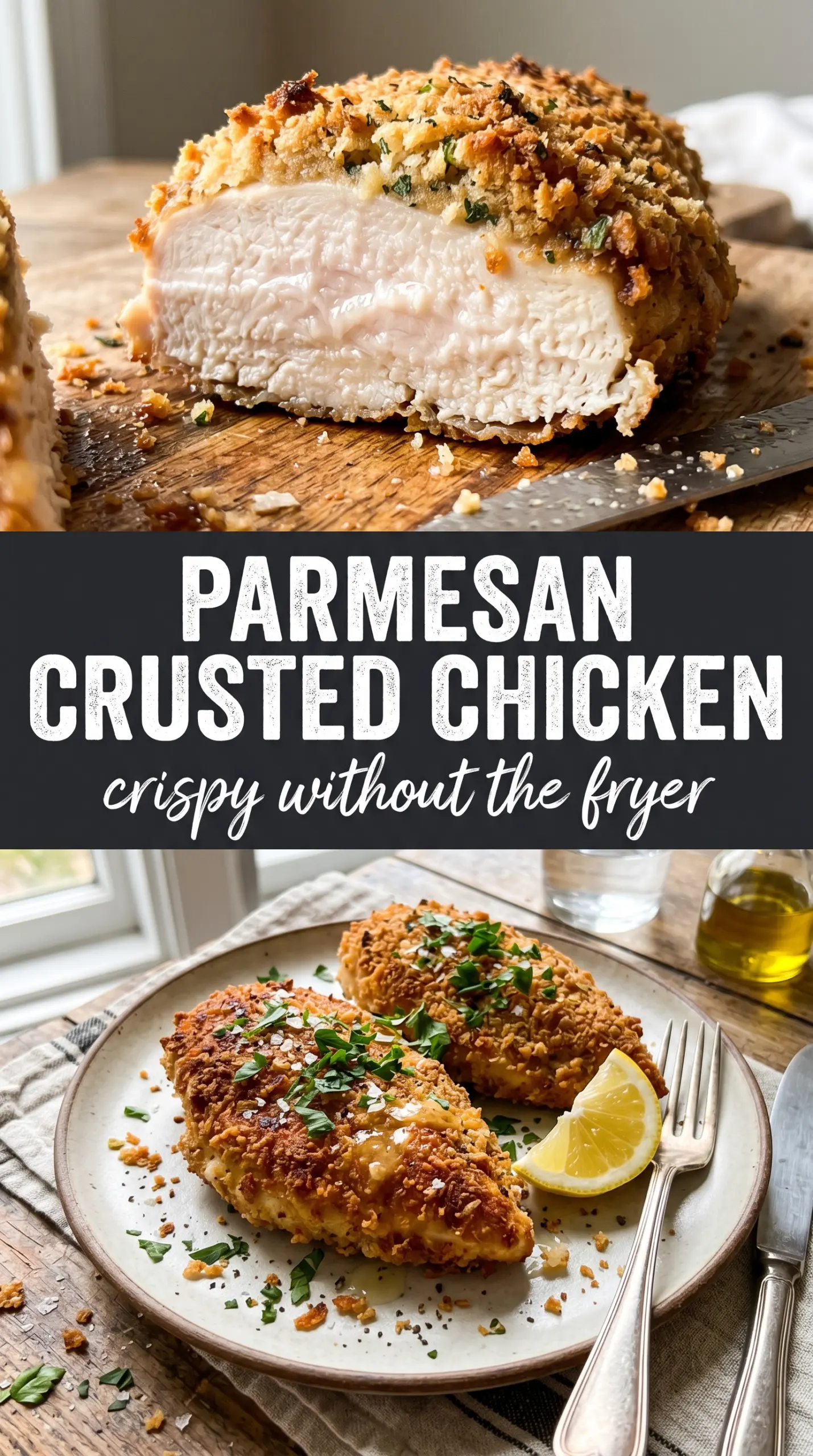
- Parmesan cheese — Freshly grated Parmesan melts into the panko and browns fast, which gives you that salty, nutty crust. The pre-shredded stuff often has anti-caking agents, so it doesn’t fuse as cleanly; use the bagged version only if that’s what you have, and expect a slightly less cohesive crust.
- Panko breadcrumbs — Panko stays lighter and crisper than regular breadcrumbs, which is why this chicken bakes up with more crunch and less density. If you swap in fine breadcrumbs, the coating will be tighter and less shattery.
- Eggs — The egg layer is the glue. Beat them well enough that the white and yolk are fully combined, or you’ll get patchy breading and bare spots.
- Olive oil — A little oil on top helps the crust brown in the oven and keeps the coating from tasting dry. Spray or drizzle it evenly; puddles will make some spots too dark before the rest catches up.
Building the Coating So It Stays Put
Dry the Chicken and Season First
Start with chicken breasts that are pounded to an even thickness, then season them before the breading goes on. A light coating of salt, pepper, and garlic powder on the chicken itself makes the meat taste seasoned all the way through, not just on the crust. If the chicken is wet on the surface, the flour will clump and the egg layer will slide, so pat it dry before you begin.
Work Through the Breading in Order
Press each breast into the flour first, shake off the excess, then dip it into the egg and let the extra drip away. Finish by pressing it firmly into the Parmesan-panko mixture so the coating really grabs onto every side. If you just dust it lightly, the crust falls off in the oven; pressure is what locks it on.
Bake on a Rack Until Deep Golden
Set the breaded chicken on a sprayed wire rack and bake at 425°F until the coating is deep golden and the center reaches 165°F. The high heat helps the panko and cheese brown before the chicken dries out. If the top is browning too fast, your rack may be too close to the heating element, so move it to the middle of the oven next time.
How to Adapt This Parmesan Crusted Chicken Without Losing the Crunch
Gluten-Free Version
Use a 1:1 gluten-free flour blend for the dredge and gluten-free panko for the crust. The result will still be crisp, but the coating may brown a little faster, so start checking near the 18-minute mark.
Lighter, Less Rich Crust
Reduce the Parmesan slightly and add a little more panko if you want a drier, lighter crust. You lose some of the salty cheese intensity, but the chicken still bakes up crunchy and the coating feels less heavy.
Chicken Cutlet Shortcut
If your chicken breasts are huge, slice them in half horizontally before pounding. Thin cutlets cook faster and give you more crust per bite, but they need closer attention in the oven because they can go from done to dry fast.
Storage and Reheating
- Refrigerator: Store leftovers in an airtight container for up to 3 days. The crust softens a bit, but the chicken stays usable for lunch or a quick second dinner.
- Freezer: Freeze baked chicken on a sheet pan first, then wrap individually. It freezes well, though the crust will never be as crisp as fresh.
- Reheating: Warm on a rack in a 375°F oven or air fryer until heated through. Skip the microwave if you want any crunch left; it turns the coating soggy fast.
Questions I Get Asked About This Recipe
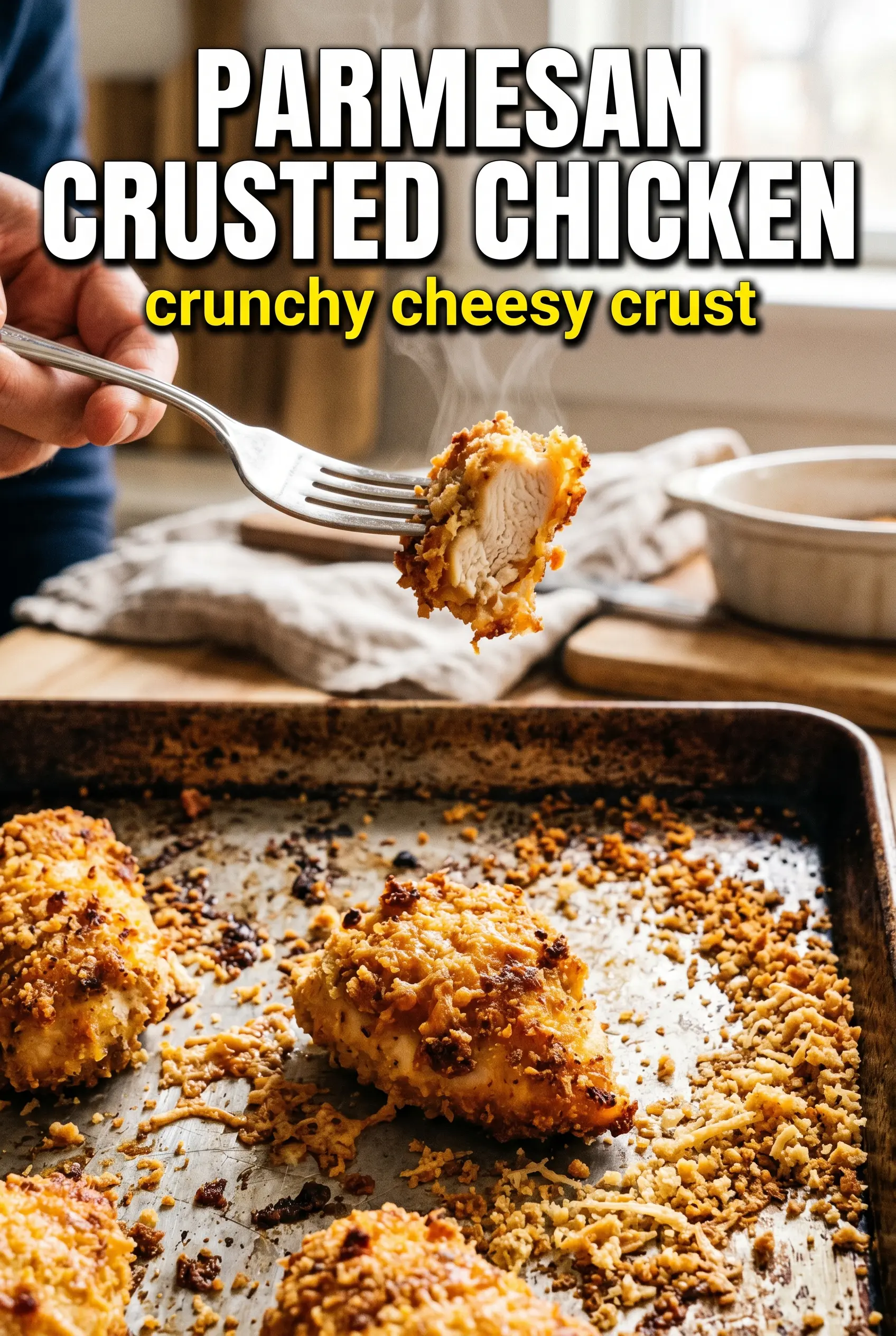
Parmesan Crusted Chicken
Ingredients
Equipment
Method
- Preheat the oven to 425°F and line a sheet pan with a wire rack; spray the rack with cooking spray and keep it ready for the chicken.
- Season the chicken breasts with salt, pepper, and garlic powder to taste, then pound them to even thickness if needed so they cook uniformly.
- Place the flour in the first station for dredging.
- Beat the eggs in a bowl for the second station.
- Mix the panko breadcrumbs, Parmesan cheese, Italian seasoning, garlic powder, and smoked paprika in the third station so the crumbs are evenly speckled.
- Dredge each chicken breast in flour, shaking off excess so the coating stays crisp.
- Dip the chicken into the beaten egg, letting any extra drip back into the bowl.
- Press the chicken firmly into the Parmesan panko so the crust fully covers all sides with a tight, textured layer.
- Drizzle or spray the olive oil over the breaded chicken to help the crust turn deep golden while baking.
- Bake for 20-22 minutes at 425°F on the wire rack until the crust is deep golden and the chicken reaches 165°F internally.
- Rest the chicken for 3 minutes to set the crust, then garnish with fresh parsley and serve with lemon wedges.