Parmesan Herb Roasted Acorn Squash turns soft, nutty squash into something with real contrast: caramelized edges, tender centers, and a crisp, salty cheese crust that clings to every ridge. The rings roast up like little edible halos, and that scalloped shape gives you more browned surface than a plain wedge ever could.
The trick is giving the squash a head start before the Parmesan goes on. Acorn squash holds a lot of moisture, and if the cheese goes in too early it can melt before the squash is tender, then burn before the surface ever crisps. Roasting first dries the exterior just enough to help the cheese form that golden crust in the final stretch.
Below you’ll find the small details that matter most: how thick to slice the squash, when to flip it, and how to keep the herbs from disappearing into the pan. It’s a simple side, but the order of operations makes all the difference.
The squash got tender first, then the Parmesan turned crisp instead of sliding off. I loved that the garlic and herbs didn’t burn, and the edges caramelized just like the photo.
Save this Parmesan Herb Roasted Acorn Squash for a side that bakes up with crisp Parmesan edges and tender, caramelized rings.
The Roast That Keeps the Squash Tender Before the Cheese Goes On
Acorn squash can go from firm to mushy fast, and the biggest mistake is treating the cheese like part of the first roast. Parmesan needs dry heat and exposed surface to crisp. If it goes on too early, it melts into the parchment, turns greasy, and never gets that lacy edge people actually want.
Slicing the squash into rings helps a lot here. The shape gives you more surface area, more browning, and a cleaner flip than thick wedges. Roast the rings until a knife slips in with only slight resistance, then add the cheese for the final stretch so it can bubble and set instead of disappearing into the squash.
What the Garlic, Herbs, and Parmesan Are Doing Here
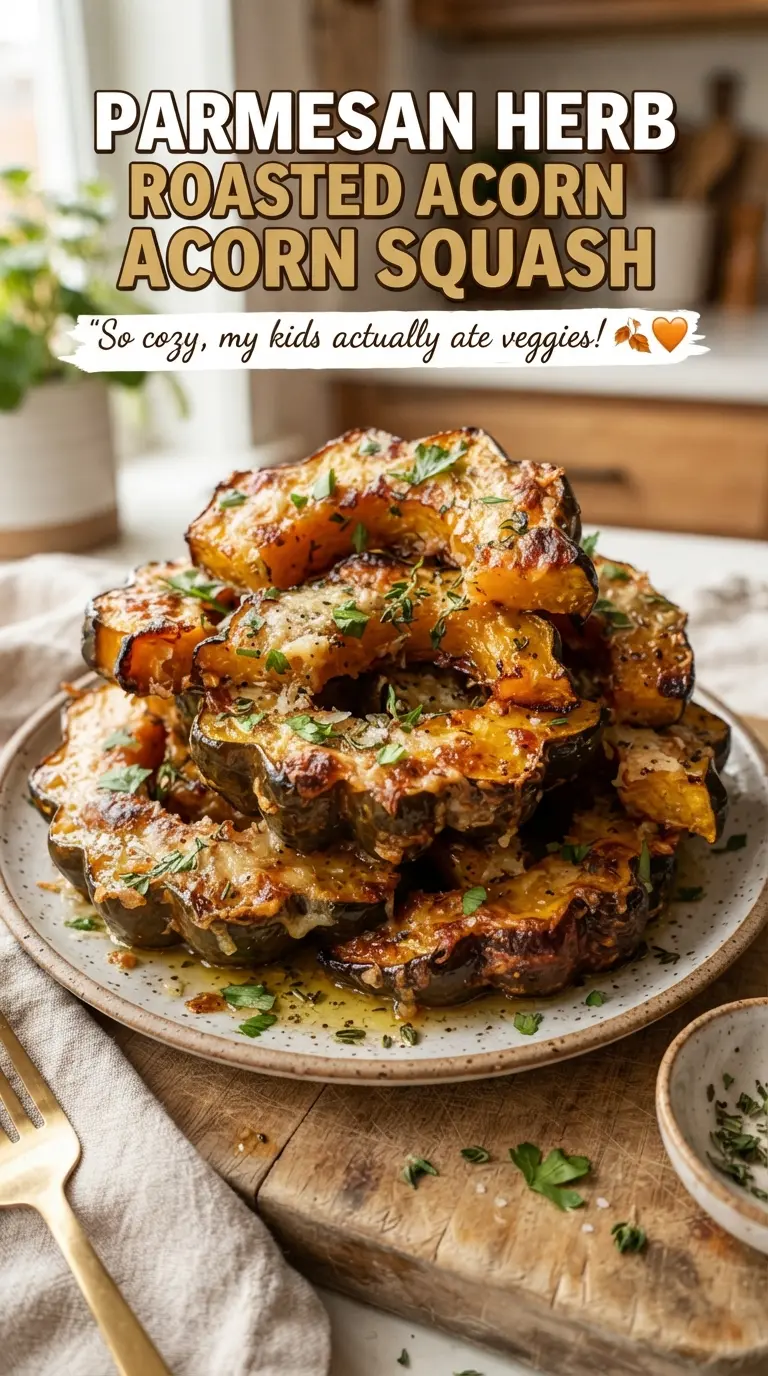
- Acorn squash — This is the base, and it needs enough thickness to hold its shape through roasting. Cut it into 1/2-inch rings so the outside browns before the centers collapse. Thinner slices can dry out; thicker ones take too long and the cheese overbrowns before the squash is tender.
- Olive oil — Oil carries the herbs and helps the squash roast instead of steam. Use enough to coat every surface lightly, but don’t drench it or the Parmesan will slide off later. A neutral oil works in a pinch, though olive oil gives the best flavor.
- Fresh thyme and rosemary — Fresh herbs matter here because they cling to the oil and perfume the squash without turning dusty. Dried herbs can work, but use less and crush them between your fingers first so they don’t taste sharp. Rosemary should be chopped fine so you don’t end up with woody bits.
- Parmesan — Grated Parmesan is what makes the crust crisp. Finely grated cheese melts too fast and can burn; coarsely grated Parmesan gives better texture and more visible golden bits. If you only have pre-grated cheese, it will still work, but the crust won’t be quite as lacy.
Getting the Rings Browned Without Burning the Cheese
Seasoning the squash first
Toss the squash with olive oil, garlic, thyme, rosemary, salt, and pepper until every ring looks lightly glossed. That coating keeps the garlic from scorching and helps the herbs stick to the surface. If the pan looks crowded or the squash is piled on top of itself, spread it out now; overlapping pieces steam instead of roast.
Roasting before the Parmesan
Lay the rings in a single layer on parchment and roast at 400°F for about 20 minutes. You want the undersides to start turning golden and the squash to soften around the edges, but not fall apart when lifted. If your slices are cut unevenly, the thinner ones will cook faster, so check the pan early and remove any pieces that are already tender.
Adding the cheese at the right moment
Flip the squash, then sprinkle the Parmesan over the top while the surfaces are still hot. The cheese should cling and begin to melt at the edges, not sit in dry piles. Return the pan to the oven for 12 to 15 minutes, watching for a deep golden color and crisp spots along the ridges. If the cheese starts darkening too fast, move the pan up one rack or lower the heat slightly for the last few minutes.
How to Adapt This for a Different Table
Make it dairy-free with a crunchy topping
Swap the Parmesan for a mixture of nutritional yeast and finely chopped toasted breadcrumbs or crushed almonds. You’ll lose the exact salty melt of the cheese, but you’ll keep a savory, crisp finish that still tastes like a finished side dish, not plain roasted squash.
Use pre-shredded cheese when that’s what you have
Pre-shredded Parmesan works, but it usually contains anti-caking starches, so the crust will be a little less delicate. Sprinkle it lightly and keep an eye on the pan during the final roast, since it can go from pale to too dark faster than freshly grated cheese.
Add heat without changing the method
A pinch of red pepper flakes tossed with the oil gives the squash a gentle back-of-the-throat heat that plays well with the sweet flesh and salty cheese. Add just enough to notice it; too much overwhelms the herbs and makes the Parmesan taste flatter.
Storage and Reheating
- Refrigerator: Store leftovers in an airtight container for up to 4 days. The Parmesan will soften, but the squash stays flavorful.
- Freezer: Not ideal. The squash turns soft and watery after thawing, and the cheese crust loses its crispness.
- Reheating: Warm on a parchment-lined sheet pan at 375°F until heated through and the edges perk back up, about 10 minutes. The microwave will make the topping limp and the squash soggy.
Answers to the Questions Worth Asking

Parmesan Herb Roasted Acorn Squash
Ingredients
Equipment
Method
- Preheat oven to 400F and line a sheet pan with parchment, so the rings roast evenly and won’t stick.
- In a large bowl, toss acorn squash rings with olive oil, garlic, fresh thyme leaves, fresh rosemary, salt, and black pepper until evenly coated, aiming for an even sheen on every ring.
- Arrange squash in a single layer on the prepared sheet pan and roast for 20 minutes, until edges start to caramelize.
- Flip the slices and sprinkle generously with grated Parmesan, using a light, even layer so it melts into a crisp crust.
- Roast 12-15 minutes more at 400F until the squash is tender and the Parmesan is golden and crisp, watching for deep golden spots on the tops and edges.