Peas with pancetta lands in that sweet spot between easy side dish and something people keep picking at before dinner hits the table. The peas stay bright and tender, the pancetta turns crisp and salty, and the whole pan finishes with a little butter and lemon zest that keeps it from feeling heavy. It’s the kind of side that wakes up a plate of roast chicken, pasta, or simple grilled fish without stealing the spotlight.
The trick is building flavor in stages. The pancetta renders first, giving you enough fat to soften the shallot and bloom the garlic without burning them. Frozen sweet peas are the right choice here because they cook fast and stay vivid, and a splash of broth gives just enough steam to heat them through without turning them dull or mushy. The mint at the end matters more than it looks on paper; it lifts the whole dish and makes the peas taste fresh instead of flat.
Below, I’ve included the timing that keeps the peas green, the swaps that still keep the dish balanced, and the small finishing move that makes this side taste restaurant-worthy instead of ordinary.
The peas stayed bright and the pancetta stayed crisp even after I tossed everything together. The little hit of mint at the end made it taste fresh, not greasy.
Save Peas with Pancetta for a fast Italian side with crisp pancetta, sweet peas, and a bright mint finish.
The Pancetta Fat Is the Difference Between Glossy Peas and Watery Ones
What goes wrong in a lot of pea sides is simple: the peas get heated, but nothing gives them a reason to taste like more than warm vegetables. Here, the pancetta does that work. As it crisps, it renders enough fat to carry the shallot and garlic, and that fat coats the peas just enough to make them taste fuller without turning greasy.
The other thing worth protecting is the color. Frozen peas don’t need long; they need heat and a little moisture. If you cook them until the broth is gone and keep going, they’ll dull and split. Pull them off as soon as they’re hot and bright green, then finish with butter and zest so the pan tastes fresh instead of cooked flat.
What Each Ingredient Is Actually Doing in This Dish
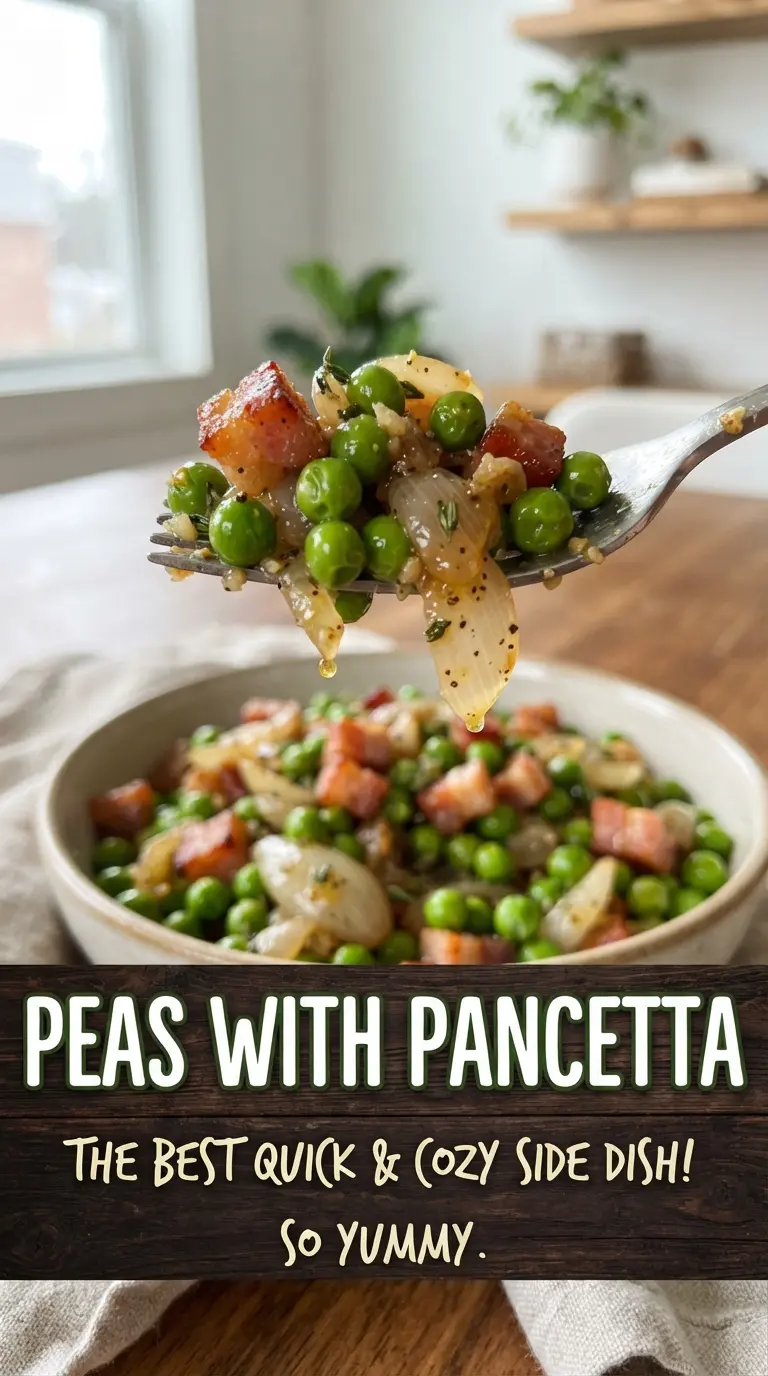
- Pancetta — This is the backbone of the dish. It brings salt, fat, and crisp texture, and that rendered fat is what seasons the peas from the inside out. Bacon works in a pinch, but it tastes smokier and a little louder; pancetta stays cleaner and more Italian in tone.
- Frozen sweet peas — Frozen is the smart move here. They’re picked and frozen fast, so they keep their sweetness and color better than fresh supermarket peas that have been sitting around. Don’t thaw them first; they go into the pan straight from frozen so they heat through without getting soft and wrinkled.
- Shallot and garlic — The shallot gives a mild sweetness that bridges the pancetta and peas, while garlic adds depth. Mince them finely so they soften quickly in the rendered fat. If you use onion instead of shallot, keep the amount smaller and cook a little longer so it doesn’t stay sharp.
- Chicken broth — Just enough broth loosens the pan and gives the peas a little steam. Water will work if that’s what you have, but the broth adds a roundness that keeps the dish from tasting thin. Use a low-sodium broth if your pancetta runs salty.
- Butter, lemon zest, and mint — Butter smooths the edges, lemon zest wakes everything up, and mint adds a fresh finish that keeps the peas from tasting heavy. Parsley is the backup if mint isn’t your thing. Add the herbs at the end so they stay bright.
Getting the Pancetta Crisp Before the Peas Go In
Rendering the Pancetta
Start the pancetta in olive oil over medium heat and give it time to release its fat and turn golden at the edges. If the heat is too high, the outside browns before the inside crisps, and you lose the clean crunch this dish needs. Once about half the pancetta is deep golden, scoop some out for topping and leave the rest in the pan so it can season the vegetables.
Softening the Shallot and Garlic
Stir the shallot into the hot fat and let it cook until translucent and tender, not browned. Garlic only needs about 30 seconds; once you smell it clearly, move on. If it sits too long in a dry pan, it can turn bitter fast, which is especially noticeable in a simple side like this.
Heating the Peas Without Overcooking Them
Add the peas and broth and cook just until they’re bright green and hot through. The broth should mostly disappear, but you don’t want to cook until the pan is dry and sizzling hard. That’s the point where peas start losing their pop and the pancetta can drift from crisp to chewy.
Finishing for Balance
Stir in the butter and lemon zest off the heat if the pan is running hot. That keeps the butter glossy instead of greasy and keeps the zest fresh and fragrant. Taste for salt at the end, since pancetta and broth can vary a lot, then top with the reserved pancetta and mint right before serving.
How to Adapt Peas with Pancetta for Different Tables
Dairy-Free Version
Skip the butter and finish with an extra teaspoon of olive oil instead. You’ll lose a little richness, but the pancetta fat carries most of the flavor anyway. The lemon zest and mint become even more important here because they replace the roundness the butter would normally add.
Vegetarian Peas with the Same Bright Finish
Leave out the pancetta and cook the shallot in olive oil with a pinch of smoked paprika or a little fennel seed if you want depth. The dish will be lighter and less salty, so you’ll need to season more deliberately at the end. A spoonful of grated Parmesan on top can help if vegetarian still includes dairy.
Using Bacon Instead of Pancetta
Bacon works, but it brings smoke and sweetness that pancetta doesn’t. Use a thinner cut if possible, and drain off excess fat if the pan starts looking glossy rather than lightly coated. The result is still good, just a little more American breakfast than Italian side dish.
Storage and Reheating
- Refrigerator: Store leftovers for up to 3 days. The peas stay tasty, but the pancetta will soften a bit.
- Freezer: I don’t recommend freezing this dish. The peas turn mealy and the pancetta loses its crisp texture.
- Reheating: Warm gently in a skillet over low heat with a small splash of broth or water. Microwaving works, but it tends to overcook the peas and make the pancetta chewy.
Questions I Get Asked About This Recipe
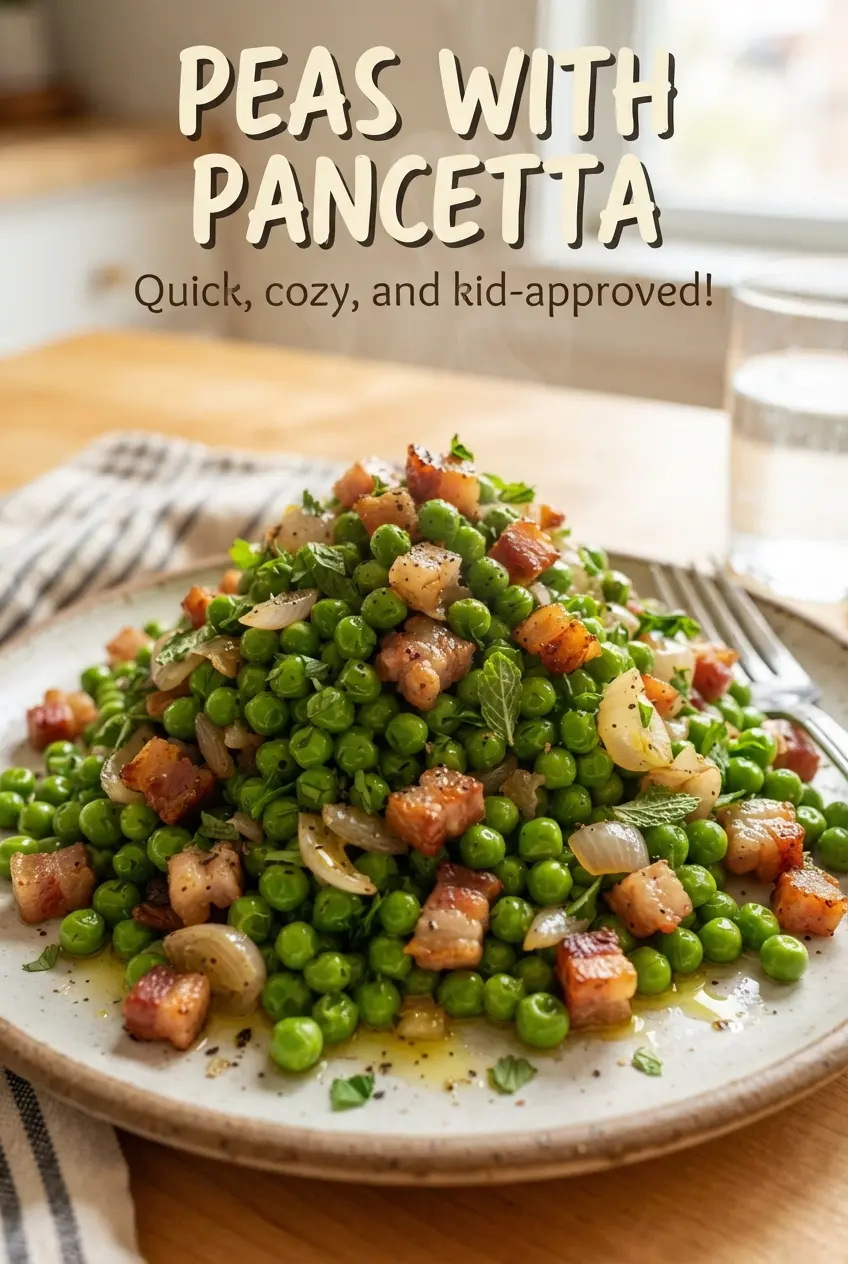
Peas with Pancetta
Ingredients
Equipment
Method
- Heat olive oil in a cast iron skillet over medium heat and cook pancetta for 6-8 minutes, stirring often, until crisp and golden. Remove half of the pancetta to reserve for topping.
- Add shallot to the skillet and cook for 2 minutes, stirring, until softened. Stir in garlic and cook for 30 seconds.
- Add frozen sweet peas and chicken broth, then cook for 4-5 minutes until the peas are bright green and hot. Stir occasionally to heat evenly.
- Stir in butter and lemon zest, then season with salt and pepper to taste. Turn off the heat once the butter melts and coats the peas.
- Top with the reserved pancetta and fresh mint, then serve immediately.