Slow-cooked pepper steak turns tender strips of flank steak into something glossy, savory, and just a little sticky around the edges. The peppers keep enough bite to stand up to the sauce, and the onions melt down into the broth so every spoonful tastes layered instead of one-note. Piled over white rice, it hits that sweet spot between takeout comfort and a meal that tastes like it had attention all day.
The trick is in the order. The steak goes in first, then the vegetables sit on top so they steam gently and keep some texture instead of disappearing into the sauce. A quick cornstarch slurry at the end matters, too, because slow cookers trap a lot of liquid and this dish needs a final thickening step to cling to the beef the way it should.
Below, I’ve included the details that matter most: how to keep the steak tender, when the peppers hold up best, and what to change if you want to make it gluten-free or stretch it a little further. There’s also a storage note for turning leftovers into an easy second dinner.
The steak stayed tender, the peppers didn’t turn mushy, and the sauce thickened up right at the end instead of staying watery. My husband went back for seconds over white rice and asked if I could make it again next week.
Save this slow cooker pepper steak for the nights when you want glossy soy-ginger sauce and tender beef over rice without standing at the stove.
The Reason the Steak Stays Tender Instead of Turning Stringy
Flank steak can go from tender to dry if it’s cooked too long at a hard simmer, which is why the slow cooker setup matters here. The low, steady heat gently loosens the fibers without hammering them, and slicing the steak against the grain gives you a shorter bite from the start. That one cut makes a bigger difference than most people expect.
The other thing that saves this dish is the sauce ratio. Too much liquid and the steak ends up floating in broth; too little and the slow cooker doesn’t have enough moisture to finish the beef evenly. The soy sauce, broth, vinegar, and ginger form a base that tastes balanced after hours of cooking, not flat or overly salty.
- Slice the flank steak thinly — Thin slices cook through faster and stay softer. If the steak is a little easier to cut when it’s partially frozen, that’s a good thing.
- Cut against the grain — This shortens the muscle fibers and keeps every bite from feeling chewy.
- Keep the peppers on top — They still soften, but they won’t vanish into the sauce the way they can if they sit under the steak for the whole cook.
- Finish with cornstarch at the end — Slow cookers don’t reduce liquid the way a skillet does, so the slurry is what turns the broth into a proper glossy sauce.
What Each Ingredient Is Actually Doing in the Pot
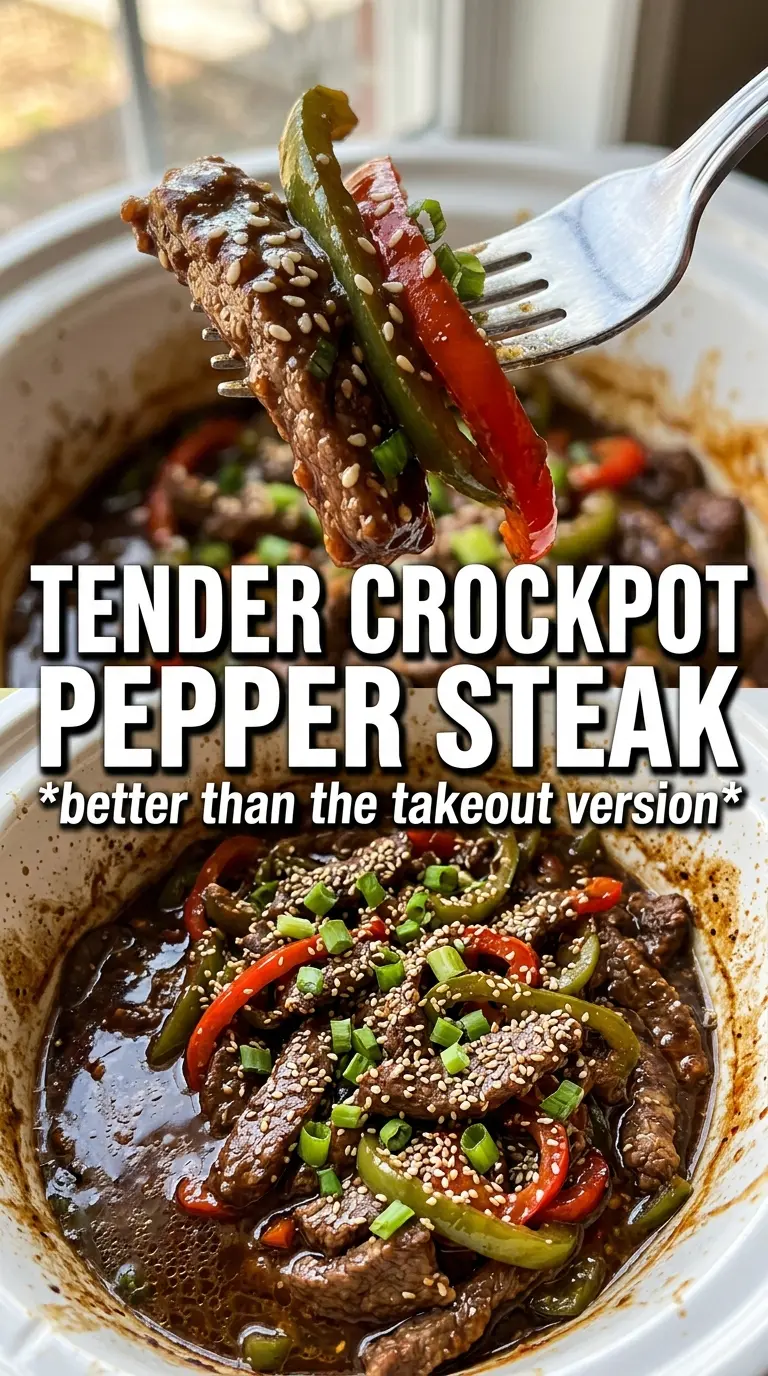
- Flank steak — This cut has enough beefy flavor to hold up to the sauce, and it becomes tender when sliced correctly and cooked gently. Sirloin works if that’s what you have, but it won’t have quite the same texture.
- Soy sauce — This is the backbone of the sauce, bringing salt, color, and that deep savory note. Use regular soy sauce here; low-sodium works if that’s your preference, but don’t swap in something much sweeter or thinner.
- Beef broth — It rounds out the soy sauce so the dish tastes like a full braise instead of just salty liquid. Water can work in a pinch, but the sauce will taste less complete.
- Brown sugar and rice vinegar — These keep the sauce from tasting heavy. The sugar adds gloss and balance, while the vinegar wakes everything up at the end of a long cook.
- Fresh ginger and garlic — Fresh is worth using here because both ingredients cook down into the sauce and keep it from tasting dull. Ground ginger won’t give the same clean bite.
- Cornstarch slurry — This is what turns the cooking liquid into a clingy sauce. Mix it with cold water first, or you’ll get lumps that never fully dissolve.
Building the Sauce Without Overcooking the Vegetables
Load the Slow Cooker in the Right Order
Start with the sliced flank steak in the bottom of the slow cooker, then scatter the peppers, onion, and garlic over the top. That setup lets the beef stay in the moisture while the vegetables soften without breaking down too quickly. If you stir everything aggressively at the start, the peppers sink and come out softer than they should.
Mix the Braising Liquid Until It’s Smooth
Whisk the soy sauce, beef broth, brown sugar, rice vinegar, and ginger together before it goes into the pot. You want the sugar dissolved and the liquid evenly mixed so the flavor doesn’t land in streaks. Pour it over the ingredients, then leave it alone; opening the lid too often slows the cook and lengthens the time the steak spends getting tender.
Thicken at the End, Not the Beginning
After the steak is tender, stir in the cornstarch slurry and switch the slow cooker to high for about 15 minutes. The sauce should go from thin to glossy and lightly coat the back of a spoon. If it still looks loose, give it a few more minutes rather than adding more cornstarch right away, because too much can turn the sauce pasty instead of silky.
How to Adapt It When You Need a Different Finish
Gluten-Free Version
Use a certified gluten-free soy sauce or tamari and keep everything else the same. The sauce still thickens the same way, and you won’t lose the glossy finish that makes this dish work.
A Little More Vegetables, Less Beef
Add another sliced bell pepper or a few mushrooms if you want to stretch the pot. The mushrooms pick up the sauce nicely, but don’t overload the slow cooker or the vegetables will steam into softness instead of keeping their shape.
Lower-Sugar Version
Cut the brown sugar back to 1 tablespoon if you want the sauce less sweet. The vinegar and soy sauce will still keep it balanced, but the final glaze will taste a little sharper and less takeout-style.
Storage and Reheating
- Refrigerator: Store in an airtight container for up to 4 days. The sauce thickens a bit more as it chills, and the peppers soften slightly.
- Freezer: It freezes well for up to 2 months. Cool it completely first, then freeze in portions with rice kept separate if possible.
- Reheating: Reheat gently on the stovetop or in the microwave with a splash of broth or water. The common mistake is blasting it on high heat, which can tighten the steak and dry out the sauce.
Answers to the Questions Worth Asking
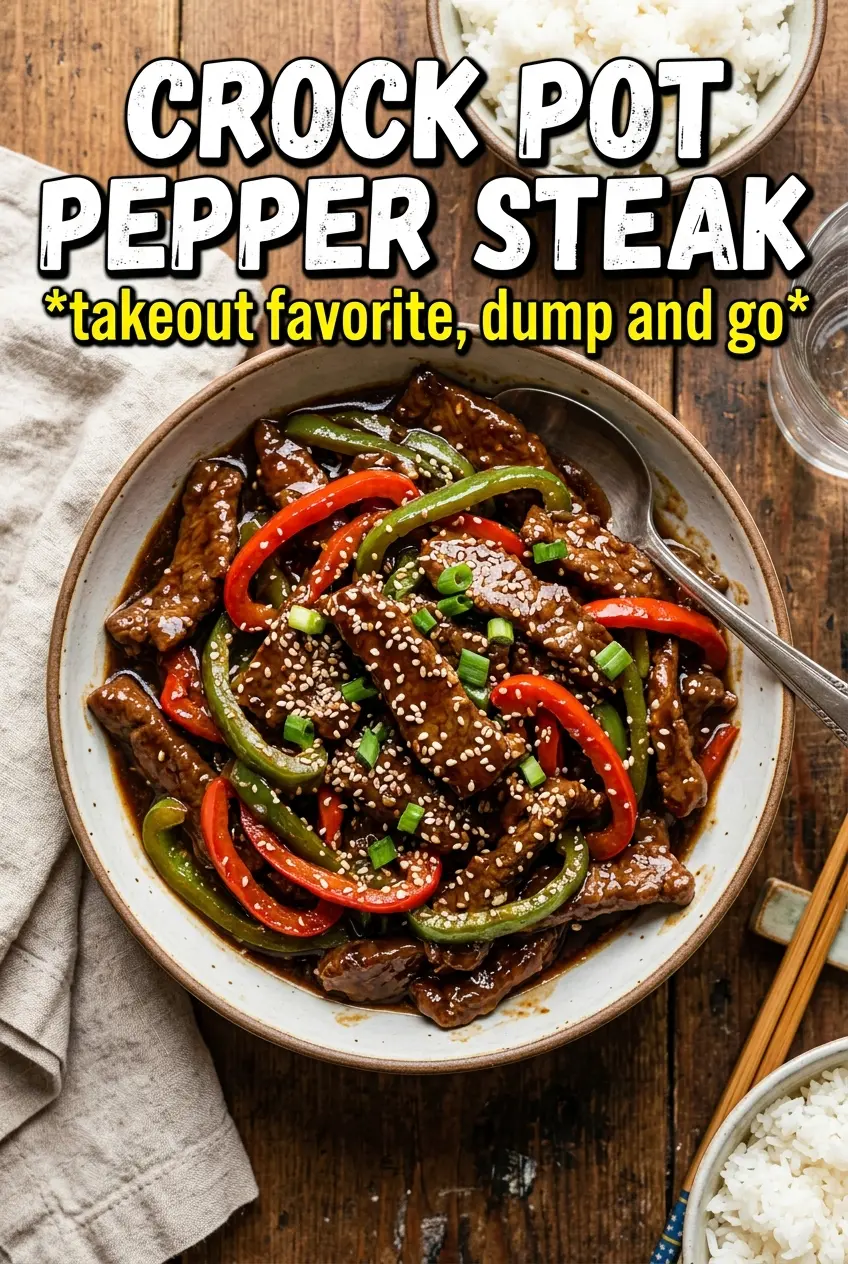
Pepper Steak in a Crock Pot
Ingredients
Equipment
Method
- Add the sliced flank steak to the slow cooker.
- Layer the bell peppers, onion, and garlic on top of the steak.
- In a bowl, whisk soy sauce, beef broth, brown sugar, rice vinegar, and grated ginger until smooth, then pour the mixture over the steak and vegetables.
- Cook on low until the steak is tender, about 5–6 hours (or cook on high for 2.5–3 hours).
- Whisk cornstarch and cold water together, stir it into the slow cooker, and cook on high for 15 minutes until the sauce thickens and coats the steak.
- Serve the pepper steak over cooked white rice and garnish with sesame seeds and green onions.