Penne coated in a silky provolone cream sauce, threaded with shaved steak, sweet onions, and peppers, is the kind of dinner that disappears fast. It has the comfort of a baked pasta without the extra work, and the cheesesteak flavors stay clear instead of turning muddy. The steak stays tender, the vegetables keep a little bite, and the sauce clings to every ridge and curve of the pasta.
The part that makes this version work is the order of operations. The steak gets a hard, quick sear first, then comes out of the pan before the vegetables go in. That keeps the beef from overcooking and lets the onions, peppers, and mushrooms pick up the browned bits left behind. The provolone melts into cream and beef broth for a sauce that tastes rich without needing flour.
Below, I’ll walk through the part that matters most: how to keep the sauce smooth, how to avoid rubbery steak, and what to change if you need to work with a different cut of beef or a lighter pasta shape.
The sauce stayed smooth and the steak was still tender when I stirred it back in. My husband kept going back for seconds and said it tasted like a cheesesteak and pasta had the best possible dinner baby.
Like this Philly cheesesteak pasta? Save it to Pinterest for the nights when you want shaved steak, peppers, and a creamy provolone sauce in one skillet dinner.
The Mistake That Makes Cheesesteak Pasta Turn Heavy
The fastest way to lose what makes this dish good is to crowd the pan and keep everything in at once. Steak needs direct heat to brown, not steam, and the vegetables need room to cook off their moisture before the cream goes in. If the pan is packed, you end up with gray beef, watery onions, and a sauce that tastes flat instead of rich.
The other thing people miss is that provolone behaves best when the heat is gentle. Once the broth and cream have reduced a little, pull the pan back to low before adding the cheese. That small pause keeps the sauce glossy. If the cheese goes in over a hard simmer, it can turn grainy before it has a chance to melt smoothly.
What Each Ingredient Is Doing in the Pan
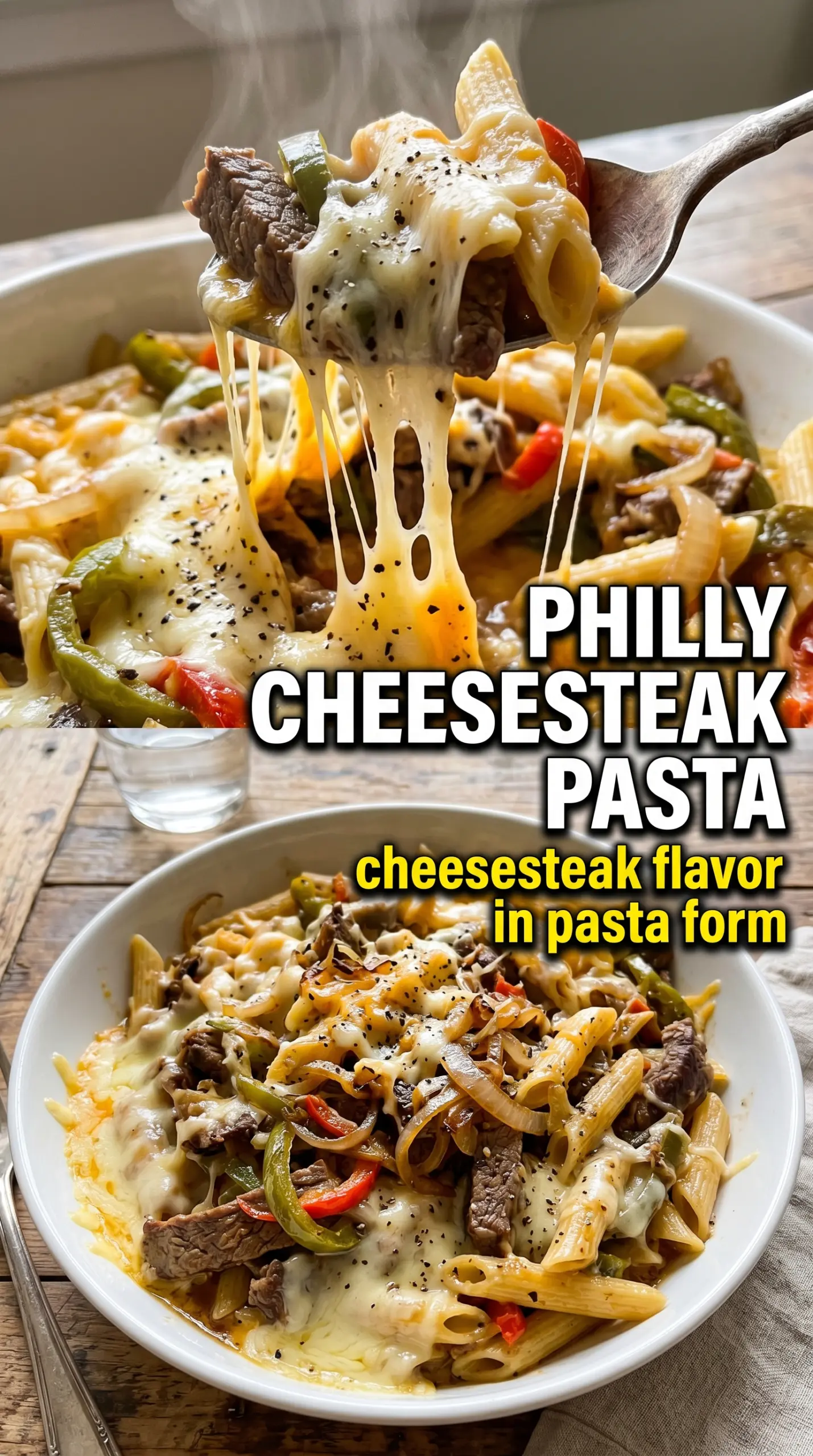
- Shaved steak or thin-sliced sirloin — This is the backbone of the dish. Shaved steak cooks fast and stays tender if you sear it briefly; sirloin works too if you slice it thin across the grain. Don’t simmer it in the sauce for long or it will tighten up.
- Provolone — It melts into a mild, stretchy sauce that tastes like a cheesesteak instead of a generic cream pasta. Block provolone shredded at home melts smoother than pre-shredded, which often carries anti-caking agents. If provolone is hard to find, mozzarella gives stretch but less flavor.
- Beef broth and Worcestershire — These are what give the sauce a savory edge so it tastes like more than cream and cheese. Use a broth you’d drink on its own if you can; a weak broth makes the whole sauce taste diluted. Worcestershire adds depth fast, so don’t skip it unless you’re replacing it with a splash of soy sauce.
- Peppers, onion, and mushrooms — They bring the classic cheesesteak sweetness and enough moisture to build the sauce’s base flavor. Slice them evenly so they cook at the same pace. Mushrooms aren’t required for a classic sandwich, but they do add a meaty background note here.
- Pasta water — This is your rescue tool. The starch helps the sauce loosen without turning thin or broken, especially if the pasta sits for a minute before serving. Add it a splash at a time.
Building the Sauce Before the Pasta Goes In
Searing the Steak Fast
Season the steak well, then put it into a hot skillet with butter and leave it alone long enough to brown. You want color on the edges and a little caramelization in the pan, not a long cook that turns the meat tough. Once it’s browned, lift it out right away. It’ll finish later when it goes back into the sauce.
Softening the Vegetables Without Boiling Them
Cook the onions, peppers, and mushrooms over medium-high heat until the pan looks dry and the edges start to darken. That’s the point where their sweetness comes forward. If they start sticking before they soften, the heat is a little too high, so lower it instead of adding water. Garlic goes in at the end because it burns fast and turns bitter if it sits in the hot pan for too long.
Reducing the Cream and Broth
After the broth and cream go in, let the mixture simmer until it looks slightly thicker and the bubbles slow down. This step matters because it concentrates the beefy flavor before the cheese joins in. If the sauce still looks thin, give it another minute or two; if it boils hard, it can separate and you’ll feel that graininess on the tongue.
Melting the Cheese and Finishing the Dish
Lower the heat before adding the provolone, then stir until the sauce looks smooth and satin-like. Toss in the pasta and steak and work quickly so everything gets coated before the sauce tightens. If the pan looks too thick at this point, use a spoonful or two of the reserved pasta water. The finished pasta should move easily in the skillet, not sit in a heavy clump.
Make It Without Mushrooms
Leave the mushrooms out and use a little extra onion and pepper instead. The dish will taste a touch sweeter and less earthy, but the classic cheesesteak feel stays intact. If you skip them, give the peppers and onions another minute or two so the pan still builds enough flavor.
Gluten-Free Pasta Swap
Use a sturdy gluten-free penne or rigatoni and cook it just to al dente, because it softens faster once it hits the sauce. Keep the pasta water close by; gluten-free noodles often need a little extra help loosening the sauce. The texture is still great as long as you don’t overcook the pasta in the first place.
Lighter Cream Option
Half-and-half can replace the heavy cream, but the sauce will be a little thinner and less plush. If you go this route, reduce it a bit longer before adding the cheese, and don’t let it boil hard. You’ll get a lighter finish, but it won’t coat the pasta as richly.
Storage and Reheating
- Refrigerator: Store in an airtight container for up to 3 days. The sauce thickens as it sits, and the pasta absorbs some of it.
- Freezer: Freezing isn’t ideal because cream sauces can separate and the pasta softens too much. If you must freeze it, expect a less creamy texture after thawing.
- Reheating: Warm it gently on the stove or in the microwave with a splash of broth, milk, or water. High heat is what breaks the sauce, so reheat slowly and stir often until it loosens again.
Answers to the Questions Worth Asking

Philly Cheesesteak Pasta
Ingredients
Equipment
Method
- Bring a large pot of salted water to a boil, then cook the penne or rigatoni until al dente, about 8–11 minutes. Reserve 1/2 cup pasta water, then drain the pasta.
- Season the shaved steak or thinly sliced sirloin with salt and black pepper. Heat a hot skillet with 1 tablespoon butter and sear the steak for 2–3 minutes until browned, then set it aside.
- Melt the remaining butter in the same skillet, then cook the sliced onion, bell peppers, and mushrooms over medium-high heat for 6–8 minutes until caramelized. Add the minced garlic and Worcestershire and stir for about 30 seconds.
- Pour in the beef broth and heavy cream and bring to a simmer, then cook for 3–4 minutes until slightly reduced. Stir until the sauce looks glossy and thickened.
- Stir in the shredded provolone cheese until melted and smooth. Toss in the drained pasta and seared steak, adding reserved pasta water a splash at a time to loosen if needed.
- Serve immediately with extra provolone melted on top for a cheesy finish. Keep it hot so the sauce stays creamy and clings to the pasta.