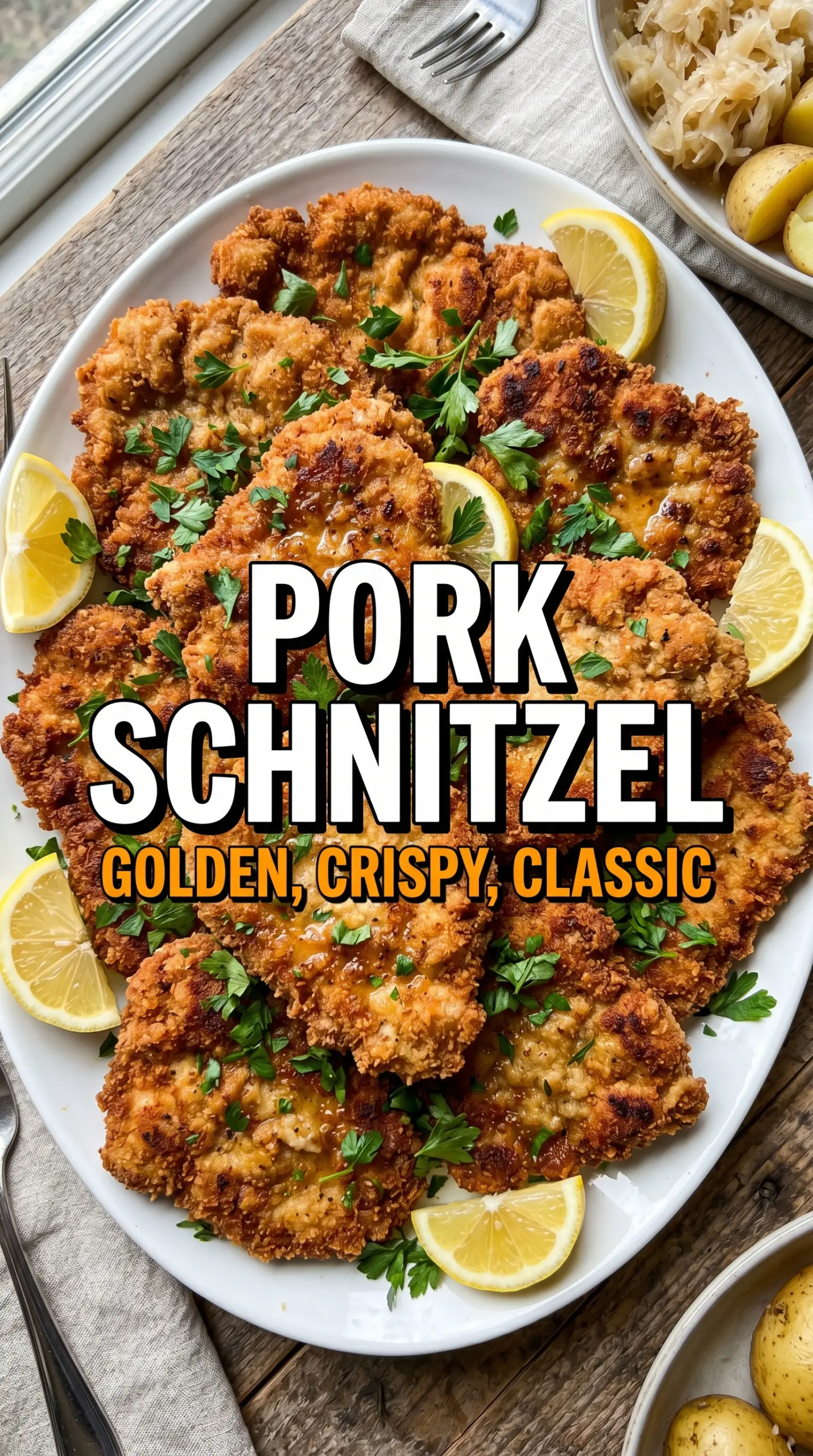
Golden pork schnitzel has a way of disappearing fast because the contrast is what gets you: a thin, juicy cutlet under a crust that crackles the second your fork hits it. The breading stays light instead of heavy, the pork cooks in minutes, and the lemon at the end pulls everything into focus.
The part that matters most is the setup. Pounding the pork to an even 1/4 inch gives you quick, even cooking, and the three-stage dredge creates a coating that actually clings instead of slipping off in the pan. A shallow layer of hot oil gives the schnitzel that even, bronzed crust without soaking it through.
Below, I’ve included the small details that keep the breading crisp, what to do if your coating starts to look patchy, and the easiest swaps if you need to adjust the breadcrumbs or make the dish gluten-free.
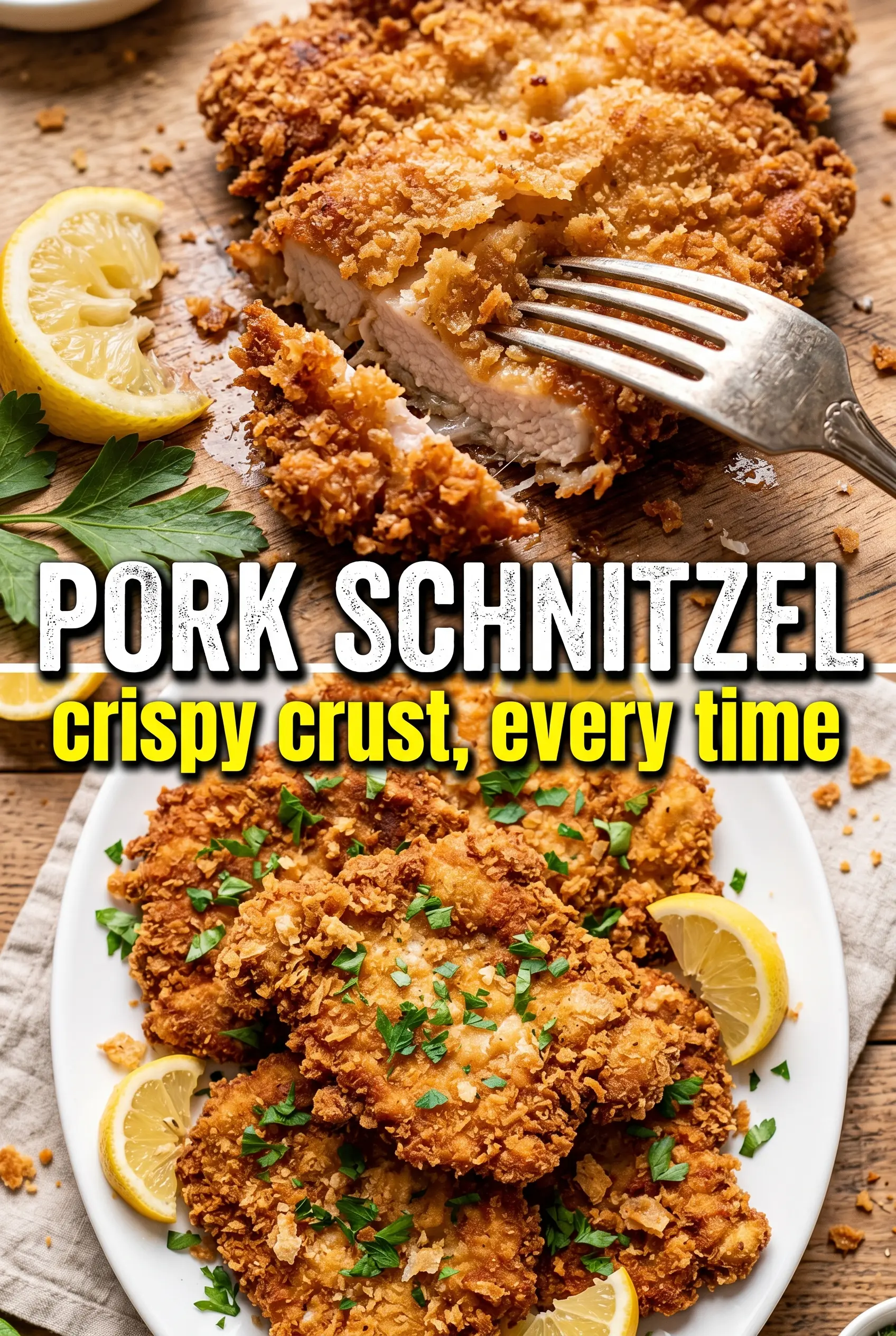
The crust stayed crisp even after I squeezed lemon over it, and the pork was tender all the way through. I pounded the chops thin like you said and they cooked in just a few minutes.
Save this crispy Pork Schnitzel for the nights when you want a golden cutlet and a dinner that lands on the table in 15 minutes.
The Coating Needs Space to Crisp, Not Steam
The biggest reason schnitzel turns soft is crowding. When the cutlets sit too close together, the oil temperature drops and the breadcrumbs absorb fat instead of frying into a brittle crust. Shallow-frying in batches keeps the surface hot enough to brown fast, which is what gives you that shattery edge.
The other mistake is pressing too hard on the breading after it hits the pan. A firm coat matters during dredging, but once the schnitzel is in the oil, let it cook. If you keep adjusting it, you can knock off the crumbs before they set, and the crust won’t have a chance to lock in.
What Each Ingredient Is Actually Doing in This Pork Schnitzel
- Pork loin chops — These give you a tender, mild cut that cooks quickly once pounded thin. Boneless loin chops are the easiest choice here because they flatten evenly; if the chop is thick in the middle, the finished schnitzel will cook unevenly and the breading will darken before the pork is done.
- Breadcrumbs — Fine breadcrumbs make the most even, classic crust. Panko works if you want a rougher, crunchier finish, but it gives a more jagged texture and can shed a little more in the pan.
- Egg and milk — This is the glue. The milk loosens the egg just enough to coat the flour-dusted pork without turning gummy. If the egg mixture is too thick, the breading goes on in clumps instead of an even layer.
- Flour — The flour dries the surface of the pork so the egg can grip. Don’t skip it or the crust can slide off in sheets once the schnitzels hit the oil.
- Oil for shallow frying — You need enough oil to fry the crumbs, not submerge the cutlets. Vegetable or canola oil are both solid choices because they stay neutral and handle the heat without competing with the pork.
- Lemon wedges and parsley — These aren’t decoration. Lemon cuts through the richness and parsley adds a fresh finish that keeps the dish from tasting heavy.
Getting the Pork Thin, Hot, and Even All the Way Through
Pounding the Cutlets
Lay the pork between sheets of plastic wrap or parchment and pound it to an even 1/4 inch. You’re not trying to shred it thinner in spots; the goal is a uniform piece that cooks at the same speed from edge to center. If one end is much thicker, that part will still be pale when the rest is already done.
Building the Breading Station
Set out the flour, egg mixture, and seasoned breadcrumbs in that order before you start dredging. Work one piece at a time so the coating stays clean and dry at each stage. If the flour gets wet before the egg step, the crumbs won’t adhere as well and you’ll end up with patchy spots.
Frying to a Deep Golden Crust
Heat the oil until it shimmers, then lay in the schnitzels carefully. You should hear an active sizzle right away; if the oil is quiet, the cutlets will soak instead of crisp. Fry just until the crumbs are deep golden brown, about 2 to 3 minutes per side, and flip only once if you can. Move them to paper towels briefly, then serve immediately so the crust stays crisp.
How to Adapt This Schnitzel When You Need a Different Finish
Gluten-Free Schnitzel
Swap the all-purpose flour for a gluten-free flour blend and use gluten-free breadcrumbs. The method stays the same, but gluten-free crumbs can brown a little faster, so watch the color closely and pull the schnitzel once it hits a deep golden shade.
Panko for Extra Crunch
Use panko instead of fine breadcrumbs if you want a louder crunch and a more textured crust. It won’t look as smooth as the classic version, but it gives a lighter, crispier bite that holds up well under lemon.
Dairy-Free Version
Skip the milk and use beaten egg on its own, or add a tablespoon of water if the mixture feels too thick. The coating will still set properly, though the egg layer may cling a little more tightly and create a slightly firmer crust.
Making It Ahead for Dinner Service
You can pound and bread the pork a few hours ahead, then chill it in a single layer until frying time. Don’t stack the cutlets or the breading will soften where they touch. For the best crust, fry just before serving.
Storage and Reheating
- Refrigerator: Store leftovers for up to 3 days. The crust will soften in the fridge, but the pork stays usable for another meal.
- Freezer: Freeze cooked schnitzel only if you need to. Wrap each piece well and freeze for up to 1 month, but expect the breading to lose some of its crispness after thawing.
- Reheating: Reheat on a wire rack in a 400°F oven or air fryer until hot and crisp again. Skip the microwave if you can; it steams the coating and turns the crust leathery.
Answers to the Questions Worth Asking
Pork Schnitzel
Ingredients
Equipment
Method
- Season the pounded pork cutlets generously with salt and pepper.
- Set out three shallow dishes: flour; beaten eggs mixed with milk; and breadcrumbs seasoned with garlic powder and salt.
- Dredge each cutlet in flour, coating the surface evenly.
- Dip the floured cutlet into the egg mixture, letting excess drip off briefly.
- Press the cutlet firmly into the breadcrumbs until fully coated.
- Heat 1/4 inch of oil in a large skillet over medium-high heat until shimmering.
- Fry schnitzels 2–3 minutes per side, until deep golden brown, working in batches and not crowding the pan.
- Drain briefly on paper towels.
- Serve immediately with lemon wedges and fresh parsley.