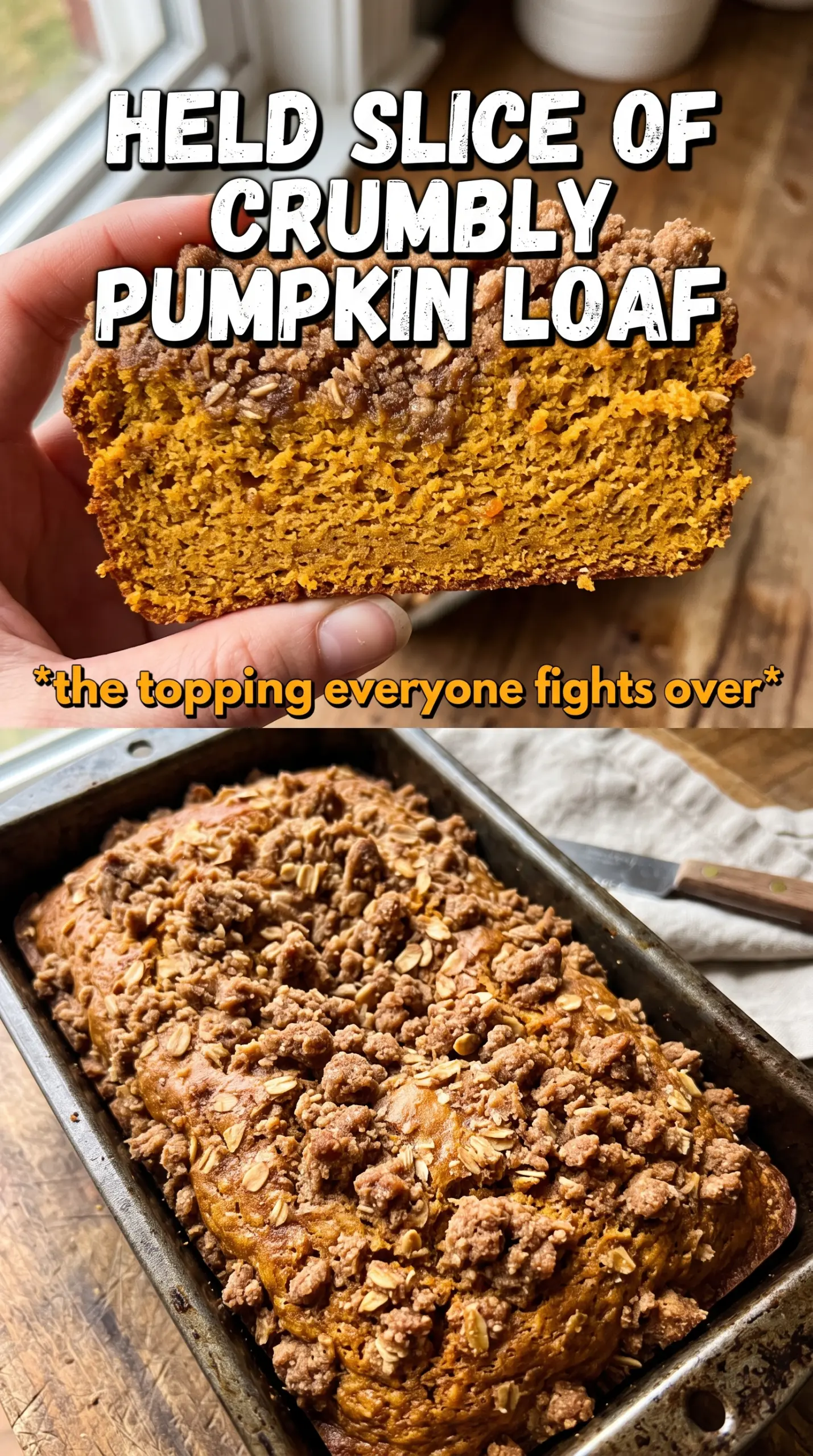
Warm pumpkin bread gets even better when the top turns into a thick, buttery crumb that bakes into a crisp, cinnamon-scented cap. The loaf stays soft and moist underneath, but the streusel gives every slice a little crunch and a deeper brown sugar flavor that plain pumpkin bread just can’t match. It’s the kind of breakfast loaf that disappears one slice at a time because the topping keeps pulling you back for “just one more piece.”
The trick is keeping the crumb cold and generous. Cold butter cut into the flour and sugar mixture gives you those bigger, bakery-style clumps instead of a sandy coating, and piling it on heavily means the topping doesn’t melt away into the batter. The sour cream in the batter also matters here; it keeps the crumb from drying out the loaf while the pumpkin adds body and moisture without making the texture gummy.
Below, I’ve included the small details that make this loaf work reliably, plus a few swaps for when you want to adjust the spice level or make it dairy-free. If you’ve ever had crumb topping sink, disappear, or bake up soft instead of crisp, this version fixes that.
The crumb stayed crisp on top even after cooling, and the pumpkin bread was still tender the next morning. I tented it with foil like the recipe said and the topping didn’t burn at all.
Save this pumpkin bread with crumb topping for the days when you want a soft loaf with a thick cinnamon-brown sugar streusel on top.
The Crumb Topping Needs to Stay Cold or It Melts Into the Loaf
Most crumb toppings fail because the butter softens too much before the loaf goes into the oven. When that happens, the mixture turns paste-like and bakes into a sugary skin instead of distinct crumbles. Cold butter is the difference between a topping that sits proudly on the bread and one that disappears into it.
The other thing that matters is quantity. A thin layer of streusel will sink into the batter as the loaf rises, especially with a moist pumpkin base. Covering every inch with a thick layer gives you a proper bakery-style top that stays craggy and crisp.
- Cold butter — Cube it straight from the fridge and cut it in quickly. If it starts to smear, chill the bowl for a few minutes before adding it to the loaf.
- Brown sugar — This gives the topping its caramel note and helps the crumbs clump. Light or dark brown sugar both work, but dark brown sugar gives a deeper molasses flavor.
- Pumpkin puree — Use plain pumpkin, not pumpkin pie filling. Pie filling already contains sugar and spices, which throws off the balance of the loaf.
What Each Ingredient Is Doing in This Pumpkin Loaf
- All-purpose flour — This keeps the loaf sturdy enough to support the topping. I wouldn’t swap in cake flour here; it’s too soft and the bread can turn fragile under the crumb.
- Eggs — They hold the batter together and help the loaf rise with a tender crumb. Bring them to room temperature if you can; they blend more smoothly with the pumpkin mixture.
- Sour cream — This is the ingredient that keeps the bread plush without making it heavy. Plain Greek yogurt works in its place, but use full-fat yogurt so the loaf doesn’t dry out.
- Pumpkin pie spice and cinnamon — Together they give the bread its warm backbone. If your spice blend is old, the loaf will taste flat, so use a fresh jar if you have one.
- Oil — Oil keeps the bread moist for days, which is exactly what you want in a loaf like this. Melted butter will work, but the texture will be a little tighter and less soft the next day.
How to Bake It So the Crumb Stays Tall and the Center Still Sets
Mix the streusel before anything else
Start with the crumb topping and get it into the fridge while you build the batter. You want large, uneven crumbs, not a fine sandy mix, so stop cutting in the butter as soon as the mixture holds together in clumps. If the butter gets too soft, the topping will melt flat in the oven instead of baking into crunchy bits.
Build the batter gently
Whisk the dry ingredients in one bowl and the wet ingredients in another until smooth, then fold them together just until the flour disappears. Overmixing develops too much structure and makes the loaf dense, which is the opposite of what pumpkin bread should be. A few streaks are fine; they’ll vanish as you fold.
Load the pan generously
Pour the batter into the greased loaf pan and scatter the crumb over every inch of the surface. Don’t press it down hard. You want the topping to sit loosely on top so it can bake into defined clusters instead of sinking into the batter. After about 35 minutes, tent the loaf with foil so the streusel doesn’t darken before the center is done.
Test the center, not just the top
The bread is done when a toothpick inserted into the center comes out clean or with a few moist crumbs. If the top looks finished but the center still feels soft, keep baking in short bursts and recheck. Pumpkin bread can look set before it actually is, and pulling it too soon leaves you with a gummy middle.
How to Adapt This Pumpkin Bread Without Losing the Crumb
Dairy-Free Version
Swap the sour cream for unsweetened dairy-free yogurt and use a plant-based butter in the crumb topping. The loaf still stays moist, but the topping may bake a touch softer, so keep an eye on the last 10 minutes.
Gluten-Free Swap
Use a 1:1 gluten-free baking flour in both the loaf and the topping. The bread will be a little more delicate, so let it cool fully before slicing or the crumb can tear away from the top.
Less Sweet, More Spiced
Cut the granulated sugar in the batter by 1/4 cup and add an extra 1/2 teaspoon cinnamon. The loaf will taste more pumpkin-forward and less dessert-like, but the crumb topping still gives you enough sweetness on top.
Storage and Reheating
- Refrigerator: Store the loaf tightly wrapped for up to 5 days. The crumb softens a little in the fridge, but the flavor stays excellent.
- Freezer: Freeze whole or sliced, wrapped well and sealed in a freezer bag, for up to 3 months. Thaw at room temperature while still wrapped so condensation doesn’t make the topping soggy.
- Reheating: Warm slices in a 300°F oven for 8 to 10 minutes or toast them lightly. The biggest mistake is microwaving too long, which makes the crumb go soft and the bread rubbery.
Answers to the Questions Worth Asking
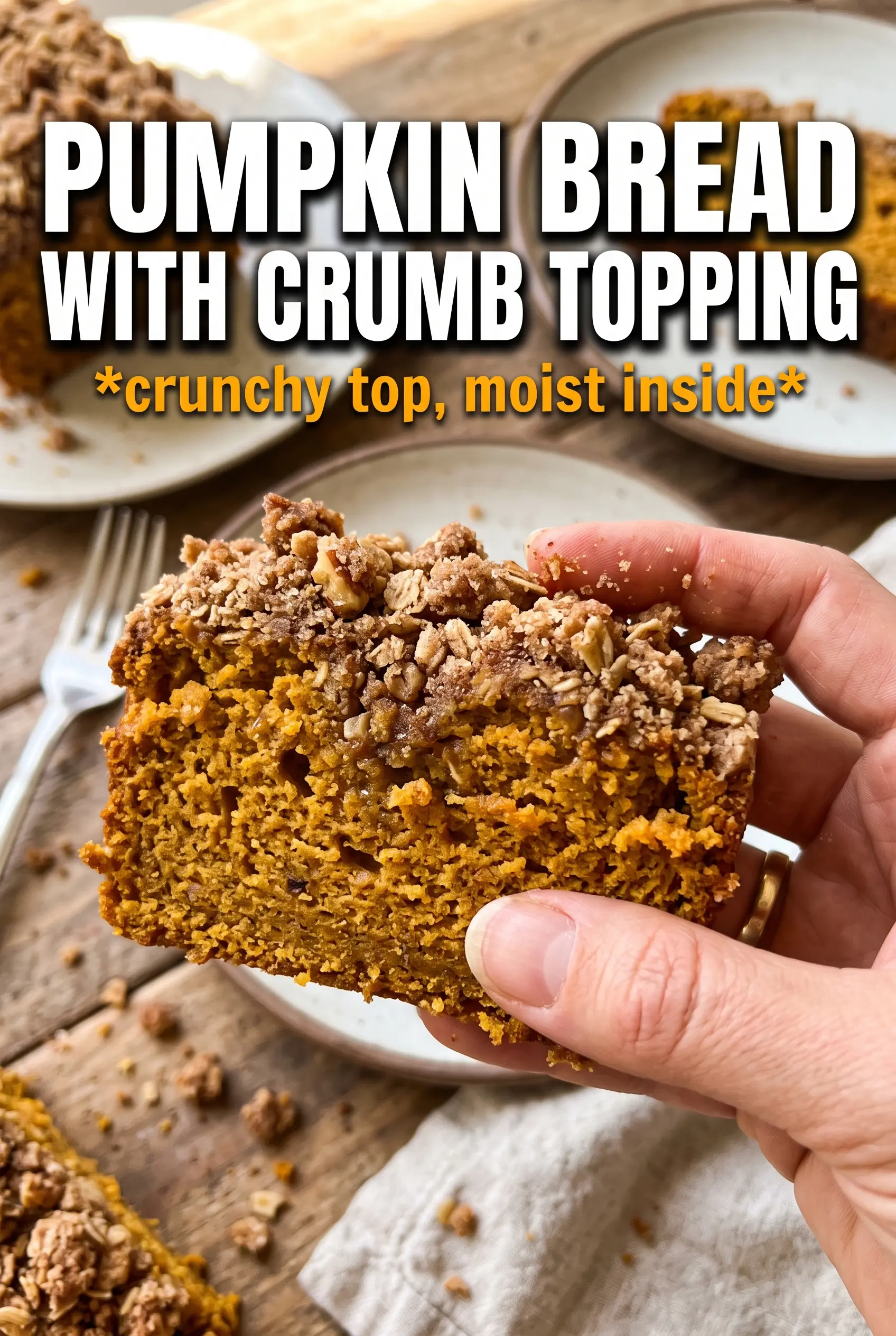
Pumpkin Bread With Crumb Topping
Ingredients
Equipment
Method
- Preheat the oven to 350°F and grease a 9x5 loaf pan so it’s ready to fill. Keep the oven fully preheated before baking for even rise.
- Make the crumb by cutting cold unsalted butter into all-purpose flour, brown sugar, cinnamon, and nutmeg until large crumbs form. Refrigerate the crumb mixture to keep it from melting into a paste.
- Whisk the flour, baking soda, pumpkin pie spice, cinnamon, and salt until evenly combined. This ensures the spices are distributed through the loaf.
- Whisk the pumpkin, sugar, brown sugar, oil, eggs, vanilla, and sour cream until smooth. Stop when the mixture looks uniform with no streaks.
- Fold the wet mixture into the dry ingredients until just combined, then pour the batter into the prepared loaf pan. Do not overmix so the crumb stays tender.
- Scatter the crumb topping very generously over the entire top, covering every inch for full coverage. Press lightly only if needed so crumbs adhere.
- Bake for 60–65 minutes at 350°F until a toothpick comes out clean, tenting with foil after 35 minutes to protect the crumb. Check at the low end of the range to avoid overbaking.