Pumpkin cinnamon roll pancakes hit that sweet spot between weekend breakfast and full-on treat. The pancakes stay soft and tender, the cinnamon swirl melts into little ribbons of brown sugar, and the cream cheese glaze ties everything together with just enough tang to keep the stack from feeling heavy. When they’re cooked right, each bite tastes like a cinnamon roll that took a shortcut through the griddle.
What makes this version work is the balance. Pumpkin puree adds moisture and body, but the batter still needs enough lift from baking powder and baking soda to stay fluffy. The cinnamon swirl has to be thin enough to pipe cleanly, or it sinks and disappears before the pancakes set. I’ve tested this with a few different batter thicknesses, and the sweet spot is a pourable batter that spreads on its own without running all over the pan.
Below, I’ve included the timing cues that matter most, plus a few swaps that help if you’re out of buttermilk or want to make the stack a little easier for a crowd.
The cinnamon swirl stayed right on top instead of melting into the batter, and the glaze thickened just enough to drip down the sides without soaking in. I made a double batch and my kids kept stealing them off the plate.
Pumpkin cinnamon roll pancakes with that gooey swirl and cream cheese glaze are worth keeping close for slow mornings and brunch tables.
The Swirl Has to Stay Separate Until the Pancake Sets
The biggest mistake with cinnamon roll pancakes is piping the swirl too early or letting the batter get too thin. If the batter runs fast, the swirl disappears into the pancake and you lose the whole point. If you wait too long to add it, the top starts to set and the swirl sits on top in a thick ribbon that can burn before the pancake cooks through.
The trick is to work fast: pour the batter, pipe the swirl immediately, then leave the pancake alone until bubbles form around the edges and the surface looks mostly matte. That gives the batter enough structure to hold the design while the cinnamon sugar melts into a soft, sticky layer instead of hardening on the griddle.
- Pipe the swirl thin. A squeeze bottle or piping bag gives you control. A thick line of filling weighs the pancake down and makes flipping messy.
- Keep the heat at medium. Too hot and the sugar burns before the center cooks. Too low and the swirl dissolves before it sets.
- Don’t press after flipping. You’ll squeeze out the tender crumb and smear the swirl.
What Each Ingredient Is Actually Doing in This Stack
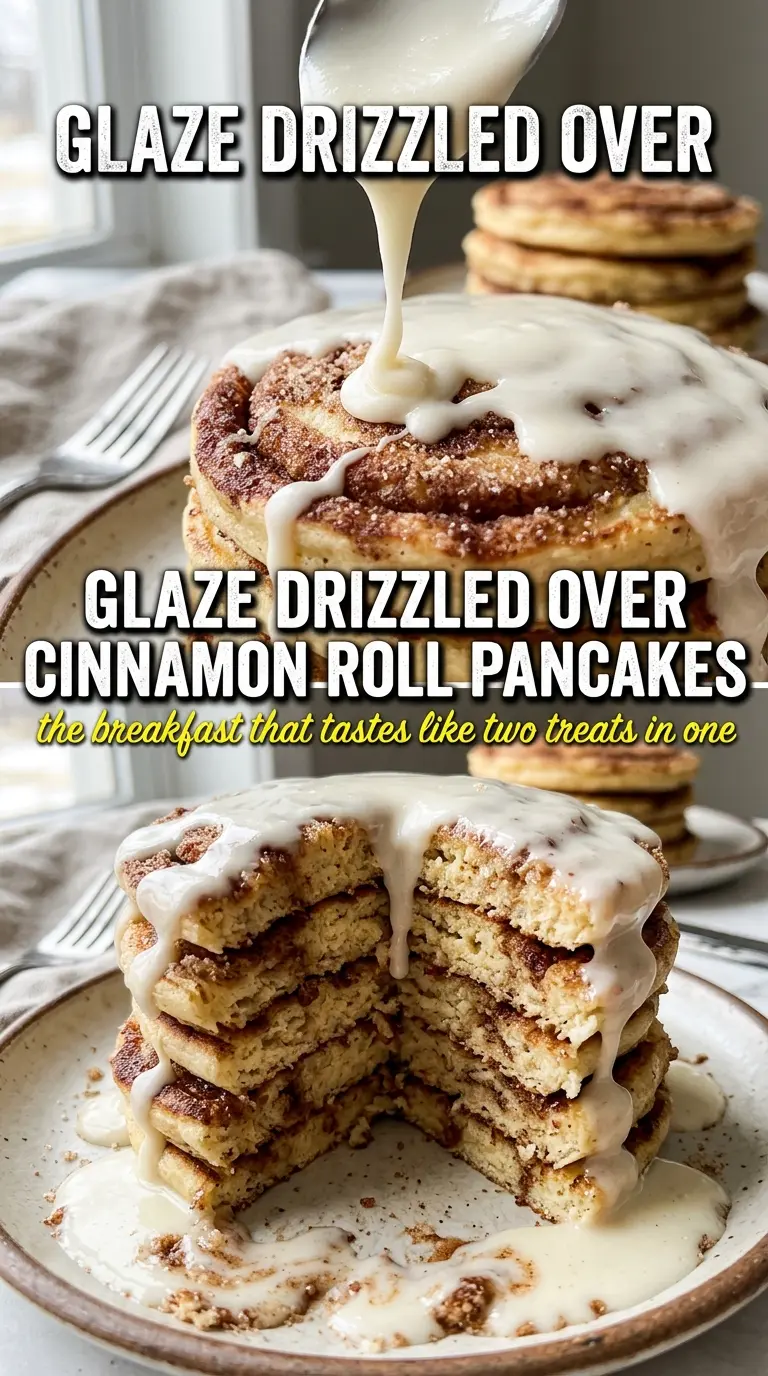
- Pumpkin puree — This brings moisture, body, and that pumpkin flavor without making the pancakes taste like pie filling. Use pure pumpkin, not pumpkin pie mix, or the sweetness and spice will throw off the batter.
- Buttermilk — It gives the batter tang and helps the baking soda work. If you need a substitute, use milk mixed with a little lemon juice or vinegar, but the texture won’t be quite as plush.
- Brown sugar in the swirl — This melts into the cinnamon ribbon and gives you that sticky cinnamon roll center. White sugar won’t give the same caramel note or soft chew.
- Cream cheese — The glaze needs it for body and tang. If you swap it for milk alone, you’ll get a thin drizzle instead of a true cinnamon roll finish.
- Melted butter — It carries the cinnamon in the swirl and keeps the pancakes rich. The butter needs to be melted, not hot, or it can separate the sugar mixture.
Building the Batter and Swirl Without Losing the Texture
Mix the swirl first
Stir the melted butter, brown sugar, and cinnamon until it looks glossy and evenly combined, then move it into a squeeze bottle or piping bag. If it’s too warm, it runs like liquid and won’t hold a clean spiral; let it sit a minute or two if needed. You want it fluid enough to pipe, but thick enough that it lands in a defined line.
Bring the pancake batter just together
Whisk the dry ingredients in one bowl and the wet ingredients in another, then fold them together until you stop seeing dry flour. A few small streaks are fine. Overmixing is the fastest way to get tough pancakes, especially with pumpkin batter, which already has more moisture and density than a standard buttermilk batter.
Cook for bubbles, not the clock alone
Scoop about 1/4 cup batter onto a greased griddle, then pipe the cinnamon swirl right away. The pancake is ready to flip when bubbles form across the top and the edges look set, usually around 3 minutes, but the real cue is the surface losing its wet shine. Flip once and cook the second side until it springs back lightly when touched, about 2 minutes more.
Finish with glaze while the stack is warm
Beat the cream cheese glaze until smooth before you start cooking, because cold cream cheese leaves lumps that never fully disappear. Drizzle it over the pancakes while they’re still warm so it softens and drapes over the swirl instead of sitting in thick clumps on top. If the glaze is too thick, add milk a teaspoon at a time until it ribbons off the spoon.
How to Adapt These Pancakes for Different Mornings
Dairy-Free Pumpkin Cinnamon Roll Pancakes
Use a neutral dairy-free milk with a teaspoon of lemon juice in place of buttermilk, plant butter for the swirl, and a dairy-free cream cheese for the glaze. The pancakes still turn out soft, but the glaze will be a little looser, so let it sit a minute before drizzling.
Gluten-Free Version
Swap in a cup-for-cup gluten-free flour blend that already includes xanthan gum. The batter may thicken as it rests, so if it starts looking stiff, loosen it with a splash of milk. Expect a slightly more tender, less stretchy crumb.
Make the Swirl Less Sweet
Cut the brown sugar in the swirl to 1/3 cup if you want a more restrained finish. You’ll get a thinner, less gooey ribbon, but the cinnamon will still show up clearly and the pancakes won’t feel as dessert-like.
Storage and Reheating
- Refrigerator: Store leftovers in an airtight container for up to 3 days. The swirl softens a little, but the pancakes stay tender.
- Freezer: Freeze the pancakes without glaze in a single layer, then stack with parchment and seal for up to 2 months. The glaze is better made fresh.
- Reheating: Warm in a skillet over low heat or in the toaster oven until heated through. High heat dries out the pumpkin batter and can scorch the cinnamon sugar before the center warms up.
Answers to the Questions Worth Asking
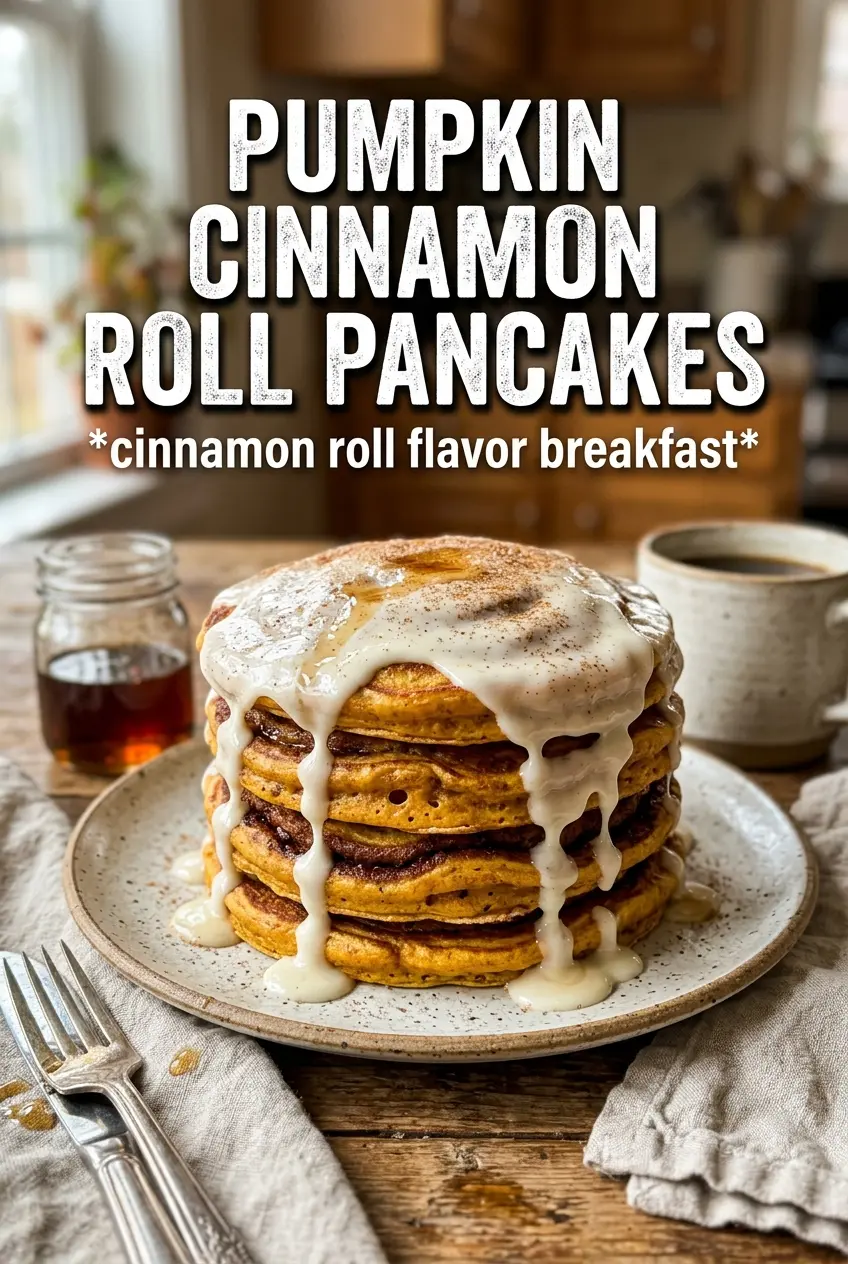
Pumpkin Cinnamon Roll Pancakes
Ingredients
Equipment
Method
- Mix the cinnamon roll swirl ingredients in a squeeze bottle or piping bag until smooth, then set aside.
- Beat the cream cheese glaze until smooth, then set aside.
- Whisk the dry pumpkin pancake ingredients together in a large bowl until evenly combined.
- Whisk the pumpkin puree, buttermilk, eggs, melted butter, and vanilla together, then fold wet into dry until just combined (do not overmix).
- Preheat a greased griddle to medium heat, then pour 1/4 cup batter onto the surface.
- Immediately pipe a cinnamon swirl in a spiral over the batter so it sets into the pancake as it cooks.
- Cook for 3 minutes, until bubbles form around the edges.
- Flip and cook for 2 minutes more, until the center is cooked through and the pancake springs back lightly.
- Drizzle cream cheese glaze generously over the stack and serve warm.