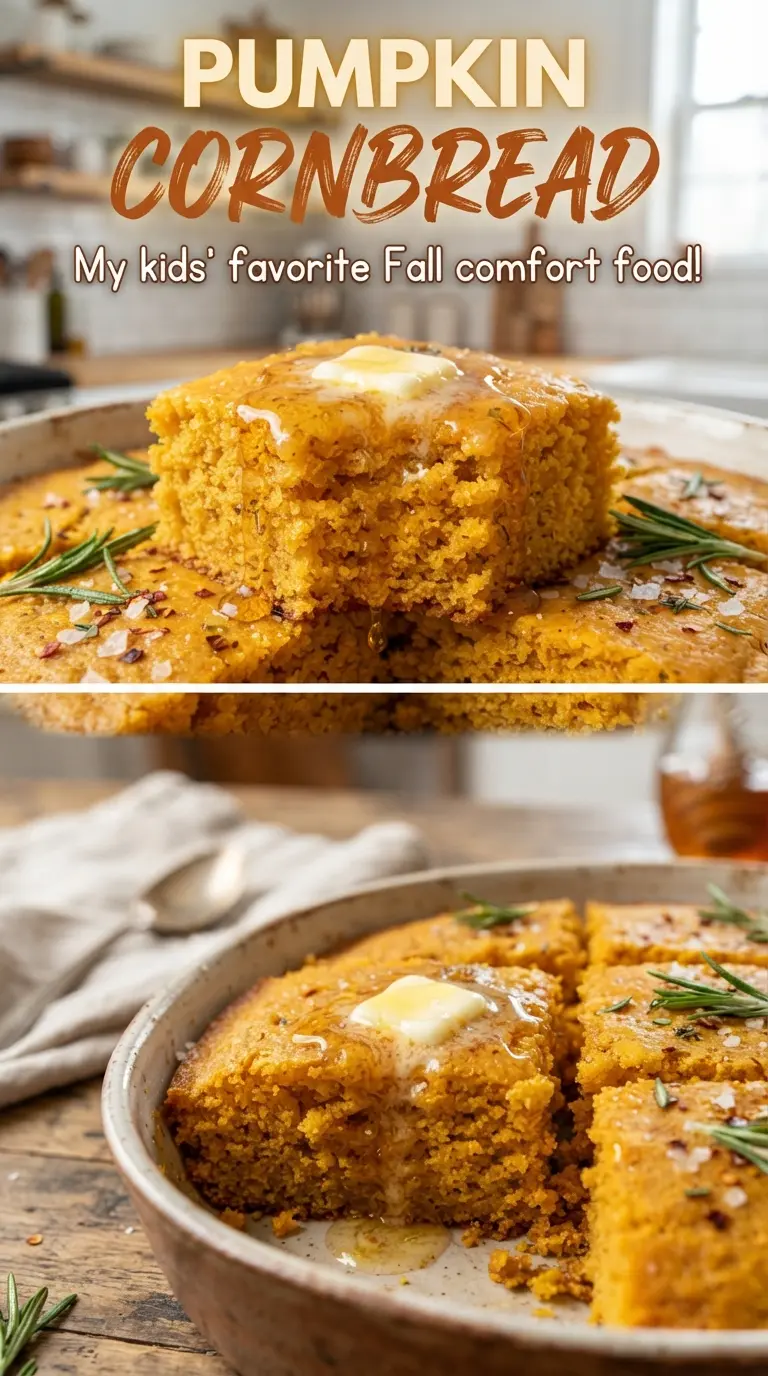
Pumpkin cornbread lands with a soft crumb, a lightly crisped edge, and just enough maple sweetness to keep each bite interesting without turning it into cake. The pumpkin doesn’t make it heavy; it gives the bread that deep orange color, a little extra moisture, and a tender texture that holds up beautifully next to chili, roasted vegetables, or a bowl of soup.
What makes this version work is the balance. Cornmeal keeps the crumb honest and a little nubby, while flour gives it structure so it slices cleanly. Pumpkin puree, buttermilk, and melted butter all bring richness, but the batter still bakes up light because the mixing stays minimal and the leavening does the lift. The maple syrup is subtle, not sticky-sweet, and it rounds out the pumpkin pie spice without taking over.
Below, you’ll find the one mixing rule that keeps cornbread tender, plus the best pan choice if you want crisp edges and a soft middle.
The pumpkin flavor came through without making it dense, and the edges got that perfect little crunch in my cast iron skillet. I served it with honey butter and my kids asked for seconds immediately.
Save this pumpkin cornbread for the days when you want crisp edges, a tender crumb, and a warm maple finish.
The Trick That Keeps Pumpkin Cornbread Tender Instead of Heavy
Most pumpkin breads get weighed down when the batter is overmixed or when there’s too much liquid fighting with the cornmeal. Cornmeal keeps absorbing moisture as it sits, so the batter needs to go from bowl to pan without a long delay. Stir just until the dry streaks disappear, then stop. The oven heat finishes the job.
The other thing that matters here is the pan. An 8×8-inch pan gives you a soft center and even slices, while a preheated cast iron skillet gives you more browned edges and a little more drama on the crust. If your cornbread has ever come out gummy in the middle, it’s usually because the batter was overworked or the pan was too cool to set the edges quickly enough.
- Brown sugar — Adds a gentle molasses note that plays well with pumpkin. White sugar works in a pinch, but it tastes flatter.
- Pumpkin puree — Use plain puree, not pumpkin pie filling. Pie filling is already sweetened and spiced, which throws off the balance.
- Buttermilk — Gives the batter acidity and tenderness. If you don’t have it, stir 2 teaspoons of lemon juice or vinegar into 3/4 cup milk and let it sit 5 minutes.
- Butter — Melted butter brings richness and helps the edges brown. Oil will work for moisture, but you’ll lose some of that classic cornbread flavor.
What Each Ingredient Is Actually Doing in This Recipe
- Primary ingredient (the star) — Quality matters most. Choose the best you can find.
- Cooking medium (oil, butter, or broth) — This carries flavors and prevents dryness.
- Seasonings (salt, pepper, spices, herbs) — Layer flavors so nothing overpowers. Build depth gradually.
- Aromatics (garlic, onion, herbs) — Cook with fat to bloom flavors. Become the foundation.
- Supporting ingredients — Complement the main ingredient without overpowering it.
- Sauce or liquid (if applicable) — Brings flavors together. Balance richness with acid.
- Acid (lemon, vinegar, wine, or other) — Brightens and prevents flat-tasting results.
- Final finish (garnish, glaze, or sauce) — Prevents one-dimensional taste and adds visual appeal.
Building the Batter Without Deflating It
Mix the Dry Ingredients First
Whisk the cornmeal, flour, brown sugar, baking powder, salt, and pumpkin pie spice until the color looks even. This keeps the leavener and spice from clumping in one bite and gives the batter a more even rise. If you skip this step, you can end up with pockets of spice or a salty patch near the bottom.
Bring the Wet Ingredients Together
Whisk the pumpkin puree, eggs, buttermilk, melted butter, and maple syrup until the mixture looks smooth and glossy. The butter should be warm, not hot, or it can scramble the eggs when it hits the bowl. If the mixture looks a little separated, keep whisking until it comes together.
Stop Stirring the Moment the Batter Comes Together
Pour the wet ingredients into the dry and stir only until the flour disappears. The batter should look thick and a little rustic, not silky. Overmixing turns cornbread tough and can make the crumb tight instead of tender. Spread it into the pan right away so the baking powder starts working in the oven, not on the counter.
Bake Until the Center Springs Back
Bake at 400°F until the top is golden and a toothpick inserted in the center comes out clean, about 22 to 25 minutes. The edges should pull away slightly from the pan and the middle should spring back when pressed. If the top browns too fast, the oven is running hot; tent loosely with foil for the last few minutes and keep baking until the center is set.
How to Adapt This for a Sweeter Slice, a Dairy-Free Pan, or a Bigger Batch
More dessert-like cornbread
Increase the brown sugar to 1/2 cup and brush the top with maple butter right after baking. It shifts the bread toward a sweeter, softer slice that works well for breakfast, but the crumb will be a little less savory next to chili.
Dairy-free version
Swap the buttermilk for unsweetened plant milk mixed with 2 teaspoons lemon juice or vinegar, and use melted coconut oil or a neutral oil instead of butter. You’ll lose a little of the buttery richness, but the texture stays tender and the pumpkin still carries the flavor.
Gluten-free pan of cornbread
Replace the all-purpose flour with a 1:1 gluten-free baking blend that includes xanthan gum. The crumb will be slightly more delicate, so let it cool for at least 10 minutes before slicing or it can crumble at the knife.
Storage and Reheating
- Refrigerator: Store covered for up to 4 days. The crumb firms up a little in the fridge, but it stays moist.
- Freezer: Wrap individual squares tightly and freeze for up to 2 months. Thaw at room temperature so the center doesn’t dry out in the microwave.
- Reheating: Warm slices in a 300°F oven for 8 to 10 minutes or toast them in a skillet with a little butter. Microwaving works, but it softens the edges and can make the texture feel damp.
Answers to the Questions Worth Asking
Pumpkin Cornbread
Ingredients
Equipment
Method
- Preheat oven to 400F, then grease an 8x8-inch pan or a 10-inch cast iron skillet so the cornbread releases easily.
- Whisk yellow cornmeal, all-purpose flour, brown sugar, baking powder, salt, and pumpkin pie spice until evenly combined and speckled throughout.
- Whisk pumpkin puree, eggs, buttermilk, melted butter, and maple syrup until smooth and uniform in color.
- Stir the wet mixture into the dry mixture just until combined, stopping as soon as no dry streaks remain.
- Spread the batter into the prepared pan so it reaches the corners for even baking.
- Bake at 400F for 22-25 minutes, until the top is golden and a toothpick inserted in the center comes out clean.
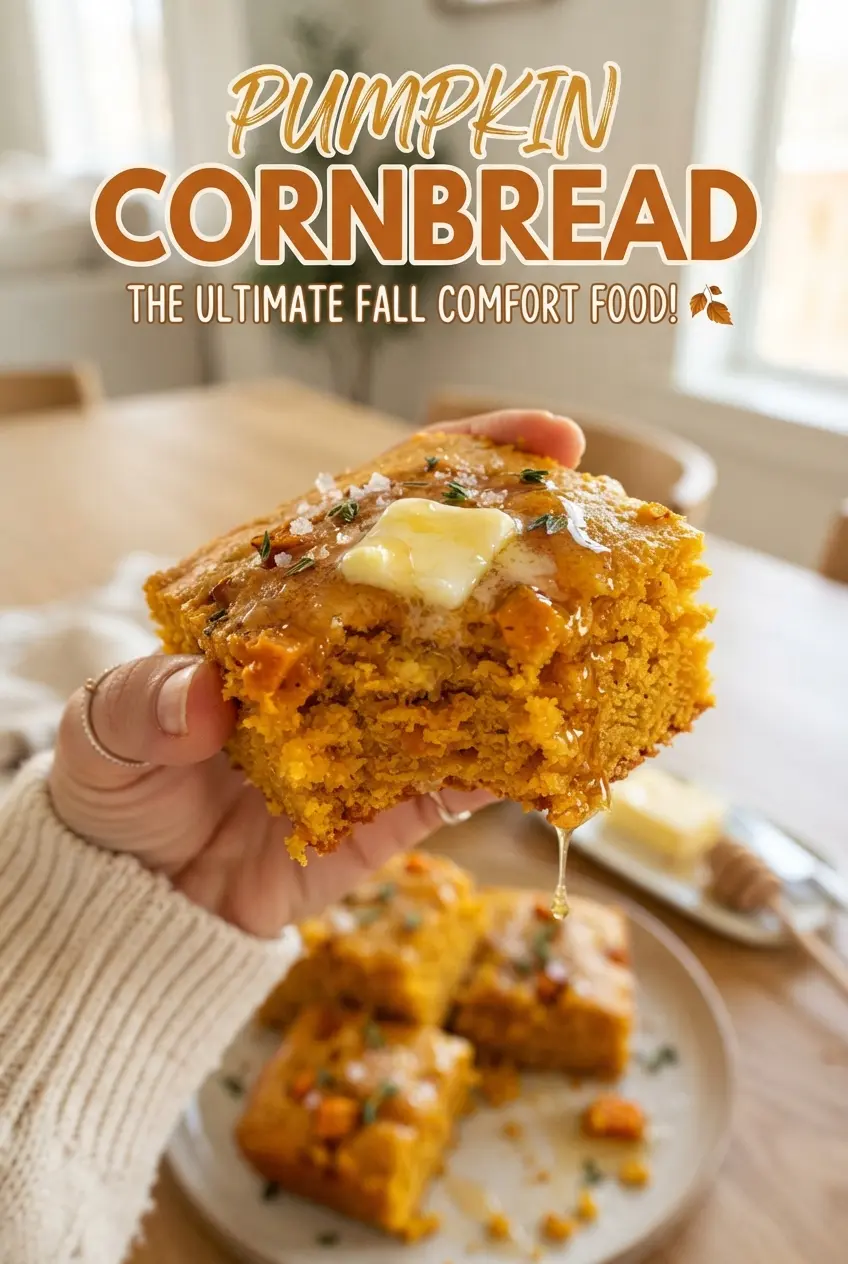
- Serve warm with butter to help the crust soften slightly and keep the crumb tender.