Pumpkin Greek yogurt pancakes come off the skillet tender in the middle, lightly crisp at the edges, and sturdy enough to hold a spoonful of yogurt and a slow pour of maple syrup without turning soggy. The pumpkin keeps them moist, but the Greek yogurt is what gives them a little lift and a clean tang that keeps the whole stack from tasting flat or overly sweet.
This batter works because the wet ingredients are whisked smooth before they meet the flour, which keeps the pancakes from getting streaky or dense. The yogurt also reacts with the baking soda, so you get a better rise than you’d expect from a pancake that feels this rich. A short rest gives the flour time to hydrate, and that one step makes the crumb softer and more even.
Below, I’ve included the exact cue I use for flipping, plus a few swaps that still keep the pancakes fluffy instead of heavy. If your pumpkin pancakes have ever cooked up gummy in the center, this version fixes that.
The pancakes stayed fluffy instead of gummy, and the pumpkin spice came through without taking over. I loved that the edges set nicely before the middle dried out.
Save these pumpkin Greek yogurt pancakes for mornings when you want a fluffy stack with extra protein and a warm pumpkin spice crumb.
The Trick to Keeping Pumpkin Pancakes Fluffy Instead of Heavy
Pumpkin puree adds moisture fast, and that’s where a lot of pancake batters go wrong. If the batter sits too long or gets overmixed, the flour tightens up and the pancakes turn bready before the middle cooks through. The fix here is simple: whisk the dry ingredients well first, add the wet ingredients until just combined, then stop stirring as soon as the flour streaks disappear.
The other thing that matters is heat. Pumpkin batter browns faster than plain pancake batter because of the sugar and spice, so medium heat is the sweet spot. If the pan is too hot, the outside sets before the center has time to puff, and you end up with a dark pancake that tastes underdone.
- Baking powder and baking soda — both matter here. The baking powder gives the pancakes lift on its own, while the baking soda reacts with the Greek yogurt for extra rise and a softer crumb.
- Greek yogurt — full-fat yogurt gives the best texture. It adds thickness, tang, and protein without thinning the batter, and that helps the pancakes hold their shape.
- Pumpkin puree — use pure pumpkin, not pumpkin pie filling. Pie filling has sugar and spices already mixed in, which throws off the balance and can make the batter too loose.
- Rest time — five minutes is enough for the flour to hydrate. Skip it and the pancakes can cook up a little rough around the edges and less tender in the middle.
What Each Ingredient Is Doing in These Pancakes
- All-purpose flour — gives the pancakes enough structure to rise without turning cakey. A gluten-free 1:1 blend can work if it includes xanthan gum, but the texture will be a little softer and more delicate.
- Plain Greek yogurt — this is the ingredient that gives the pancakes their tang and plush crumb. Full-fat is worth using here because low-fat yogurt can make the batter thinner and the pancakes a bit less rich.
- Pumpkin puree — it brings moisture and that pumpkin flavor, but it also weighs the batter down. That’s why the recipe uses both yogurt and leaveners; the pumpkin alone can’t carry the texture.
- Milk — loosens the batter just enough so it pours cleanly. If your yogurt is extra thick, add a tablespoon more milk; if the batter already looks loose, hold back a splash.
- Melted butter — adds flavor and helps the edges brown. You can swap in neutral oil, but you’ll lose some of the warm, round flavor that butter gives these pancakes.
- Cinnamon and pumpkin pie spice — the cinnamon keeps the spice blend from tasting muddled. If you only have pumpkin pie spice, use a little extra cinnamon so the flavor doesn’t fall flat.
The Part Where the Batter Turns Into a Proper Stack
Mix the Dry and Wet Separately
Whisk the flour, leaveners, spices, sugar, and salt in one bowl until the seasoning looks evenly distributed. In another bowl, whisk the pumpkin, Greek yogurt, milk, eggs, melted butter, and vanilla until the mixture is smooth and no streaks of yogurt remain. If the wet ingredients still look lumpy when they meet the flour, the batter won’t mix evenly and you’ll end up overworking it trying to fix that later.
Fold, Then Walk Away
Pour the wet mixture into the dry ingredients and fold gently with a spatula just until you don’t see dry flour anymore. The batter should look thick, a little shaggy, and not perfectly smooth. That rest for five minutes matters because it gives the flour time to soak up the moisture and lets the batter thicken into something that cooks up soft instead of wet in the center.
Watch the Edges, Not the Clock
Heat a lightly greased skillet over medium heat and portion about 1/4 cup batter for each pancake. Let them cook until bubbles appear across the top and the edges start to look set, not shiny. If the bottoms are getting dark before those bubbles show up, lower the heat; if the pancakes spread too much, the pan isn’t hot enough yet.
Flip Once and Finish Cleanly
Turn each pancake carefully and cook the second side for about two minutes, just until it springs back lightly when touched. Don’t press them with the spatula. That squeezes out the air you worked to create, and the pancakes go from fluffy to compact in one move. Serve them right away with Greek yogurt, honey, and maple syrup while the tops are still soft and warm.
How to Adjust These Pancakes Without Losing the Texture
Dairy-Free Swap That Still Stays Tender
Use a thick dairy-free yogurt and replace the butter with neutral oil. The pancakes will still be soft, but they’ll lose the tangy richness that Greek yogurt brings, so the flavor will be a little milder. Pick an unsweetened yogurt so the batter doesn’t turn overly sweet or thin.
Gluten-Free Version for a Softer Crumb
Swap the all-purpose flour for a good 1:1 gluten-free baking blend. The pancakes will cook a little more delicately and may need an extra 30 to 60 seconds per side, but they should still flip cleanly if the batter rests and the pan stays at medium heat.
Extra Pumpkin Spice Without a Drier Pancake
If you want a stronger spice note, add another 1/4 teaspoon cinnamon and a small pinch of nutmeg instead of piling on more pumpkin pie spice. Too much spice blend can make the pancakes taste dusty and heavy, while a little extra cinnamon keeps the flavor warm and clean.
Storage and Reheating
- Refrigerator: Store cooked pancakes in an airtight container for up to 4 days. They soften a little as they sit, but they hold up well.
- Freezer: These freeze well. Let them cool completely, layer with parchment, and freeze in a sealed bag or container for up to 2 months.
- Reheating: Warm them in a toaster, toaster oven, or skillet over low heat until hot. The mistake to avoid is blasting them in the microwave too long, which makes the centers rubbery before the edges are heated through.
Answers to the Questions Worth Asking
Pumpkin Greek Yogurt Pancakes
Ingredients
Equipment
Method
- Whisk all-purpose flour, baking powder, baking soda, pumpkin pie spice, cinnamon, sugar, and salt in a bowl until evenly combined.
- Whisk pumpkin puree, plain Greek yogurt, milk, eggs, melted butter, and vanilla extract until smooth.
- Fold the wet mixture into the dry mixture just until combined, then rest the batter 5 minutes for a thicker, fluffier texture.
- Heat a lightly greased cast iron skillet over medium heat (about 350°F/175°C).
- Pour about 1/4 cup batter per pancake and cook 2–3 minutes, until bubbles form on the surface and the edges look set.
- Flip and cook 2 minutes more, until both sides are golden and the centers look cooked through.
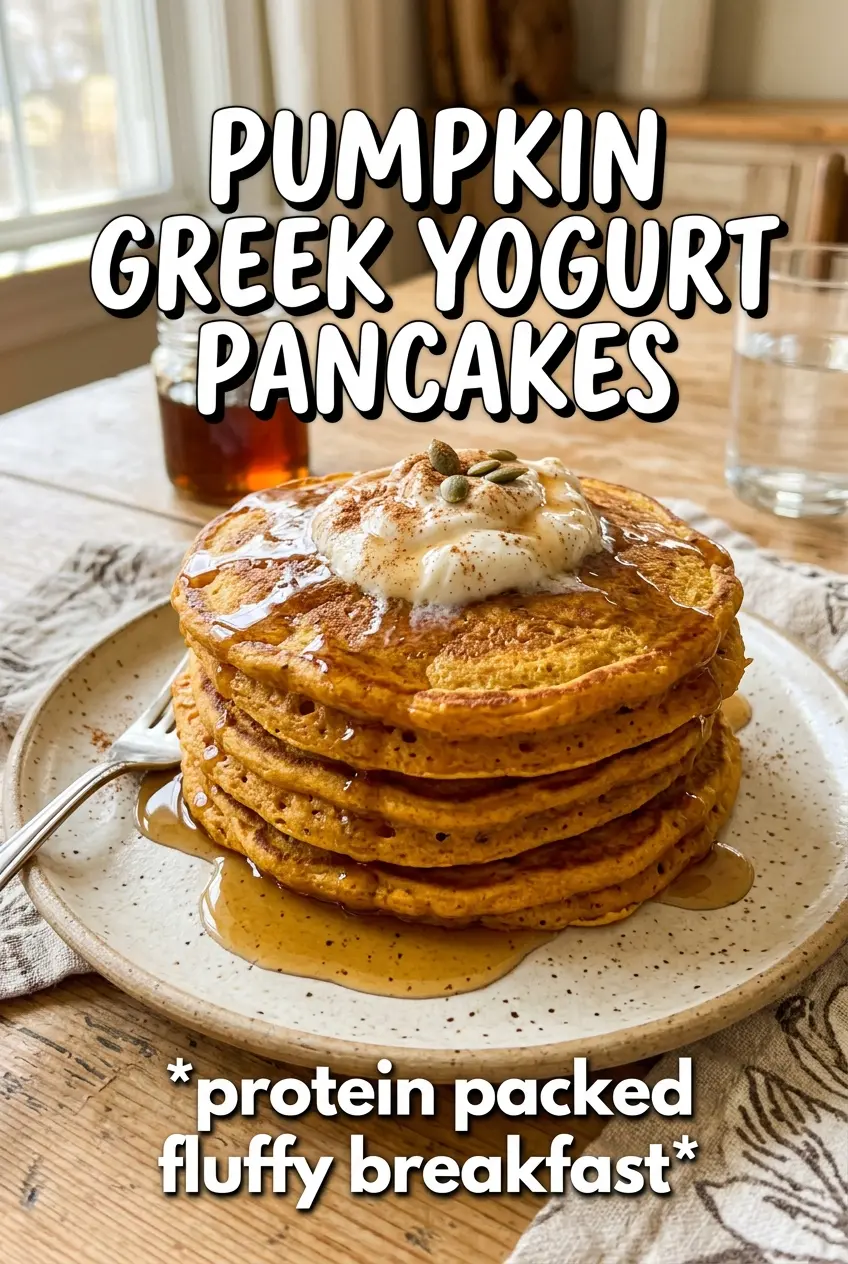
- Serve warm pancakes with a dollop of plain Greek yogurt topped with honey and maple syrup.