Pumpkin oatmeal protein pancakes land with the kind of sturdy, satisfying texture that actually keeps you full past breakfast. They cook up golden at the edges, tender in the center, and just dense enough to feel hearty without turning heavy or gummy. The pumpkin brings moisture and a gentle earthiness, while the oats give these pancakes a soft, nutty bite that regular flour pancakes just don’t have.
The trick is keeping the batter thick and the heat low. Protein powder can dry out fast, and if the skillet runs too hot, the outside browns before the middle sets. Blending the oats first helps them act like flour, and the Greek yogurt does double duty by adding tang and keeping the crumb soft. If you’ve had protein pancakes turn rubbery before, this version fixes that by leaning on real structure instead of trying to force a thin batter to behave like classic pancakes.
Below you’ll find the small details that matter here: how thick the batter should look, why the first flip needs a little patience, and a few smart swaps if you want to make these dairy-free or a little sweeter.
The batter was thick but still poured nicely, and the pancakes held together when I flipped them. Mine cooked in just about the 3 minutes per side, and the pumpkin spice with the honey on top tasted like fall without being too sweet.
Save these pumpkin oatmeal protein pancakes for a thick, high-protein breakfast with cozy spice and a soft oat crumb.
The Batch Trick That Keeps These Pancakes Light Instead of Heavy
Protein pancakes fail when the batter gets overworked or the pan runs too hot. The oats need to be blended fine enough to behave like flour, but once the wet ingredients hit the dry, stop stirring as soon as the streaks disappear. Overmixing tightens the batter and gives you that rubbery bite people blame on protein powder when the real problem is too much agitation.
The other piece is heat. Medium-low gives the batter time to set before the sugars and protein brown too fast. If the first pancake looks dark in under two minutes, the skillet is too hot. You want bubbles across the surface and edges that look matte, not wet, before you turn them.
- Blended oats — This is your flour replacement, and it matters because whole oats won’t create the same even, tender crumb. Blend until the texture looks like soft flour, not coarse meal.
- Greek yogurt — It adds moisture and tang while helping the pancakes stay plush. Regular yogurt works in a pinch, but thin yogurt can make the batter looser and less stable.
- Protein powder — Vanilla or unflavored both work, but flavored powders vary a lot in sweetness and thickness. If yours is very sweet, cut the honey back a little; if it’s dry, add a splash more milk.
- Pumpkin puree — Use plain pumpkin puree, not pumpkin pie filling. The filling is already sweetened and spiced, which throws off both texture and balance.
What Each Ingredient Is Doing in the Bowl
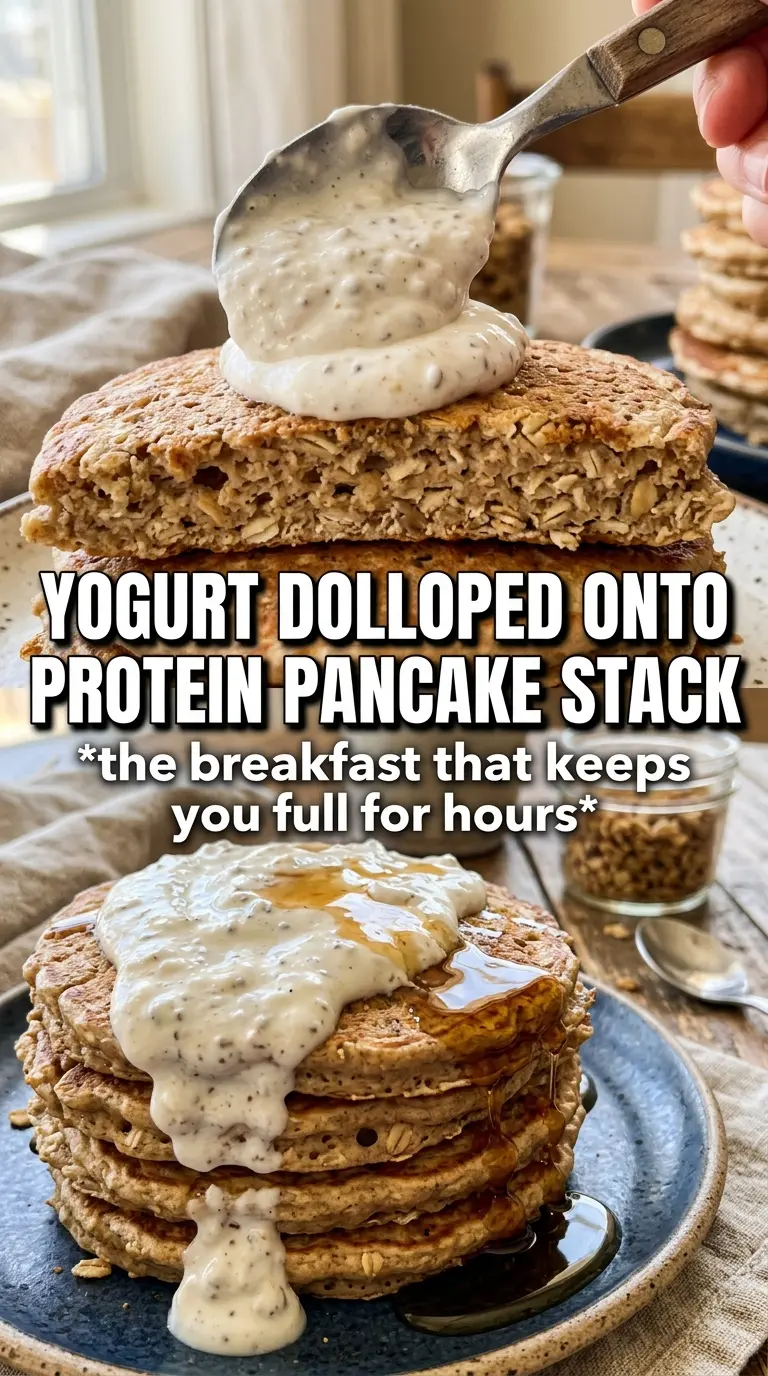
The oat flour gives these pancakes their structure and that slightly nubby texture that makes them feel more substantial than a standard stack. Eggs and Greek yogurt hold everything together and keep the center from drying out, which is especially important once protein powder enters the picture. The milk just loosens the batter enough to spoon and spread; add it slowly because the difference between thick and too-thin happens fast.
The pumpkin pie spice and cinnamon should taste warm, not aggressive. If your spice blend is old, the pancakes can taste flat even when everything else is right. Honey or maple syrup adds just enough sweetness to round out the pumpkin and protein powder without making these taste like dessert.
- Eggs — These do the heavy lifting for structure. If you try to replace all of them, the pancakes lose lift and can turn fragile when you flip them.
- Plain Greek yogurt — Thick yogurt is what keeps the batter creamy without making it runny. Sour cream can work, but it makes the flavor a little sharper and the batter a touch heavier.
- Almond milk or regular milk — Either one works. Use less than you think at first; this batter should be thick enough to mound slightly on the skillet.
- Pumpkin seeds for topping — They aren’t just garnish. That little crunch cuts through the softness of the pancakes and gives the plate a better finish.
Getting the Batter, Heat, and Flip in the Right Order
Blend the Dry Base First
Start by turning the oats into a fine flour, then whisk them with the protein powder, baking powder, spice, cinnamon, and salt. This keeps the leavening distributed evenly so you don’t end up with one pancake that rises better than the rest. If the oat flour looks a little clumpy, run it through the blender one more time; big bits of oat stay chewy instead of tender.
Whisk the Wet Ingredients Until Smooth
Combine the pumpkin, eggs, Greek yogurt, milk, honey, and vanilla until the mixture looks glossy and uniform. You shouldn’t see streaks of egg white or pockets of yogurt. If the mixture looks grainy, the yogurt was too cold or the pumpkin wasn’t mixed in fully, and that unevenness carries straight into the batter.
Let the Batter Stay Thick
Fold the wet into the dry just until combined. The batter should be thick enough to scoop with a 1/4 cup measure and slowly drop onto the pan rather than pour like regular pancake batter. If it seems too stiff, add milk one tablespoon at a time. If it seems thin, let it sit for 2 minutes; the oats and protein powder will absorb a little more moisture.
Cook Low and Flip Once
Grease a skillet and set it over medium-low heat. Drop 1/4 cup portions and let them cook until bubbles appear on top and the edges look set, about 3 minutes. Slide a thin spatula all the way under before flipping, because protein pancakes tear if you try to turn them too early. Cook the second side for about 2 minutes, just until the center springs back when touched.
How to Adapt These Pancakes Without Losing the Texture
Dairy-Free Version
Swap the Greek yogurt for a thick dairy-free yogurt with some body, not a thin drinkable style. Use unsweetened almond milk or oat milk. The pancakes will still hold together, but the tang will be milder and the crumb a little less plush.
Gluten-Free and Naturally Oat-Based
These are already built on oats, so the main job is using certified gluten-free oats if needed. The texture stays the same, but don’t skip the blending step or the pancakes turn rustic in a way that reads more grainy than hearty.
Lower-Sugar Breakfast Stack
Use unflavored protein powder and cut the honey in the batter to 2 teaspoons. The pancakes will taste a little more savory and the pumpkin spice will come forward more clearly, which works well if you plan to finish with yogurt and just a light drizzle of honey.
Storage and Reheating
- Refrigerator: Store leftovers in an airtight container for up to 4 days. They firm up a little as they chill, which actually makes them easier to stack for lunch or breakfast later in the week.
- Freezer: These freeze well. Cool completely, freeze in a single layer, then move to a bag with parchment between layers so they don’t stick together.
- Reheating: Warm them in a toaster oven, skillet, or microwave until just heated through. The biggest mistake is blasting them too long in the microwave, which dries out the edges before the center warms up.
Answers to the Questions Worth Asking
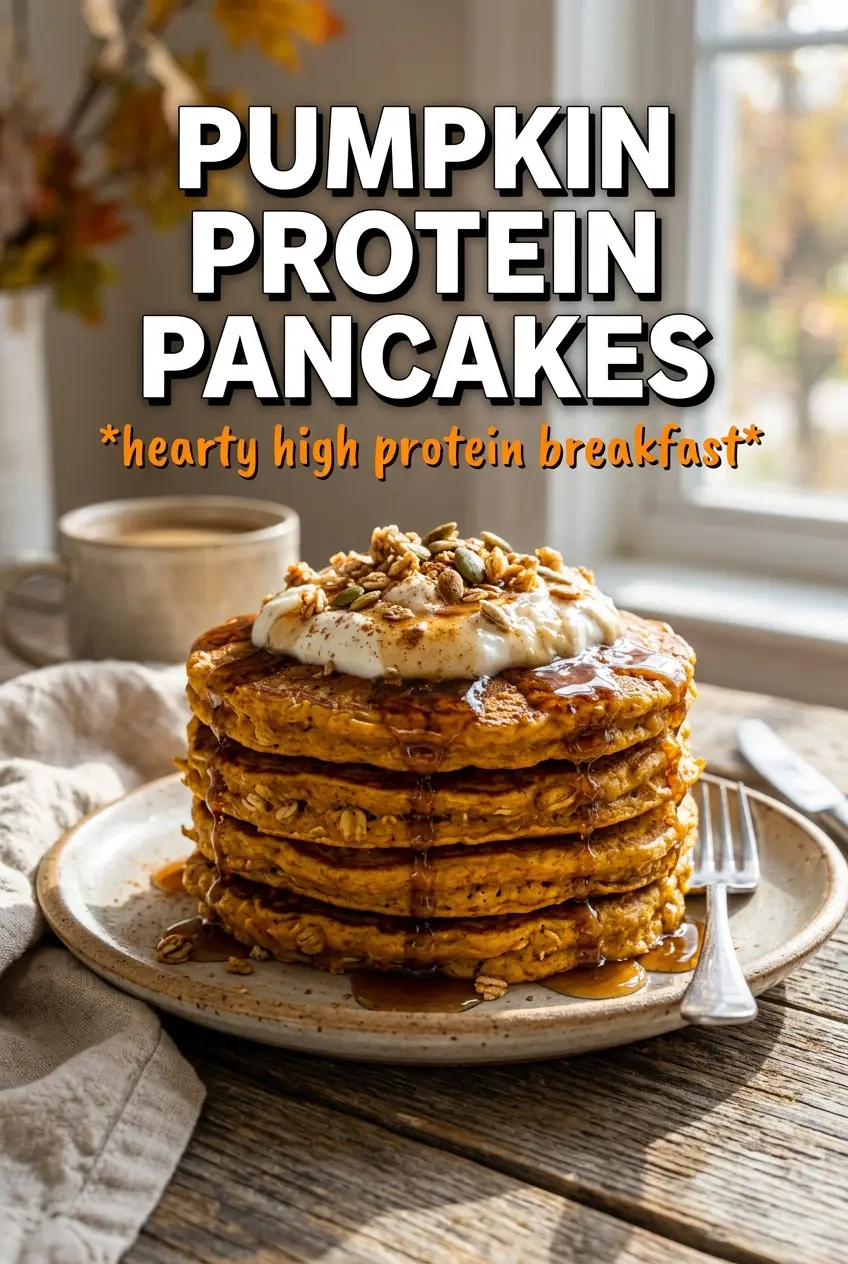
Pumpkin Oatmeal Protein Pancakes
Ingredients
Equipment
Method
- Blend rolled oats into a fine flour, then combine with protein powder, baking powder, pumpkin pie spice, cinnamon, and salt.
- Whisk pumpkin puree, eggs, Greek yogurt, milk, honey or maple syrup, and vanilla extract until smooth.
- Fold wet into dry until combined; the batter should be thick.
- Heat a greased skillet over medium-low heat, keeping the temperature low to prevent burning.
- Drop 1/4 cup portions into the skillet and cook 3 minutes, until bubbles form and edges set.
- Flip carefully and cook 2 minutes more, until cooked through.
- Top the pancakes with Greek yogurt, a drizzle of honey, and pumpkin seeds.