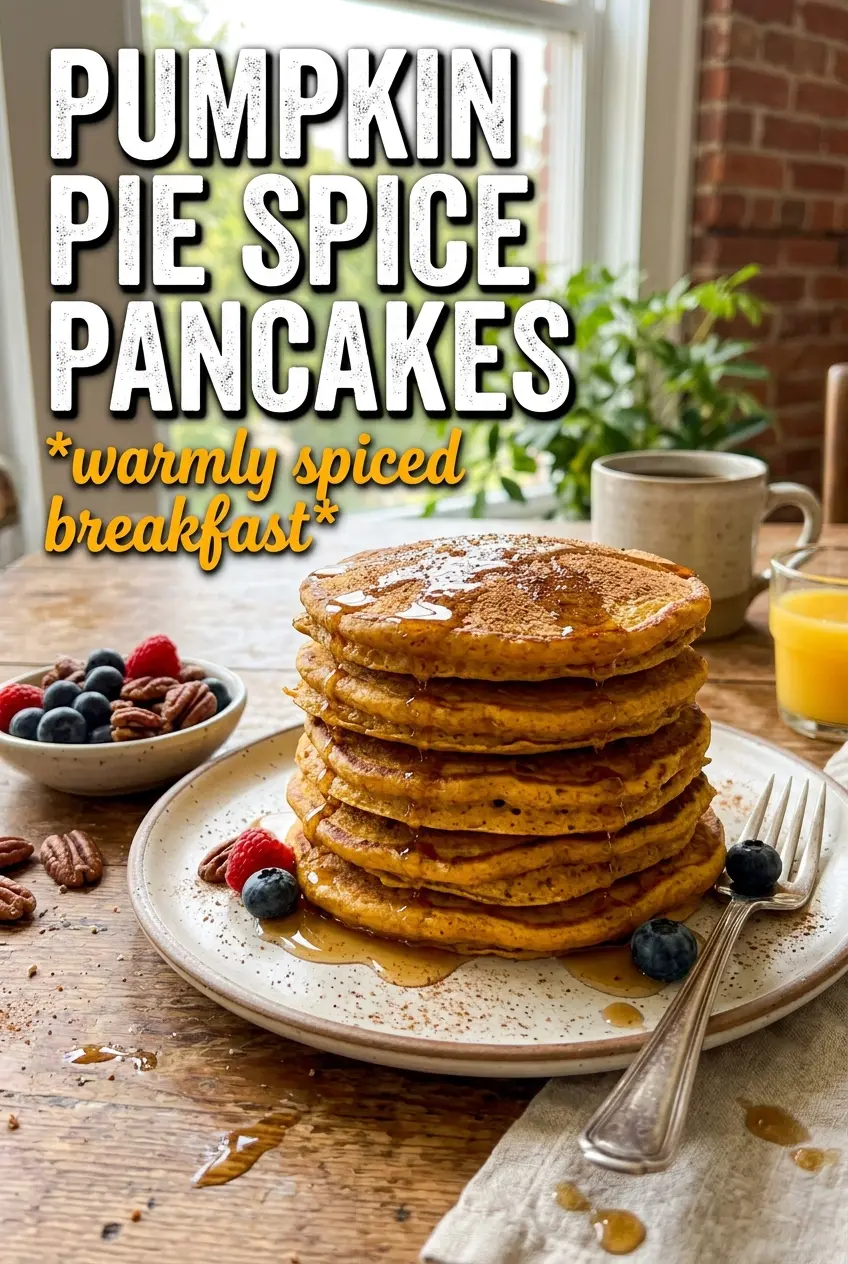
Pumpkin pie spice pancakes come out fluffy, fragrant, and tender, with just enough pumpkin to keep the crumb moist without turning heavy. The spice blend lands in every bite, so you get cinnamon, ginger, nutmeg, cloves, and allspice all at once instead of a flat, one-note pancake. They brown into deep golden rounds that hold up under whipped cream without collapsing.
The part that makes these work is the balance: pumpkin puree for softness, buttermilk for lift and tang, and both baking powder and baking soda for a batter that rises on the griddle instead of sitting there like paste. The spices are measured separately, which keeps the flavor bright and layered rather than muddy. Resting the batter for five minutes also helps the flour hydrate, so the pancakes cook up more evenly.
Below, you’ll find the small details that matter most, including how to keep the spice flavor bold without making the pancakes bitter and how to handle the batter so the centers stay light.
The pancakes were thick but still light, and the pumpkin spice came through without tasting overpowering. I loved that the edges got a little crisp while the centers stayed fluffy.
Save these pumpkin pie spice pancakes for a breakfast stack with fluffy centers and a warm, spiced finish.
The Spice Blend That Keeps These Pancakes From Tasting Flat
Most pumpkin pancakes lean on pumpkin pie spice alone and call it done, but that can taste dusty instead of layered. Here, the individual spices are measured on purpose, which keeps the cinnamon warm, the ginger bright, and the cloves from taking over. That balance matters because pumpkin puree mutes flavor faster than most batters do.
The other thing that protects the texture is the leavening combo. Baking powder lifts from the start, while baking soda reacts with the buttermilk and gives the batter a little more spread and color. If you skip the resting time, the flour hasn’t had a chance to absorb the moisture, and the pancakes can cook up uneven in the center.
What Each Ingredient Is Actually Doing in This Stack
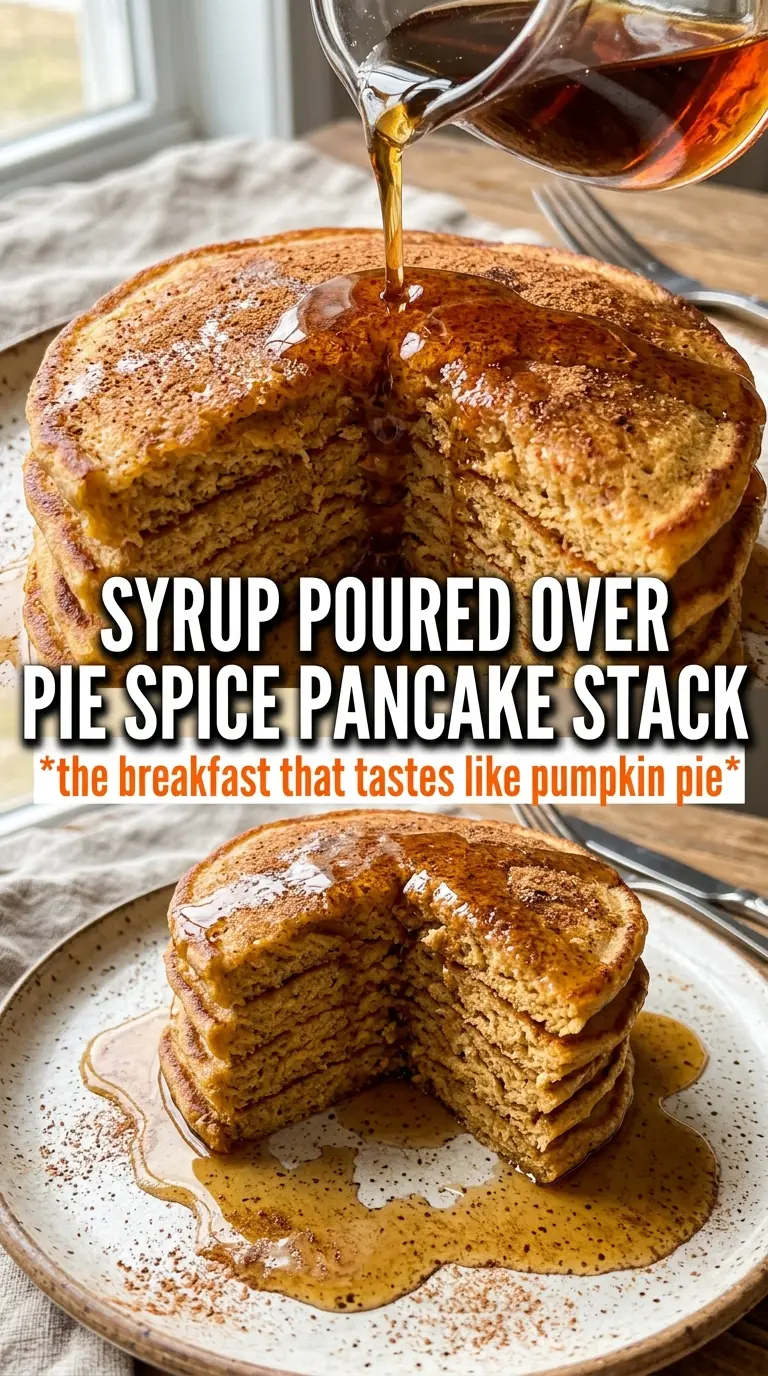
- Pumpkin puree — This adds moisture, color, and that soft pumpkin flavor that makes the pancakes taste like more than cinnamon flapjacks. Use plain pumpkin puree, not pumpkin pie filling, or the batter will be sweetened and spiced before you can control it.
- Buttermilk — The tang sharpens the spice and helps the baking soda do its job. Regular milk works in a pinch, but the pancakes won’t brown as nicely or feel as tender; if that’s your only option, stir 1 tablespoon lemon juice or vinegar into 1 1/4 cups milk and let it sit for 5 minutes.
- Eggs — They hold the batter together and keep the pancakes from turning fragile once you flip them. Room temperature eggs blend faster and keep the melted butter from seizing into little bits.
- Melted butter — This gives the pancakes richness and helps with browning. You can swap in neutral oil, but you’ll lose some of that buttery finish on the edges.
- All the spices — Cinnamon, ginger, nutmeg, cloves, and allspice each pull a different direction, and that’s what keeps the flavor from tasting one-dimensional. Fresh spices matter here more than in a lot of breakfast recipes because there isn’t a long simmer to wake them up.
The Batter and Griddle Rhythm That Give You Fluffy Pancakes
Mixing Without Overworking
Whisk the dry ingredients first so the spices are evenly spread through the flour, then add the wet ingredients and fold just until the streaks disappear. The batter should look a little lumpy. If you beat it smooth, the pancakes turn tight and bready instead of light.
Resting for the Right Amount of Time
Let the batter sit for 5 minutes after mixing. That short rest gives the flour time to absorb the pumpkin and buttermilk, and it lets the leavening settle into the batter. If it sits much longer, it can thicken too much and spread poorly, so cook it soon after that rest.
Cooking for Color Without Burning the Spices
Heat the skillet over medium, not high. The sugar and spices will darken fast, and a pan that’s too hot gives you browned outsides before the center sets. Pour about 1/4 cup batter for each pancake, wait for bubbles on the surface and edges that look matte, then flip and cook just until the second side springs back when touched.
Three Ways to Change the Batch Without Losing the Good Part
Dairy-Free Pumpkin Pie Spice Pancakes
Use an unsweetened non-dairy milk with 1 tablespoon lemon juice or vinegar stirred in, and swap the butter for melted coconut oil or neutral oil. You’ll lose a little of the buttery depth, but the spice and pumpkin still carry the recipe nicely. Coconut oil gives a subtle flavor that works especially well with the warm spices.
Gluten-Free Version That Still Flips Cleanly
A 1:1 gluten-free flour blend usually works here without any extra changes. The batter may thicken a little more as it rests, so cook it soon after mixing and don’t let it sit for too long. If the first pancake spreads too slowly, whisk in a tablespoon or two of buttermilk.
Make Them Richer and More Dessert-Like
Replace the whipped cream topping with maple whipped cream or a pat of salted butter and a drizzle of maple syrup. That pushes the pancakes toward brunch-dessert territory and adds sweetness without changing the batter itself. It’s a good move when you want a more indulgent plate.
Storage and Reheating
- Refrigerator: Store cooled pancakes in an airtight container for up to 4 days. They soften a little in the fridge, but the flavor holds well.
- Freezer: These freeze well. Layer parchment between pancakes, seal them tightly, and freeze for up to 2 months.
- Reheating: Warm them in a toaster oven, skillet, or low oven until hot through. The biggest mistake is microwaving too long, which makes the edges rubbery and the centers damp.