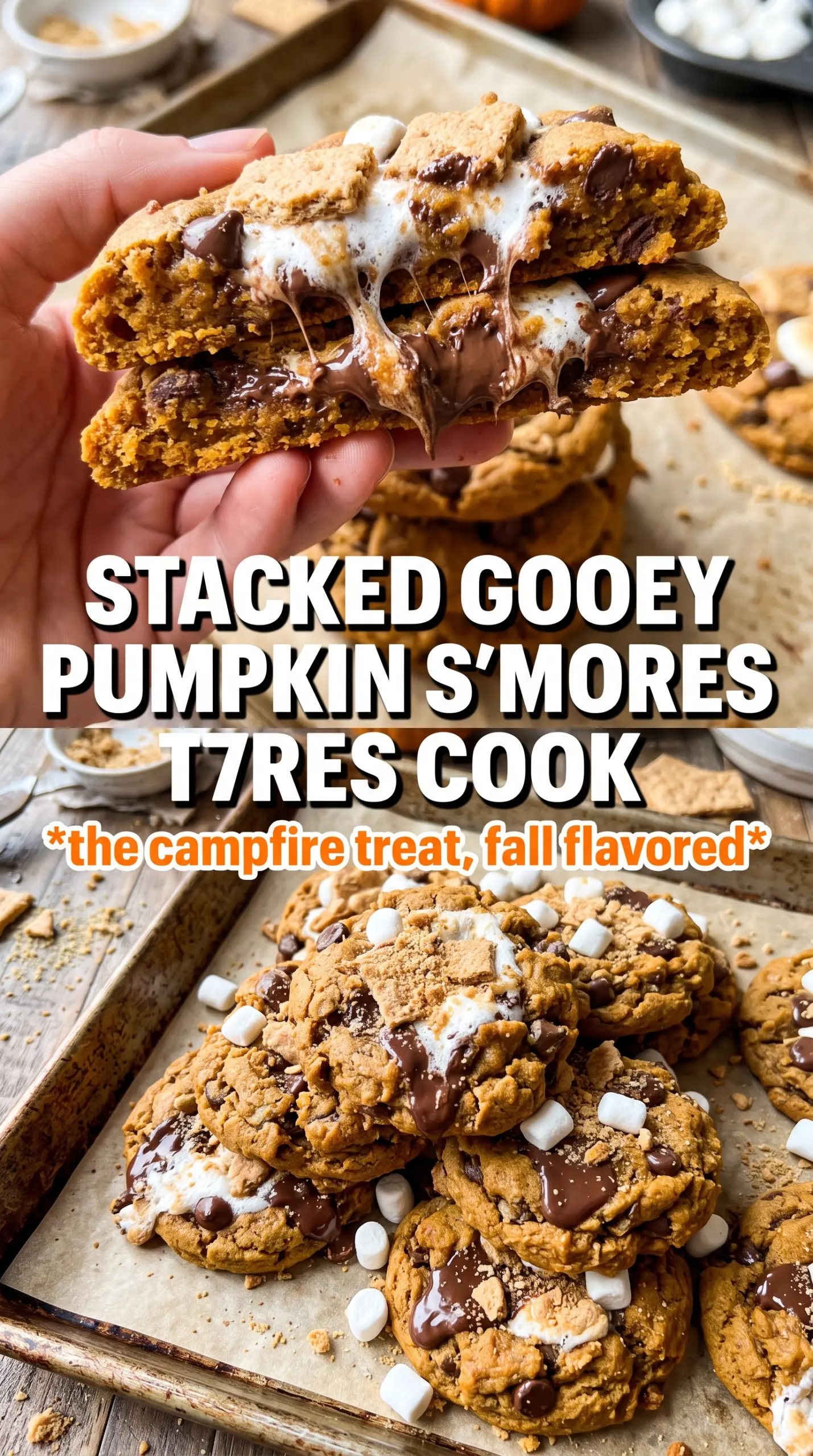
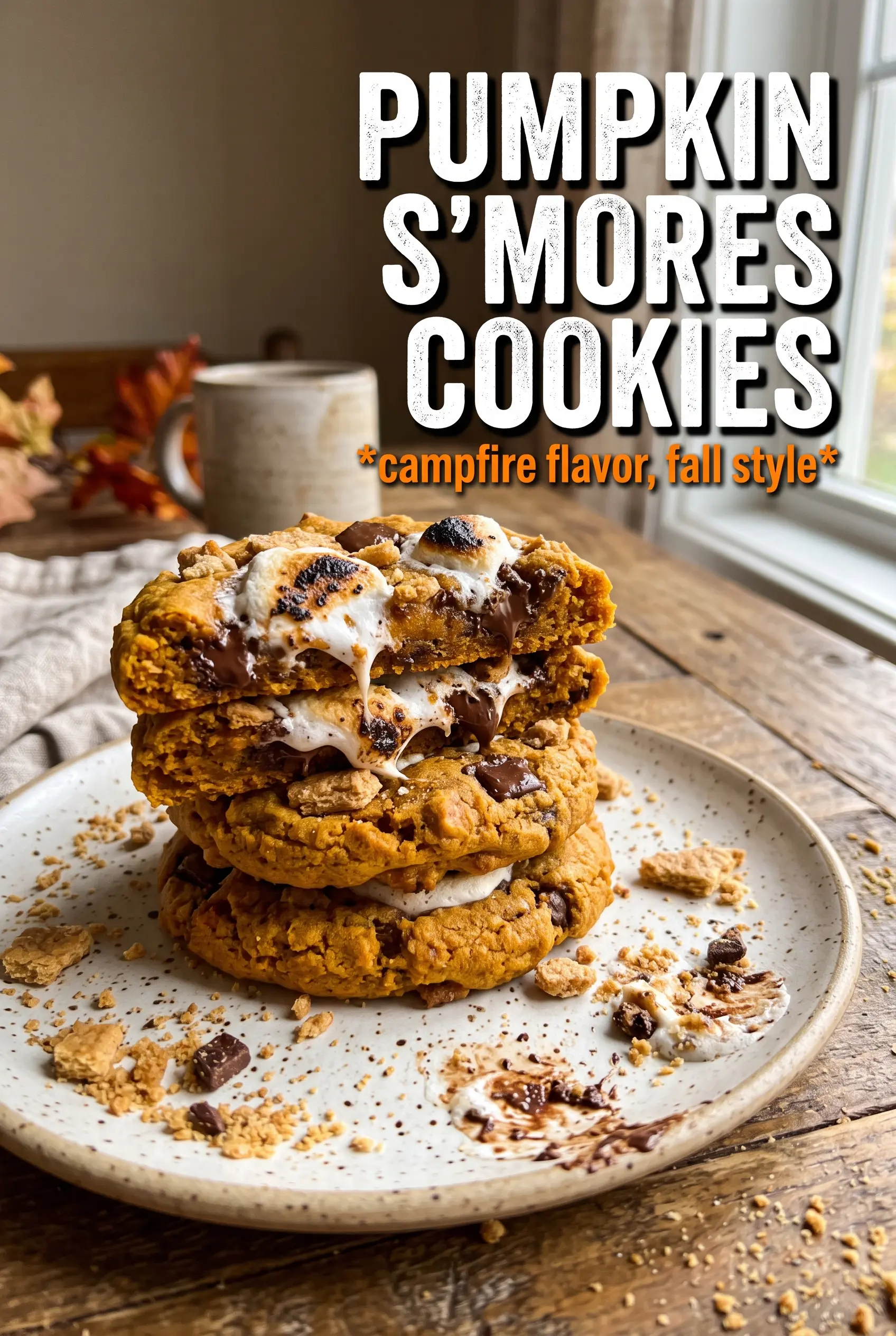
Pumpkin S’mores Cookies bake up thick in the middle with crisp edges, gooey marshmallow pockets, and little shards of graham cracker that turn buttery and toasty in the oven. The chocolate stays melty, the pumpkin spice comes through without taking over, and each cookie tastes like a campfire dessert that moved indoors and got a lot easier to make.
The trick is keeping the pumpkin under control. Blotting the puree dry keeps the dough from turning cakey, and adding half the marshmallows into the dough while pressing the rest onto the tops gives you those stretchy, toasted peaks without losing all the marshmallow in the bake. A short chill isn’t required here, but the dough should still be scooped and baked promptly so the marshmallows don’t start dissolving into the batter.
Below, I walk through the one step that keeps these cookies from spreading too much, plus the ingredient swaps that still give you a real s’mores-style cookie instead of a soft pumpkin cookie with a few mix-ins.
The pumpkin stayed soft instead of cakey, and the marshmallows on top toasted up in the oven just like I wanted. My kitchen smelled like a fall campfire, and the graham cracker pieces stayed pleasantly crunchy.
Save these Pumpkin S’mores Cookies for the nights when you want toasted marshmallow tops and melty chocolate in one pan.
The Secret to Keeping Pumpkin Cookies Chewy Instead of Puffy
Most pumpkin cookies turn soft and cakey because the puree brings too much moisture into the dough. That isn’t a problem if you want muffin-like cookies, but it gets in the way here because s’mores cookies need structure: a chewy center, set edges, and enough body to hold chocolate chunks and marshmallows without collapsing.
Blotting the pumpkin is the part that changes everything. A 1/3 cup measure of pumpkin puree can hold a surprising amount of water, and pressing it between paper towels pulls off the extra before it hits the bowl. Once that moisture is under control, the butter and sugar can cream properly, which helps the cookies spread just enough instead of baking up as thick little domes.
The other detail worth respecting is the marshmallow timing. If you mix all of them into the dough, they melt away and disappear. Half in the dough, half on top gives you pockets of gooeyness inside and that toasted cap on the surface.
What Each Ingredient Is Actually Doing in These Cookies
- Pumpkin puree — Use plain pumpkin puree, not pumpkin pie filling. The filling is already sweetened and spiced, which throws off both the texture and the balance of the cookie. Blotting it dry is non-negotiable here.
- Brown sugar — This brings chew, moisture, and that deeper caramel note that works with graham crackers better than white sugar alone. Don’t swap all of it out unless you want a crisper, less plush cookie.
- Graham cracker pieces — These give the cookie its s’mores backbone. Break them by hand into uneven pieces so some stay crunchy and some soften into little sandy pockets.
- Dark chocolate chunks — Chunks melt into puddles in a way chips don’t quite match. Semi-sweet works too, but dark chocolate keeps the sweetness in check once the marshmallows and graham crackers are in the mix.
- Mini marshmallows — The mini size melts fast, which is exactly what you want. Add only half to the dough so the rest can sit on top and toast instead of vanishing completely.
Building the Dough So the Marshmallows Stay Put
Start with a Properly Creamed Base
Beat the butter with both sugars until the mixture looks fluffy and a little lighter in color. That air helps the cookies spread in a controlled way instead of baking into dense rounds. Add the blotted pumpkin, egg, and vanilla after the butter mixture looks smooth, then stop as soon as everything is combined. If you beat too long after the flour goes in, the cookies turn tough and the marshmallows tear through the dough.
Fold the Mix-Ins at the End
Stir the dry ingredients in just until the flour disappears, then switch to a spatula for the graham crackers, chocolate, and half the marshmallows. The dough will be thick and a little sticky, which is what you want. If it looks loose, the pumpkin was too wet, and the cookies will spread too much in the oven.
Top and Bake Without Waiting Around
Scoop the dough into 2-tablespoon rounds and press the remaining marshmallows onto the tops before they sit too long. Marshmallows start to soften as soon as they touch the dough, so baking promptly helps them hold shape and toast instead of dissolving. Bake just until the edges are set and the centers still look slightly soft, then cool on the pan for five minutes so the cookies finish setting without drying out.
How to Tweak These Without Losing the S’mores Feel
Gluten-Free Version
Use a 1:1 gluten-free baking flour blend that includes xanthan gum. The texture will be a little more tender and less chewy than the original, but the marshmallows and chocolate still carry the cookie. Keep the pumpkin well blotted, because gluten-free doughs usually spread more if they’re too wet.
Dairy-Free Swap
Replace the butter with a solid plant-based butter stick, not a tub spread. Tub-style margarines hold too much water and can make the cookies puff and spread unevenly. The flavor stays close enough, especially once the graham crackers, spices, and chocolate go in.
Extra Toasted Marshmallow Tops
Bake the cookies until just set, then broil for about 60 seconds if you want those caramelized marshmallow tops. Stay right there and watch them closely, because marshmallows go from golden to scorched fast. This gives you a sharper s’mores look and a little crispness on top.
Make Them Smaller for a Cookie Tray
Scoop 1-tablespoon portions and shave a few minutes off the bake time. Smaller cookies set up faster, and the marshmallow topping gets crisp at the edges before the centers overbake. This is the best move if you’re making a big batch for a party plate.
Storage and Reheating
- Refrigerator: Store in an airtight container for up to 4 days. The marshmallows soften a little, but the cookies stay chewy.
- Freezer: Freeze baked cookies for up to 2 months with parchment between layers. Thaw at room temperature; freezing the dough works too, but press fresh marshmallows on top right before baking.
- Reheating: Warm on a baking sheet at 300F for 4 to 5 minutes. A microwave makes the marshmallows rubbery and can toughen the cookie edge, so use the oven if you want that just-baked texture back.
Answers to the Questions Worth Asking
Pumpkin S'Mores Cookies
Ingredients
Equipment
Method
- Preheat the oven to 375°F and line baking sheets with parchment for easy release.
- Blot the pumpkin puree dry between paper towels to prevent the cookies from spreading too much.
- Beat the softened butter with the brown sugar and granulated sugar until fluffy, about 2–3 minutes.
- Beat in the pumpkin puree, egg, and vanilla extract until the mixture looks smooth and evenly colored.
- Whisk the flour, baking soda, pumpkin pie spice, cinnamon, and salt together, then fold into the butter mixture just until no dry streaks remain.
- Fold in the graham cracker pieces, chocolate chunks, and half of the mini marshmallows until distributed throughout.
- Scoop the dough into 2-tablespoon rounds and press the remaining mini marshmallows onto the tops so they bake in place.
- Bake at 375°F for 10–12 minutes until the edges look set and the centers are just starting to firm up.
- If desired, broil for about 60 seconds to toast the marshmallow tops; watch closely for browning.
- Cool the cookies on the pan for 5 minutes so they set before moving.