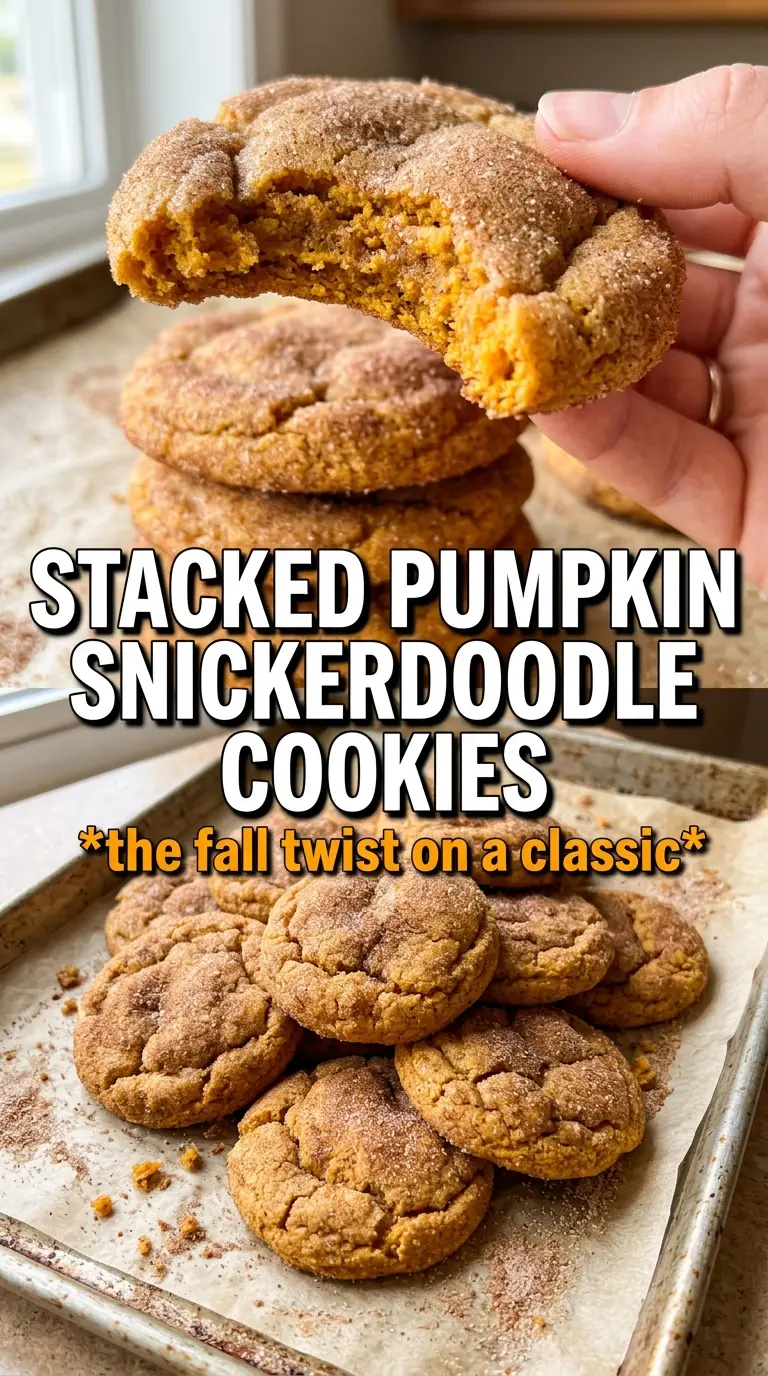
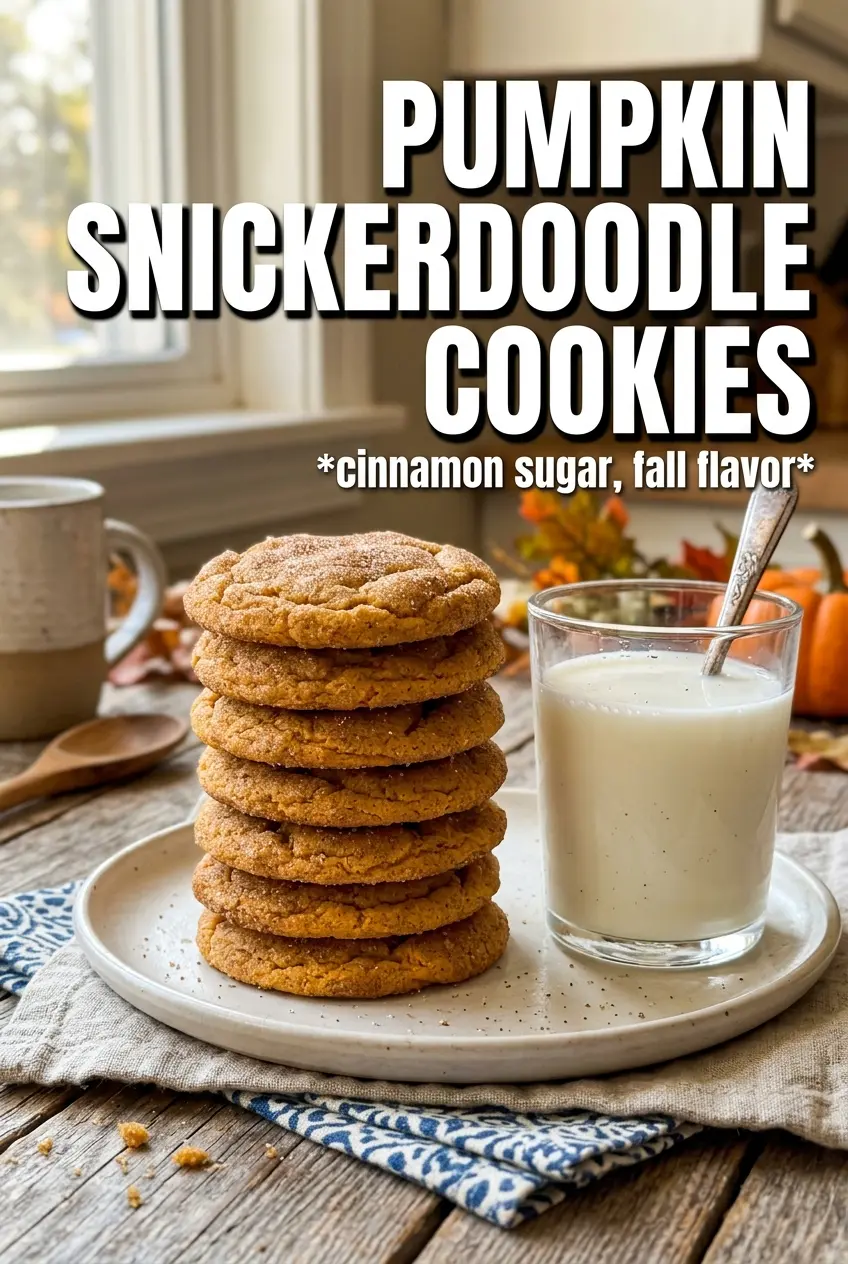
Pumpkin snickerdoodle cookies bake up soft and pillowy in the center with those classic crinkled tops and a cinnamon-sugar shell that turns crisp at the edges. The pumpkin doesn’t make them cakey here because it’s used sparingly and dried first, which keeps the dough tender without adding too much extra moisture. You get the warm spice of a snickerdoodle with just enough pumpkin to make each bite taste round and cozy.
The little detail that matters most is blotting the pumpkin puree until it’s no longer wet. That step keeps the dough from spreading oddly or baking up too dense, and it helps the sugar coating cling instead of dissolving. Cream of tartar does its usual job too: it gives the cookies that tangy snickerdoodle bite and helps create the cracked tops everyone wants.
Below you’ll find the trick for getting the spice sugar to coat evenly, plus the one short chill that saves a soft dough from becoming frustrating to scoop.
I blotted the pumpkin like you said and the cookies came out soft in the middle with crisp edges instead of puffy and wet. The cinnamon sugar crust stayed on beautifully, and the cracked tops looked just like bakery cookies.
Love the soft centers and cinnamon-sugar crackle in these pumpkin snickerdoodle cookies? Save this recipe for the days when you want a fast batch of bakery-style cookies with a warm spice finish.
The Pumpkin Trick That Keeps These Cookies from Turning Cakey
Most pumpkin cookies go wrong because the dough gets too wet before it ever reaches the oven. Pumpkin puree carries a lot of moisture, and when that moisture stays in the dough, the cookies puff instead of spreading into those soft, crinkled rounds you want. Blotting the pumpkin dry changes the texture in a real way. It concentrates the flavor and keeps the crumb tender instead of bready.
The other important piece is not overworking the flour once it goes in. Snickerdoodles need enough mixing to bring the dough together, but once the flour disappears, stop. Overmixing tightens the dough and can make the cookies lose that soft, melt-away bite that sets a good snickerdoodle apart from an ordinary spice cookie.
What Each Ingredient Is Actually Doing in These Pumpkin Snickerdoodles
- All-purpose flour — This gives the cookies their structure without making them heavy. Bread flour would make them chewy in the wrong way, and a low-protein cake flour can make them spread too much. Measure it by spooning and leveling so the dough stays soft but still holds its shape.
- Cream of tartar — This is the backbone of a real snickerdoodle. It adds that subtle tang and helps the cookies bake with a cracked top and a tender bite. There isn’t a perfect substitute here if you want the classic flavor, though a little lemon juice can mimic the tang in a pinch, not the texture.
- Butter — Softened butter traps air when beaten with the sugar, which helps the cookies rise and stay light. If it’s too warm, the dough will spread more than it should, so aim for softened but still cool to the touch.
- Pumpkin puree — Use plain pumpkin puree, not pumpkin pie filling. The filling already contains sugar and spices and will throw off the balance. Blotting it dry matters more than the brand you buy.
- The rolling sugar and spices — This coating is what gives the cookies that familiar snickerdoodle crust. The cinnamon and pumpkin pie spice bloom in the oven, and the extra sugar helps create those crisp, sparkly edges.
Getting the Dough Mixed, Chilled, and Coated the Right Way
Blot the Pumpkin First
Spread the pumpkin puree between layers of paper towel and press gently, then repeat with fresh towels until it looks noticeably drier. You don’t need to remove every trace of moisture, but you do want to take out enough that the puree won’t make the dough loose and sticky. If you skip this, the cookies still bake, but they won’t keep that tidy snickerdoodle shape.
Build the Dough Without Overworking It
Beat the butter and sugar until the mixture looks pale and fluffy, then add the egg, vanilla, and dried pumpkin. Once the flour mixture goes in, fold just until the last streaks disappear. The dough should be soft and slightly sticky, not pourable. If it seems too loose to scoop cleanly, chill it for 30 minutes rather than adding more flour, which would make the cookies dry.
Roll Thick, Even Balls in the Spice Sugar
Scoop the dough into 1 1/2 tablespoon portions and roll each one generously in the cinnamon-spice sugar. A thick coating gives you better crackle and better flavor on the outside of each cookie. Place the dough balls a few inches apart on parchment-lined baking sheets so they have room to spread without merging at the edges.
Bake Until the Tops Crinkle
Bake just until the edges are set and the tops are crinkled, usually 10 to 12 minutes. The centers will still look a little soft when they come out, and that’s right where they should be. Let them sit on the pan for 5 minutes before moving them, because they finish firming up as they cool and can tear if you rush them off the tray.
How to Adjust These Cookies Without Losing the Snickerdoodle Texture
Make Them a Little More Spiced
Add an extra 1/4 teaspoon cinnamon and a pinch more nutmeg to the dough if you want a deeper spice note. Keep the dough balanced, though, because too much spice can overpower the pumpkin and make the cookies taste dusty instead of warm.
Gluten-Free Version
A good 1:1 gluten-free baking flour works here, but the cookies will spread a touch less and the edges may be slightly more delicate. Chill the dough before scooping, and don’t overbake them, since gluten-free dough dries out faster once the moisture is gone.
Dairy-Free Swap
Use a solid plant-based butter stick instead of regular butter. The flavor changes a little, but the structure stays close if the substitute is formulated for baking. Avoid soft tub spreads here, since they can make the dough greasy and thin.
Storage and Reheating
- Refrigerator: Store in an airtight container for up to 5 days. The cookies stay soft, though the sugar coating softens a bit after the first day.
- Freezer: These freeze well baked or as dough balls. Freeze baked cookies in a single layer, then move them to a bag, or freeze the rolled dough and bake from frozen with an extra minute or two.
- Reheating: Warm baked cookies in a 300F oven for 3 to 5 minutes. The mistake to avoid is microwaving too long, which makes the centers rubbery and melts the sugar coating into a sticky layer.
Questions I Get Asked About This Recipe
Pumpkin Snickerdoodle Cookies
Ingredients
Equipment
Method
- Preheat oven to 375F and line baking sheets with parchment for easy release and even browning.
- Blot pumpkin puree between paper towels several times to remove as much moisture as possible; this is key for crisp edges.
- Whisk all-purpose flour, cream of tartar, baking soda, cinnamon, nutmeg, ginger, allspice, and salt until evenly combined.
- Beat unsalted butter, softened and granulated sugar until very light and fluffy.
- Add egg, vanilla extract, and blotted pumpkin puree, then beat just until smooth.
- Fold in the flour mixture until just combined; the dough will be slightly sticky.
- Refrigerate the dough for 30 minutes if very soft, so the cookies hold shape during baking.
- Mix the rolling sugar, cinnamon, and pumpkin pie spice in a shallow bowl.
- Scoop dough into 1-1/2 tablespoon balls, then roll generously in the cinnamon spice sugar until coated.
- Bake at 375F for 10-12 minutes, until edges are set and tops are crinkled with a warm golden look.
- Cool on the pan for 5 minutes, so the cookies firm up as they settle.