Golden, layered pumpkin spice pull apart bread is the kind of breakfast that disappears while it’s still warm. The outside bakes into a lightly crisp, caramelized crust, while the inside stays soft and pillowy with buttery cinnamon-sugar seams in every pull-apart section. A drizzle of cream cheese glaze finishes the whole loaf with just enough tang to keep the sweetness in balance.
What makes this version work is the pumpkin in the dough, not just in the filling. It adds moisture and a subtle earthy sweetness, but it also means the dough needs a full knead and a proper rise so it doesn’t bake up dense. The filling is brushed on after rolling, which keeps the layers distinct instead of turning the whole loaf muddy and wet. Tenting the loaf with foil halfway through is the other small thing that matters here; it gives the center time to cook through before the top gets too dark.
Below, I’ve laid out the one detail that keeps the layers tall instead of collapsing, plus a few practical swaps in case you want to adjust the glaze or spice level without changing the whole recipe.
The layers pulled apart beautifully and the pumpkin spice filling stayed tucked in instead of melting out. I baked it with foil halfway through like you said and the top came out golden, not burnt.
Keep this pumpkin spice pull apart bread handy for slow mornings when you want soft layers, warm spice, and cream cheese glaze in every slice.
The Trick to Keeping the Layers Tall Instead of Squashed
The biggest mistake with pull apart bread is packing the stacks too tightly in the pan. When the dough has room to rise upward before it bakes, the sections separate cleanly and you get those dramatic, tender layers instead of a compressed loaf. The second trap is underbaking the center because the top looks done first. That’s why the foil tent matters here; it slows the browning long enough for the middle to finish baking without drying out the crust.
Using pumpkin puree in the dough makes the crumb plush, but it also adds weight. If your dough feels sluggish after mixing, that’s normal. The dough should still be soft and a little tacky, not stiff and dry, because dry dough tears when you roll it out and makes the layers uneven.
What Each Ingredient Is Actually Doing in the Dough and Filling
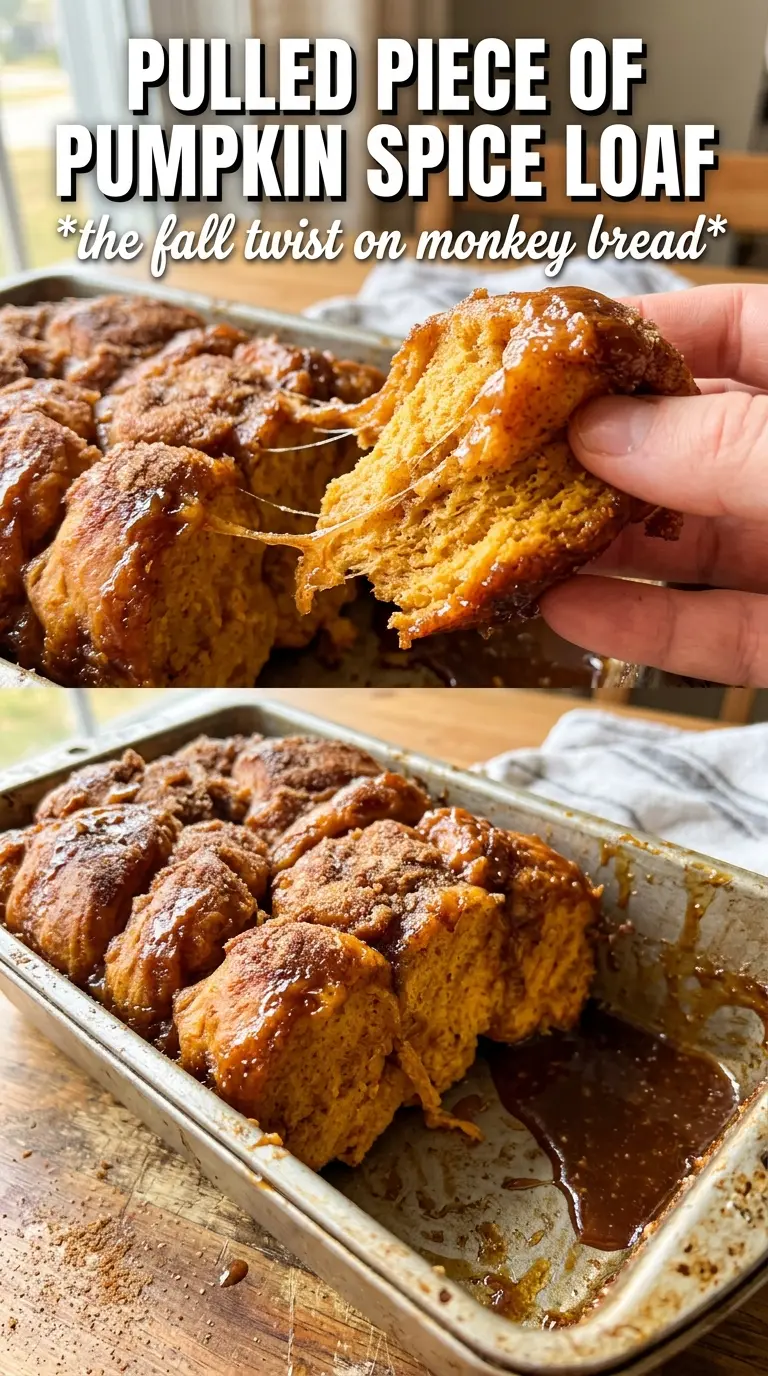
- Warm milk — This wakes up the yeast and gives the dough a softer, richer crumb than water would. Keep it warm, not hot; anything too hot can kill the yeast before the dough even starts.
- Pumpkin puree — This adds moisture, color, and that unmistakable pumpkin flavor. Use plain pumpkin puree, not pumpkin pie filling, or the dough will be too sweet and spiced before you even add the filling.
- Butter — Butter shows up in both the dough and the filling, and that’s part of why the bread stays tender and the layers taste bakery-style. Melted butter is fine here because it helps coat the dough and carry the spices evenly.
- Brown sugar — This is what gives the filling its caramel-like edges as the bread bakes. Pack it tightly so the filling has enough body to stay in place between the layers.
- Cream cheese — The glaze needs cream cheese for tang and thickness. If you swap it for milk alone, you’ll lose the creamy finish that balances the sweet filling.
Building the Loaf So the Filling Stays Inside
Blooming the Yeast
Stir the yeast into warm milk with the sugar and let it sit until it looks foamy and active. That foam tells you the yeast is alive and ready to lift the dough. If the mixture stays flat, the milk was probably too hot, too cold, or the yeast is old, and the loaf will rise poorly no matter what you do next. Add the butter, egg, and pumpkin puree once the yeast is active so the base stays emulsified and smooth.
Making the Soft Pumpkin Dough
Work in the flour, pumpkin pie spice, and salt, then knead until the dough feels smooth and elastic, about 7 to 8 minutes. It should pull away from the bowl but still feel soft to the touch. If you add too much flour because the dough looks sticky at first, the bread will bake up tight instead of fluffy. After the first rise, it should look puffy and nearly doubled, with a softer, aerated feel when you press it.
Stacking the Spiced Layers
Roll the dough into a 12×16 rectangle and brush it with melted butter before sprinkling on the filling. Cut it into long strips, stack them, then cut those stacks into squares so the layers stay visible in the pan. The key here is even coverage without dumping the filling in clumps; clumps slide out during baking and leave dry patches behind. Set the stacks cut-side up in the loaf pan so the layers can open as they rise and bake.
Baking Until the Center Is Set
Let the loaf rise again in the pan until the stacks look puffy and snug but not jammed together. Bake at 350F and tent the top with foil halfway through so the sugar on top doesn’t scorch before the center catches up. The loaf is done when the top is deeply golden and the middle feels set, not soft and doughy, when you gently press the center. Drizzle the glaze over the warm loaf so it melts into the ridges instead of sitting in a hard stripe on top.
How to Adapt This Loaf Without Losing the Texture
Dairy-Free Pumpkin Spice Pull Apart Bread
Use unsweetened non-dairy milk in the dough and a plant butter that melts smoothly. The bread will still rise well, but the glaze loses some of its tang unless you swap in a dairy-free cream cheese with enough body to hold its shape.
Extra-Spiced Filling
Add another 1/2 teaspoon of pumpkin pie spice if you want a sharper fall-spice edge. That change deepens the aroma without affecting the structure, but don’t push the cinnamon much higher or the filling starts tasting dry and harsh instead of warm.
Make-Ahead Morning Bread
Shape the loaf the night before, cover it tightly, and refrigerate it after the second rise starts. In the morning, let it sit at room temperature while the oven heats so it can finish puffing before baking. Cold dough straight from the fridge tends to bake unevenly and can leave the center gummy.
Mini Pull Apart Loaves
Divide the stacks between two smaller loaf pans for a quicker bake and more crust on each serving. The texture stays the same, but you’ll want to start checking a little earlier since smaller pans cook through faster and brown more quickly.
Storage and Reheating
- Refrigerator: Store covered for up to 4 days. The bread firms up a little in the fridge, but the layers stay tender once warmed.
- Freezer: Freeze the baked loaf without glaze, wrapped well, for up to 2 months. Thaw overnight in the fridge, then glaze after reheating for the best texture.
- Reheating: Warm slices loosely covered in a 300F oven for 10 to 15 minutes. The common mistake is microwaving too long, which turns the layers rubbery instead of soft.
Answers to the Questions Worth Asking
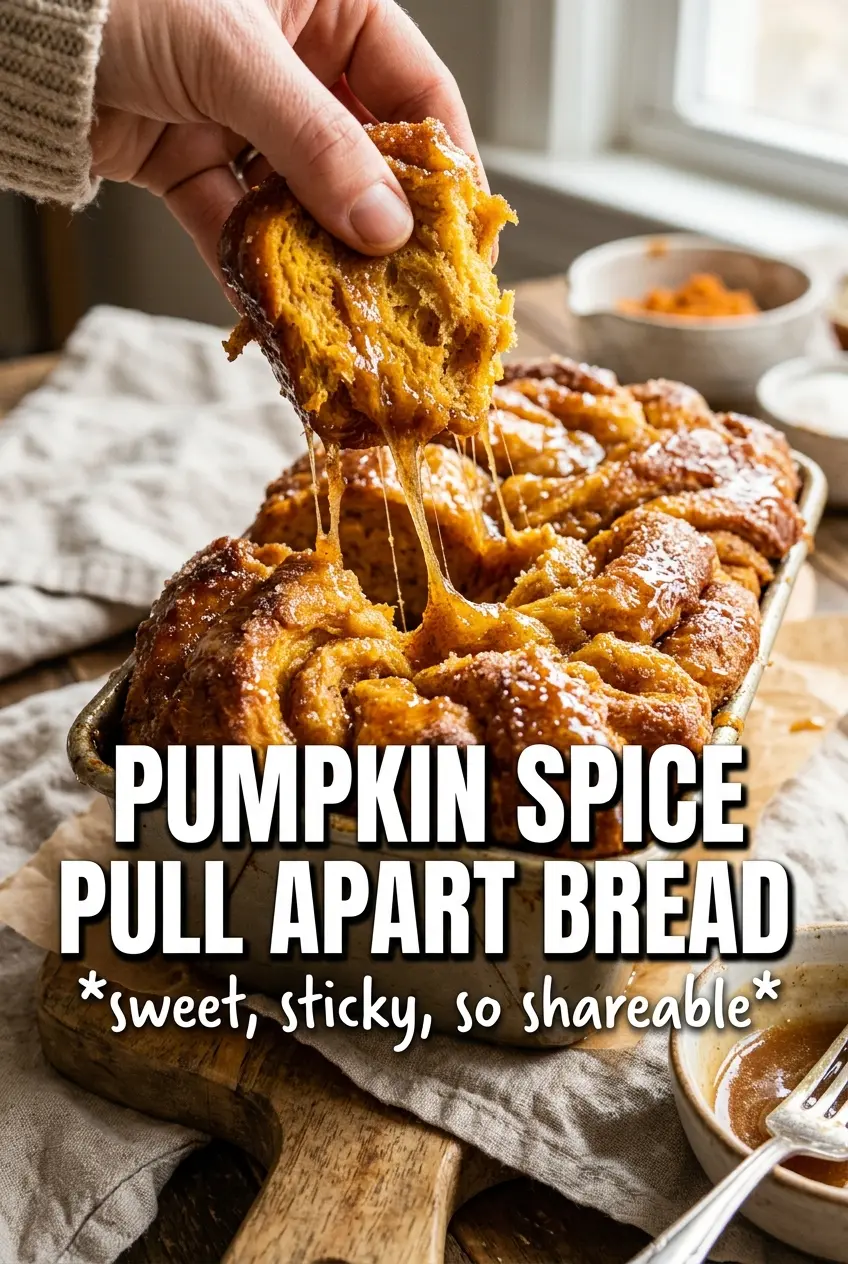
Pumpkin Spice Pull Apart Bread
Ingredients
Equipment
Method
- Activate the yeast by heating warm milk to about 110°F/43°C, then stir in the sugar and yeast until foamy. Add melted butter, egg, and pumpkin puree, mixing until smooth.
- Knead in flour, pumpkin pie spice, and salt for 7-8 minutes until the dough is soft and elastic.
- Place the dough in a bowl, cover, and let it rise for 1 hour in a warm place until puffy and doubled.
- Roll the dough into a 12x16 rectangle, then brush the surface with melted butter.
- Evenly sprinkle the filling mixture (brown sugar, cinnamon, pumpkin pie spice, and nutmeg) over the buttered dough.
- Cut the dough into 4 lengthwise strips, stack the strips, then cut into 6 square stacks.
- Place the stacks on their sides in a greased 9x5 loaf pan, spacing them so they can expand, then cover and let rise for 30 minutes until slightly puffy.
- Bake at 350°F for 35-40 minutes until deep golden on top, tenting with foil halfway through to prevent over-browning.
- Drizzle the cream cheese glaze over the warm bread immediately so it melts into the layers.