Ranch roasted carrots come out with crisp, caramelized edges, tender centers, and that savory-herby coating that makes people keep picking at the pan before dinner is even on the table. The ranch seasoning clings to the carrots as they roast, and the Parmesan melts into the hot surface just enough to turn the whole dish into something much more interesting than a plain vegetable side.
What makes this version work is the balance. The carrots need enough oil to brown instead of dry out, but not so much that the seasoning slides off. Roasting them in a single layer at a high temperature gives you those browned edges, and adding the Parmesan at the end keeps it from scorching before the carrots are tender.
Below, you’ll find the little details that matter: how to cut the carrots so they finish at the same time, why the seasoning goes on before roasting, and a few smart swaps if you’re working with what you already have in the kitchen.
The carrots got those browned, sticky edges I was hoping for, and the ranch seasoning didn’t burn even with the full roast time. I added the Parmesan at the end like you said and it melted into the hot carrots perfectly.
Like these ranch roasted carrots? Save them to Pinterest for an easy side with crispy edges and a cheesy finish.
The Edge-Caramelization Problem With Roasted Carrots
Roasted carrots only taste worth repeating when they brown instead of steam. That happens when the carrots are cut into evenly sized sticks, given enough space on the pan, and roasted hot enough that the surface dries out before the insides collapse. If the pan is crowded, the carrots release moisture and turn soft all over instead of getting those browned edges that make this dish stand out.
The other thing that matters here is timing. Ranch seasoning has dried herbs and salt, so it needs oil to distribute evenly and a hot oven to wake it up without scorching. Parmesan goes on after roasting because cheese burns faster than carrots brown, and the residual heat is enough to soften it into the surface.
What the Ranch Seasoning and Parmesan Are Really Doing Here
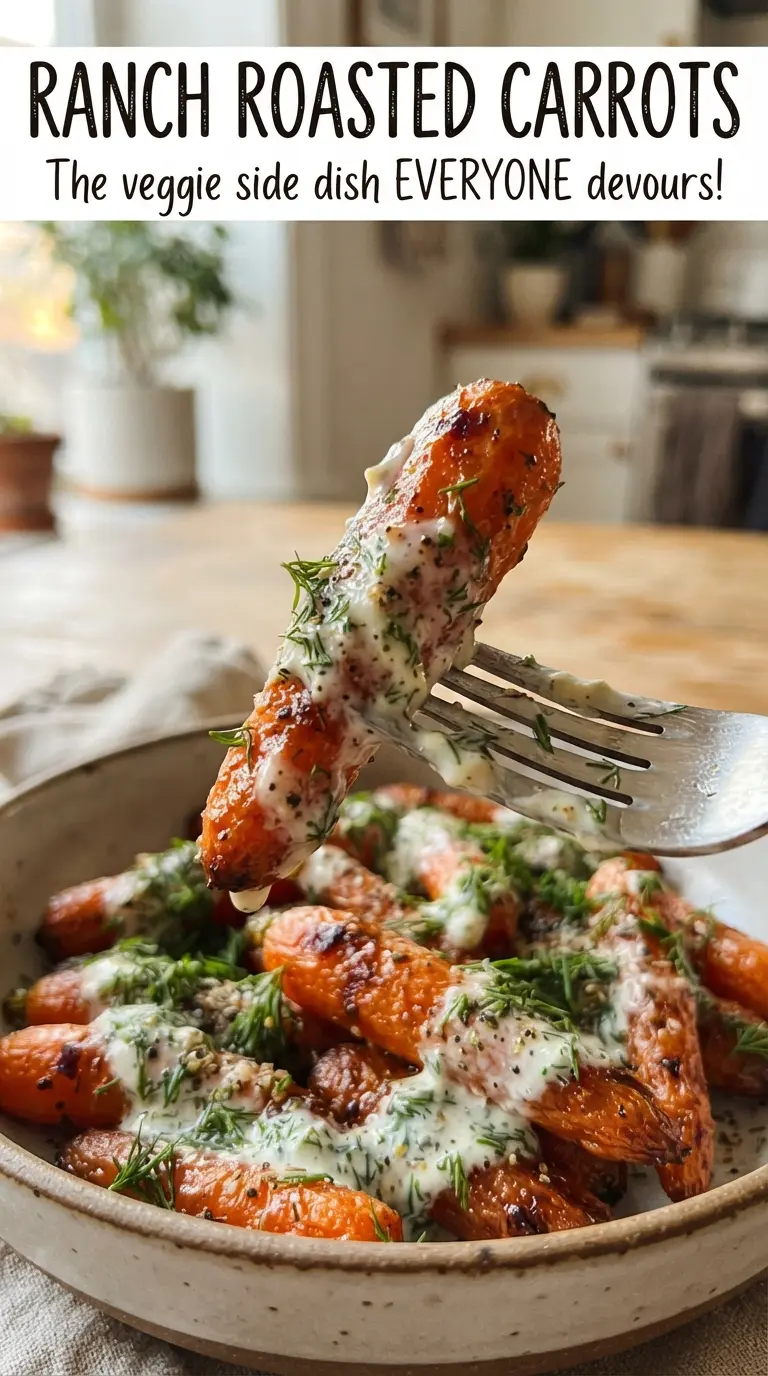
- Carrots — Choose firm, fresh carrots with good color. Older carrots still work, but they can taste woody, and that shows up fast in a simple side like this. Cutting them into similar sticks matters more than the exact size; uneven pieces mean some burn while others stay firm.
- Olive oil — This helps the ranch seasoning coat every surface and gives the carrots enough fat to brown. You can use avocado oil if that’s what you keep around, but don’t cut the oil back much or the seasoning will look dusty instead of clinging.
- Ranch seasoning — The packet does the heavy lifting because it already has the salt, garlic, onion, and herbs blended in the right proportions. Homemade ranch seasoning works too, but if your mix is heavy on salt, back it off a little because the Parmesan adds more at the end.
- Parmesan — Grated Parmesan melts into the hot carrots and gives the dish a salty, savory finish. Use the finely grated kind for the best coating; shredded Parmesan stays more separate and doesn’t settle into the ridges of the carrots as well.
- Fresh dill or parsley — This is the bright finish that keeps the carrots from tasting one-note. Dill leans more in the ranch direction, while parsley keeps it cleaner and fresher.
Roasting Them Hot Enough to Brown Without Burning the Seasoning
Coating the Carrots Evenly
Start by tossing the carrot sticks with the olive oil and ranch seasoning until every piece looks lightly coated. If you see bare spots, add a touch more oil rather than more seasoning; extra dry seasoning tends to fall onto the pan and scorch. The carrots should look glossy, not wet.
Spacing the Pan
Spread the carrots in a single layer with a little room between pieces. If they overlap, they trap steam and the edges stay pale. A parchment-lined sheet pan helps with cleanup and keeps the coating from sticking as the carrots caramelize.
Knowing When They’re Done
Roast at 425°F for 20 to 25 minutes, tossing halfway through. You want tender carrots with browned edges and a little wrinkling at the tips. Pull them before they turn limp; they keep softening for a few minutes after they come out of the oven.
Finishing With Cheese and Herbs
Sprinkle the Parmesan and herbs over the hot carrots right after roasting. The cheese should melt on contact and look a little glossy, not dry and powdery. If you wait too long, the heat drops and the Parmesan sits on top instead of melting in.
How to Adapt These Carrots for Different Tables
Dairy-Free Version
Leave off the Parmesan and finish with extra herbs plus a small squeeze of lemon if you want more brightness. You’ll lose the salty, cheesy finish, but the carrots still roast up with plenty of ranch flavor and good browning.
Using Baby Carrots Instead
Baby carrots work, but they brown a little less and can taste sweeter and softer. Roast them the same way, but start checking a few minutes early because their smaller size means they can go from tender to mushy faster than full carrots cut into sticks.
Gluten-Free Check
Most ranch seasoning packets are gluten-free, but not all of them are. Check the label if that matters for your table, since the rest of the ingredients are naturally gluten-free.
Storage and Reheating
- Refrigerator: Store leftovers in an airtight container for up to 4 days. The carrots will soften a bit, but the seasoning stays flavorful.
- Freezer: They freeze, but the texture turns softer after thawing, so I only freeze them if I’m okay using them later in soups or grain bowls.
- Reheating: Warm them on a sheet pan in a 400°F oven until hot. The oven brings back some of the edge that a microwave takes away, while the microwave tends to make the carrots watery.
Answers to the Questions Worth Asking
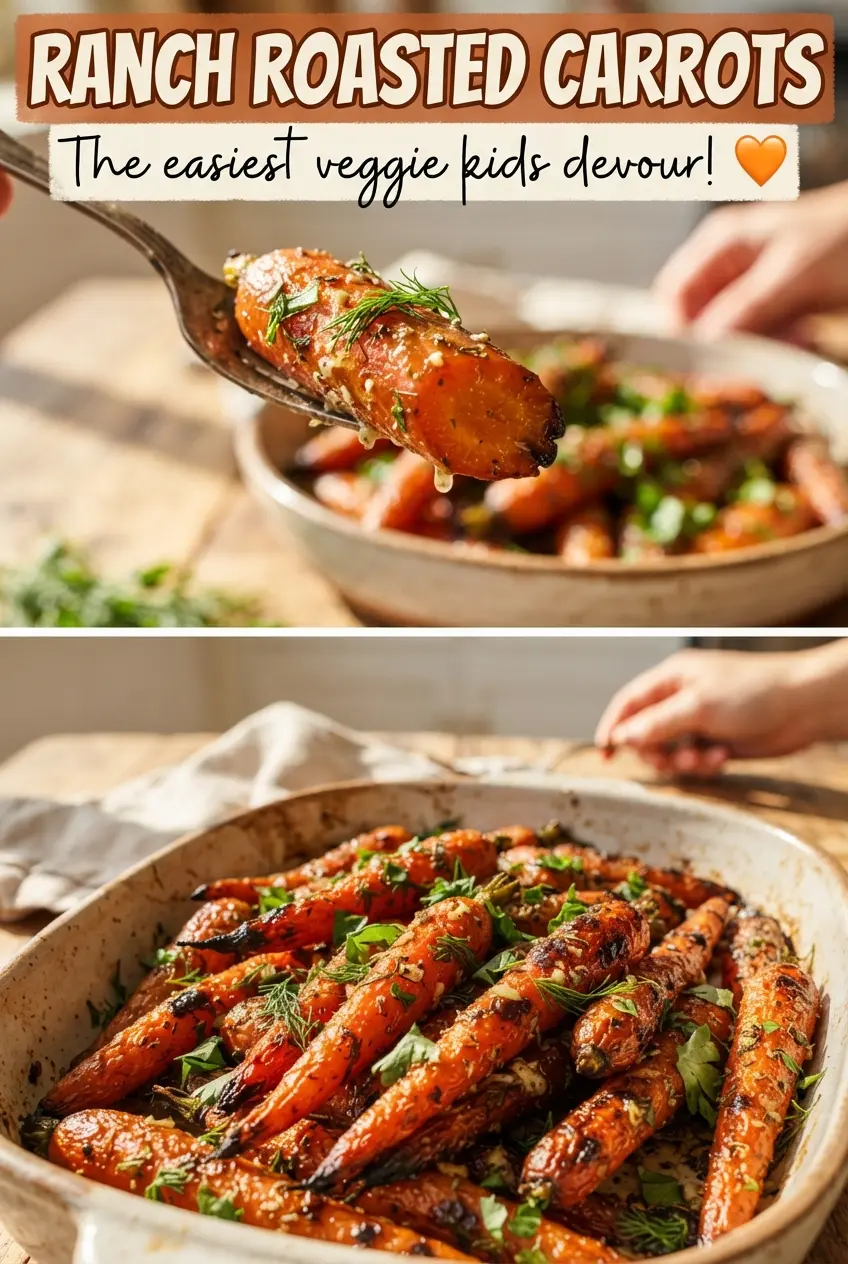
Ranch Roasted Carrots
Ingredients
Equipment
Method
- Preheat oven to 425F and line a sheet pan with parchment, so the carrots roast evenly without sticking.
- Toss the carrots with olive oil and ranch seasoning until evenly coated, using a thorough toss to make sure every stick is covered.
- Spread the carrots in a single layer on the sheet pan with space between pieces, so they brown instead of steaming.
- Roast for 20-25 minutes, tossing halfway, until tender and browned at the edges; look for caramelized spots and a fork-tender bite.
- Sprinkle with grated Parmesan and fresh dill or parsley, then serve warm so the topping clings to the hot roasted surfaces.