Ruby-red raspberry glazed pork chops hit that sweet-savory balance that keeps them from tasting like dessert on a plate. The glaze clings to the meat in a sticky sheen, with enough tang from balsamic and Dijon to keep every bite sharp and interesting. When the pork is seared first, it brings the kind of browned edge that stands up to the fruit instead of getting buried by it.
The part that makes this version work is restraint. Raspberry jam gives body fast, but it needs broth to loosen into a glaze and vinegar to keep it from reading flat or sugary. Garlic and rosemary add a savory backbone, and the sauce finishes in the same skillet so those browned bits from the pork become part of the glaze instead of being washed away.
Below you’ll find the little details that matter here: how to keep the chops juicy, how to know when the glaze has reduced enough, and what to change if you want to swap the pork cut or make the dish ahead.
The glaze thickened up perfectly and coated the chops without turning sticky-sweet. I was worried the raspberry jam would taste too fruity, but the balsamic and Dijon balanced it out beautifully.
Pin these raspberry glazed pork chops for a quick skillet dinner with a glossy fruit glaze and just enough balsamic bite.
The Reason the Glaze Stays Glossy Instead of Turning Jammy
The biggest mistake with fruit glazes is letting them boil too hard too long. Jam already has pectin, so once the broth cooks off, the sauce can go from silky to paste-like in a minute. Here, the vinegar and mustard help keep the texture loose enough to coat the pork instead of sitting in a thick blob on top.
Using the same skillet after searing matters more than it sounds like it would. The browned bits dissolve into the glaze and deepen the fruit flavor, which is what keeps this tasting like dinner instead of a sweet sauce poured over meat. If the pan looks too dry when the garlic goes in, that’s normal; the broth will pick up everything from the bottom as it simmers.
What Each Ingredient Is Actually Doing in the Pan
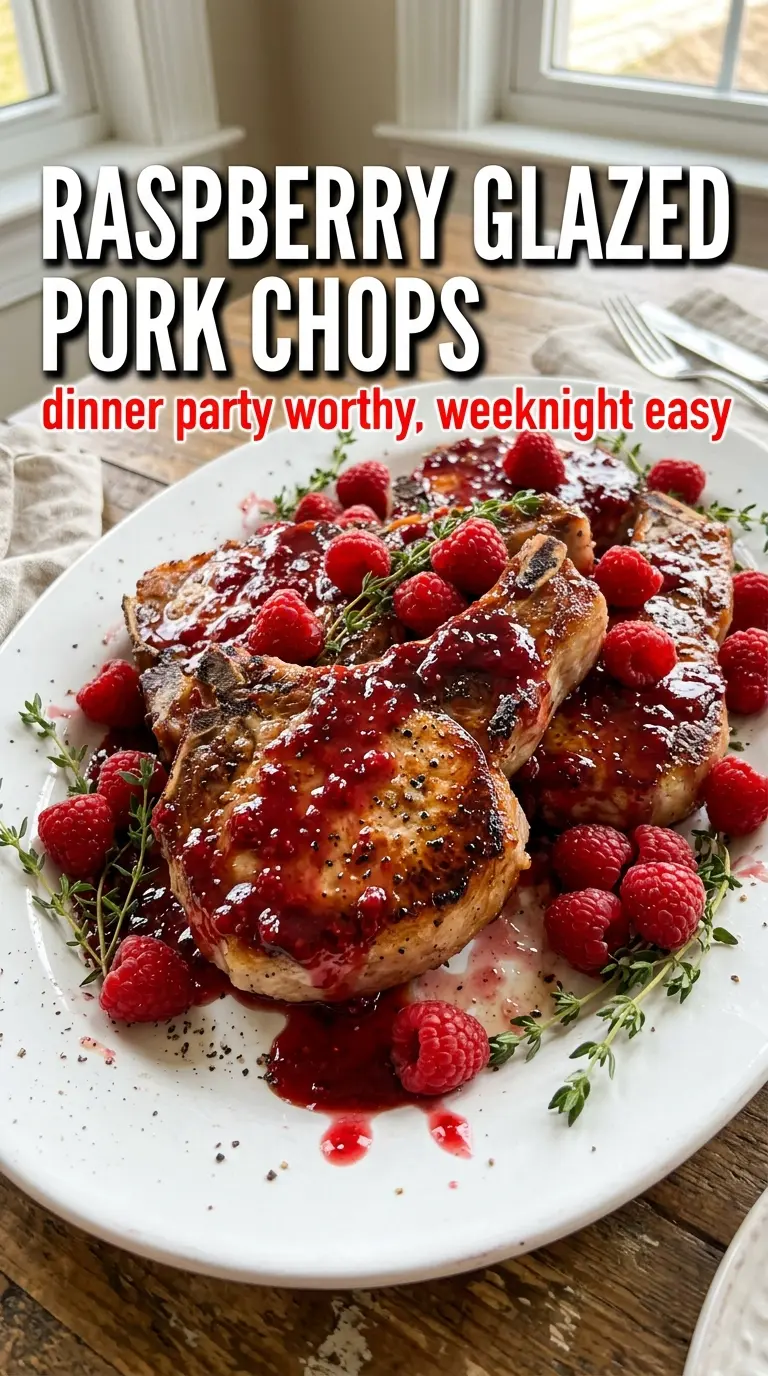
- Bone-in pork chops — The bone helps protect the meat from drying out, and the 1-inch thickness gives you enough time to build a good sear without overcooking the center. Boneless chops will work, but they cook faster and need a shorter second trip through the glaze.
- Raspberry jam — This is the body of the sauce. It gives you fruit, sweetness, and thickness in one ingredient, which is why a plain fresh-berry mash doesn’t behave the same way on the stove. If you use a low-sugar jam, expect a thinner glaze and simmer it a little longer.
- Balsamic vinegar — This is what keeps the glaze from leaning cloying. The acidity sharpens the raspberry and cuts through the richness of the pork, and plain white vinegar won’t give the same depth.
- Dijon mustard — Dijon helps the glaze emulsify and adds a quiet savory note that ties the fruit to the meat. Yellow mustard is harsher and less rounded, so it changes the balance more than you’d expect.
- Fresh rosemary — Rosemary is the herb that can stand up to jam without disappearing. Dried rosemary works in a pinch, but use half as much and crush it between your fingers before it goes into the pan.
- Chicken broth — This loosens the jam into a pourable glaze and gives you enough simmer time to reduce without scorching. Water will work only in the most basic sense; broth adds a fuller base.
Getting the Sear Before the Fruit Goes In
Dry the chops and season early
Pat the pork chops dry before they hit the skillet. Surface moisture is the enemy of browning, and if the chops start wet, they’ll steam before they sear. Salt and pepper the meat right before cooking so the seasoning stays on the surface and helps build that first crust.
Build color, then leave them alone
Heat the oil until it shimmers, then lay the chops in and let them cook without moving them. After 4 to 5 minutes, the underside should release cleanly with a deep golden crust. If they stick, they’re not ready yet; forcing them early tears off the crust you worked for.
Cook the glaze in the same pan
Once the chops come out, add the garlic for just 30 seconds. It should smell fragrant, not browned. Then stir in the jam, balsamic, Dijon, rosemary, and broth, scraping up every browned bit as the sauce starts to simmer. If the garlic burns, the whole glaze will taste bitter, so keep that stage short.
Finish with a light simmer, not a boil
Let the sauce bubble gently for 3 to 4 minutes until it looks shiny and coats the back of a spoon. Return the pork chops and turn them in the glaze until they’re glossy and heated through. If you cook them too long at this point, the pork tightens up and the glaze can over-reduce, so stop as soon as the chops are hot and coated.
How to Make These Pork Chops Fit Your Table
Use boneless chops for a faster dinner
Boneless chops cook faster and are easier to overdo, but they still work well here if you shave a minute or two off the first sear and keep the final simmer short. You’ll get the same glaze, just a slightly leaner texture and less carryover heat from the bone.
Make it dairy-free and gluten-free without changing the method
This recipe is already naturally dairy-free and gluten-free as written, which makes it an easy one to serve to a mixed crowd. Just check the labels on the jam, broth, and Dijon, since those are the ingredients most likely to hide thickeners or additives.
Swap in apricot or cherry jam
Apricot gives a brighter, more tart glaze, while cherry leans deeper and a little richer. Either one works with the same vinegar, mustard, and rosemary structure, though cherry will taste slightly darker and less sharp than raspberry.
Storage and Reheating
- Refrigerator: Store leftovers in an airtight container for up to 3 days. The glaze thickens as it chills, so the sauce will look tighter the next day.
- Freezer: Freeze cooked pork chops with the sauce for up to 2 months. Wrap them well and thaw overnight in the fridge before reheating so the glaze doesn’t separate from the meat.
- Reheating: Warm gently in a covered skillet over low heat with a splash of broth or water. High heat dries out the pork fast and can make the glaze catch on the pan before the center is hot.
Answers to the Questions Worth Asking

Raspberry Glazed Pork Chops
Ingredients
Equipment
Method
- Season the pork chops with salt and pepper. Pat lightly so seasoning clings to the surface.
- Heat the olive oil in a skillet over medium-high heat, then sear the chops for 4–5 minutes per side until golden. Transfer to a plate or bowl to rest while you make the glaze.
- In the same pan, sauté the garlic for 30 seconds. Stir to prevent scorching and keep the aroma fragrant.
- Stir in the raspberry jam, balsamic vinegar, Dijon mustard, minced rosemary, and chicken broth. Scrape up any browned bits so they blend into the sauce.
- Simmer for 3–4 minutes until the sauce reduces to a glaze. Look for a thicker, glossy consistency that coats the back of a spoon.
- Return the pork chops to the pan and coat them in the raspberry glaze. Spoon sauce over the top so the surface turns jewel-toned and sticky.
- Cook for 2–3 minutes until the pork chops are heated through. Keep the simmer gentle so the glaze stays glossy.
- Garnish with fresh raspberries and rosemary and serve. Add the garnish right before plating for the freshest color and aroma.