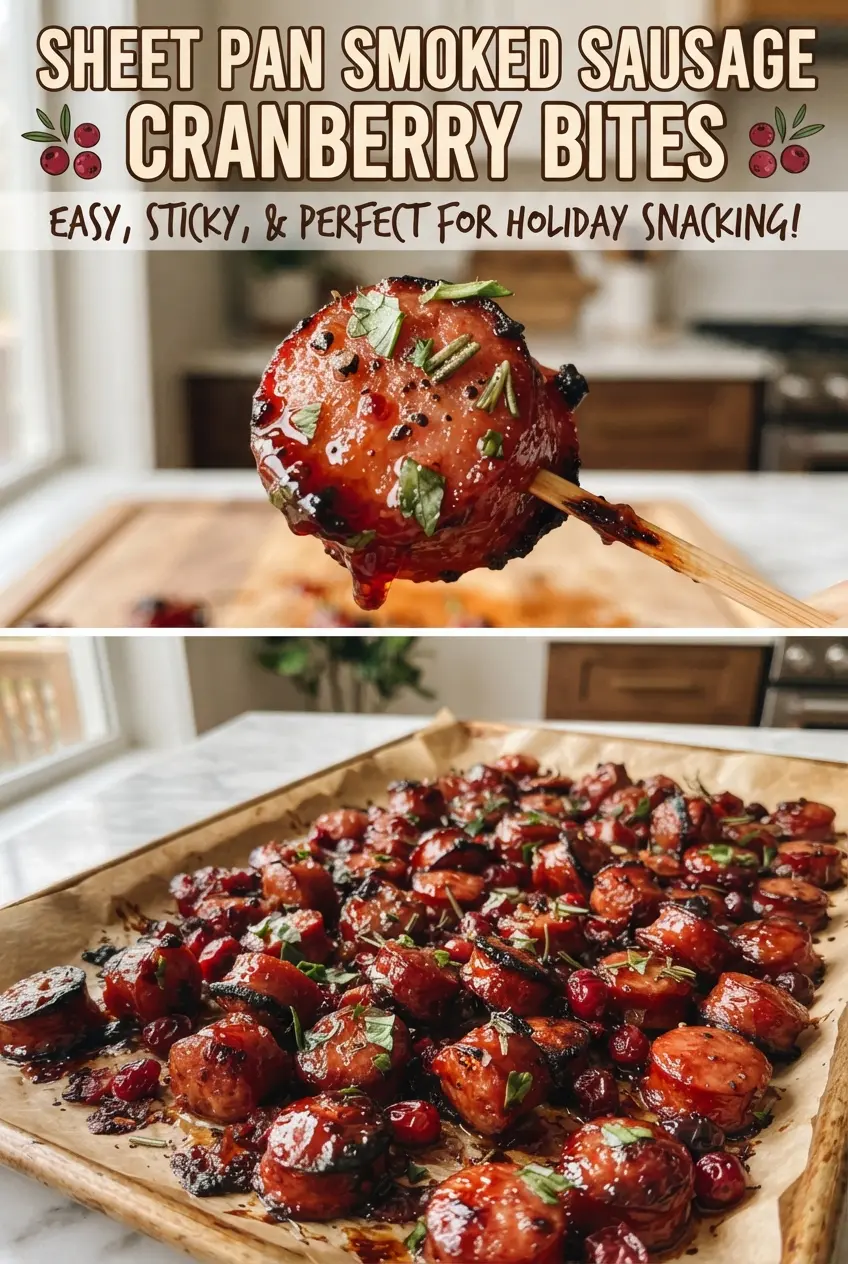
Sheet Pan Smoked Sausage Cranberry Bites hit that sweet-savory spot that disappears fast on a snack table. The sausage turns browned at the edges, the cranberry glaze gets sticky and glossy, and the whole tray tastes like it took more effort than it did. They’re the kind of appetizer people hover around, picking up “just one more” until the pan is empty.
The trick is roasting the sausage first so it gets a little color before the glaze goes on. That browning matters because the cranberry mixture is sweet and thick; if you add it too early, it can steam the sausage instead of letting it caramelize. Dijon sharpens the sweetness, apple cider vinegar keeps the glaze from turning flat, and orange zest at the end wakes everything up.
Below, I’ve included the details that make this work smoothly, plus a few swaps if you need to stretch it for a crowd or adjust the sweetness. The timing is simple, but the order matters, and that’s what keeps these bites sticky instead of soggy.
The glaze went on thick and sticky, and the sausage browned up instead of getting mushy. I served these with toothpicks and the tray was gone in minutes.
Save these sticky cranberry sausage bites for your next party tray or game-day spread.
The reason the sausage gets browned before the glaze goes on
The biggest mistake with sheet pan appetizers like this is dumping sauce over the sausage from the start. Smoked sausage is already cooked, so what you’re chasing here is color and texture, not doneness. Roasting the coins first gives the cut sides a little crust, and that crust holds up once the cranberry glaze gets added.
The glaze is sweet on purpose, but it needs balance. Brown sugar deepens the cranberry sauce, Dijon adds bite, and apple cider vinegar keeps the whole thing from tasting like dessert. If your glaze seems thin at first, don’t panic; it thickens in the oven as it bubbles and reduces around the sausage.
- Smoked sausage — Any fully cooked sausage link will work here, but smoked sausage gives the best savory backbone. Slice it into even 1/2-inch coins so everything browns at the same pace.
- Whole berry cranberry sauce — This matters more than smooth cranberry sauce because the berries help the glaze cling to the sausage. If you only have jellied cranberry sauce, stir it well and expect a slightly smoother finish.
- Dijon mustard — Dijon is doing real work here by cutting the sweetness and sharpening the glaze. Yellow mustard can work in a pinch, but it tastes flatter and less balanced.
- Orange zest — Add this at the end, not before baking. Heat can dull the citrus oils, and the fresh zest is what makes the finished bites taste bright instead of heavy.
What Each Ingredient Is Actually Doing in This Recipe

- Primary ingredient (the star) — Quality matters most. Choose the best you can find.
- Cooking medium (oil, butter, or broth) — This carries flavors and prevents dryness.
- Seasonings (salt, pepper, spices, herbs) — Layer flavors so nothing overpowers. Build depth gradually.
- Aromatics (garlic, onion, herbs) — Cook with fat to bloom flavors. Become the foundation.
- Supporting ingredients — Complement the main ingredient without overpowering it.
- Sauce or liquid (if applicable) — Brings flavors together. Balance richness with acid.
- Acid (lemon, vinegar, wine, or other) — Brightens and prevents flat-tasting results.
- Final finish (garnish, glaze, or sauce) — Prevents one-dimensional taste and adds visual appeal.
Getting the glaze sticky without turning the sausage soggy
Roasting the sausage first
Line the pan with foil so cleanup stays easy, then spread the sausage in a single layer. Crowding is what traps steam, and steam is the enemy of browning. After about 12 minutes, the edges should look bronzed and a little crisp, with some rendered fat in the pan.
Building the cranberry glaze
Whisk the cranberry sauce, brown sugar, Dijon, vinegar, garlic powder, and red pepper flakes until the mixture looks mostly smooth. A few berry lumps are fine. What you want is a glaze that pours slowly, not one that’s watery enough to run off the sausage before it can set up.
Finishing in the oven
Once the glaze hits the tray, toss everything until the sausage is coated from edge to edge. Return it to the oven and watch for bubbling around the pan; that’s the sign the sugars are reducing and sticking. If the glaze looks burned before the timer is up, your oven runs hot, so pull the pan once the sauce looks shiny and the sausage is lacquered.
The final fresh finish
Orange zest and thyme go on at the end because both lose some punch with long heat. Toss just enough to scatter them through the pan, then serve warm with toothpicks. That little hit of freshness keeps the bites from tasting one-note.
How to adjust these for a bigger crowd or a different pantry
Make it less sweet
Cut the brown sugar back to 2 tablespoons and add an extra teaspoon of Dijon. The glaze will taste sharper and a little more savory, which works well if you’re serving these with other rich appetizers.
Gluten-free version
Use a gluten-free smoked sausage and check the mustard label, since some brands add fillers. The method stays the same, and the finished bites taste just as sticky and bold.
Swap the cranberry flavor
If cranberry sauce isn’t what you have, use red pepper jelly for a sharper, spicier finish or apricot preserves for a softer, fruitier glaze. Both work, but cranberry gives the deepest holiday-style color and the best tang.
Storage and Reheating
- Refrigerator: Store leftovers in an airtight container for up to 4 days. The glaze firms up as it chills, so the sausage will look a little less glossy the next day.
- Freezer: These freeze fairly well for up to 2 months, though the glaze softens a bit after thawing. Freeze in a single layer first if you want the pieces to stay separate.
- Reheating: Warm on a sheet pan at 350°F until hot, about 8 to 10 minutes. The microwave works, but it softens the edges and can make the glaze loosen instead of re-sticking.
Answers to the questions worth asking
Sheet Pan Smoked Sausage Cranberry Bites
Ingredients
Equipment
Method
- Preheat oven to 400F and line a rimmed sheet pan with foil. This creates easy cleanup and helps the sausage brown evenly.
- Spread the sausage coins in a single layer on the sheet pan. Roast for 12 minutes until browned at the edges.
- Whisk cranberry sauce, brown sugar, Dijon mustard, apple cider vinegar, garlic powder, and red pepper flakes until smooth. The mixture should look cohesive and slightly thick.
- Pour the glaze over the sausage and toss to coat thoroughly. Make sure most pieces get an even coating.
- Roast for 10-13 minutes more at 400F until the glaze is sticky and bubbling. Look for glossy bubbles and caramelized edges on the sausage.
- Toss the bites with orange zest and fresh thyme leaves. Serve warm with toothpicks for easy snacking.