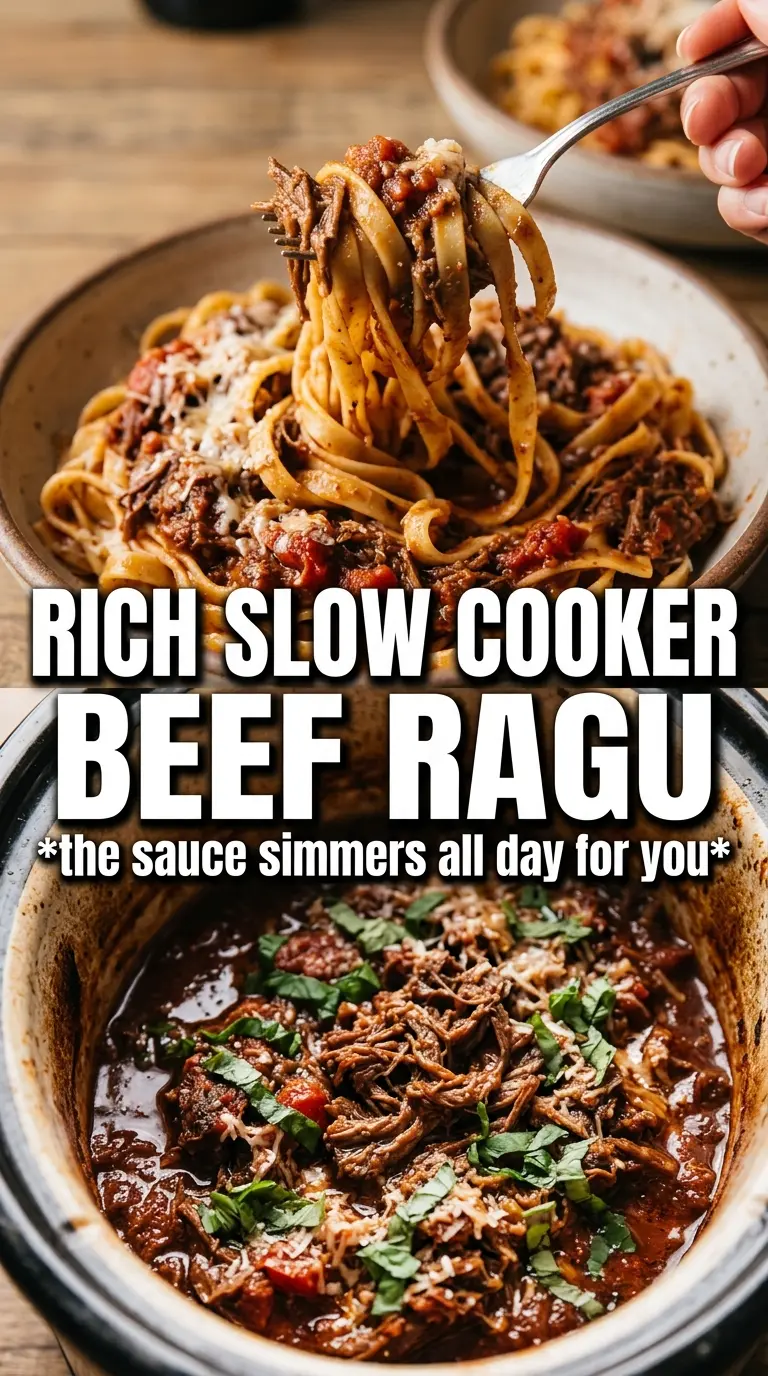
Slow cooker beef ragu turns a tough chuck roast into spoon-tender strands wrapped in a thick, glossy tomato sauce that clings to every ribbon of pasta. The long cook gives the beef time to melt into the tomatoes, wine, and aromatics, which is what makes this version taste deep and slow-simmered without standing over the stove for hours.
The key is building enough flavor before the lid goes on. Tomato paste, red wine, and a small amount of sugar keep the sauce balanced and rich, while the carrots, celery, and onion soften into the background instead of tasting chunky or raw. By the time the beef shreds, the sauce has body from the meat itself, so you don’t need to reduce it at the end unless you want it even thicker.
Below you’ll find the one step that keeps the sauce from tasting flat, plus the best way to serve it so the pasta and ragu feel like they belong together rather than sitting on the same plate.
The beef shredded into perfect pieces and the sauce was thick enough to coat the pappardelle without getting watery. I used Chianti and let it go the full 8 hours, and it tasted like it had been simmering all afternoon.
Save this slow cooker beef ragu for pasta nights when you want deep tomato richness, fall-apart beef, and a sauce that clings to pappardelle.
The Part That Keeps Beef Ragu Rich Instead of Flat
The biggest mistake with slow cooker ragu is treating the slow cooker like a shortcut for a finished sauce. It still needs a solid flavor base at the start. Tomato paste needs to be in the mix because it adds concentration and a little caramel note that crushed tomatoes alone can’t give you, and the wine matters because it sharpens the sauce instead of letting it taste sweet and one-dimensional.
Chuck roast is the right cut here because it has enough connective tissue to turn silky over a long cook. Leaner beef dries out before the sauce gets where it needs to go. The vegetables also need to be finely diced so they disappear into the sauce as they cook; big chunks stay obvious and give you more stew than ragù.
What Each Ingredient Is Doing in the Pot
- Beef chuck roast — This is the cut that turns tender instead of stringy. It has enough fat and collagen to break down into a sauce that tastes meaty, not just tomatoey. If you swap it, stick with another braising cut like brisket or shoulder.
- Crushed San Marzano tomatoes — These give the sauce body and a naturally sweeter, lower-acid taste. Regular crushed tomatoes work, but they can taste sharper, so the sauce may need a pinch more sugar or a longer simmer to mellow.
- Dry red wine — Chianti or Cabernet brings depth and lifts the tomatoes. Don’t use anything sweet; that throws the whole pot out of balance. If you want to cook without wine, use beef broth plus 1 tablespoon red wine vinegar, but the sauce will taste a little less round.
- Tomato paste — This is the ingredient that gives the sauce concentration without making it thicker in a gluey way. It deepens the color and helps the finished ragu cling to pasta.
- Onion, celery, and carrots — This trio softens into the sauce and makes the base taste complete. Dice them finely so they almost melt away by the end of the cook.
How to Build the Slow Cooker Sauce So It Shreds Beautifully
Season the Beef First
Salt and pepper the chuck roast before it goes into the slow cooker. That first layer of seasoning reaches the meat as it cooks, not just the sauce around it. If the beef seems bland at the end, it’s usually because it was underseasoned before the lid went on. You want it evenly seasoned on all sides, even though the roast isn’t seared first here.
Mix the Sauce Until the Tomato Paste Disappears
Whisk the tomatoes, wine, tomato paste, garlic, onion, celery, carrots, basil, oregano, thyme, and sugar together before pouring them over the beef. The tomato paste should be fully dispersed so you don’t end up with little dense streaks in the finished sauce. The mixture will look loose at this stage, and that’s fine — the sauce thickens as the beef gives up its juices and the vegetables break down.
Cook Low and Let the Beef Fully Collapse
Set it on low for 8 to 10 hours and leave it alone until the roast pulls apart with almost no resistance. If you stop early, the beef will still be tight in the center and the sauce won’t have the same body. The real sign it’s ready is that the meat shreds into big, soft pieces instead of needing to be cut. Pull out the bay leaves before you stir the beef back in.
Shred and Return the Meat to the Sauce
Take the beef out with tongs, shred it with two forks, and put it right back into the slow cooker. This step lets the meat soak up the sauce again, which is what makes the ragu taste unified instead of like beef served over tomato sauce. If the sauce looks thinner than you want, leave the lid off for 15 to 20 minutes on warm or high so a little steam escapes.
How to Adapt This for a Different Table
Gluten-Free Serving Bowl
The ragu itself is naturally gluten-free, so the only change is the pasta. Serve it over gluten-free pappardelle, polenta, or mashed potatoes. Polenta gives you the creamiest base, while gluten-free pasta keeps the classic feel with a little more care needed during boiling.
No-Wine Version
Use an equal amount of beef broth plus 1 tablespoon red wine vinegar. You lose a little of the wine’s depth, but the vinegar brings back the brightness that keeps the sauce from tasting heavy. Don’t skip the vinegar entirely or the tomatoes can taste dull.
Extra-Rich Sunday-Style Ragu
Stir in 1 to 2 tablespoons of butter at the end for a silkier finish. It rounds off the acidity and gives the sauce a glossy sheen. I like this version when I’m serving it with pappardelle because the wide noodles hold onto every bit of the richer sauce.
Storage and Reheating
- Refrigerator: Store for up to 4 days. The sauce thickens as it chills, and the flavor gets even better by day two.
- Freezer: Freezes well for up to 3 months. Cool completely, portion into containers, and leave a little space at the top so it can expand.
- Reheating: Warm it gently on the stove over low heat or in the microwave in short bursts, adding a splash of water or broth if needed. Don’t boil it hard or the beef can turn stringy and the sauce can separate.
Questions I Get Asked About This Recipe
Slow Cooker Beef Ragu
Ingredients
Equipment
Method
- Season the beef chuck roast generously with salt and black pepper, then place it in the slow cooker. Visual cue: the roast should look evenly speckled with seasoning.
- Whisk together crushed San Marzano tomatoes, dry red wine, tomato paste, garlic, onion, celery, carrots, dried basil, dried oregano, dried thyme, and sugar until smooth. Visual cue: there should be no tomato paste lumps.
- Pour the sauce over the beef in the slow cooker and add bay leaves. Visual cue: bay leaves should be partially visible on top of the sauce.
- Cook on low for 8–10 hours until the beef is completely fall-apart tender. Visual cue: the meat should shred easily when pressed with a fork.
- Remove the beef and shred into large pieces using two forks, then discard the bay leaves. Visual cue: shredded pieces should be thick and steak-like, not finely ground.
- Return the shredded beef to the sauce and stir to combine. Visual cue: the sauce should cling to the beef and look thick and cohesive.
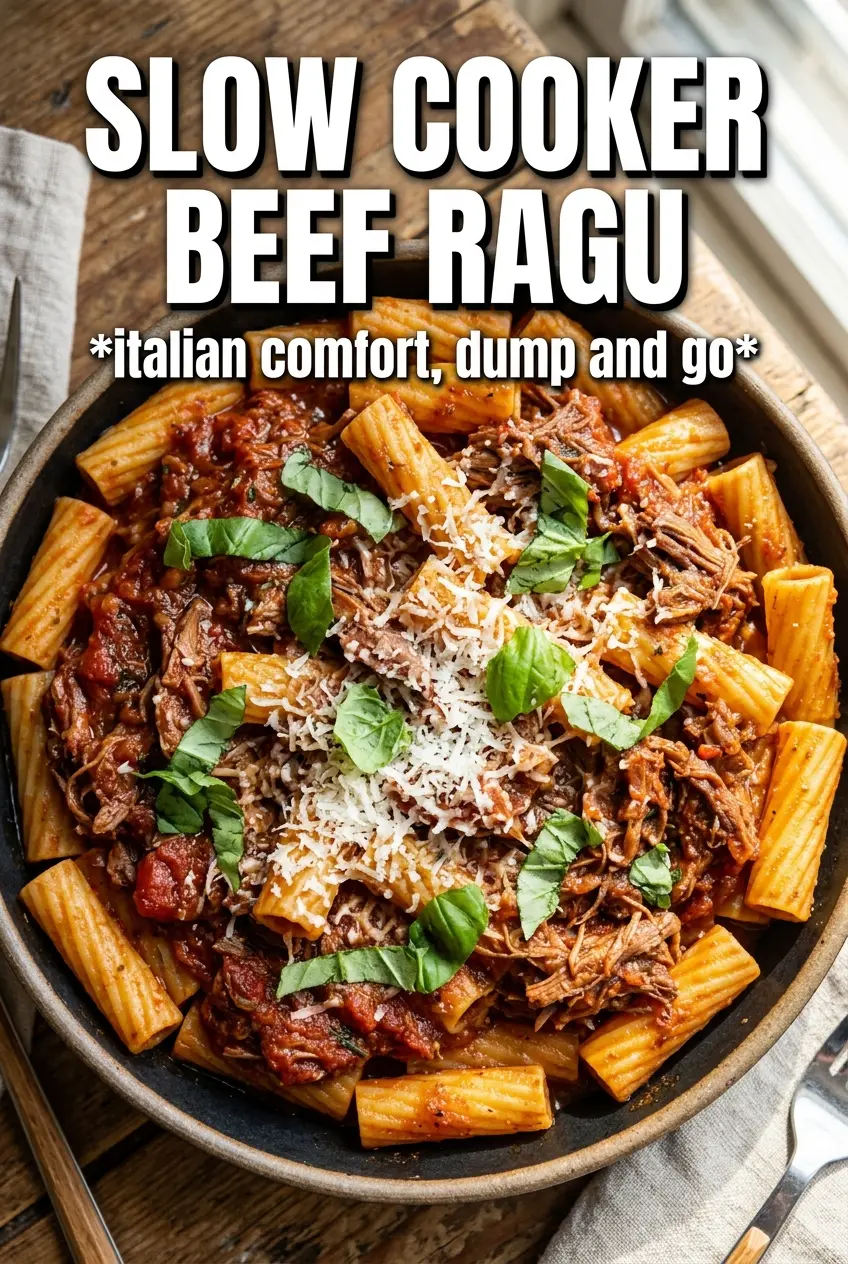
- Serve the ragu over pappardelle or rigatoni, then garnish with fresh basil and freshly grated Parmesan. Visual cue: finish with bright basil leaves and a light snowfall of Parmesan.