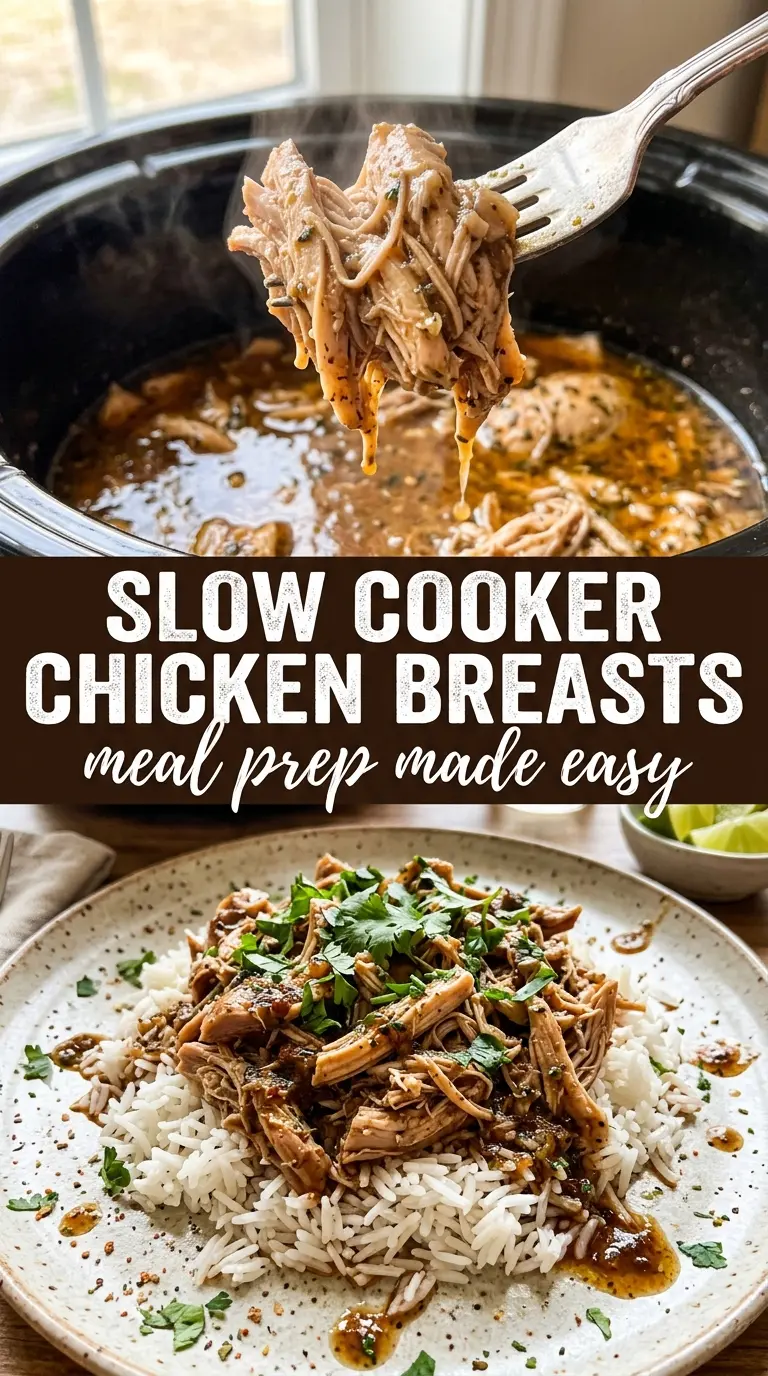
Slow cooker chicken breasts can go from plain and risky to tender, juicy, and full of flavor when they’re cooked with a light hand and enough broth to keep the meat insulated. The payoff is chicken that slices cleanly, then pulls apart with almost no effort, with enough seasoned juices left behind to turn into a simple pan sauce. It’s the kind of dinner that looks low-key on the plate but eats like you paid attention.
The trick is treating chicken breasts like the lean cut they are. They don’t need a long bath in liquid, and they don’t need high heat to turn soft. A short seasoning mix on the outside, a little broth underneath, and butter plus garlic at the end give the cooker enough flavor-building ingredients without drowning the chicken or washing away the seasoning. The result is moist meat with a clean chicken flavor, not something that tastes boiled.
Below, I’ll show you the timing window that matters most, the ingredient swaps that still keep the chicken tender, and how to use the cooking liquid so nothing gets wasted.
The chicken stayed unbelievably juicy on LOW, and the broth with butter and garlic turned into a spoonable sauce that tasted like I’d done a lot more work than I actually did.
Like this set-and-forget chicken? Save it for the nights when you want juicy slow cooker chicken breasts with an easy garlic butter sauce.
The Narrow Window That Keeps Chicken Breasts From Turning Stringy
Slow cooker chicken breasts go wrong when they’re treated like thighs. Breasts are lean, so they don’t have the fat cushion that forgives a long cook time. Once they pass tender and head into overcooked territory, the meat turns dry and fibrous fast, even if it still looks fine in the pot.
That’s why the LOW setting is the safer move here. The chicken cooks gently enough to stay juicy, and the broth underneath keeps the bottom from drying out while the butter and garlic melt into the juices. If you cook on HIGH, stay close to the shorter end of the timing range and start checking early. The best cue is texture: the chicken should feel firm but give easily when pressed, and the thickest part should slice without shredding into dry strands.
What Each Ingredient Is Actually Doing in the Pot
- Chicken breasts — Boneless, skinless breasts are the point of the recipe, but they need even thickness to cook evenly. If one side is much thicker, pound it lightly so the ends finish at the same time and you don’t get one dry half and one underdone half.
- Chicken broth — This keeps the cooker from running dry and gives you the base for the sauce. Low-sodium broth is the smart choice if you want control over the seasoning, because the salt level concentrates as it cooks.
- Butter — Butter rounds out the broth and gives the sauce enough body to cling to sliced chicken. Olive oil won’t give you quite the same finish here; it can work in a pinch, but you’ll lose that silky, rich edge.
- Garlic, onion powder, smoked paprika, and Italian seasoning — These build flavor without needing a long browning step. Garlic powder and onion powder season the meat directly, while the paprika and herbs keep the broth from tasting flat.
- Parsley and lemon — These are not garnish filler. Parsley adds freshness, and lemon cuts through the butter so the finished dish tastes bright instead of heavy.
How to Keep the Chicken Juicy and Turn the Cooking Liquid Into Sauce
Season the Meat Before It Goes In
Coat both sides of the chicken breasts with the spice mix before they hit the slow cooker. That seasoning has to touch the meat directly or it gets diluted by the broth. A generous coating matters here because chicken breast has a mild flavor and needs help from the start. If the seasoning looks sparse, it will taste sparse at the end.
Add Just Enough Liquid
Pour the broth around the chicken, not over the top. You want steam and a shallow pool of liquid, not full submersion, because too much liquid can wash the seasoning off and leave you with bland chicken. The butter and garlic will melt into that broth and create the pan sauce as the chicken cooks. Resist the urge to add extra broth unless your slow cooker runs especially hot or tends to evaporate heavily.
Stop Cooking the Moment the Chicken Is Done
Check the thickest piece around the low end of the time range. The chicken should reach 165°F in the center, but by that point it should still look plump and feel tender when pierced. If it sits much longer, the fibers tighten and the meat loses its juice even though it’s fully cooked. Pull it out, let it rest for 5 minutes, then slice across the grain so each piece stays soft.
Spoon the Juices Over the Top
Don’t discard the broth in the bottom of the cooker. That liquid holds the seasoning, butter, and garlic, and it’s what turns plain sliced chicken into a complete dish. Spoon it over the top like a quick pan sauce, then finish with parsley and a squeeze of lemon. If the sauce tastes a little too thin, let it sit uncovered for a few minutes and it will taste richer as it cools slightly.
How to Adjust This When You Need a Different Finish
Make It Dairy-Free
Swap the butter for olive oil or a plant-based butter. Olive oil gives you a lighter sauce and won’t have quite the same richness, while vegan butter keeps more of that glossy finish. Either way, keep the liquid amount the same so the chicken still stays protected while it cooks.
Use Chicken Thighs Instead
Boneless thighs are a good swap if you want richer, more forgiving meat. They can handle a longer cook time without drying out, so the recipe is less delicate. The sauce stays the same, but the finished dish will taste deeper and a little more savory.
Turn It Into Meal Prep
Slice the chicken after it rests and pack the juices right over the top. That keeps the meat from drying out in the fridge and makes reheating much easier. It works especially well for rice bowls, salads, or sandwiches because the extra sauce keeps everything moist.
Make It Gluten-Free
The base recipe is already naturally gluten-free as long as your broth is certified gluten-free. Check the label on the broth and seasoning blends if you’re sensitive to cross-contact, since those are the only places gluten tends to hide here.
Storage and Reheating
- Refrigerator: Store the chicken with the juices for up to 4 days. The meat stays much moister this way than it does stored dry.
- Freezer: It freezes well for up to 3 months if you pack the sliced chicken and sauce together in a freezer-safe container. Thaw overnight in the refrigerator before reheating so the texture stays tender.
- Reheating: Warm gently on the stove over low heat or in the microwave at reduced power with a spoonful of the cooking liquid. High heat is the fastest way to turn leftover chicken breasts dry and chewy.
Answers to the Questions Worth Asking

Slow Cooker Chicken Breasts
Ingredients
Equipment
Method
- Season chicken breasts generously on both sides with garlic powder, onion powder, smoked paprika, Italian seasoning, and salt and cracked black pepper to taste (visual cue: evenly speckled surface).
- Place seasoned chicken in the slow cooker and pour chicken broth around the chicken (visual cue: broth comes partway up the sides).
- Add butter and minced garlic over and around the chicken (visual cue: butter begins to melt into the broth).
- Cover and cook on LOW for 3-4 hours, or HIGH for 2-2.5 hours, until very tender and easily pulled apart (visual cue: juices run clear and the chicken dents easily).
- Do not overcook—stop as soon as the chicken is tender to keep it juicy (visual cue: internal fibers separate easily without drying).
- Remove chicken and let rest 5 minutes before slicing (visual cue: steam calms down and juices settle).
- Pour the cooking juices over the sliced chicken as a pan sauce (visual cue: glistening sauce coats the chicken slices).
- Garnish with fresh parsley and lemon wedges (visual cue: bright green herbs and yellow lemon contrast the pale chicken).