Slow cooker chicken cacciatore turns out with tender chicken that slips off the bone and a tomato sauce that tastes like it simmered all afternoon, because it basically did. The vegetables soften into the sauce, the mushrooms give it that deep, savory backbone, and the olives wake everything up with a briny finish. It’s the kind of dinner that lands on the table looking rustic and tasting like you put in much more effort than you actually did.
The part that makes this version work is the layering. The onions, peppers, mushrooms, and garlic go in first so they can shed moisture and flavor into the sauce instead of sitting on top and steaming unevenly. Bone-in thighs hold up best here because they stay juicy over a long cook, and the crushed tomatoes bring enough body that you don’t need extra thickeners. The wine adds depth, but it cooks down into the sauce instead of tasting sharp.
Below, I’ve noted the small choices that keep the sauce balanced and the chicken tender, plus a few swaps that still give you a proper cacciatore instead of a generic tomato stew.
The sauce came out thick and rich, and the chicken was falling apart after six hours on low. I stirred in the olives at the end like you said, and that briny pop made the whole dish taste restaurant-level.
Save this slow cooker chicken cacciatore for an easy Italian-style dinner with tender chicken, olives, and a rich tomato sauce.
The part that keeps the sauce from turning thin and watery
Slow cooker chicken cacciatore can go wrong when the vegetables dump all their moisture into the pot at once and the sauce never gets a chance to taste concentrated. That’s why the chicken goes over a bed of onions, peppers, mushrooms, and garlic instead of being buried under them. The vegetables soften underneath, but they still hold enough shape that the finished dish tastes layered instead of flat.
Bone-in thighs matter here. They give you richer flavor than boneless pieces, and they stay tender through a long cook instead of drying out. If you use boneless thighs, shorten the cook a bit or the meat can go stringy around the edges. The crushed tomatoes should coat the chicken, not drown it; too much liquid makes the sauce taste diluted, especially if your slow cooker runs hot.
What each ingredient is doing in the pot
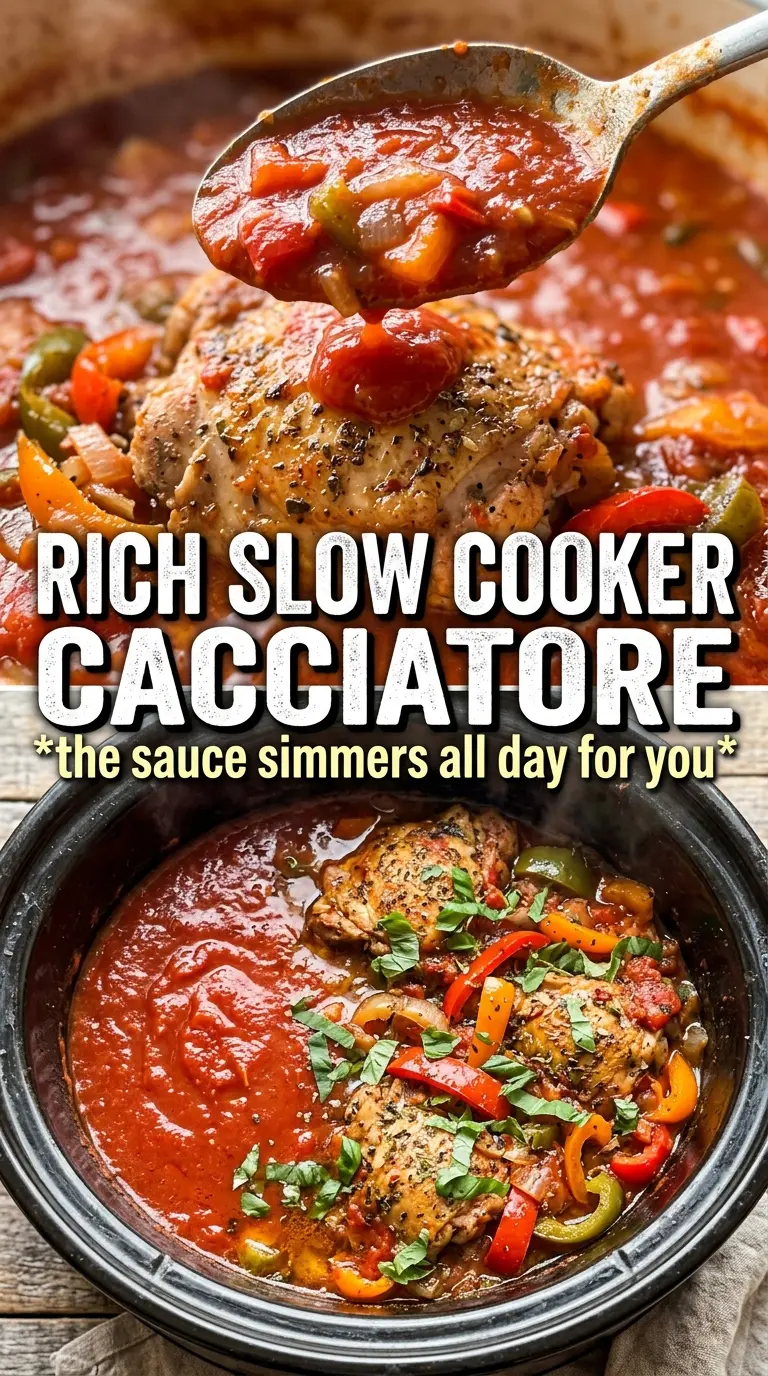
- Bone-in chicken thighs — These hold up best in the slow cooker and bring more flavor than breasts. The bone helps keep the meat juicy over a long cook, and the skin can be removed if you want to cut back on fat.
- Crushed tomatoes — This is the base of the sauce, and the texture matters. Crushed tomatoes give you body without needing to reduce anything at the end, which is important in a slow cooker where liquid doesn’t evaporate much.
- Dry red wine — A small amount adds depth and helps the sauce taste finished. Use something drinkable, not expensive; if you don’t want to cook with wine, add low-sodium chicken broth plus a teaspoon of red wine vinegar for a little of that brightness.
- Mushrooms, peppers, onion, and garlic — These build the cacciatore flavor. Slice and dice them evenly so they soften at the same rate instead of leaving you with a mix of mush and crunch.
- Kalamata olives — Add these near the end so they keep their briny punch. If they cook for the full time, they can turn muddy and overwhelm the sauce.
- Italian seasoning, oregano, and red pepper flakes — This combination gives you warmth without making the dish taste like jarred spaghetti sauce. The red pepper flakes are adjustable, but don’t skip them entirely unless you want a much softer, sweeter sauce.
How to layer the pot so the chicken stays tender
Seasoning the chicken first
Season the chicken thighs with salt, pepper, and Italian seasoning before they go into the slow cooker. That quick seasoning step matters because the slow cooker won’t concentrate flavor the way a skillet or oven does. If the chicken tastes bland at the end, it usually means the seasoning was added only to the sauce, not directly to the meat.
Building the vegetable base
Spread the onion, garlic, bell peppers, and mushrooms in the bottom of the cooker. This gives the chicken a platform and keeps it from sitting directly on the hottest surface, which can make the bottom edges overcook before the rest is ready. The vegetables will collapse as they cook, and that’s exactly what you want.
Adding the sauce without stirring it flat
Pour the crushed tomatoes and wine over the top, then add the oregano and red pepper flakes. Don’t stir aggressively at this point; a gentle settle is enough. If you mix everything hard right away, the chicken ends up deeper in the liquid and the top can lose that slow-cooked, braised texture.
Finishing with olives and herbs
Cook until the chicken is tender enough to pull apart with a fork, then stir in the olives during the last 30 minutes. That timing keeps their flavor sharp and keeps them from disappearing into the sauce. Finish with fresh basil and parmesan right before serving so the dish keeps some brightness against the rich tomato base.
How to adapt this without losing the character of the dish
Make it dairy-free
Skip the parmesan at serving and finish with basil only. The dish still tastes complete because the sauce already has depth from the tomatoes, wine, mushrooms, and olives.
Use chicken breasts instead of thighs
You can use bone-in breasts, but shorten the cook and check early so they don’t dry out. Thighs are more forgiving and give a deeper sauce, so breasts work best when you need a leaner version and are willing to watch the timing closely.
Skip the wine
Replace the wine with chicken broth and a teaspoon of red wine vinegar or lemon juice at the end. You lose a little depth, but you keep the acidity that keeps the tomato sauce from tasting heavy.
Stretch it for a bigger crowd
Add another can of tomatoes, one extra bell pepper, and a few more mushrooms before increasing the chicken. The sauce gets a little looser, but it still serves well over pasta or polenta, and the flavor stays balanced.
Storage and Reheating
- Refrigerator: Store in an airtight container for up to 4 days. The sauce gets even better on day two, and the chicken stays tender.
- Freezer: This freezes well for up to 3 months. Cool it completely first, then freeze in portions so the chicken and sauce reheat evenly.
- Reheating: Warm it gently on the stove or in the microwave with a splash of broth if needed. High heat can make the chicken stringy and push the sauce into a thick, sticky edge.
Questions I Get Asked About This Recipe
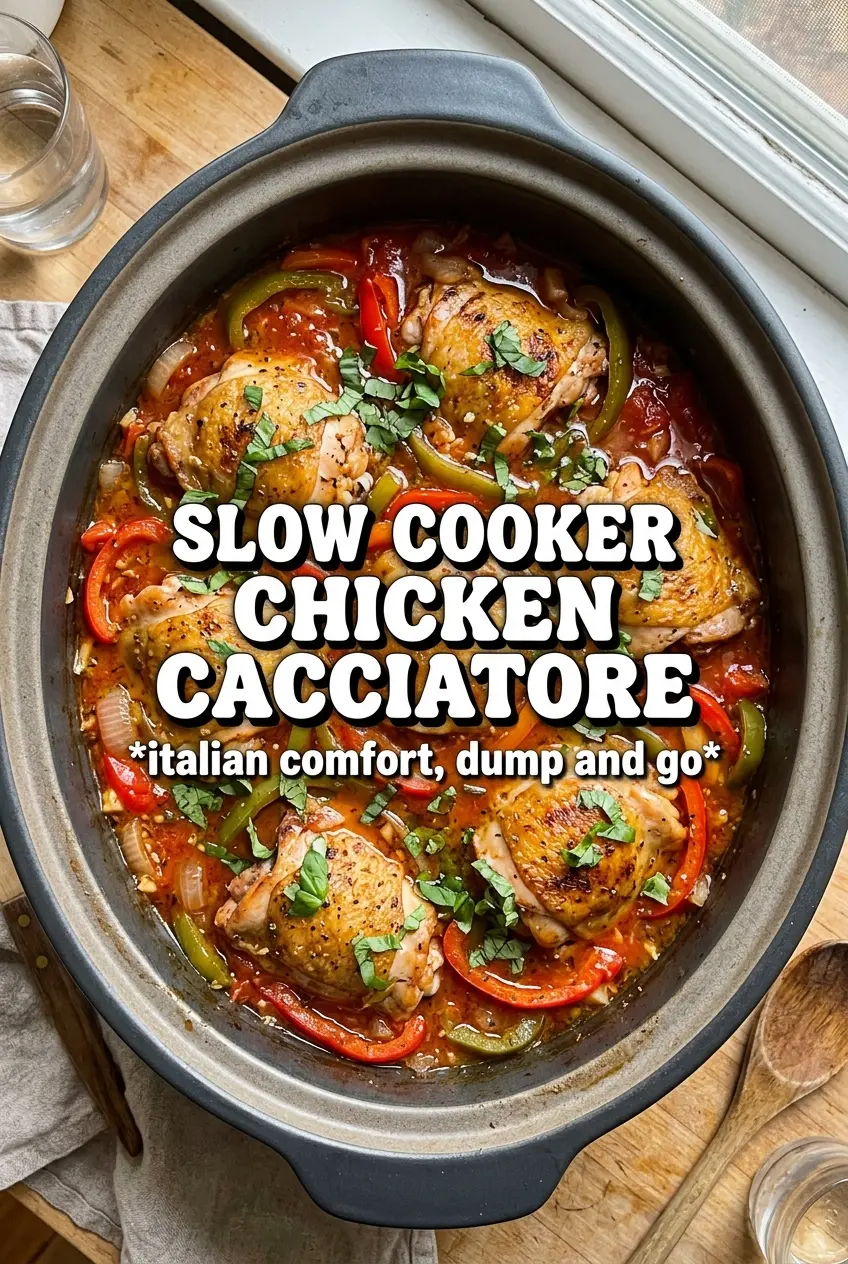
Slow Cooker Chicken Cacciatore
Ingredients
Equipment
Method
- Season the chicken thighs with salt, black pepper, and Italian seasoning.
- Layer the onion, garlic, red bell pepper, green bell pepper, and mushrooms in the bottom of the slow cooker.
- Place the chicken thighs on top of the vegetables.
- Pour the crushed tomatoes and dry red wine over everything, then add dried oregano and red pepper flakes.
- Cook on Low 6-8 hours until the chicken is tender, keeping the lid on to maintain heat and moisture.
- If using High, cook for 3-4 hours until the chicken is tender.
- Stir in the kalamata olives and cook for the last 30 minutes, so they stay glossy and flavorful.
- Serve the cacciatore over pasta or polenta with fresh basil and parmesan.