Coconut curry chicken turns into something special in the slow cooker: tender thigh meat, a silky golden sauce, and just enough heat to keep each bite interesting. The coconut milk softens the curry paste without flattening it, and the long, gentle cook gives the chicken time to absorb garlic, ginger, and lime instead of tasting like they were added at the end.
What makes this version work is the balance. Red curry paste brings the backbone, but fish sauce, brown sugar, and lime juice keep the sauce from tasting one-note. I like adding the bell pepper early so it softens into the sauce, then stirring in the peas near the end so they stay bright and sweet instead of turning dull and mushy.
Below, you’ll find the small timing details that keep the sauce smooth, plus a few smart swaps if you need to work with what’s already in your kitchen. The last section covers the questions that usually come up once people make this once and want to put it on repeat.
The sauce was silky and the chicken stayed tender all the way through. I added the peas at the end like you said, and they kept their color and popped in the curry instead of going soft.
Save this slow cooker coconut curry chicken for nights when you want a creamy Thai-inspired dinner with almost no hands-on time.
The Reason the Sauce Stays Creamy Instead of Separating
The biggest mistake with slow cooker curries is adding everything and walking away without thinking about heat and fat balance. Coconut milk can split if it gets hammered on high heat for too long, and curry paste can taste flat if it never gets stirred into a liquid first. Whisking the sauce ingredients together before they hit the chicken gives the paste a chance to disperse instead of clumping in one dark streak.
Chicken thighs are the right cut here because they stay juicy through a long cook. Breasts dry out too quickly and don’t give you the same forgiving texture. The onion and bell pepper also matter more than they look on paper; they soften into the sauce and help it feel finished instead of thin and brothy.
What Each Ingredient Is Doing in the Pot
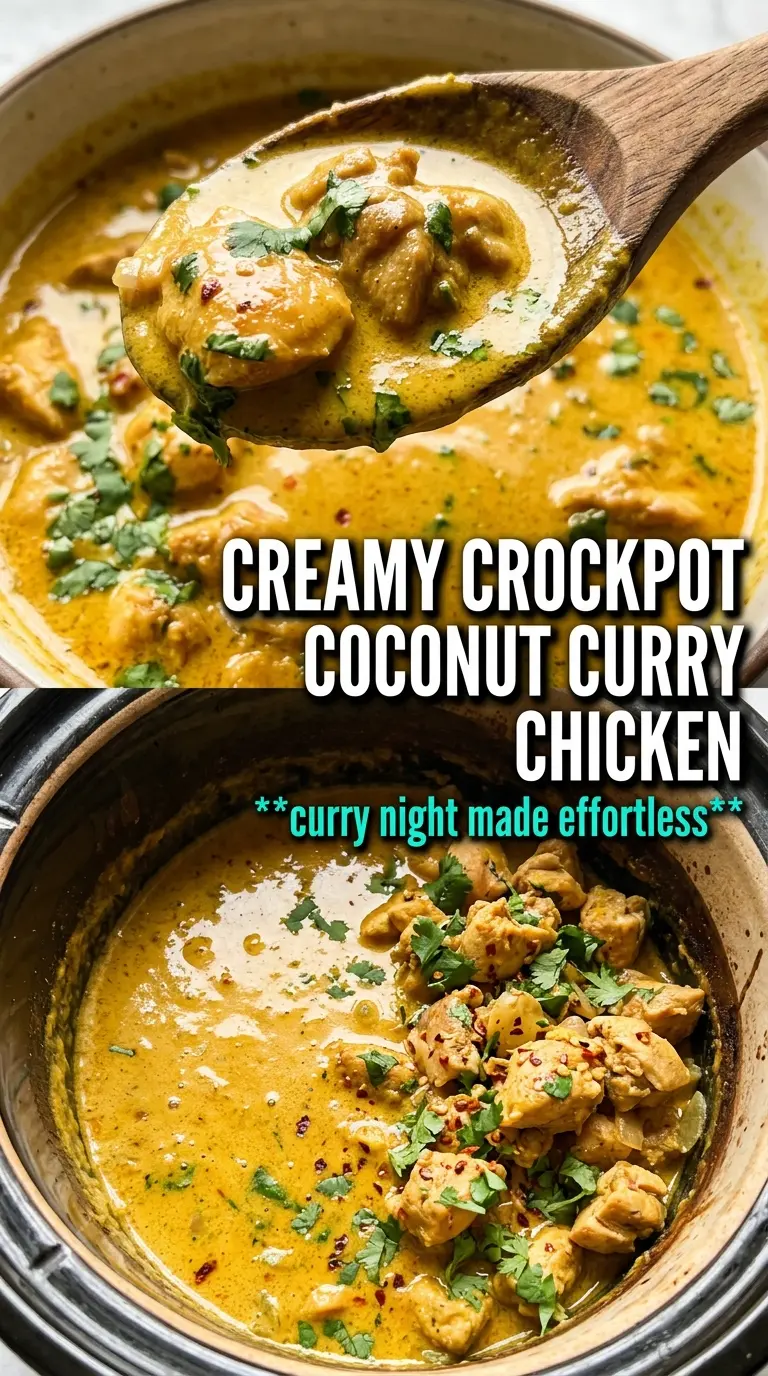
- Boneless skinless chicken thighs — These hold up to the long cook and stay succulent after hours in the sauce. You can cut them into chunks for quicker flavor absorption, but thighs are the one ingredient here I wouldn’t swap if you want the same tender result.
- Full-fat coconut milk — This gives the curry its body and the round, creamy finish that light coconut milk can’t match. If yours separates in the can, whisk it well before adding it; that little step keeps the sauce smooth.
- Red curry paste — This is the main source of heat, aromatics, and color. Brands vary a lot, so taste yours if you know it runs hot or mild, and adjust only after the curry has finished cooking.
- Fish sauce — It adds salt and depth in a way plain salt can’t. If you need a substitute, use soy sauce or tamari, but expect a different, less rounded savory note.
- Brown sugar and lime juice — These keep the sauce from tasting heavy. The sugar softens the curry paste’s edge, and the lime wakes everything up at the end, when the sauce needs brightness most.
- Frozen peas and red bell pepper — The pepper melts into sweetness while the peas should stay green and fresh. Add the peas late so they don’t go khaki and soft.
Building the Curry So the Sauce Doesn’t Turn Muddy
Whisk the Sauce Before It Meets the Chicken
Combine the coconut milk, curry paste, broth, garlic, ginger, fish sauce, brown sugar, lime juice, and turmeric until the paste is fully dissolved. If you dump curry paste on top of the chicken, it can sit in streaks and cook unevenly. A smooth sauce at the start gives you a smoother curry at the end.
Let the Slow Cooker Do the Long Work
Add the chicken, onion, and bell pepper, then cook until the chicken is very tender and pulls apart easily with a spoon. On low, that usually takes 6 to 7 hours; on high, about 3 hours. If the chicken is still chewy, it just needs more time, not more heat. High heat can push coconut milk toward a greasy edge before the chicken has finished softening.
Finish with the Bright Ingredients Last
Stir in the peas during the last 20 minutes so they stay fresh and sweet. Taste the curry after that and adjust with more fish sauce, lime juice, or brown sugar if needed. The final seasoning should taste balanced: savory first, then a little sweet, then a clean hit of acid at the end.
Make It Dairy-Free and Naturally Gluten-Free
This curry already lands in dairy-free territory because the creaminess comes from coconut milk. For a gluten-free version, check the curry paste and fish sauce labels, since some brands sneak wheat into one or both. Serve it with rice and you’ve got a meal that fits both needs without changing the texture.
Swap the Protein Without Changing the Method
Boneless chicken breasts work if that’s what you have, but they need less time and can dry out if left too long. Shrink the cook time and check early for tenderness. For shrimp, this becomes a different recipe entirely — add them near the end and cook only until they turn opaque.
Turn Up the Heat or Keep It Mild
Different red curry pastes carry different levels of spice, so this is the easiest place to control the final burn. For more heat, add extra curry paste or a sliced chili at the end. For a milder curry, start with less paste and add more only after tasting the finished sauce.
Storage and Reheating
- Refrigerator: Store for up to 4 days. The sauce will thicken and the coconut may firm up slightly, which is normal.
- Freezer: It freezes well for up to 2 months. Cool completely first and freeze in portions; the texture may look a little looser after thawing, but it comes back once reheated gently.
- Reheating: Warm it on the stove over low heat or in short microwave bursts, stirring between rounds. Don’t boil it hard, or the coconut sauce can separate and the chicken can tighten up.
Questions I Get Asked About This Recipe
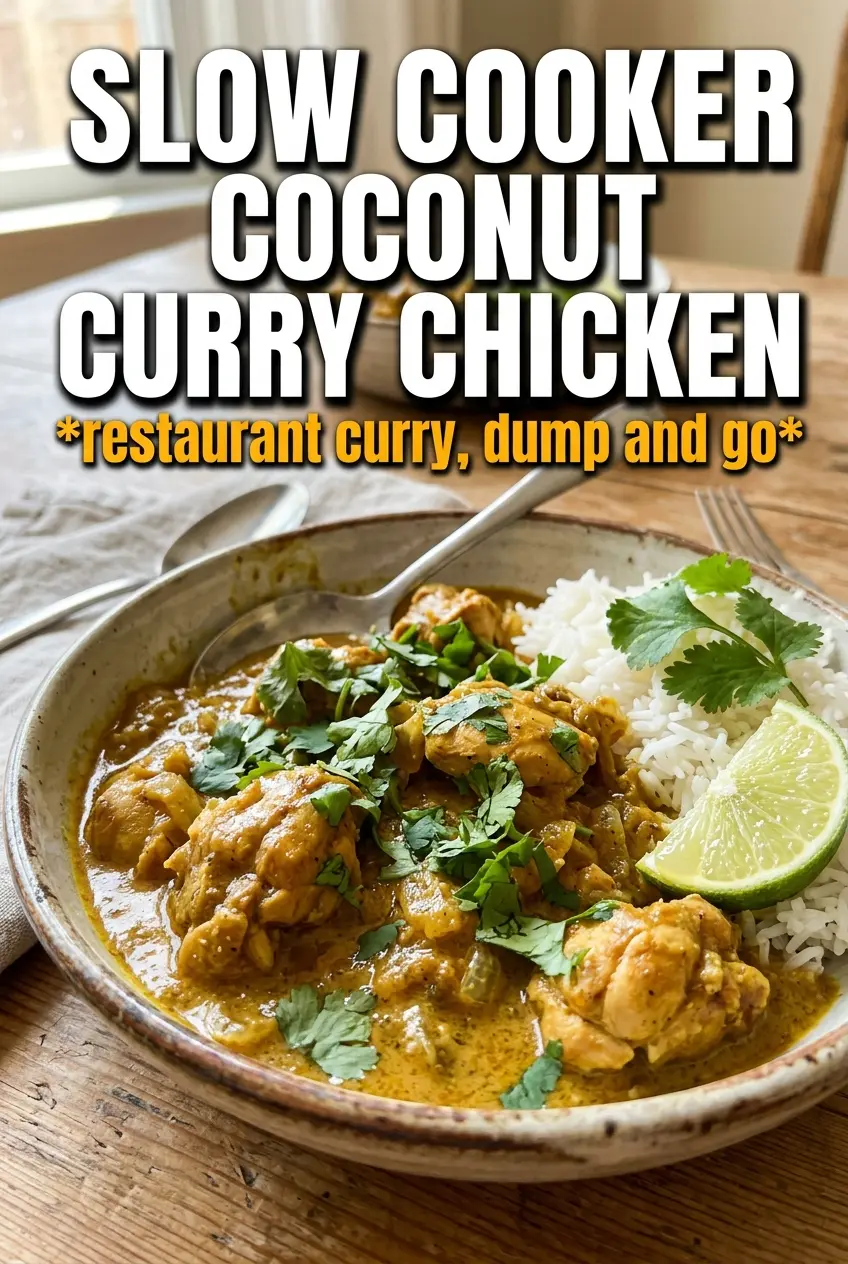
Slow Cooker Coconut Curry Chicken
Ingredients
Equipment
Method
- Place the chicken thighs in the slow cooker so they sit in an even layer.
- Whisk together coconut milk, red curry paste, chicken broth, garlic, ginger, fish sauce, brown sugar, lime juice, and turmeric until the paste is fully combined and the sauce looks smooth.
- Pour the sauce over the chicken, then add the diced onion and sliced red bell pepper so the vegetables are partially submerged and visible on top.
- Cook on low for 6–7 hours, or high for 3 hours, until the chicken is very tender and flakes easily when pressed.
- Stir in the frozen peas during the last 20 minutes of cooking, so they turn bright green and heat through.
- Taste and adjust seasoning by adding additional fish sauce, lime juice, or brown sugar as needed until the flavor is balanced.
- Serve over jasmine rice and top with fresh Thai basil and lime wedges.