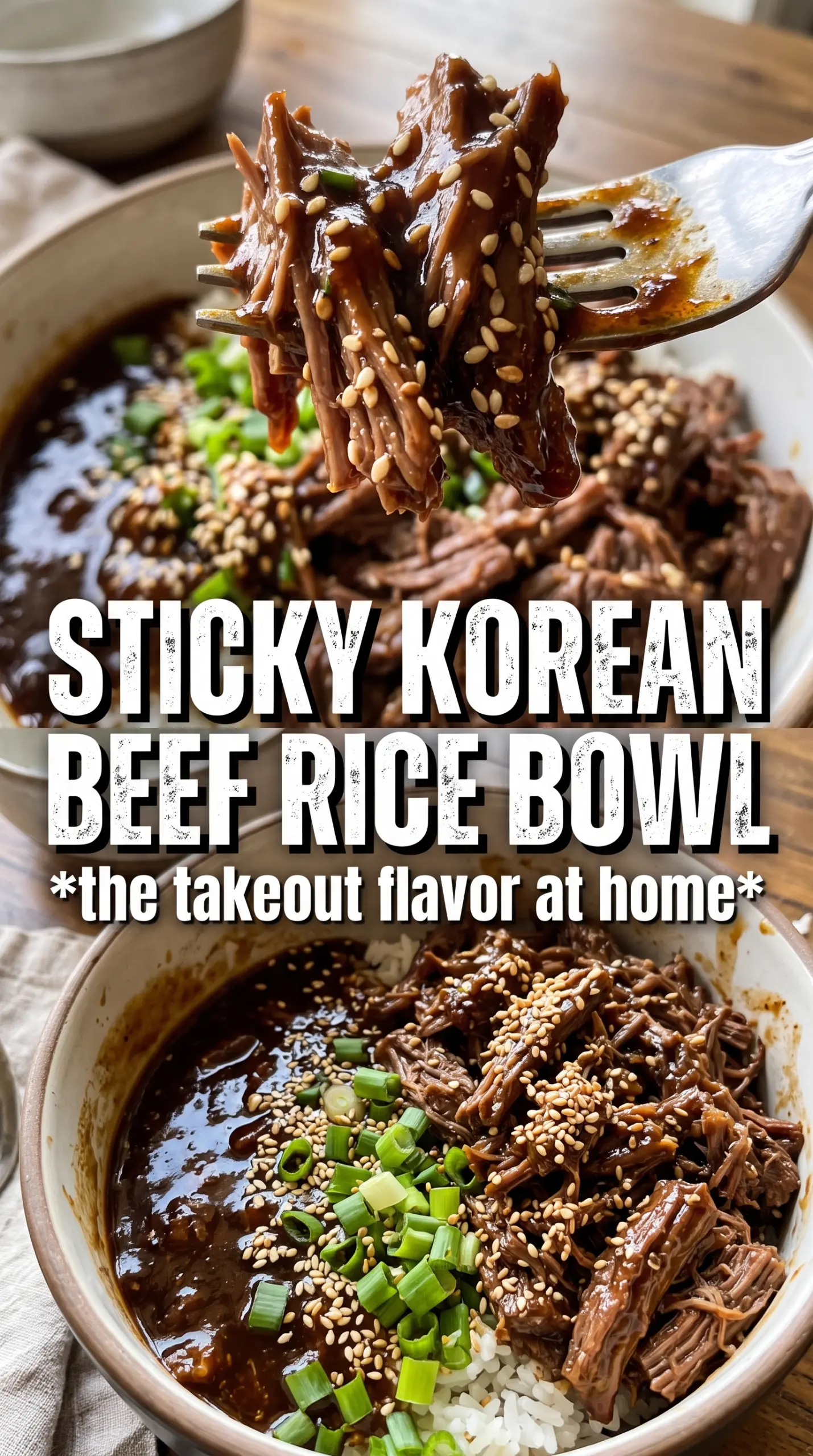
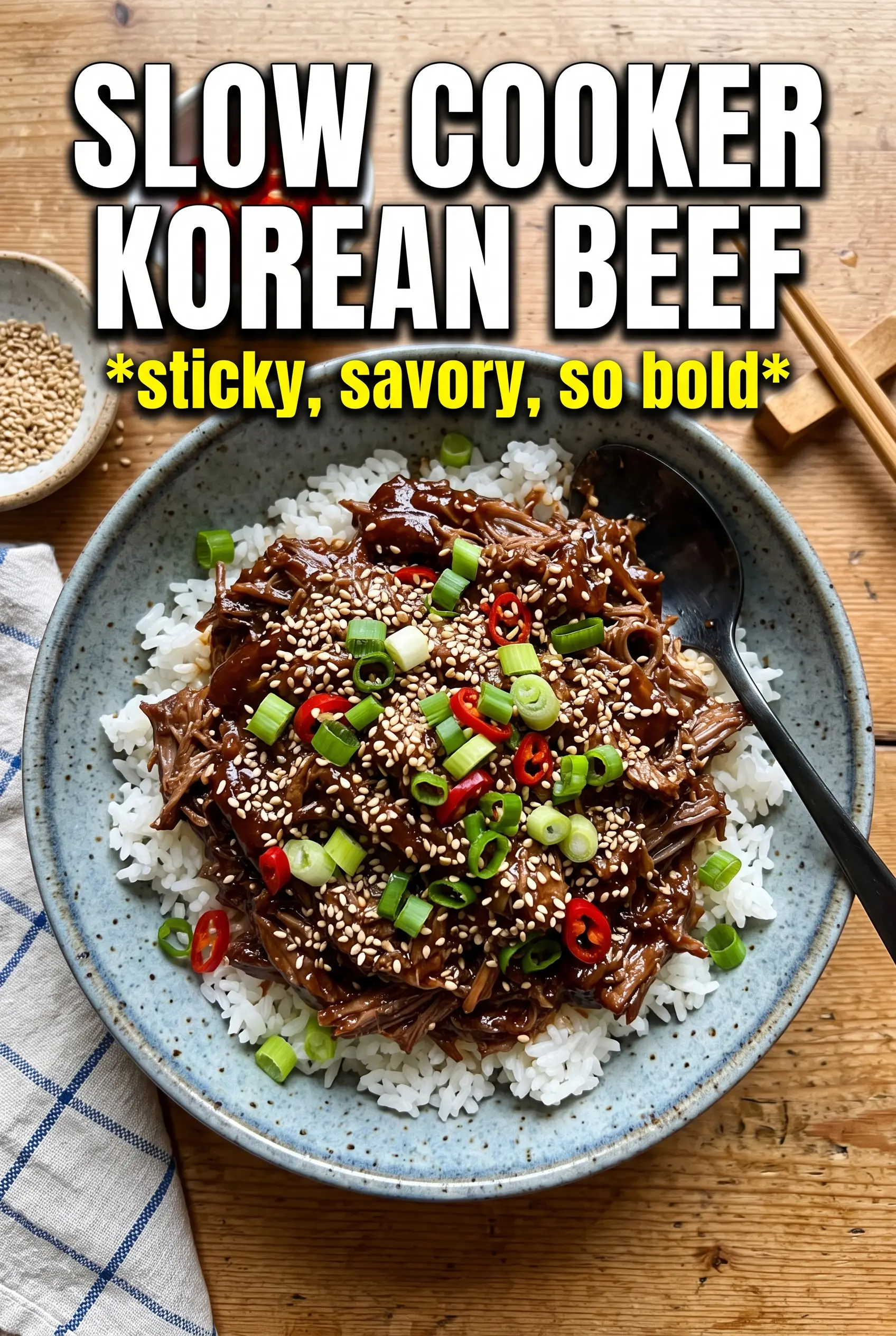
Slow cooker Korean beef turns into the kind of dinner that disappears fast: tender shreds of chuck roast coated in a glossy soy-garlic sauce with just enough brown sugar to round out the edges. Piled over white rice, it has that sweet-salty, sticky finish that makes every bite taste like it took far more effort than it did.
Chuck roast is the right cut here because it has enough fat and connective tissue to turn silky over long, low heat. The slow cooker does the heavy lifting, but the real difference comes at the end: thickening the sauce separately with cornstarch and cold water keeps it smooth instead of grainy or watery. Shredding the beef before it goes back into the sauce lets every strand soak up the glaze.
Below, you’ll find the timing that keeps the beef tender instead of dry, the one step that makes the sauce cling to the meat, and a few swaps if you’re working with a different cut or need a gluten-free version.
The sauce thickened up beautifully after the cornstarch went in, and the beef stayed tender even after reheating the leftovers over rice the next day.
Like this slow cooker Korean beef? Save it to Pinterest for sticky, rice-ready dinners with glossy sauce and almost no hands-on work.
The Part Most Slow Cooker Beef Gets Wrong: Thin Sauce and Bland Meat
The common mistake with this dish is building all the flavor in the liquid and never getting it back onto the meat. If the sauce stays thin, the beef tastes washed out instead of coated and glossy. The other problem is cooking past the point where the chuck roast turns tender; once it shreds easily, it’s done. Keep going for hours longer and the meat starts to dry out at the edges.
This version avoids both problems by using a strong soy-sugar base from the start and then thickening the cooking liquid after the beef is shredded. That order matters. If you thicken too early, the sauce can scorch or turn gummy in the slow cooker. If you shred first and return the beef to the finished sauce, every strand picks up that sticky glaze instead of sitting in broth.
- Chuck roast — This is the cut that gives you the soft, pull-apart texture people want here. Flank steak works in a pinch, but it won’t become as silky and is easier to overcook.
- Soy sauce — It carries the salt and the backbone of the dish. Use a regular all-purpose soy sauce unless you need gluten-free, then swap in tamari without changing anything else.
- Brown sugar — It doesn’t just sweeten the sauce; it helps it turn lacquered and cling to the beef. Packed brown sugar is important because the moisture content affects the final balance.
- Sesame oil — This is the nutty aroma that reads as Korean-American at first bite. A little goes a long way, so don’t replace it with neutral oil unless you’re willing to lose that finish.
What Each Ingredient Is Actually Doing in This Recipe
- Primary ingredient (the star) — Quality matters most. Choose the best you can find.
- Cooking medium (oil, butter, or broth) — This carries flavors and prevents dryness.
- Seasonings (salt, pepper, spices, herbs) — Layer flavors so nothing overpowers. Build depth gradually.
- Aromatics (garlic, onion, herbs) — Cook with fat to bloom flavors. Become the foundation.
- Supporting ingredients — Complement the main ingredient without overpowering it.
- Sauce or liquid (if applicable) — Brings flavors together. Balance richness with acid.
- Acid (lemon, vinegar, wine, or other) — Brightens and prevents flat-tasting results.
- Final finish (garnish, glaze, or sauce) — Prevents one-dimensional taste and adds visual appeal.
How to Get the Beef Tender Before the Sauce Thickens
Mix the Sauce First, Not Halfway Through
Whisk the soy sauce, brown sugar, sesame oil, garlic, ginger, red pepper flakes, and black pepper before it ever hits the slow cooker. That keeps the sugar from settling at the bottom and gives the beef an even coating from the start. If you dump ingredients in separately, the bottom layer can taste saltier while the top stays flat.
Let the Slow Cooker Do the Long Work
Cook on low for 6 to 7 hours if you can. High heat works in a pinch, but low heat gives the beef a cleaner shred and less chance of stringy edges. The meat is ready when it falls apart easily with a fork and looks deeply browned all the way through. If it still fights back, it needs time, not more stirring.
Thicken the Sauce After Shredding
Pull the beef out first, then whisk the cornstarch with cold water before stirring it into the hot sauce. Cold water keeps the cornstarch smooth; if you add it dry, you’ll get little lumps that never fully disappear. Let the sauce cook on high for the full 15 minutes so it loses the raw starch taste and turns glossy enough to coat a spoon.
Toss the Beef Back in at the End
Return the shredded beef to the thickened sauce and toss until every piece looks lacquered. This last step is what makes the dish taste finished instead of just saucy. Serve it right away over rice with green onions, sesame seeds, and a little sriracha if you want heat at the table.
How to Adapt This for Different Cuts, Diets, and Dinner Timing
Gluten-Free Version
Swap the soy sauce for tamari or a certified gluten-free soy sauce. The flavor stays salty and savory, but tamari usually tastes a touch rounder and less sharp. Everything else can stay exactly the same.
Using Flank Steak Instead of Chuck
Flank steak cooks faster and slices into neat strands, but it won’t give you the same rich, shreddable texture as chuck roast. Check it early, around the 3-hour mark on high or 5 hours on low, because flank dries out once it goes past tender.
Milder Heat for Kids or Sensitive Palates
Cut the red pepper flakes in half or leave them out and finish with sriracha at the table for everyone else. The sauce still tastes complete because the garlic, ginger, soy, and brown sugar carry the main flavor.
Storage and Reheating
- Refrigerator: Store in an airtight container for up to 4 days. The sauce tightens as it chills, which is normal.
- Freezer: It freezes well for up to 2 months. Cool it completely, portion it with some sauce, and thaw overnight in the fridge before reheating.
- Reheating: Warm it gently on the stove or in the microwave with a splash of water if needed. The biggest mistake is blasting it too hard, which can dry out the beef and make the sauce seize up.
Answers to the Questions Worth Asking
Slow Cooker Korean Beef
Ingredients
Equipment
Method
- Place the beef in the slow cooker in an even layer. Cover with the lid so it cooks evenly.
- Whisk together soy sauce, brown sugar, sesame oil, garlic, ginger, red pepper flakes, and black pepper until smooth and the sugar dissolves. The sauce should look glossy and well combined.
- Pour the sauce over the beef so the pieces are coated as evenly as possible. Use a spoon to distribute any pooled sauce.
- Cook on low for 6–7 hours or high for 3–4 hours until the beef is very tender and shreds easily. You should see the meat break apart when pressed with a fork.
- Remove the beef and shred with two forks. Keep the shredded strands slightly chunky so they hold onto the sauce.
- Whisk cornstarch and cold water together, then stir the slurry into the sauce. The liquid should turn cloudy before it thickens.
- Cook on high for 15 minutes until the sauce is noticeably thicker and glossy. Bubbles should appear at the edges and the sauce should cling to a spoon.
- Return the shredded beef to the sauce and toss to coat. Ensure every piece is lacquered with the thickened sweet soy mixture.
- Serve the Korean beef over cooked white rice. Top immediately while the sauce is hot and shiny.
- Garnish with sliced green onions and sesame seeds, then drizzle with sriracha if desired. Finish with a visible pop of green and toasted-seed speckles.