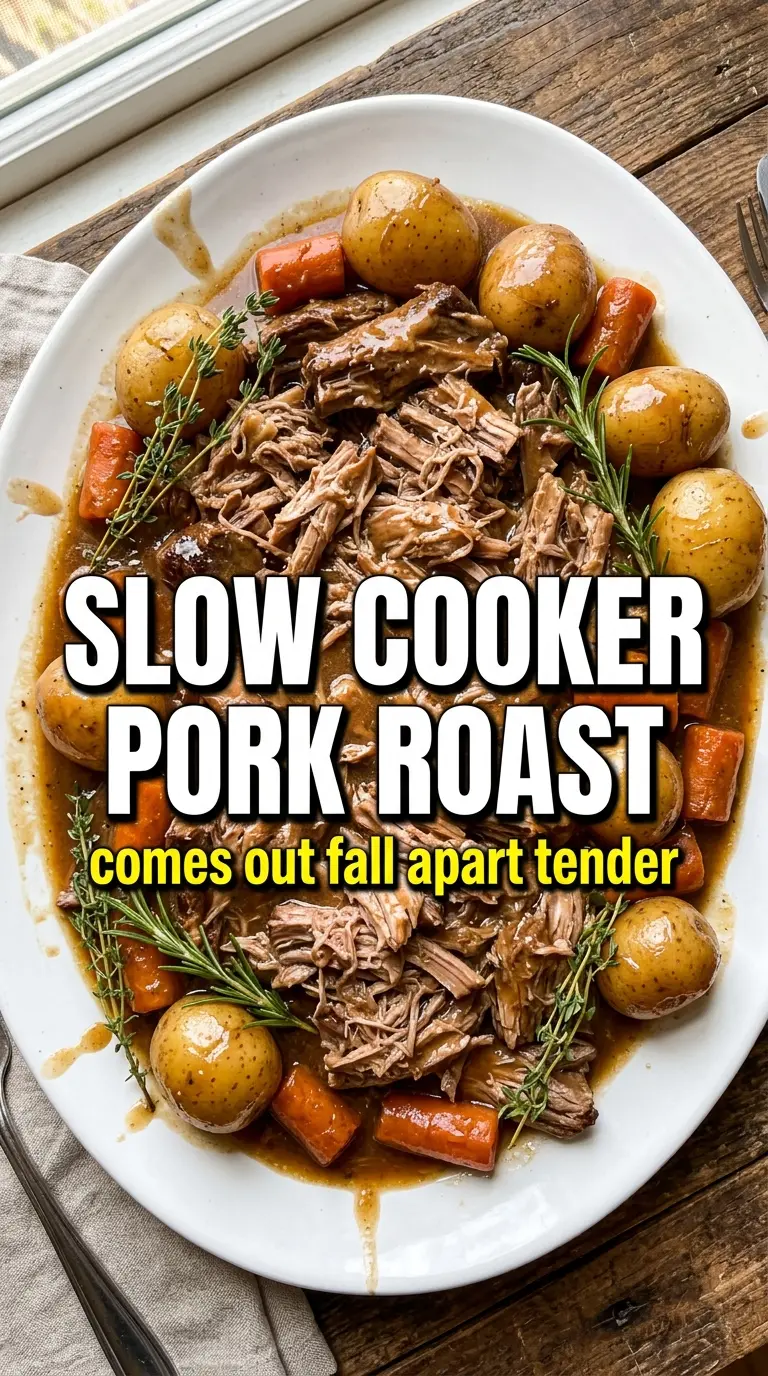
Pull-apart slow cooker pork roast earns its place in the dinner rotation because it comes out tender enough to shred with a fork and rich enough to taste like it cooked with a lot more effort than it did. The onions melt into the broth, the herbs perfume the meat from the inside out, and the pan juices turn into the kind of savory sauce you want spooned over every bite.
The trick is building enough flavor before the slow cooker ever turns on. A hard sear gives the roast a deeper, meatier edge, and the combination of Worcestershire, soy sauce, and broth creates a braising liquid that tastes rounded instead of flat. Pork shoulder is the right cut here because the connective tissue has time to break down slowly, which is what gives you those soft shreds instead of dry slices.
Below, I’ll walk through the sear, the slow-cooking setup, and the few details that make this pork roast come out juicy instead of stringy. I’ve also included a couple of swaps and storage notes, since this is one of those recipes that works just as well for Sunday dinner as it does for leftovers the next day.
The pork shredded beautifully after 8 hours on low, and the juices were perfect spooned over mashed potatoes. I was worried it might dry out, but it stayed so tender and the onion gravy flavor was spot on.
Slow cooker pork roast with savory juices and fall-apart tenderness is exactly the kind of dinner worth keeping on hand for busy nights.
The Sear That Keeps the Roast from Tasting Flat
A slow cooker will make pork tender, but it won’t build flavor on its own. That browned crust from the skillet is where the deeper, roasted taste starts, and it also leaves behind little caramelized bits that enrich the juices in the pot. If you skip this step, the roast still cooks through, but the broth tastes more like seasoned steam than a proper braise.
The other mistake is crowding the roast into a wet cooker too early without any base layer. Sliced onion under the pork lifts it slightly and keeps it from sitting in a bland pool, while garlic and herbs perfume the liquid as it cooks. You’re aiming for slow, steady heat and enough liquid to keep the bottom from scorching, not a full bath that washes the seasoning away.
What the Pork, Onion, and Seasoning Are Really Doing Here
- Pork shoulder or butt — This cut has the fat and connective tissue that turn silky over long cooking. Lean pork loin won’t give the same shreds or the same forgiveness if it goes a little long.
- Chicken broth — It gives the roast enough liquid to braise without drowning the meat. Low-sodium broth works best because Worcestershire and soy sauce already bring plenty of salt.
- Worcestershire sauce and soy sauce — These are the backbone of the braising liquid. Worcestershire adds tang and depth, soy sauce adds savoriness and color, and together they keep the pan juices from tasting thin.
- Fresh rosemary and thyme — Fresh herbs hold up better over a long cook than dried herbs do, and they give the roast a clean, woodsy aroma. If you only have dried, use a smaller amount so the flavor doesn’t turn dusty.
- Onion and garlic — They soften into the juices and help build the base of a quick serving sauce. Don’t mince the onion too finely; sliced pieces hold up better and don’t disappear completely.
The Hours That Turn This Into Fork-Tender Pork
Seasoning and Searing
Pat the pork dry before seasoning it heavily on all sides with salt, pepper, garlic powder, and smoked paprika. The surface needs to be dry or the spices will steam instead of sticking, and the sear won’t take. Brown the roast in a hot skillet for 2 to 3 minutes per side until you get a deep mahogany crust; if the pan is smoking hard or the spices are burning, lower the heat a notch. This step is about building flavor, not cooking the meat through.
Setting Up the Slow Cooker
Spread the sliced onion and minced garlic across the bottom of the slow cooker, then set the browned pork on top. Stir the broth, Worcestershire sauce, and soy sauce together before pouring them around the roast, not over the top, so you don’t wash away the seasoning. Nestle in the rosemary and thyme. The liquid should come partway up the sides of the meat, not cover it completely.
Cooking Until It Shreds
Cover and cook on Low for 8 to 10 hours, or on High for 4 to 5 hours if you’re short on time. Low heat gives the most even breakdown of the connective tissue, which is why the meat pulls apart more cleanly. The roast is ready when a fork slides in with almost no resistance and the meat breaks into shreds instead of holding a slice. If it still feels tight in the center, give it more time; rushing this part is what leaves pork dry and tough.
Shredding and Bringing Back the Juices
Move the pork to a board or a shallow bowl and shred it with two forks. Pull out any obvious fat caps or herb stems, then toss the meat back into the slow cooker so it can soak up the cooking liquid. This is where the roast goes from plain shredded pork to something worth piling over mashed potatoes or rice. If the juices look thin, let the shredded pork sit in them for 10 to 15 minutes before serving so the meat picks up more flavor.
How to Adjust This Pork Roast Without Losing the Good Part
Make It Gluten-Free
Use a gluten-free Worcestershire sauce and tamari instead of regular soy sauce. The flavor stays deep and savory, and you won’t lose the balance in the braising liquid.
Swap in Pork Loin Only If You Cook It Cautiously
Pork loin will work in a pinch, but it won’t shred with the same ease and it dries out faster. If you use it, shorten the cook time and start checking early, then stop as soon as the center is just tender enough to pull apart.
Add Vegetables for a One-Pot Dinner
Chunks of carrots, parsnips, or halved baby potatoes can go in around the pork for the last 3 to 4 hours on Low. Add them at the beginning and they’ll turn mushy before the meat is done.
Make It Richer with a Pan Sauce Finish
After shredding, remove a cup of the cooking liquid and simmer it in a saucepan until slightly reduced, then pour it back over the pork. That gives you a thicker, more concentrated sauce without needing flour or cornstarch.
Storage and Reheating
- Refrigerator: Store the pork in its juices for up to 4 days. The flavor gets even deeper overnight, and the meat stays moister if it’s kept covered with liquid.
- Freezer: This freezes well for up to 3 months. Pack it with some of the cooking juices in airtight containers or freezer bags so the meat doesn’t dry out when thawed.
- Reheating: Reheat gently on the stove over low heat or in the microwave at medium power with a spoonful of the juices. High heat is the fastest way to turn tender pork stringy and dry.
Answers to the Questions Worth Asking

Slow Cooker Pork Roast
Ingredients
Equipment
Method
- Season pork shoulder or butt generously on all sides with salt, pepper, garlic powder, and smoked paprika.
- Heat olive oil in a cast iron skillet over medium-high heat and sear pork shoulder or butt on all sides until browned, about 2–3 minutes per side.
- Place sliced onion and minced garlic in the bottom of the slow cooker, then set the seared pork on top.
- Combine chicken broth, Worcestershire sauce, and soy sauce, then pour around the pork.
- Add fresh rosemary and fresh thyme to the slow cooker.
- Cook on Low 8–10 hours or High 4–5 hours until the pork shreds easily.
- Shred the pork with two forks, then toss the shredded meat with the juices until glossy and well coated.
- Serve the fall-apart pork roast over mashed potatoes or rice, spooning pan juices over the top.