
Pillowy, tender, and packed with little bursts of fresh apple, these soft apple cinnamon cookies bake up with the kind of texture that disappears fast from a cooling rack. The edges pick up just enough cinnamon sugar to give each bite a gentle crackle, while the centers stay plush and cake-soft. If you’ve had apple cookies turn out dry, dense, or strangely bland, this version fixes all three problems at once.
The trick is keeping enough moisture in the dough without making it wet. Applesauce handles most of the tenderizing, while finely diced fresh apple adds flavor and little juicy pockets that make the cookies taste like actual apples, not just spice. Chilling the dough matters here too. It gives the flour time to hydrate and keeps the cookies from spreading into flat pucks before the centers set.
Below, I’ll walk through the part that matters most: how to keep these cookies soft without underbaking them. I’ve also included a few smart swaps and storage notes, since this is the kind of cookie that still tastes great the next day.
The cookies stayed soft for days and the cinnamon sugar on the outside gave them such a nice little crunch. I chilled the dough like you said and they didn’t spread at all.
These soft apple cinnamon cookies are the ones to pin for a chewy, cinnamon-sugar finish with little apple bits in every bite.
The Secret to Cookies That Stay Soft Instead of Spreading Thin
The biggest risk with apple cookies is too much moisture in the dough combined with too little structure. Applesauce and diced apples both bring water, which is great for tenderness but easy to overdo if the dough goes into the oven warm. That’s why chilling isn’t optional here. It firms up the butter, lets the flour absorb moisture, and gives the cookies a better chance of puffing before they set.
The other thing that matters is size. These cookies are meant to be scooped in modest portions so the center can stay plush while the edges just barely set. Bake them until the tops look matte and the edges lose their raw shine. If you wait for them to look deeply golden all over, they’ll be overdone by the time they cool.
What the Applesauce and Fresh Apple Each Bring to the Dough
- Applesauce — This is what keeps the cookies soft and gives the dough a built-in apple flavor. Unsweetened applesauce works best because you control the sweetness with the sugars in the dough. You can swap in pear sauce in a pinch, but the flavor will be less clearly apple-forward.
- Fresh apples — Finely diced apples give you little juicy bites instead of a uniform muffin-like crumb. Use a firm, baking-friendly apple so the pieces hold some shape in the oven. If the dice is too large, the cookies bake unevenly and can turn gummy in spots.
- Brown sugar — This adds moisture and a deeper caramel note that plays well with cinnamon. It also helps the cookies stay tender for a couple of days. Light brown sugar is fine; dark brown sugar will make them a little richer and more molasses-heavy.
- Cinnamon sugar coating — The rolling mixture gives the cookies that crackly edge and keeps them from tasting flat. Don’t skip it. It’s the part that makes the outside taste as good as the inside.
Building the Dough Without Overmixing the Apples
Whisk the Dry Ingredients First
Combine the flour, baking soda, baking powder, cinnamon, nutmeg, and salt before you touch the butter. That spreads the leavening evenly through the dough, which helps the cookies bake up with a soft, even lift instead of patchy domes. If the spices clump, you’ll get uneven bites with random pockets of cinnamon.
Cream the Butter and Sugars Until It Looks Fluffy
Beat the softened butter with both sugars until the mixture looks pale and airy, not greasy and dense. That step traps air, which gives these cookies a lighter texture even though they’re soft and moist. If the butter is too warm, the mixture turns glossy and loose and the cookies tend to spread.
Fold in the Apples at the End
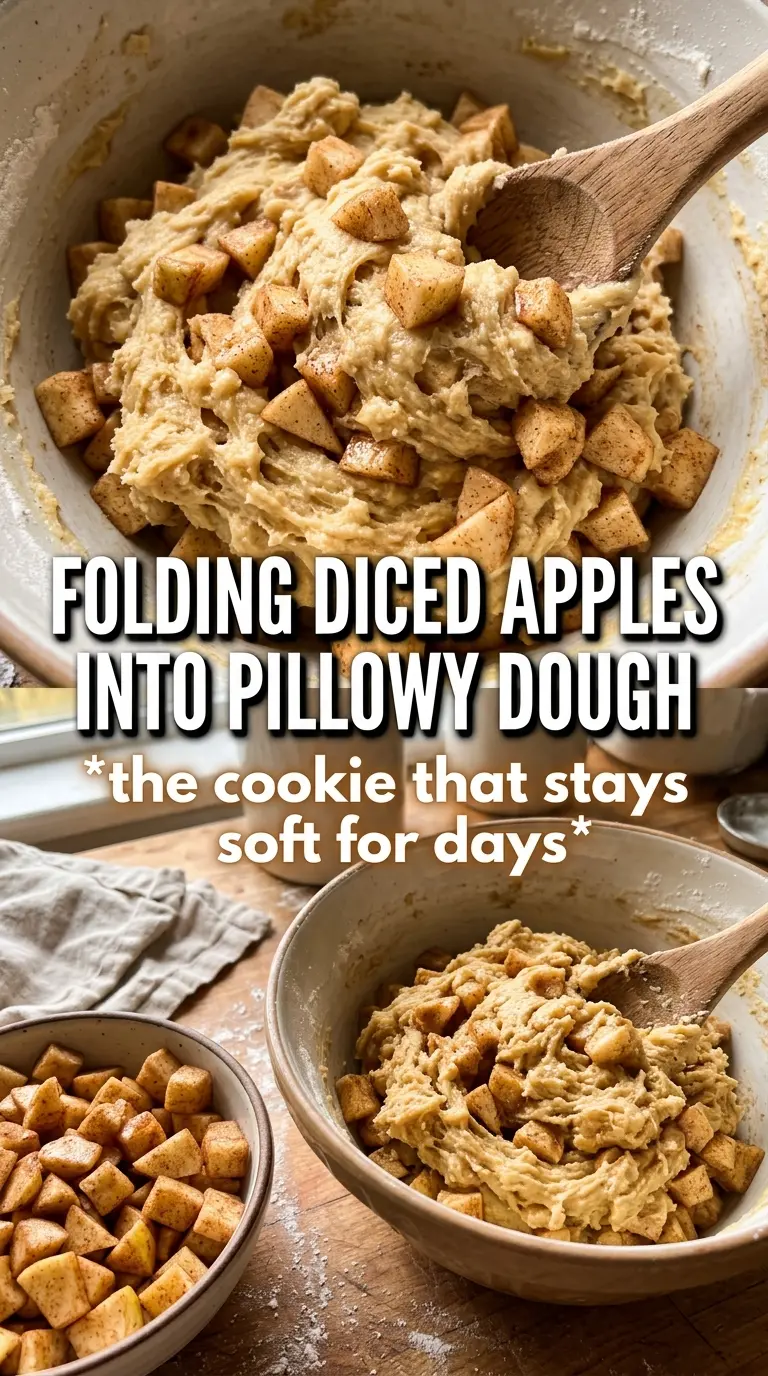
Once the wet and dry mixtures are combined, fold in the diced apples just until they’re distributed. Stirring too long crushes the fruit and works the dough into a sticky paste. The dough will be sticky either way, but it should still hold its shape when scooped.
Chill, Scoop, and Bake Until Just Set
Give the dough a full hour in the refrigerator before scooping. That rest is what keeps the cookies from flattening too fast. Roll the tops in cinnamon sugar, place them on parchment-lined sheets, and bake until the edges are set and the centers still look soft and slightly underdone. Let them cool on the pan completely; moving them too soon will make them break apart.
How to Adapt These Cookies for Different Pans, Apples, or Diets
Gluten-Free Version
Use a 1:1 gluten-free baking flour that includes xanthan gum. The cookies will still be soft, but they may spread a touch less and taste best the day they’re baked. Don’t swap in almond flour here; it changes the structure too much and the cookies won’t hold the same pillowy shape.
Use Pear Instead of Apple
If you only have ripe pears, swap them in for the diced apple and keep everything else the same. Pears soften a little faster and give the cookies a milder, sweeter finish. The flavor will be lovely, but less bright and less tart than the apple version.
Extra Cinnamon on the Outside
If you want a stronger cinnamon hit, increase the rolling mixture slightly or add a pinch more cinnamon to the dry ingredients. That gives the cookies a warmer, more bakery-style finish without changing the texture. Just don’t overload the dough itself or the spice can start to taste dusty instead of rounded.
Storage and Reheating
- Refrigerator: Store in an airtight container for up to 4 days. They stay soft, though the apple pieces can make the centers feel a little more tender on day two.
- Freezer: These freeze well after baking. Cool completely, freeze in a single layer, then transfer to a container for up to 2 months.
- Reheating: Warm a cookie for 8 to 10 seconds in the microwave if you want that fresh-baked softness back. Don’t overheat them or the apples will make the texture soggy instead of plush.