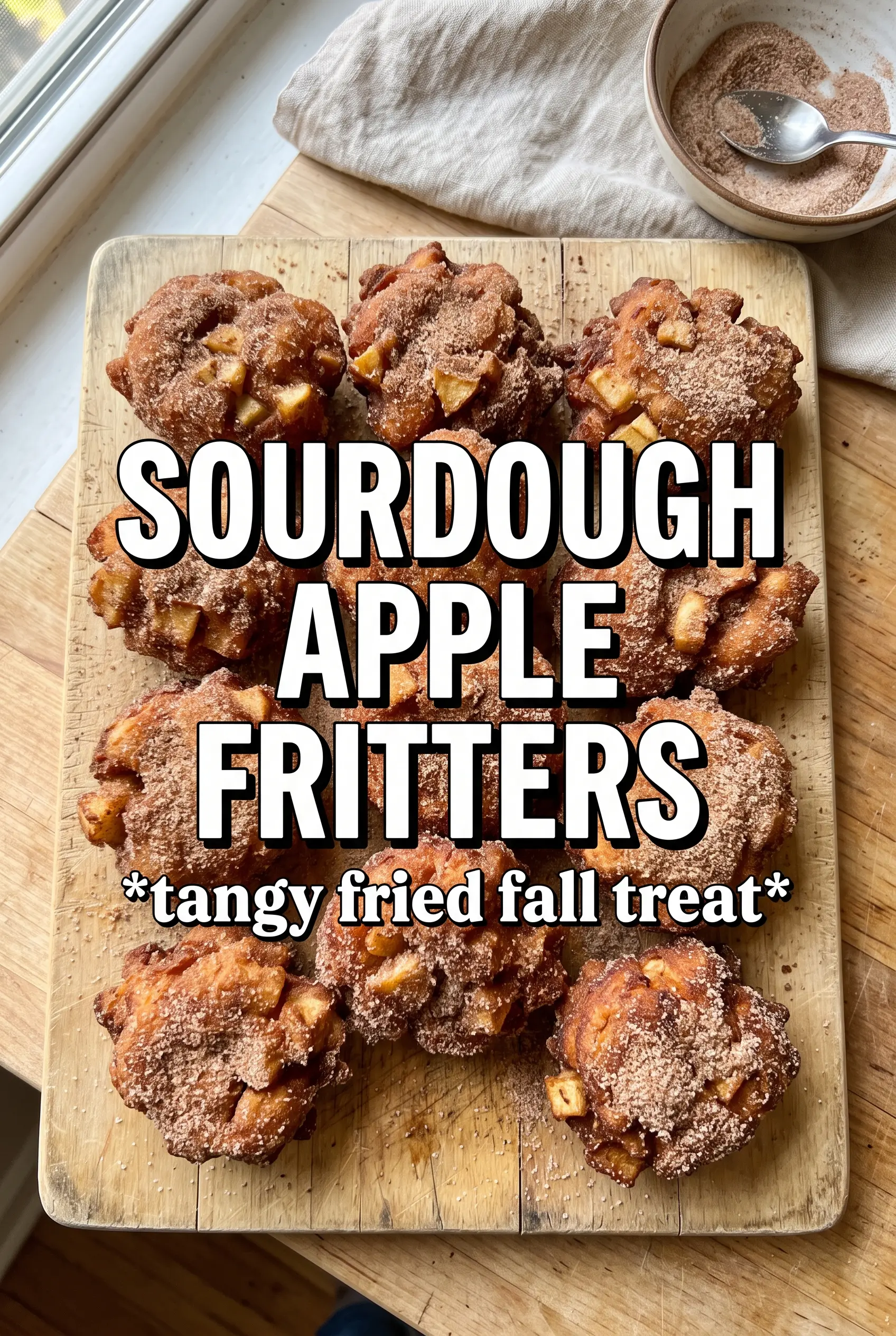
Hot sourdough apple fritters land with a crisp, craggy shell and a tender middle that tastes like the best parts of apple cider doughnuts and apple fritter shop windows all at once. The sourdough gives the batter a little tang, the apples soften just enough in the fry, and the outside turns deeply golden with those irregular edges that catch powdered sugar in every crease.
This version works because the batter stays thick. That keeps the apples suspended instead of sinking, which gives you those sweet little pockets of fruit in every bite. The sourdough starter also brings structure and flavor without making the fritters heavy, and a short rest is unnecessary here because the baking powder handles the lift right away.
Below, I’ve included the timing cue that matters most when frying these, plus a few smart swaps for using discard, active starter, or a cider glaze instead of powdered sugar.
The fritters were crisp on the outside and stayed fluffy inside, and the diced apples cooked through without turning mushy. I used the cider glaze and it set up just enough to crackle when I bit into them.
Save these sourdough apple fritters for the mornings when you want crisp edges, tender apples, and a quick cider glaze or powdered sugar finish.
The Trick to Keeping the Apples in the Batter, Not in the Bottom of the Bowl
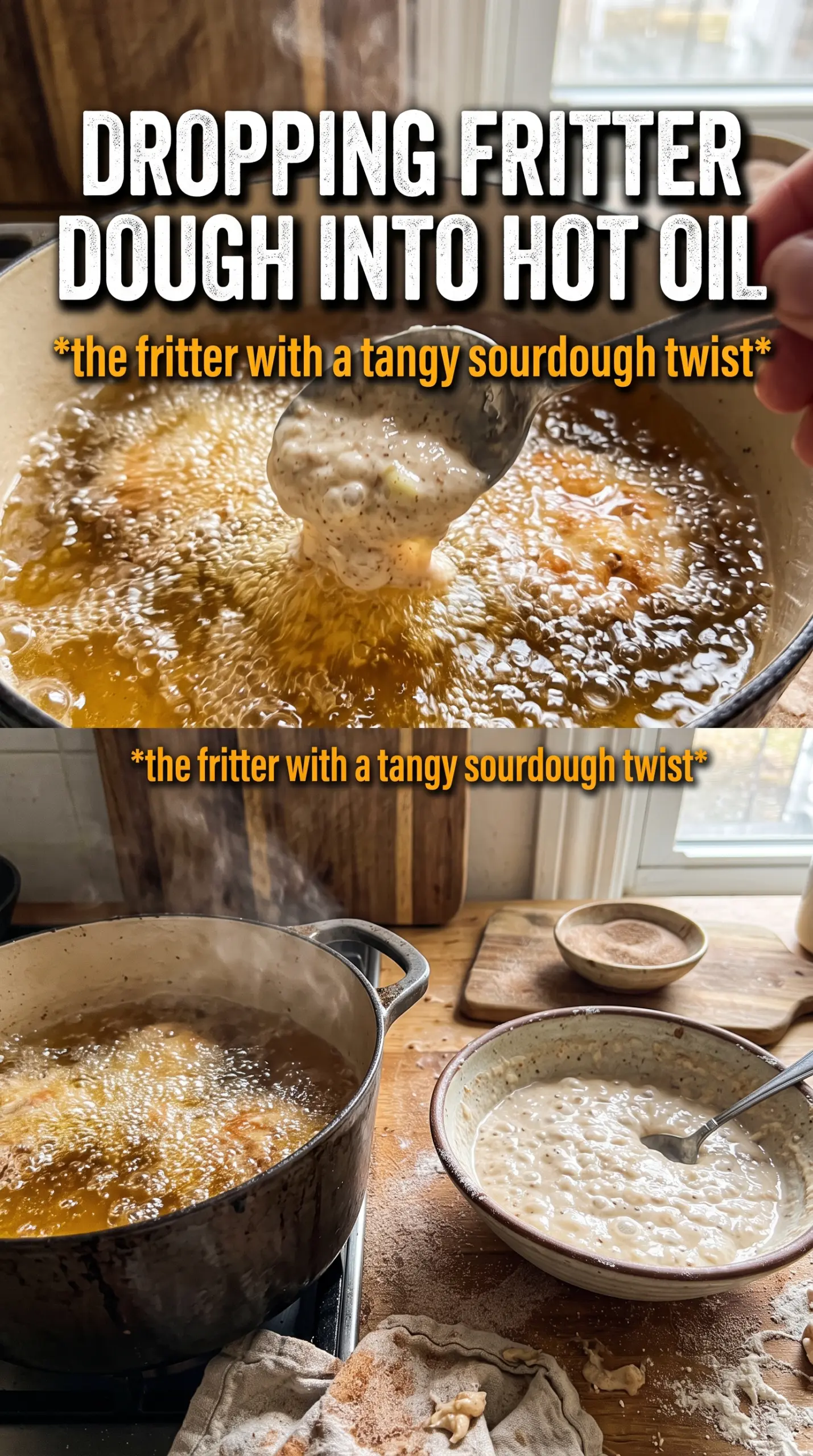
Most fritter batters fail before they even hit the oil. If the mix is too loose, the apples slide out, the batter spreads, and you end up with oily scraps instead of proper fritters. This batter should be thick enough to mound on a spoon and hold its shape when you drop it in. That thickness is what gives you the rough, craggy edges that fry up crisp.
The other key is heat. At 350F, the outside sets before the inside turns greasy, and the apples cook through in the same window that browns the batter. If the oil runs cool, the fritters drink it up. If it gets too hot, the outside darkens before the center loses its raw taste.
- Sourdough starter — Use active starter or discard here. Active starter gives a little more lift and a lighter crumb, while discard still works because the baking powder does the real rising.
- Apples — Peel them and dice them small. Bigger chunks throw off the batter and can leave the center undercooked while the outside browns.
- Whole milk — This loosens the batter just enough. Don’t swap in too much extra liquid; a thin batter is the fastest way to lose the fritter shape.
- Cinnamon and nutmeg — These don’t need to dominate. They should read as warm background spice, not apple pie filling.
What Each Ingredient Is Actually Doing in This Recipe
- Primary ingredient (the star) — Quality matters most. Choose the best you can find.
- Cooking medium (oil, butter, or broth) — This carries flavors and prevents dryness.
- Seasonings (salt, pepper, spices, herbs) — Layer flavors so nothing overpowers. Build depth gradually.
- Aromatics (garlic, onion, herbs) — Cook with fat to bloom flavors. Become the foundation.
- Supporting ingredients — Complement the main ingredient without overpowering it.
- Sauce or liquid (if applicable) — Brings flavors together. Balance richness with acid.
- Acid (lemon, vinegar, wine, or other) — Brightens and prevents flat-tasting results.
- Final finish (garnish, glaze, or sauce) — Prevents one-dimensional taste and adds visual appeal.
Frying the Fritters So They Cook Through Before They Darken
Mixing the Batter Without Overworking It
Whisk the starter, eggs, milk, and sugar first until smooth, then add the dry ingredients and stop as soon as the flour disappears. A few streaks are fine. Overmixing builds gluten and makes the fritters tough instead of tender. Fold in the apples last so they stay intact and don’t bleed too much moisture into the batter.
Heating the Oil to the Right Point
Use a heavy pot and enough oil to come up about 2 inches. Let it reach 350F and hold there, because that temperature gives you a fast crust without scorching. If you don’t have a thermometer, drop in a tiny bit of batter; it should sizzle right away and float up within seconds, not sink and languish. If it browns in under a minute, the oil is too hot.
Dropping and Flipping for That Ragged Edge
Use heaping tablespoons and work in small batches. Crowding the pot drops the oil temperature fast and turns the fritters dense and greasy. Fry until the first side is deeply golden and the edges look set, then flip once and finish the second side. Drain them on paper towels right away and dust with powdered sugar while they’re still hot so it clings instead of sliding off.
How to Change These Without Losing the Crisp Edge
Cider Glaze Instead of Powdered Sugar
Whisk powdered sugar with a little cider until it’s thick but drizzleable, then spoon it over the fritters after they’ve drained for a minute. The glaze gives a sweet-tart finish and a light shell that sets as it cools, while powdered sugar keeps the crust drier and more rustic.
Gluten-Free Version
Swap in a 1:1 gluten-free all-purpose flour blend with xanthan gum already included. The fritters will still fry up well, but the interior may be a little more delicate, so flip them only once and handle them gently when draining.
Use Pears for a Softer Fruit Bite
Firm pears can replace the apples if you want a softer, more floral fritter. Dice them the same size and keep the oil temperature steady, because pears release a little more moisture and can make the batter loosen faster.
Storage and Reheating
- Refrigerator: Store leftovers in an airtight container for up to 2 days. They’ll soften as they sit, which is normal for fried batter.
- Freezer: These freeze better unfrosted. Freeze in a single layer, then move to a bag or container for up to 1 month.
- Reheating: Reheat in a 350F oven or air fryer until the exterior crisps back up. The microwave makes them soggy and pulls out the crunch you worked for.
Answers to the Questions Worth Asking
Sourdough Apple Fritters
Ingredients
Equipment
Method
- Whisk sourdough starter, eggs, milk, and sugar together until smooth.
- Stir in all-purpose flour, cinnamon, nutmeg, salt, and baking powder until just combined.
- Fold in the diced apples; the batter should be thick and sticky.
- Heat vegetable oil to 350F in a heavy pot (about 2 inches deep).
- Drop heaping tablespoons of batter into the hot oil and fry 2-3 minutes per side until deeply golden.
- Fry in batches and avoid crowding the pot so the oil stays near 350F.
- Transfer fritters to paper towels to drain; dust with powdered sugar while hot.
- Whisk 1 cup powdered sugar with 2 tablespoons cider until smooth.
- Drizzle the glaze over the warm fritters.