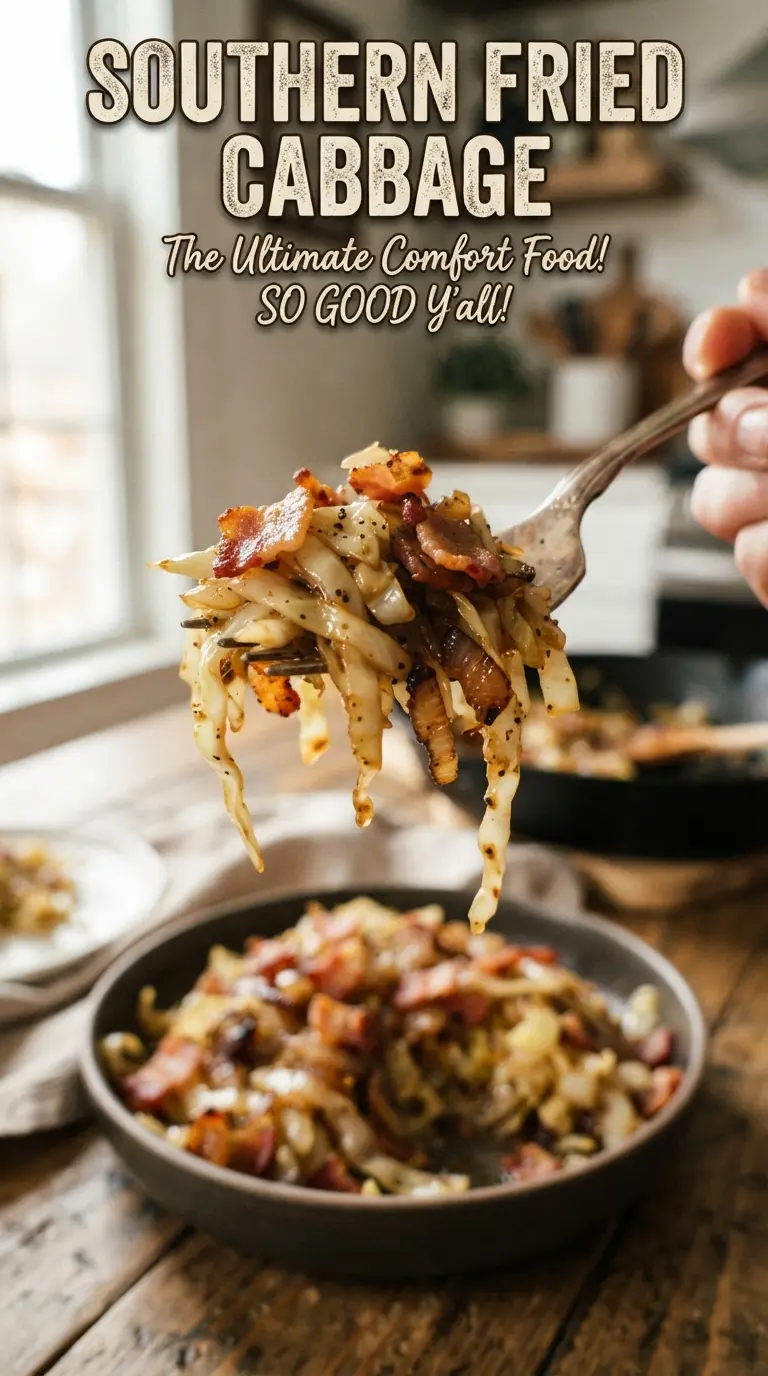
Southern fried cabbage turns soft, smoky, and deeply savory in one skillet, with tender cabbage that still keeps a little bite at the stem and those caramelized edges that make every forkful worth coming back for. The bacon drippings do a lot of the heavy lifting here, but the real difference is the quick hit of vinegar at the end, which keeps the dish from tasting flat or greasy.
This version leans into the classic balance of salty bacon, sweet onion, and black pepper, then gives the cabbage enough time over steady heat to pick up color instead of steaming itself into submission. A small spoonful of sugar helps the cabbage brown a little faster, and the butter rounds out the pan juices so the final dish tastes rich without feeling heavy.
Below, I’ll show you how to keep the cabbage from turning watery, what to look for when it starts to caramelize, and the simple swaps that still keep the spirit of the dish intact.
The cabbage stayed tender with those browned edges, and the splash of vinegar at the end kept the bacon from taking over. I served it with pork chops and there wasn't a shred left.
Love the smoky bacon, tender cabbage, and caramelized onion in this Southern fried cabbage? Save it to Pinterest for the side dish that always disappears first.
The Trick to Keeping Fried Cabbage Tender Instead of Watery
The biggest mistake with fried cabbage is crowding it and walking away too soon. Cabbage releases a lot of moisture, and if the pan is overloaded, it steams before it browns. You want enough heat to let that moisture cook off while the edges pick up color, which is what gives the dish its signature sweet-savory flavor.
Starting with bacon is more than just tradition. The rendered fat seasons the cabbage from the first minute, and the browned bits left in the pan help the onions and garlic taste deeper. The vinegar at the end matters for the same reason: it cuts through the richness and wakes up everything underneath.
- Bacon — Thick-cut bacon works, but standard slices crisp faster and leave enough drippings to coat the cabbage without making it greasy. If you use turkey bacon, add a little extra butter or oil because you won’t get the same rendered fat.
- Green cabbage — A firm, heavy head is best. Pre-shredded cabbage can work in a pinch, but it softens faster, so shorten the cooking time and keep an eye on the texture.
- Apple cider vinegar — Don’t skip this. It sharpens the final dish and keeps the bacon from flattening the flavor. If you’re out, white vinegar works, but use a lighter hand.
What Each Ingredient Is Actually Doing in This Recipe
- Primary ingredient (the star) — Quality matters most. Choose the best you can find.
- Cooking medium (oil, butter, or broth) — This carries flavors and prevents dryness.
- Seasonings (salt, pepper, spices, herbs) — Layer flavors so nothing overpowers. Build depth gradually.
- Aromatics (garlic, onion, herbs) — Cook with fat to bloom flavors. Become the foundation.
- Supporting ingredients — Complement the main ingredient without overpowering it.
- Sauce or liquid (if applicable) — Brings flavors together. Balance richness with acid.
- Acid (lemon, vinegar, wine, or other) — Brightens and prevents flat-tasting results.
- Final finish (garnish, glaze, or sauce) — Prevents one-dimensional taste and adds visual appeal.
Building the Skillet Flavor in the Right Order
Crisping the Bacon First
Cook the chopped bacon over medium heat until the pieces are crisp and the fat has rendered out. If the pan runs dry before the bacon is done, the heat is too high; lower it so the fat can slowly melt without burning the bits on the bottom. Pull the bacon out and leave the drippings in the skillet.
Softening the Onion and Garlic
Add the sliced onion to the hot drippings and cook until it turns soft and a little translucent with browned edges. Stir in the garlic for just 30 seconds; any longer and it can turn bitter fast. At this point, the kitchen should smell sweet, savory, and a little smoky.
Cooking the Cabbage Until the Edges Color
Add the cabbage, butter, salt, black pepper, red pepper flakes, and sugar. Stir occasionally, not constantly, so the cabbage has time to sit against the pan and caramelize. You’re looking for tender strands with golden edges and a little collapse in volume, not a mushy pile.
Finishing With Vinegar and Bacon
Stir in the apple cider vinegar near the end, after the cabbage is already tender. That keeps the vinegar bright instead of cooked off. Add the crisp bacon back in right before serving so it stays crunchy enough to contrast with the soft cabbage.
How to Change This Without Losing the Soul of the Dish
Make it vegetarian with smoked seasoning
Skip the bacon and start the onion in butter or olive oil, then add a pinch of smoked paprika or a few drops of liquid smoke. You lose the rendered bacon drippings, so the dish won’t have quite the same depth, but you’ll still get a satisfying sweet-and-savory cabbage side.
Make it dairy-free
Use extra bacon drippings or a neutral oil instead of butter. The texture stays the same, but the final dish will taste a little leaner, so keep the vinegar and black pepper in place to keep the flavor lively.
Make it milder or spicier
Leave out the red pepper flakes for a softer, more classic version, or add an extra pinch if you want a little heat behind the sweetness. The pepper flakes don’t change the structure of the dish, just the finish on the palate.
Storage and Reheating
- Refrigerator: Store in an airtight container for up to 4 days. The cabbage softens a little more as it sits, but the flavor holds up well.
- Freezer: It freezes, but the cabbage will be softer after thawing, so I only do this if I need to save leftovers. Cool it completely and freeze in a tight container for up to 2 months.
- Reheating: Warm it in a skillet over medium-low heat with a splash of water or a dab of butter. The biggest mistake is blasting it in the microwave until it turns limp and greasy.
Answers to the Questions Worth Asking
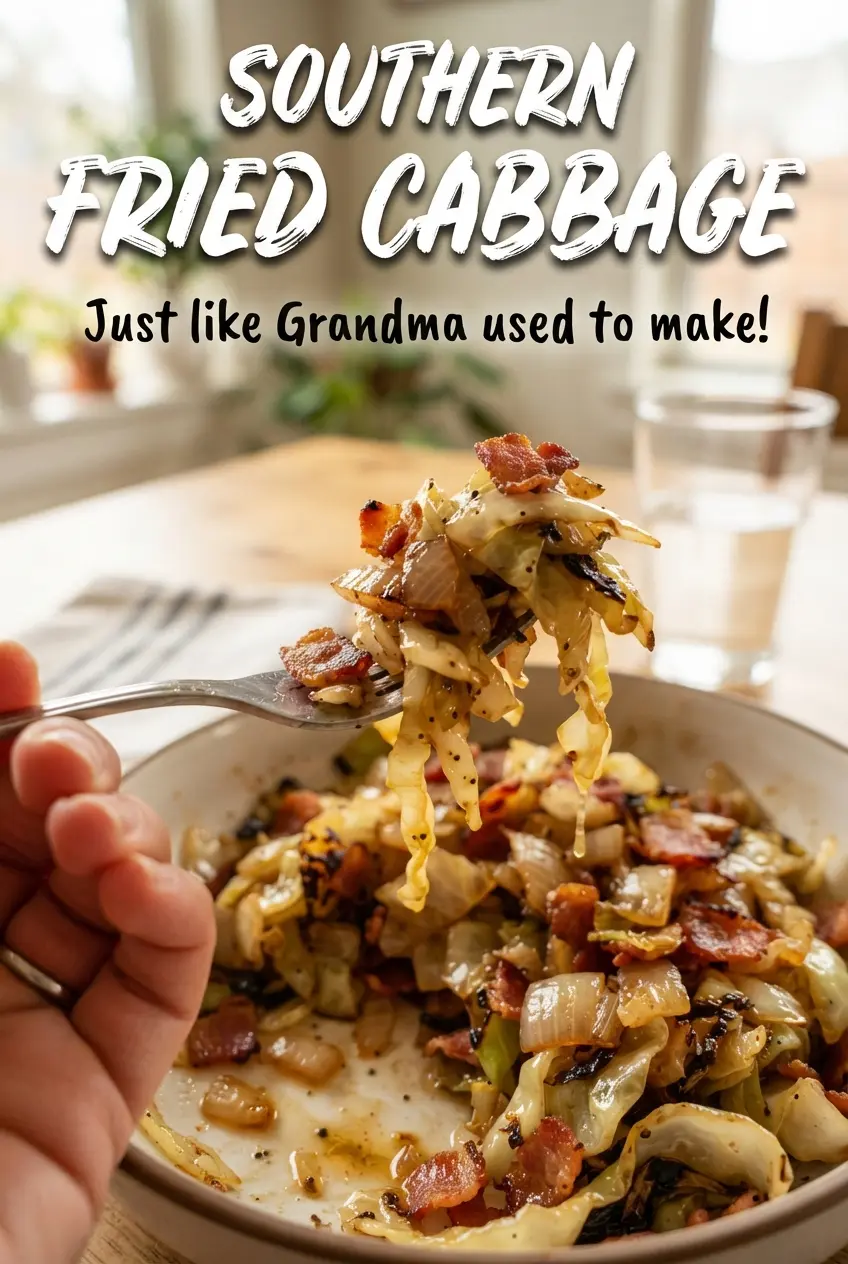
Southern Fried Cabbage
Ingredients
Equipment
Method
- Cook chopped bacon in a large cast iron skillet over medium heat for 8 minutes until crisp, then remove and leave the drippings in the pan.
- Add sliced onion to the drippings and cook for 5 minutes until softened, then stir in minced garlic and cook for 30 seconds.
- Add chopped cabbage, butter, salt, black pepper, red pepper flakes, and sugar to the skillet and stir to combine.
- Cook for 12-15 minutes, stirring occasionally, until cabbage is tender and caramelized at the edges, with golden-brown spots visible.
- Stir in apple cider vinegar and the crispy bacon until evenly mixed, then serve warm.