Spiced pumpkin bread should taste warm and layered, with a tight, moist crumb and a top that turns deep brown instead of pale and dull. The best loaves have enough spice to feel bold without turning dusty, and this one gets there by leaning on more than just cinnamon. You get ginger, cardamom, cloves, allspice, and a little black pepper, which sounds like a lot until you taste how much depth it gives the pumpkin.
The other thing that makes this loaf stand out is the molasses. It pulls the flavor darker and richer, which matters because pumpkin on its own can taste flat if the rest of the batter isn’t doing enough work. Brown sugar helps with moisture, while the oil keeps the loaf soft for days instead of drying out after the first slice.
Below, I’ll walk you through the spice balance, the small trick that keeps the crumb tender, and how to finish it with a brown butter glaze that settles into the top instead of sliding right off.
The loaf came out incredibly moist and the spice mix tasted balanced, not harsh. The brown butter glaze set up nicely after about 20 minutes, and the black pepper gave it this subtle warmth at the end that everyone noticed.
Save this spiced pumpkin bread for the loaf with deep spice, brown butter glaze, and a moist crumb that stays tender for days.
The Spice Blend That Keeps Pumpkin Bread from Tasting Flat
Pumpkin bread often misses the mark when it leans on cinnamon alone. Cinnamon gives warmth, but it doesn’t build much depth on its own, and pumpkin needs a little structure behind it or the whole loaf can taste one-note. The mix here works because ginger brings bite, cardamom adds perfume, cloves and allspice bring that dark bakery smell, and black pepper stretches the finish without turning the loaf spicy in a hot-sauce sense.
The molasses matters for the same reason. It doesn’t make the bread taste like gingerbread, but it darkens the sweetness and rounds out the pumpkin so the loaf tastes fuller. If you skip it, the bread will still bake up fine, but the spice profile won’t have the same low, rich hum underneath it.
- Pumpkin puree — Use plain pumpkin puree, not pumpkin pie filling. The filling already contains sugar and spice, which throws off both the texture and the balance of this loaf.
- Molasses — This is the ingredient that makes the flavor deeper instead of just sweeter. Regular molasses works best; blackstrap is too bitter here.
- Vegetable oil — Oil keeps the crumb soft and moist after cooling. Butter would add flavor, but it also sets firmer as the loaf cools, which shortens the tender window.
- Brown sugar — Packed brown sugar adds moisture and a little caramel note. If you only have white sugar, the loaf will still work, but it won’t feel as plush.
What Each Ingredient Is Doing Before the Batter Hits the Pan
- All-purpose flour — This amount gives the loaf enough structure to hold the pumpkin puree without collapsing. Too much flour makes the bread dry and tight, so measure it lightly.
- Baking soda — This reacts with the acidic ingredients and helps the loaf rise in the oven. If your soda is old, the bread will bake up dense instead of lifting at the center.
- Eggs — They bind the batter and help the crumb set cleanly. Room-temperature eggs mix more smoothly, but cold eggs won’t ruin the loaf.
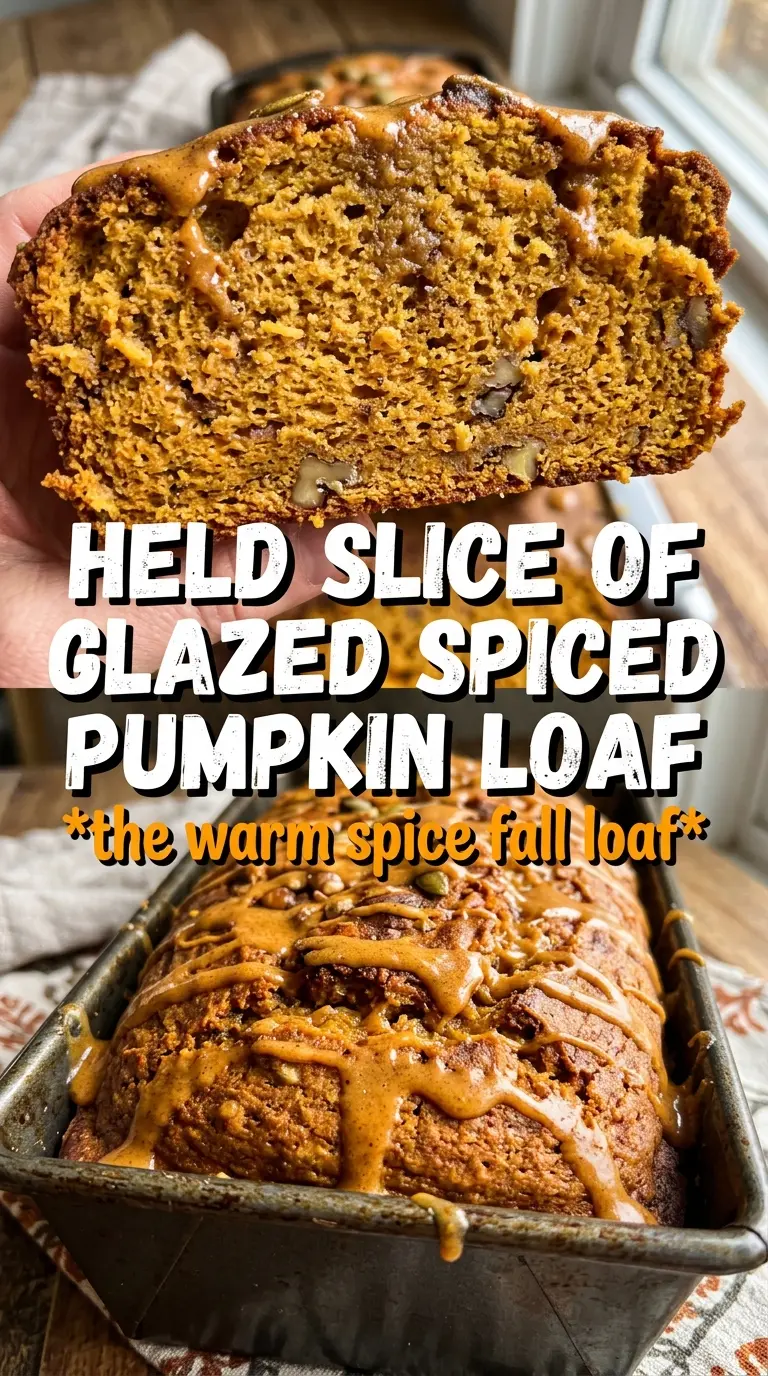
- Brown butter glaze — The browned butter gives the glaze a nutty edge that plays well with the spice mix. If you’re in a hurry, melted butter works, but you lose that toasted finish on top.
How to Keep the Loaf Tender Without Overmixing It
Build the wet base until it’s fully smooth
Whisk the pumpkin, sugars, oil, eggs, vanilla, and molasses until the mixture looks glossy and uniform. You’re looking for no streaks of egg white and no clumps of brown sugar hiding at the bottom of the bowl. If the wet base isn’t fully mixed first, you’ll have to stir the batter longer once the flour goes in, and that’s where a loaf starts turning tough.
Fold the flour in just until the last dry streak disappears
Once the dry ingredients hit the wet mixture, switch to a spatula and stop as soon as the batter comes together. A few small lumps are fine; overmixing is what gives pumpkin bread a gummy tunnel through the middle. The batter should be thick and spoonable, not fluffy like cake batter and not runny like quick muffin batter.
Bake until the center is set and the top springs back
At 350°F, the loaf usually needs 60 to 65 minutes, but the pan and your oven matter. The bread is done when the top is deeply browned, a tester comes out with a few moist crumbs, and the middle no longer feels soft and jiggly when you press it gently. If the top is browning too fast, lay a loose sheet of foil over it during the last 15 minutes instead of lowering the oven too early.
Let the glaze settle before slicing
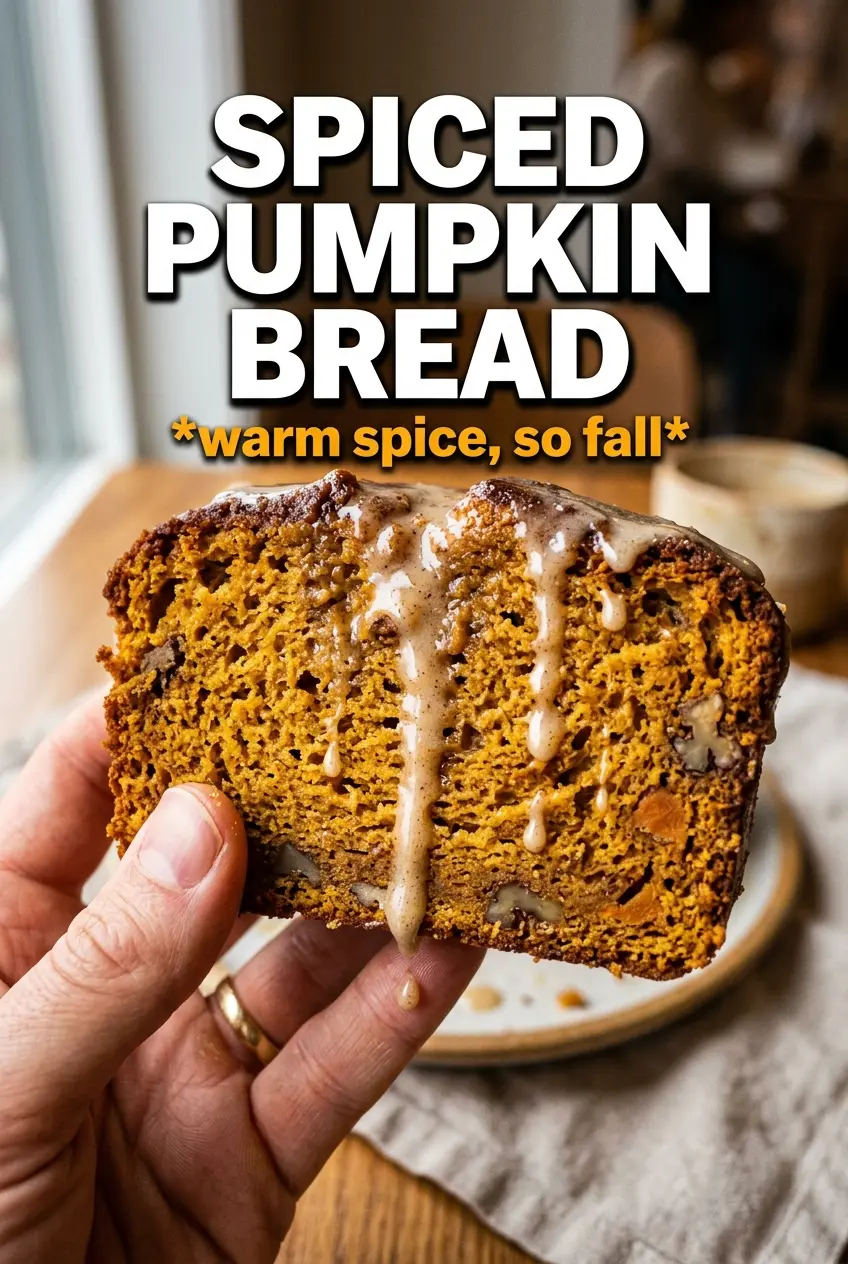
Brown the butter first, then whisk it with powdered sugar, milk, and cinnamon until smooth enough to drizzle. If the loaf is still warm, the glaze will melt into it and disappear; if it’s completely cool, it will stay on the surface and set into a thin, shiny layer. Give it time to firm up before slicing or the top will drag and smear.
Three Ways to Adjust This Loaf Without Losing the Good Part
Dairy-Free Finish
The bread itself is already dairy-free, so the only swap you need is in the glaze. Use plant milk instead of dairy milk and the glaze still sets well, though it may stay a touch looser. If you want the same richness as browned butter, add a pinch of salt to keep the topping from tasting flat.
Gluten-Free Version
A good 1:1 gluten-free flour blend can replace the all-purpose flour here, but pick one that includes xanthan gum or another binder. The loaf will be a little more delicate when warm, so let it cool completely before removing it from the pan. The spice and molasses hold up nicely in a gluten-free version, which is why this swap works better here than in a lighter quick bread.
Extra-Spiced Bakery Style
If you want a bolder loaf, bump the cinnamon by another 1/2 teaspoon and add a small pinch more cloves. Don’t increase the pepper much beyond what’s listed unless you want a sharper finish, because it can take over fast. This variation gives you a darker, more dramatic slice that stands up well to the glaze.
Storage and Reheating
- Refrigerator: Store tightly wrapped for up to 5 days. The crumb stays moist, though the glaze will soften a bit.
- Freezer: Freeze slices or the whole loaf, well wrapped, for up to 3 months. Thaw at room temperature still wrapped so condensation doesn’t make the crust sticky.
- Reheating: Warm slices in a low oven or toaster oven for the best texture. Microwaving works, but too long will make the bread rubbery and can melt the glaze into a slick.
Questions I Get Asked About This Recipe
Spiced Pumpkin Bread
Ingredients
Equipment
Method
- Preheat the oven to 350F and grease a 9x5 loaf pan so the loaf releases cleanly.
- Place the loaf pan on a sheet pan to catch any drips, then keep it ready for batter.
- In a bowl, whisk all-purpose flour, baking soda, cinnamon, ginger, cardamom, nutmeg, cloves, allspice, black pepper, and salt until evenly combined.
- In a bowl, whisk pumpkin puree, granulated sugar, packed brown sugar, vegetable oil, eggs, vanilla, and molasses until smooth.
- Pour the wet mixture into the dry ingredients and fold until no dry streaks remain.
- Pour the batter into the prepared loaf pan and level the top with a gentle shake.
- Bake at 350F for 60-65 minutes, until a toothpick inserted in the center comes out clean or with a few moist crumbs.
- Cool completely in the pan before glazing so the glaze sets without running off.
- Stir browned butter, powdered sugar, milk, and cinnamon until smooth enough to drizzle.
- Drizzle the brown butter glaze over the cooled loaf for a glossy finish.