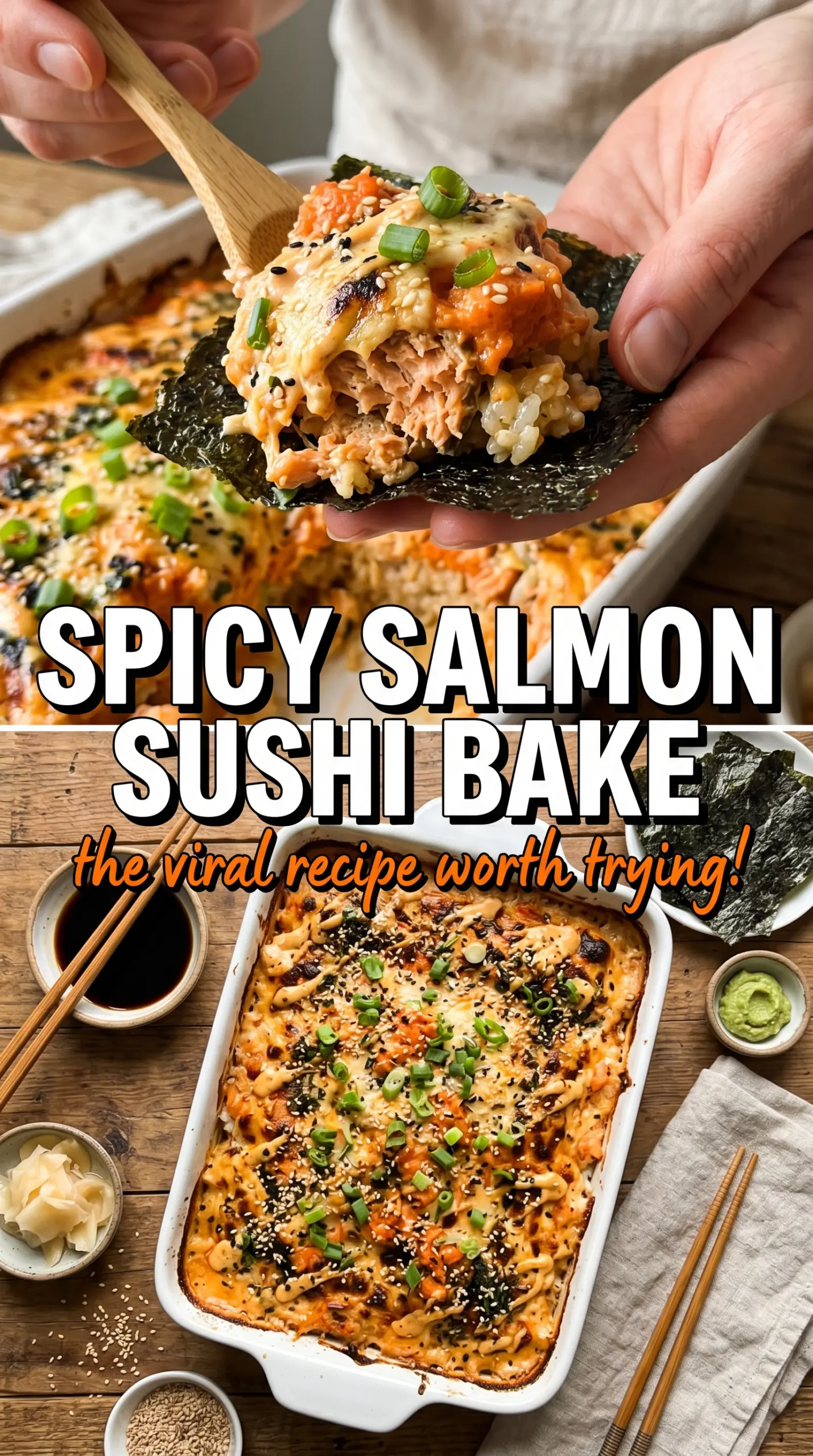
Spicy salmon sushi bake hits the table with everything people want from sushi night: creamy, savory salmon on top, tangy seasoned rice underneath, and those crisp nori sheets that turn each scoop into a little hand-rolled bite. It bakes up bubbling at the edges and golden on top, with just enough heat from the sriracha to keep each forkful interesting without overpowering the salmon.
The key is balance. Seasoning the rice before it goes into the pan keeps the whole dish from tasting flat, and mixing softened cream cheese into the salmon makes the topping lush instead of dry. Japanese mayo brings a richer, silkier finish than regular mayo, while furikake adds salt, sesame, and seaweed in one move so the topping tastes complete.
Below, I’ve included the timing cues that keep the rice from turning gummy and the salmon from overbaking. You’ll also find a few smart swaps if you want to adjust the heat, skip dairy, or make the dish ahead for an easy dinner later in the week.
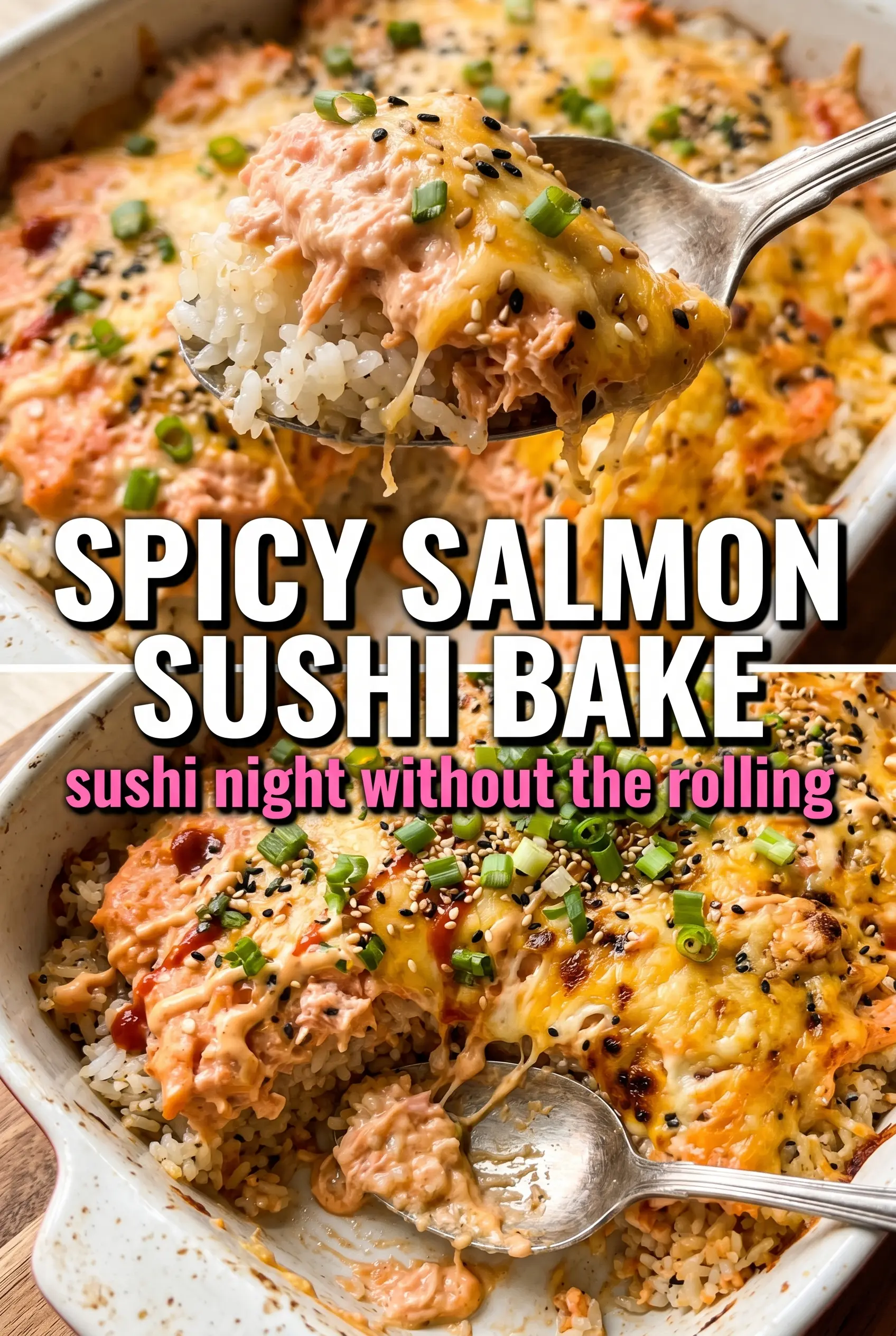
The rice stayed fluffy, not mushy, and the salmon layer got that perfect creamy-spicy finish. We scooped it with nori sheets and it tasted like sushi night without all the rolling.
Spicy Salmon Sushi Bake is the easiest way to get that creamy, bubbly sushi casserole on the table fast.
The Rice Layer Is What Keeps This From Tasting Flat
Most sushi bakes lean hard on the topping and forget the rice, which is why some of them taste heavy instead of balanced. Here, the rice gets seasoned while it’s still warm, so the vinegar, sugar, and salt actually soak in and season every grain. If you spread plain rice into the pan and season it later, the top tastes fine and the bottom tastes dull.
The second thing that matters is the thickness of the rice layer. Press it into an even base, but don’t pack it down like a brick. You want enough structure that it slices or scoops cleanly, while still staying tender underneath the salmon topping.
What Each Ingredient Is Actually Doing in the Bake
- Cooked sushi rice — Short-grain rice is the right choice because it clings together without turning gluey. If you use long-grain rice, the bake falls apart when you scoop it. Make it fresh if you can, then season it while it’s still hot so it absorbs the vinegar mixture evenly.
- Rice vinegar, sugar, and salt — This is the seasoning backbone. The vinegar gives the rice that familiar sushi tang, the sugar rounds out the sharpness, and the salt keeps the base from tasting one-note.
- Salmon — Cooked, flaked salmon keeps the topping tender and substantial. Leftover roasted or baked salmon works well, but avoid anything heavily seasoned with lemon or butter because it can fight the sushi flavors.
- Cream cheese — This is what gives the topping its lush, scoopable texture. Softened cream cheese blends smoothly; cold cream cheese stays lumpy and makes the salmon layer harder to spread.
- Japanese mayonnaise — Kewpie has more richness and a deeper eggy tang than standard mayo, which matters here. Regular mayo will work in a pinch, but the topping won’t taste as round or as silky.
- Sriracha and soy sauce — Sriracha brings heat and a little sweetness, while soy sauce adds the savory depth that keeps the topping from tasting like spicy cream cheese. If you want milder heat, cut the sriracha back and add a little more mayo to keep the mixture spreadable.
- Furikake, green onions, and nori — Furikake gives the bake its salty, nutty finish, green onions cut through the richness, and nori sheets turn it into a scoop-and-wrap meal. Don’t skip the nori if you want the full sushi-bite experience.
Building the Bake So the Top Stays Creamy and the Edges Brown
Season the rice first
Mix the rice vinegar, sugar, and salt into the hot rice until it looks glossy and evenly seasoned. Warm rice takes up the seasoning better than cooled rice, so this is the moment that makes the whole dish taste like sushi instead of plain casserole. Spread it in a greased 9×13 dish in an even layer so every scoop gets the same base.
Mix the salmon filling until it holds together
Combine the flaked salmon, softened cream cheese, Japanese mayo, sriracha, and soy sauce until the mixture is evenly coated and thick. The filling should spread easily without being runny. If the cream cheese is cold, it stays in little chunks and the topping bakes unevenly, so let it soften on the counter first.
Bake until the edges bubble
Sprinkle furikake over the rice, add the salmon mixture, then finish with the remaining seasoning on top. Bake at 400°F just until the top is hot, slightly golden, and bubbling at the edges, which usually takes 15 to 20 minutes. If you leave it in too long, the salmon dries out and the cream cheese can separate, so pull it when the center is hot and the top still looks creamy.
Finish while the casserole is still hot
Drizzle with extra sriracha mayo and scatter the green onions over the top right before serving. Letting it sit too long makes the rice firm up and the nori lose its texture, so bring the sheets to the table and scoop immediately. The contrast between warm rice, creamy salmon, and crisp nori is what makes this dish work.
How to Tweak the Heat, the Dairy, or the Batch Size
Make it milder without losing the punch
Cut the sriracha in half and lean on the soy sauce and furikake for flavor. You’ll lose some heat, but the bake still tastes layered and savory instead of flat. Add extra sriracha at the table for anyone who wants more spice.
Dairy-free version that still holds together
Swap the cream cheese for a dairy-free cream cheese with a thick, spreadable texture. Some brands loosen more in the oven, so choose one that’s made for bagels or dips rather than a whipped version. The result will be a little less rich, but the casserole will still scoop cleanly.
Use crab, shrimp, or a salmon mix
Replace some or all of the salmon with cooked shrimp or crab for a different sushi-bar feel. Crab makes the bake sweeter and softer, while shrimp gives it a firmer bite. Keep the seasoning the same, but chop larger seafood into bite-size pieces so the topping spreads evenly.
Storage and Reheating
- Refrigerator: Store leftovers in an airtight container for up to 3 days. The rice firms up as it chills, but the flavor holds up well.
- Freezer: I don’t recommend freezing the finished bake. The cream cheese filling and rice both change texture after thawing and turn grainy or watery.
- Reheating: Reheat gently in the oven at 300°F, covered loosely with foil, until warmed through. The biggest mistake is blasting it in the microwave, which makes the rice tough and the topping split.
Questions I Get Asked About This Recipe
Spicy Salmon Sushi Bake
Ingredients
Equipment
Method
- In a greased 9x13 baking dish, season the cooked sushi rice with rice vinegar, sugar, and salt, then spread evenly into an even layer.
- Sprinkle 1 tablespoon furikake over the rice layer so it’s distributed in small speckles.
- In a bowl, mix flaked salmon with softened cream cheese, Japanese mayonnaise, sriracha, and soy sauce until combined, then spread evenly over the rice.
- Sprinkle the remaining furikake over the salmon so the top will look textured after baking.
- Bake at 400°F for 15–20 minutes, until the top is golden and bubbling at the edges (look for active bubbling around the perimeter).
- Drizzle with extra sriracha mayo, top with sliced green onions, and serve immediately with nori sheets for scooping.