Sticky beef noodles hit that sweet spot between fast and satisfying: glossy ramen, savory beef, and a sauce that clings instead of pooling at the bottom of the bowl. The noodles stay springy, the beef gets caramelized around the edges, and every bite tastes like it came together with a little more effort than it actually did.
The key is building the sauce in the pan after the beef browns, not before. That lets the soy, oyster sauce, brown sugar, sesame oil, and vinegar reduce into something concentrated and shiny, while the noodles finish soaking up just enough sauce to stay coated instead of soggy. High heat matters here, but only at the right moment — it helps the sauce hug the noodles instead of thinning out.
Below, I’ve included the small details that matter most, from when to drain the beef to how to keep the noodles from clumping once they hit the skillet. If you’ve ever had stir-fry noodles turn heavy or dry, this version fixes both problems.
The sauce thickened up beautifully and coated every noodle, and the little hit of ginger at the end made it taste like takeout in the best way. My husband went back for a second bowl before I even sat down.
Sticky beef noodles with glossy ramen and a sticky soy-ginger sauce belong in your quick-dinner rotation.
The Reason These Noodles Stay Glossy Instead of Gloppy
The difference between sticky and clumpy comes down to timing. The sauce needs to hit the hot beef long enough to reduce, but the noodles should go in only after the liquid has already started to thicken. If you add them too early, they drink up the sauce before it can coat the pan, and you end up with dry noodles and a heavy skillet.
Ramen works here because it’s thin enough to pick up the sauce fast, but sturdy enough to keep its bite for those last 2 minutes in the pan. Drain it well before adding it to the skillet. Extra water on the noodles dilutes the sauce and keeps it from clinging the way it should.
What the Sauce Ingredients Are Actually Doing
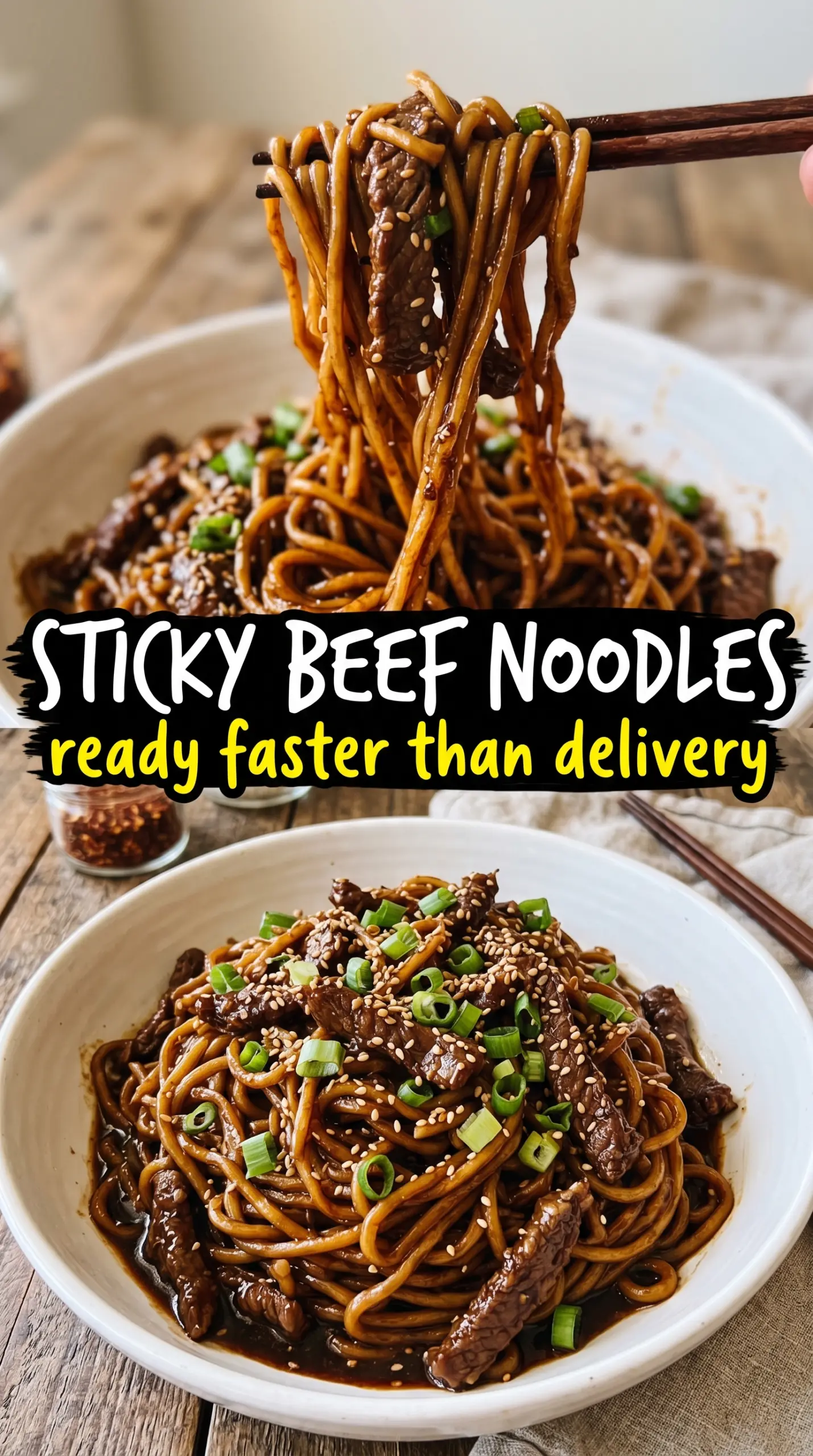
- Ground beef — Use something around 85/15 if you can. It browns with enough fat to carry the sauce, but not so much that the finished noodles feel greasy. If your beef is much fattier, drain it after browning so the sauce can reduce instead of floating on top of rendered fat.
- Ramen noodles — The cheap pack works perfectly here because you’re not using the seasoning. Cook them just until tender, then drain right away. Overcooked noodles turn soft once they hit the sauce, and there’s no coming back from that.
- Soy sauce and oyster sauce — These build the savory backbone. Soy sauce brings salt and depth, while oyster sauce gives body and that glossy, lacquered finish. There isn’t a true equal substitute for oyster sauce, but hoisin can stand in if that’s what you have, though the result will be sweeter and a little less rounded.
- Brown sugar — This is what helps the sauce cling. It balances the salt and gives the sauce that sticky finish as it cooks down. White sugar works in a pinch, but it tastes sharper and doesn’t bring the same caramel note.
- Sesame oil, rice vinegar, and sriracha — Sesame oil adds aroma, vinegar keeps the sauce from tasting flat, and sriracha gives a gentle heat that wakes everything up. Don’t skip the vinegar; without it, the dish can read as heavy instead of savory and bright.
- Garlic and ginger — These need just a minute in the hot pan. Any longer and they can burn, which makes the whole dish bitter. Fresh ginger matters most here because it cuts through the richness of the beef and keeps the sauce lively.
Building the Beef and Sauce in the Right Order
Brown the Beef Hard Enough to Get Fragments
Start with a large skillet over high heat and let the beef cook without constant stirring for a moment so it can actually brown. You want small caramelized bits, not pale steamed crumbles. If the pan is crowded or the heat is too low, the beef will release liquid and boil instead of searing, and the final dish loses a lot of flavor.
Wake Up the Garlic and Ginger Without Burning Them
Once the beef is browned and drained, add the garlic and ginger and cook for about a minute. Stir constantly and keep an eye on the edges of the pan. They should smell fragrant and sharp, not dark or bitter. If they start to brown too fast, pull the pan off the heat for a few seconds before adding the sauce.
Reduce the Sauce Before the Noodles Go In
Pour in the sauce and stir it through the beef so it starts to bubble and thicken. This is when the sugar dissolves and the sauce turns shiny. If it still looks thin after a minute or two, keep it moving over high heat; once the noodles go in, the clock starts ticking and you want the sauce already on its way to sticky.
Toss the Noodles Until They’re Coated, Not Drenched
Add the drained ramen and toss hard for about 2 minutes. The noodles should look evenly lacquered, with the sauce disappearing into the nooks instead of sitting in the bottom of the skillet. If the pan looks dry before the noodles are coated, add a tablespoon of water, not more sauce, so you loosen the mixture without making it salty or muddy.
Three Ways to Make Sticky Beef Noodles Work for Your Kitchen
Make It Gluten-Free
Use gluten-free rice noodles or gluten-free ramen, then swap in tamari for the soy sauce. Check your oyster sauce too, since some brands include wheat. The sauce will still turn sticky and savory, but rice noodles soften faster, so toss them in at the very end and serve right away.
Make It Sweeter and Less Spicy for Kids
Leave out the sriracha and add an extra teaspoon of brown sugar if you want a softer, more takeout-style finish. The dish will lose a little edge, but the sticky coating and savory beef stay the same. A few sesame seeds on top still give it enough contrast.
Use Ground Turkey Instead of Beef
Ground turkey works if you want something lighter, but it needs a little help because it doesn’t bring the same richness. Keep the sesame oil, don’t skip the oyster sauce, and brown the turkey well so it doesn’t taste flat. If the skillet looks dry, add a teaspoon of neutral oil before the garlic goes in.
Make It Lower Carb
Swap the ramen for shirataki noodles or spiralized zucchini, but add them at the very end so they don’t flood the pan with moisture. The flavor still lands because the sauce is doing the heavy lifting, though the texture will be lighter and less chewy than the ramen version.
Storage and Reheating
- Refrigerator: Store leftovers in an airtight container for up to 3 days. The noodles will tighten up as they sit, and the sauce will soak in more fully.
- Freezer: This freezes better than a lot of noodle dishes, but the ramen gets softer after thawing. Freeze in single portions for up to 2 months, then thaw in the fridge before reheating.
- Reheating: Warm it in a skillet over medium heat with a splash of water to loosen the sauce. The biggest mistake is microwaving it dry, which makes the noodles tough and the beef clingy in the wrong way.
Answers to the Questions Worth Asking
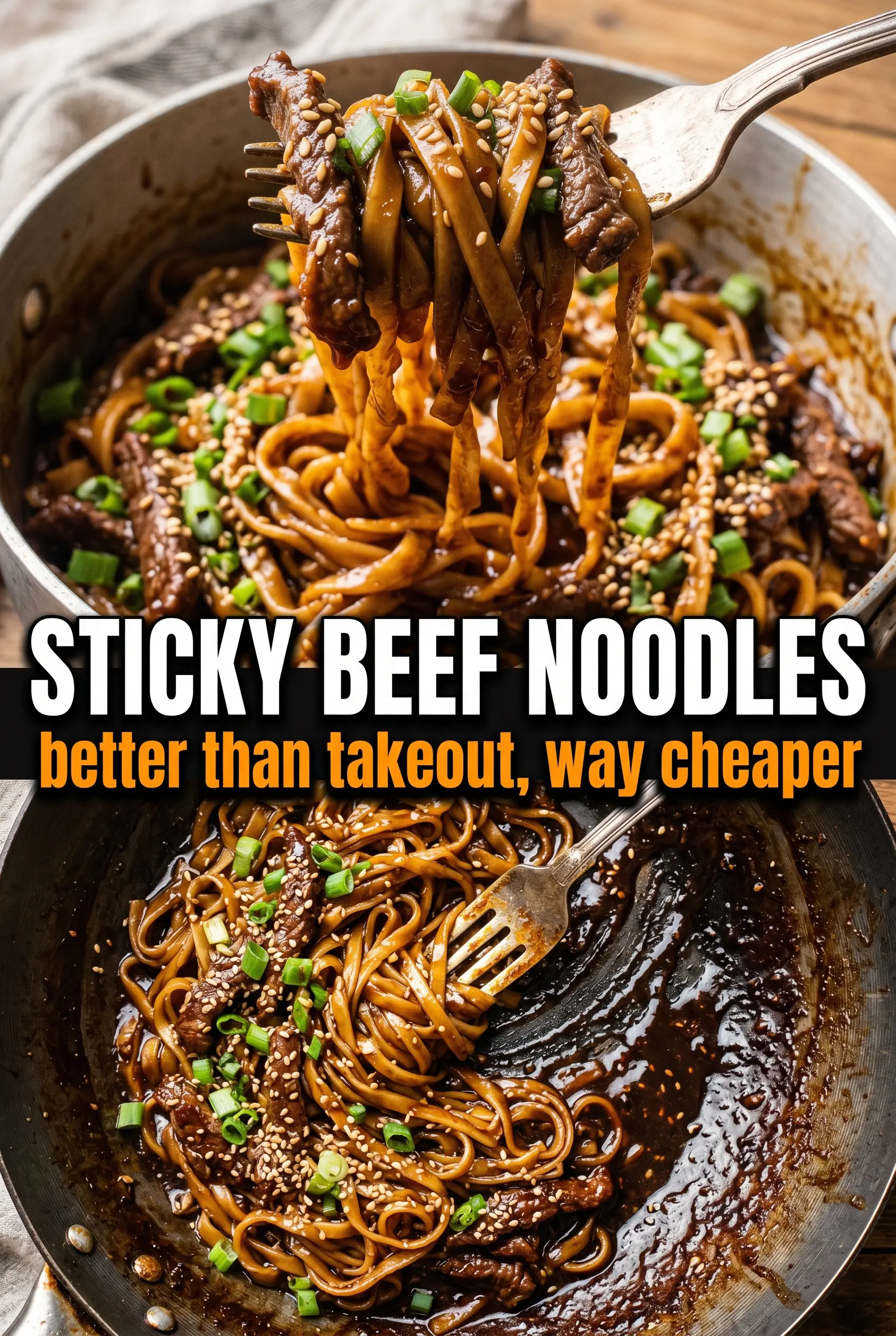
Sticky Beef Noodles
Ingredients
Equipment
Method
- Cook ramen noodles according to package directions (discard seasoning packets), then drain and set aside.
- Keep the noodles warm so they can absorb the sauce when tossed.
- Whisk together soy sauce, oyster sauce, brown sugar, sesame oil, rice vinegar, and sriracha until smooth and glossy.
- Brown ground beef in a large skillet over high heat, breaking into crumbles, then drain excess fat.
- Add minced garlic and grated ginger and cook for 1 minute, until fragrant and just starting to brown.
- Pour the sticky sauce over the beef and stir to coat the crumbles evenly.
- Add cooked noodles to the skillet and toss everything together over high heat for 2 minutes, until noodles are coated and the sauce looks thick and clingy.
- Serve immediately, topped with sesame seeds and sliced green onions.