Stuffed pepper soup gives you all the comfort of classic stuffed peppers without the fussy part of hollowing, filling, and baking each one. The broth turns rich and tomatoey, the beef stays hearty, and the peppers soften just enough to hold onto their shape instead of disappearing into the pot. A spoonful with melted cheddar on top tastes like a full meal, not a thin soup pretending to be dinner.
This version works because the tomato paste gets cooked with the onion and peppers before the liquid goes in. That little step deepens the base and keeps the broth from tasting flat. I also add the rice directly to the pot near the end so it cooks right in the soup and picks up all that seasoned broth instead of sitting separately and blandly on the side.
Below you’ll find the timing that keeps the rice tender, not mushy, plus a few smart swaps if you want to stretch the soup, lighten it up, or make it fit what you already have in the pantry.
The rice came out tender without getting mushy, and the broth had that exact stuffed-pepper flavor my dad used to make. I topped mine with extra cheddar and it was even better the next day.
Save this stuffed pepper soup for a cozy bowl with beef, peppers, rice, and plenty of melted cheddar.
The Step Most People Rush: Building the Tomato Base First
Stuffed pepper soup can taste thin if the aromatics and tomato paste don’t get enough time in the pot before the broth goes in. That short sauté is where the flavor gets layered. The onions and peppers soften, the garlic loses its raw edge, and the tomato paste darkens slightly so the soup tastes cooked instead of just combined.
If you dump everything in at once, the broth still works, but it misses that deep, savory note that makes people go back for a second bowl. Let the pot stay on the heat until the tomato paste smells sweet and a little toasty. That’s the point where the base has enough structure to carry the rice and beef.
What Each Ingredient Is Actually Doing in This Bowl
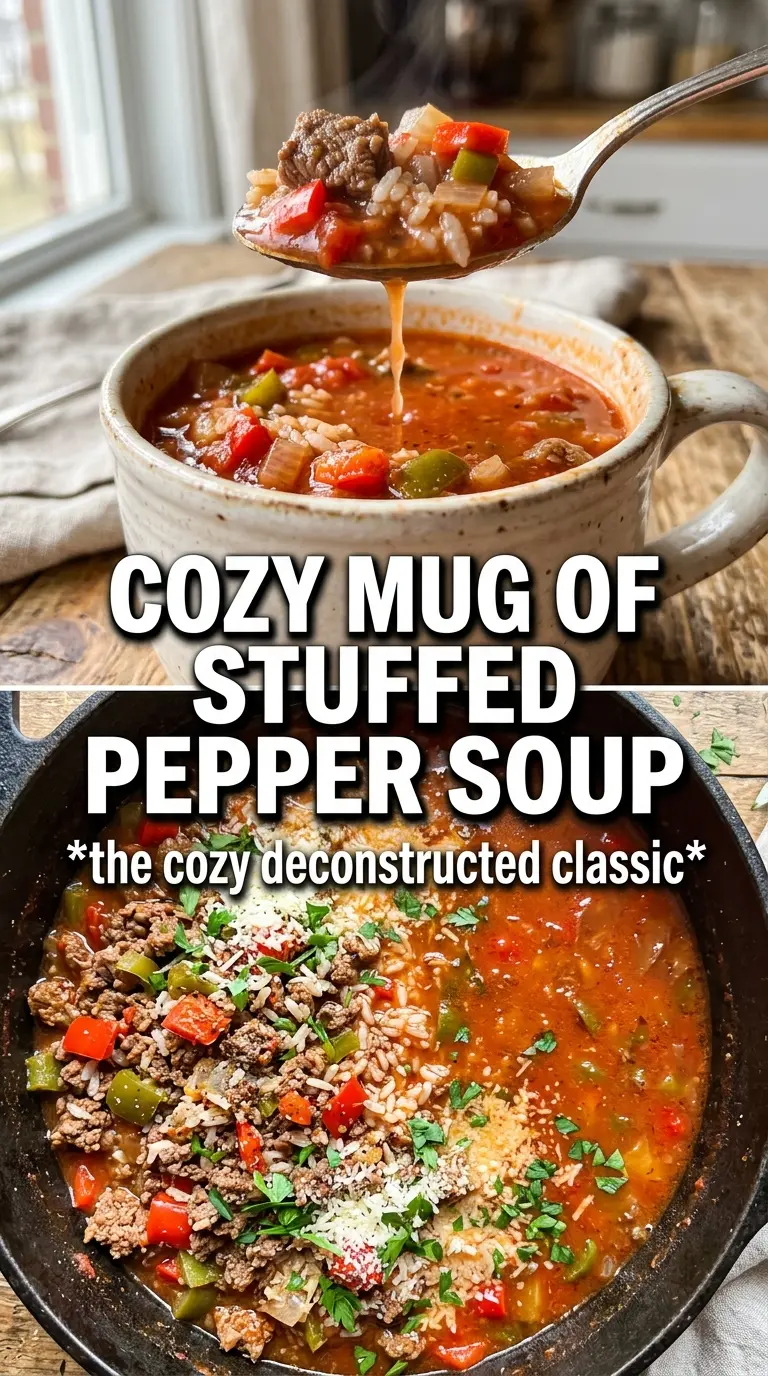
- Ground beef — This brings the savory backbone and turns the soup into a true main dish. An 80/20 blend gives the best flavor, but anything from lean to medium will work as long as you drain the excess fat after browning so the broth stays clean.
- Bell peppers — Green peppers bring the classic stuffed-pepper flavor, while the red pepper adds a little sweetness that balances the tomatoes. Dice them evenly so they soften at the same pace and don’t leave one spoonful crunchy while another is silky.
- Tomato paste — This is the ingredient that makes the broth taste full and not watery. Cook it with the vegetables for a couple of minutes so it deepens; if you skip that step, the soup tastes sharper and less rounded.
- Crushed and diced tomatoes — The crushed tomatoes give the body, and the diced tomatoes leave you with little bites of tomato in the bowl. If you only have one type, use it, but the mix gives the best balance between saucy and chunky.
- Long grain white rice — This is what turns the soup into a stuffed-pepper dinner in spoonable form. Long grain rice holds its shape better than short grain; if you use brown rice, add extra broth and give it more time.
- Cheddar and parsley — Cheddar melts into the hot soup and adds the salty finish that makes every bite feel complete. Parsley brightens the bowl at the end, so don’t skip it if you want the soup to taste fresh instead of heavy.
Getting the Rice Tender Without Turning the Pot to Mush
Brown the Beef First
Cook the beef over medium-high heat until there are no pink spots left and the meat has picked up a little color. If you leave it gray, the soup tastes flat, and if you skip draining the fat when there’s a lot in the pan, the broth turns greasy. Break the meat up well, but don’t chase tiny crumbles; a little texture makes the bowl feel heartier.
Softening the Peppers and Onion
Add the diced onion and bell peppers to the same pot and cook them until the onion turns translucent and the peppers soften at the edges. They shouldn’t collapse into a puree. This is where a lot of people stop too soon, and the vegetables stay sharp and raw-tasting in the finished soup.
Letting the Rice Cook in the Broth
Once the tomatoes and broth are in, bring everything up to a boil, then drop it to a steady simmer before adding the rice. Cover the pot and keep the heat low enough that the soup barely bubbles. If it boils hard, the rice can split open and go sticky before the liquid has a chance to season it properly.
Finishing With Cheese and Parsley
When the rice is tender, taste the soup and add salt and pepper only then. Tomatoes and broth change how salt lands, so seasoning at the end gives you control. Ladle into bowls and top with cheddar while the soup is hot enough to melt it into ribbons, then finish with parsley for a clean, fresh bite.
Three Practical Ways to Change the Bowl Without Losing the Point
Make It Gluten-Free Without Changing the Texture
This soup is naturally gluten-free as written, so the only thing to watch is your broth and any toppings. Use a certified gluten-free beef broth and stick with plain cheddar and herbs on top. The rice already gives the soup body, so you won’t miss anything by leaving out flour or thickeners.
Swap the Beef for Ground Turkey
Ground turkey works well if you want a lighter bowl, but it needs help from the tomato paste and seasoning because it doesn’t bring as much richness on its own. Use the same method, then taste carefully at the end and add a little more salt or smoked paprika if the soup tastes too lean.
Use Brown Rice When You Want More Bite
Brown rice gives the soup a nuttier flavor and firmer texture, but it takes longer to cook and needs more liquid. Add an extra cup of broth and simmer until the rice is tender, stirring now and then so it doesn’t stick to the bottom. White rice is softer and more classic here, but brown rice holds up better if you plan on leftovers.
Make It Dairy-Free at the Table
The soup itself is dairy-free until the topping, so you can leave off the cheddar or use a dairy-free shreds that melts well. The best move is to keep the soup rich through the beef, tomatoes, and broth, then add fresh parsley for brightness instead of trying to replace the cheese with something watery.
Storage and Reheating
- Refrigerator: Store for up to 4 days. The rice will keep absorbing broth, so expect the soup to thicken.
- Freezer: It freezes well, but the rice softens a bit after thawing. For the best texture, freeze in portions and thaw overnight in the fridge.
- Reheating: Warm gently on the stove over medium-low heat with a splash of broth or water. Don’t boil it hard or the rice can go past tender and turn heavy.
Answers to the Questions Worth Asking
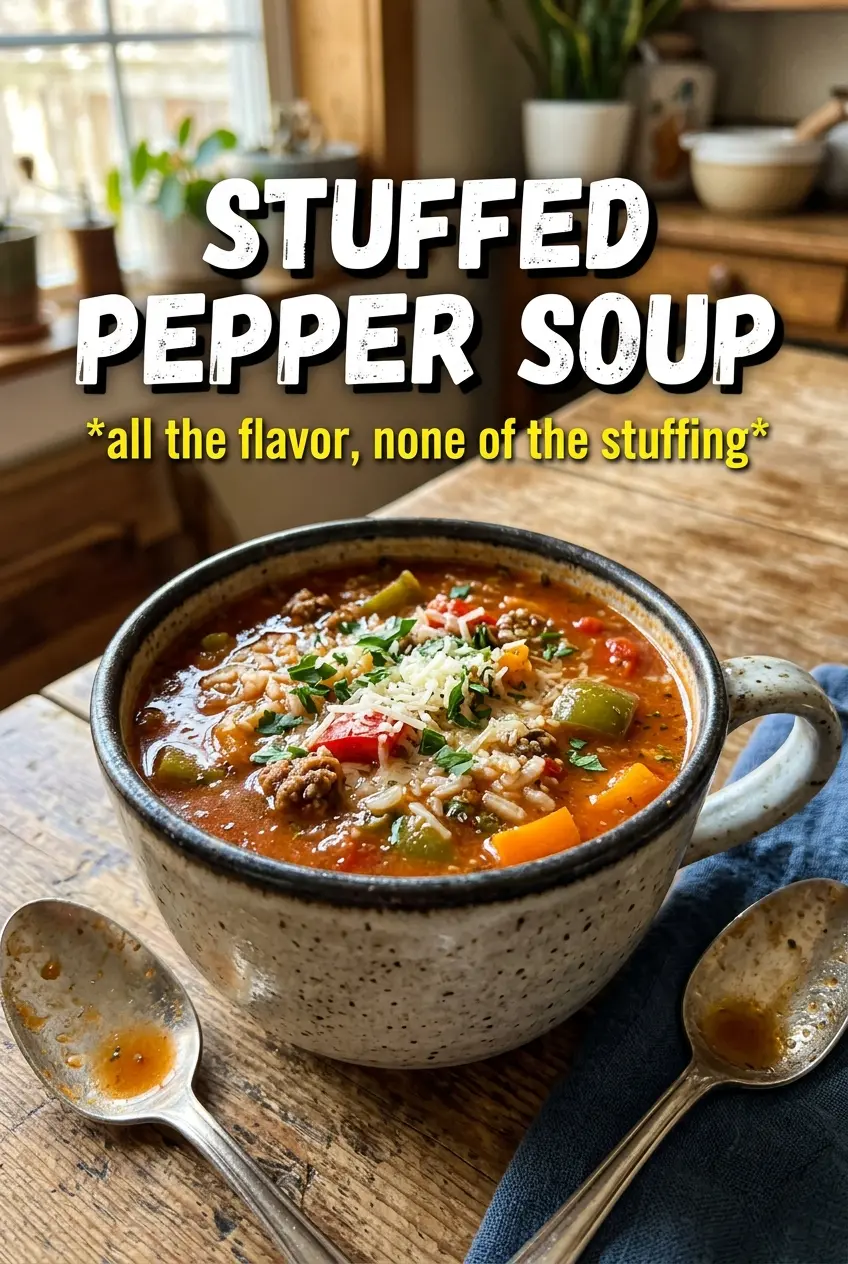
Stuffed Pepper Soup
Ingredients
Equipment
Method
- Brown the ground beef in a large pot over medium-high heat until cooked through, then drain the fat.
- Sauté the onion and diced bell peppers in the same pot for 4-5 minutes, stirring until softened.
- Stir in the minced garlic and tomato paste and cook for 2 minutes, until fragrant and slightly darkened.
- Add the crushed tomatoes, diced tomatoes, beef broth, Italian seasoning, garlic powder, and smoked paprika, then bring to a boil.
- Add the uncooked long grain white rice, reduce heat to maintain a gentle simmer, cover, and simmer 18-20 minutes until the rice is cooked through.
- Season with salt and pepper to taste, then serve topped with shredded cheddar and fresh parsley.